What homeowners are rarely told, and why it leads to disappointment.
Most homeowners look at a solar control film datasheet and assume the performance numbers reflect what will happen in their home. The figures often look impressive because the TSER value includes the performance of the glass itself. On paper, internal solar control films appear to offer strong heat rejection. In reality, modern glazing systems change the physics completely.
Why the datasheets do not reflect real homes
Solar control films are usually tested on single glazing or older double glazing. Modern double glazing is engineered very differently. It typically includes:
- A low emissivity coating on the cavity-facing surface
- An argon filled cavity
- A design that slows winter heat loss by keeping heat inside
These features are excellent for energy efficiency, but they create a barrier that internal solar control films cannot work through effectively.
Why internal solar control films cannot push heat back out
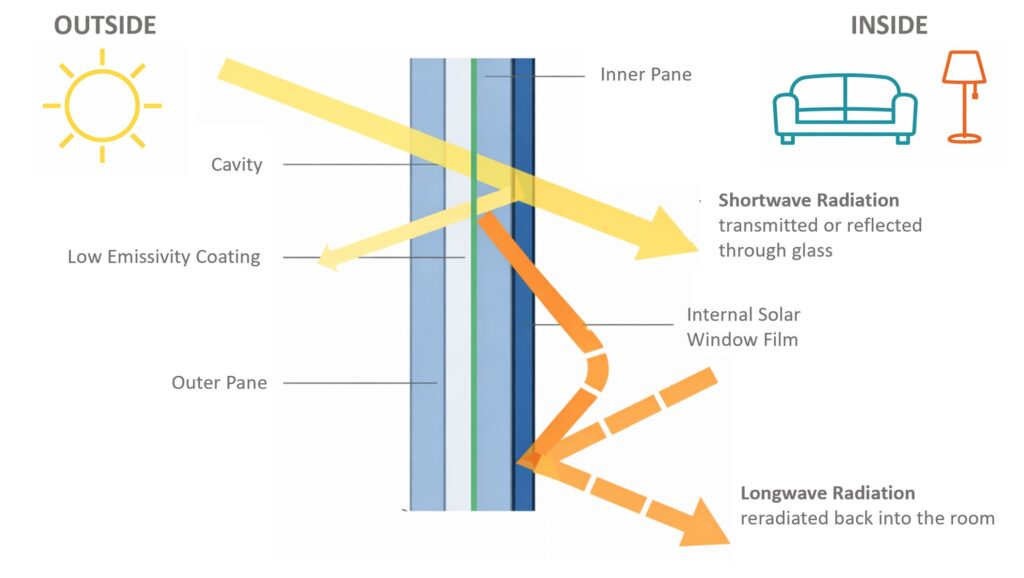
Solar heat arrives as short wave infrared. An internal solar control film tries to reflect that heat back out of the room. On modern glazing, the heat must pass through the inner pane, hit the low emissivity coating, then attempt to travel back through the cavity and the outer pane. The low emissivity coating is designed to stop heat escaping, so it reflects the heat back into the room.
This leads to two predictable outcomes.
- Neutral internal films absorb the heat instead of reflecting it
- The absorbed heat is then re-radiated into the room like a warm panel heater
Very little of the heat ever makes it back through the glazing system. This is why many homeowners feel no difference after installing clear internal solar control films on modern double glazing, even though the datasheet suggested a big improvement.
When internal films can still work
Internal solar control films can perform well on:
- Single glazing
- Older double glazing without low emissivity coatings
- Certain commercial glazing systems
On modern residential double glazing, the improvement is often less than 10 percent in real world conditions.
Why this becomes a problem for homeowners
Most homeowners want clear glass, no mirror effect, no change to the look of the home and a noticeable reduction in heat. When they are sold a clear internal solar control film that promises high performance, they expect a cooler home. The physics of modern glazing simply do not allow internal solar control films to deliver what the datasheet implies.
Many companies still recommend internal films because they are easier to install. They can be fitted in poor weather, they avoid the need for external access equipment and they are quicker and more profitable. Easier for the installer does not mean better for the homeowner.
The right solution for modern double glazing
For homeowners who want clear heat control without changing the appearance of the glass, the correct approach is an external spectrally selective solar control film. A leading example is 3M Prestige Exterior 70. It offers:
- High visible light levels
- Virtually no change to the appearance of the glass
- Spectral selectivity that targets near infrared heat
- Around 45 percent reduction in heat gain on modern double glazing
- No internal mirror effect
Because the film is on the outside, it stops the heat before it enters the glazing system. This is exactly where modern glass needs help.

Why installation quality matters just as much as the film
Even the best solar control film will disappoint if the installation is rushed. A proper installation requires:
- Scraper cleaning the glass
- Lifting gaskets and flushing out dirt
- Cleaning the frame edges
- Allowing enough time for preparation
- Careful application to avoid contamination
Many companies rely on the Glass and Glazing Federation visual quality standards for applied films. These standards are designed to protect installers, not homeowners. They allow imperfections that most customers would not accept if they knew they had a choice.
A premium film deserves a premium installation that takes time, care and pride. This is how you achieve 15 to 20 years of reliable performance.
The takeaway
Internal solar control films underperform on modern double glazing because the glazing system itself blocks the film from rejecting heat. Homeowners often end up paying twice. Once for the internal film and again when they realise it has not solved the problem.
Real comfort comes from the combination of accurate technical advice, advanced external spectrally selective films and meticulous installation.