Are you in the middle of planning a beautiful glass extension, filled with excitement, but have a quiet worry that it might become a stunning, but unliveable, greenhouse?
And what if the very design choices meant to create your dream home, those breath taking walls of glass and minimalist lines, could accidentally compromise the one thing you can’t live without: your family’s everyday comfort?
That’s a valid concern, and you’re right to be thinking about it. To help, here are the key things to keep in mind.
Key Takeaways
- Comfort vs. Concept: The main issue arises when the architectural vision (Concept) unintentionally overlooks the reality of living in the space (Comfort).
- Glass Isn’t Enough: Relying only on high-performance glass is a common pitfall. UK regulations like Part O acknowledge that active shading is essential to prevent overheating.
- Plan Shading Early: Treating shading as an afterthought leads to aesthetic compromises, unusable rooms, and the frustrating cost of retrofitting solutions.
- Empower Yourself: Asking your architect a few simple, thoughtful questions about heat, glare, and integration can ensure your dream home is both beautiful and a pleasure to live in.
We’re going to talk openly about the common, but completely avoidable, glazing and shading mistakes that can happen in architectural projects. We’re not here to point fingers, but to give you the understanding and confidence you need to protect your vision by exploring the tension between a brilliant concept and the reality of living in the space.
The “Comfort vs. Concept” Dilemma: Why These Mistakes Happen
Let’s start by framing the core issue. When things go wrong, it’s rarely because of a ‘bad’ architect. In fact, it’s usually the result of a very good one being rightly focused on the ‘grand vision’, the structure, the light, the form.
But sometimes, this intense focus on the visual concept can overshadow the small but critical details that ensure year-round comfort.
We liken it to a performance sports car with no brakes, bold, powerful, and full of promise, but without control, the experience is compromised. It’s a potential blind spot in a highly specialised area, and it’s where a specialist’s eye for detail becomes essential.
The Top 3 Glazing & Shading Pitfalls (And Their Real-World Impact)
When that balance between concept and comfort is missed, it typically leads to a few common problems that we see time and time again.
1. Believing High-Performance Glass Is a Magic Bullet
One of the most frequent assumptions we encounter is that modern “solar control glass” is all that’s needed to manage heat. While the technology is impressive, it’s not a complete solution.
The reality is, there are two key ratings for glass. The U-value tells you how good it is at keeping heat in during winter, like a good jumper. The g-value, on the other hand, measures how much of the sun’s heat it lets in during the summer. While special coatings can reduce this heat gain, glass alone often isn’t enough to stop a room from overheating.
Crucially, this isn’t just our opinion. UK building regulations like Part O were introduced specifically to combat overheating in new homes, officially recognising that active shading is essential, especially on sun-facing walls.
2. Treating Shading as an Afterthought
This is perhaps the most painful mistake for a homeowner. You get through the build, the dust settles, and you step into your beautiful new kitchen extension on the first sunny day of spring. But instead of joy, you feel a growing sense of dread as the room gets hotter and hotter. This “post-build regret” is when homeowners realise they are losing parts of their home to discomfort.
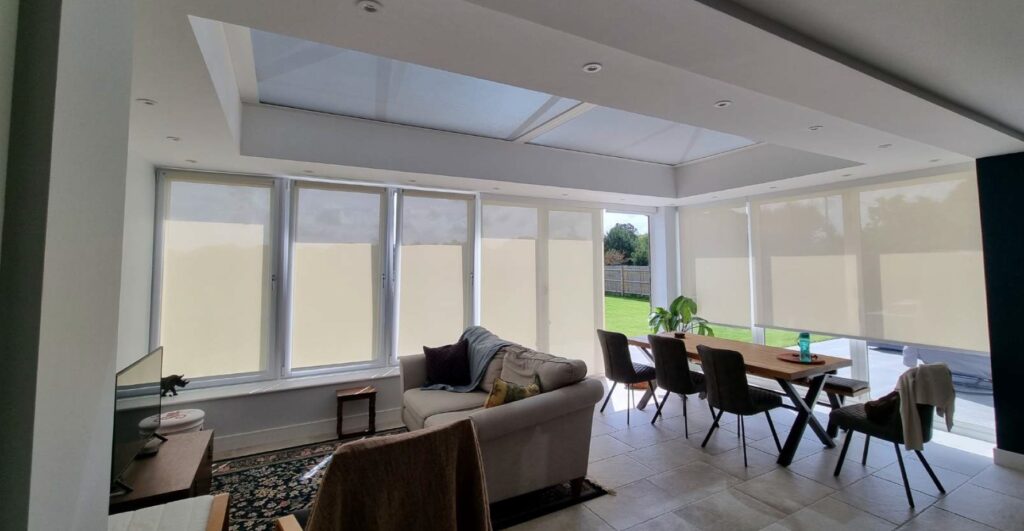
Nigel’s home in a quiet Hampshire village is a perfect example of how a beautiful idea can clash with day‑to‑day comfort. His new open‑plan living space featured two elevations of bi‑fold doors and a roof lantern over five metres long, filling the room with natural light and giving uninterrupted views across the countryside from every angle. It looked incredible on paper.
However, Concept over Comfort could not have been more accurate. The space behaved like a sports car with no brakes. The sun poured in from every direction, creating excessive brightness and significant heat gain throughout spring, summer and autumn. The insulated structure simply could not cope, and Nigel’s vision for a calm, elegant living space was overwhelmed by glare and rising temperatures.
WindowTreat could introduce high‑performance electric blinds that restored comfort, but the opportunity for true minimalism had already passed. The clean lines and original glazing sightlines could never be protected in the same way as if shading had been designed in from the start.
When this happens, you’re forced into retrofitting a solution. This not only involves the frustration of having to “buy twice”, first paying for the pristine vision, then paying again to fix it, but it often means “bolting on” a system that compromises the clean, minimalist look you invested in.
3. Forgetting About Glare, Fading, and Privacy
The problem goes beyond just heat. Have you ever tried to watch the Saturday football or work on your laptop, only to be beaten by blinding glare? We often hear from clients who joke they have to wear sunglasses indoors, it’s funny, but it highlights a real frustration.
Then there’s the “goldfish bowl” effect at night. Those same beautiful windows that connect you to the garden during the day can leave you feeling exposed once the lights are on.
And finally, there’s the slow, silent damage. UV rays in sunlight are relentless agents of destruction, causing expensive wooden floors, cherished furniture, and valuable artwork to fade over time.
From Worry to Wisdom: How to Ensure Your Home is Both Beautiful and Liveable
The best way to avoid these pitfalls is to shift the mindset from the start. It’s about ‘Human-Centred Design’, a core principle of our S.H.A.D.E. framework, which simply means thinking about how you’ll feel in the space, right from day one. Shading isn’t an accessory; it’s part of the architecture.
You don’t need to be a technical expert to make a difference. Having a few thoughtful questions ready can open up a positive, collaborative conversation with your architect.
Here are some gentle but powerful things you could ask:
- “How have we planned for summer overheating in this design, particularly for the south and west-facing glass?”
- “Beyond the glass specification, what’s our strategy for shading to make sure the room stays comfortable?”
- “How will we make sure the shading solution is integrated cleanly so it doesn’t disrupt the minimalist look we’re aiming for?”
- “How will we manage glare so we can comfortably use the space for relaxing and watching TV during the day?”
A Final Thought on Preserving Your Dream
Ultimately, the goal is to ensure the stunning home you see on the plans becomes the comfortable, usable, and joyful sanctuary you and your family will cherish for years. A little forward planning is all it takes to protect that dream.
Planning early is the key to seamlessly integrating comfort and control into your design. If you’d like to chat through the possibilities for your own project, our specialists are always here for a friendly chat.
Call: 01256 345580
Book Appointment: https://windowtreat.co.uk/residential/forms/virtual-appointment-booking/
To understand more about the solutions that solve these issues, you might find our guide to Blinds For Sliding Doors a helpful next step.