Have you ever found yourself lowering the blinds on a beautiful sunny day, just so you could see the TV or stop the room from feeling like a greenhouse?
And in that moment, did you feel a bit disappointed that the stunning garden view you invested so much in was suddenly gone, hidden behind a solid block of fabric?
It’s an incredibly common compromise, but one you don’t actually have to make. Before we explore the elegant solution that gives you back your view and your comfort, here are the key things to keep in mind.
Key Takeaways
- The Single Blind Compromise: A single blind forces a daily choice between managing heat and glare or enjoying your view and natural light. It cannot do both perfectly.
- The Dual Blind Solution: A twin system combines two specialist fabrics in one unit – a screen for daytime glare and heat control, and a blackout for night-time privacy.
- It’s About Usability: The real value of a dual system isn’t just in the blinds themselves, but in making your expensive extension comfortable and usable all year round.
- The Right Fit: A single blind is often perfect for bedrooms or less critical windows. A dual system is a game-changer for main living areas with large glazing, especially those facing south or west.
Why a Single Blind Forces a Compromise
You’ve created this beautiful, light-filled extension to connect with the outdoors. The reality is, managing that light with just one blind means you’re always having to choose between two conflicting needs.
It’s a daily compromise that can slowly chip away at the enjoyment of your new space.
The Daytime Dilemma: View vs. Comfort
On a bright day, the challenge is heat and glare. A single blackout blind will certainly solve the problem, but it does so by plunging your room into darkness. The connection to the garden is severed, and the whole purpose of your lovely glass doors is lost. The dream is unintentionally ruined.
On the other hand, a standard sheer or light-filtering blind might preserve the view, but it often fails to provide enough heat rejection. The glare might still bounce off screens, and the room can remain uncomfortably warm, meaning you haven’t really solved the issue.
The Night-time Dilemma: The Privacy Paradox
Then, when evening comes, the role reverses. That sheer fabric that was lovely during the day can become almost transparent at night once you switch the lights on.
It completely fails the privacy test, leaving you feeling exposed in your own home.
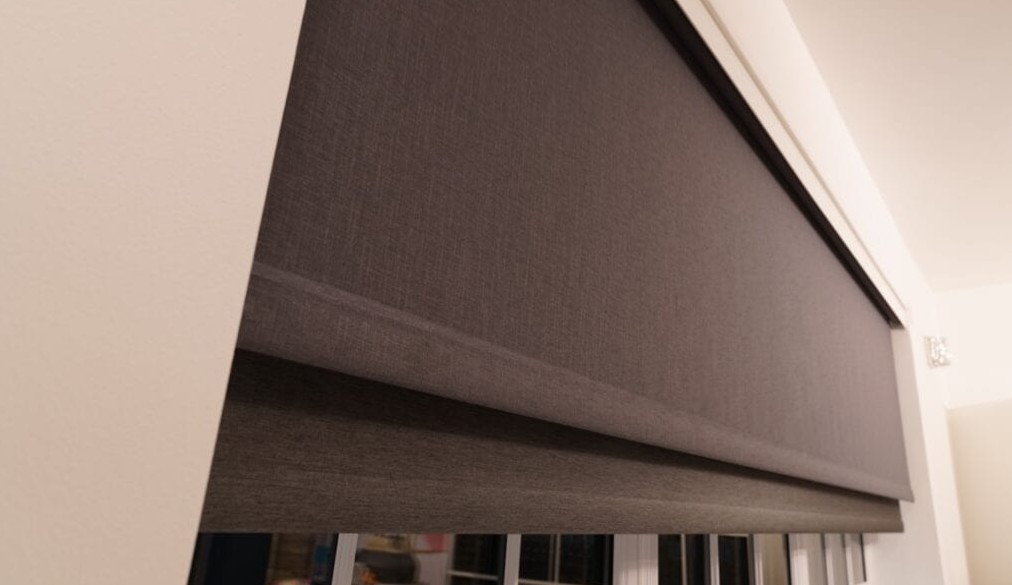
How a Dual Blind System Solves the Problem
This is where a dual blind system comes in. Think of it as having a layered toolkit for your window, giving you the perfect response for any time of day or weather.
It’s a single, neat installation using two different blinds, each with a specific job:
The ‘Day’ Blind (Your View-Keeper)
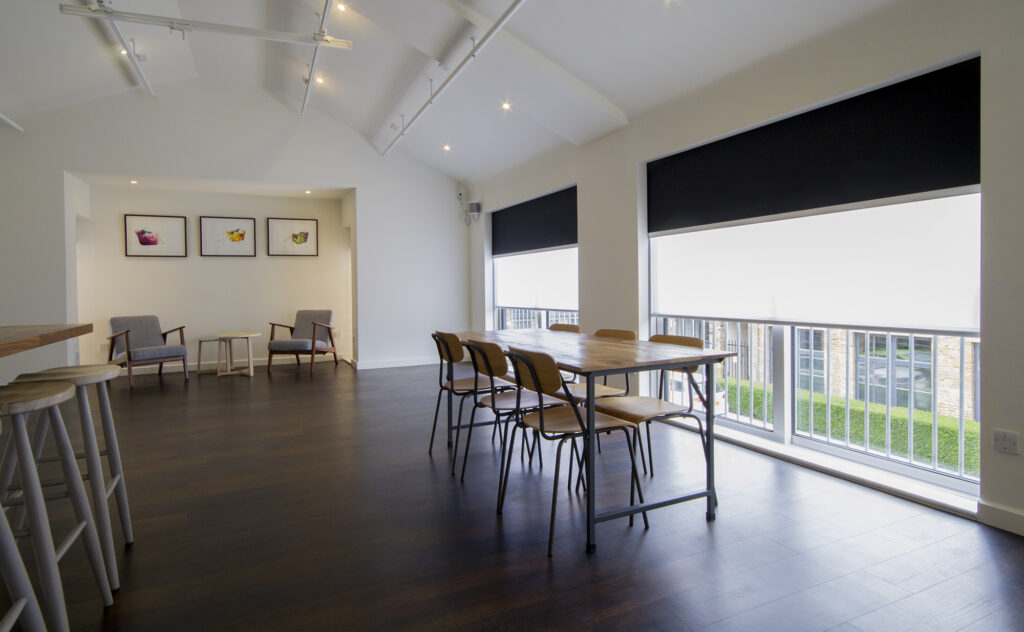
This is a high-performance screen fabric that acts like a high-tech net curtain. It’s cleverly designed to cut the harsh glare and reflect a huge amount of solar heat, but the magic is that you can still see out through it perfectly.
The ‘Night’ Blind (Your Privacy Shield)
Sitting just behind the screen is a blackout fabric. This is for when the sun goes down or you want to watch a film. It gives you 100% privacy and creates that cosy, secure feeling in the evening.
To see how this works in a real home, let’s look at Diane’s in Dorset. They built a lovely garden room, but the relentless heat and glare made it so uncomfortable they ended up wearing sunglasses indoors just to see each other across their living space. Their dream of a bright, airy family space was fading.
By installing a high-performance screen blind, they could finally use the room on the hottest days, with the heat and glare managed but the view of their garden perfectly preserved. At night, the second blackout blind gave them complete privacy. They didn’t just get new blinds; they got their dream room back, making it the inviting, comfortable space they had oringinally planned for.
Which is Right for You? An Honest Look at Both Options
Now for the important question: do you actually need a dual system? Let’s be really clear: a dual system isn’t for everyone, and sometimes a single blind is the perfect choice.
Who is a SINGLE Blind a Good Fit For?
- Bedrooms, primarily. If your number one priority is achieving darkness for sleep, a single high-quality blackout blind is often all you need.
- Smaller windows in less critical rooms. For a north-facing utility room or a bathroom window that doesn’t suffer from intense sun, a single blind is usually perfectly adequate.
- When the budget is the main driver. If you need a functional solution and aren’t facing major issues with heat or glare, a single blind is the more cost-effective option.
Who is a DUAL System a Good Fit For?
- Homes with large glazed areas. If you have bifold doors, sliding doors, or a roof lantern in a main living space like a kitchen or garden room, a dual system is a game-changer.
- South or west-facing extensions. These rooms get the most sun and are prone to becoming uncomfortably hot. A dual system gives you the tools to manage it properly.
- Anyone who values both the view and comfort. If you don’t want to choose between seeing your garden and being able to sit in your living room, a dual system is the answer.
Let’s Talk About the Cost
A dual system does cost more than a single one, and there’s no getting around that. It’s two mechanisms and two high-performance fabrics.
But it’s helpful to think about the value, not just the initial cost. If you’ve invested a significant amount in an extension that becomes unusable for half the year, what’s the real cost of that?
The extra investment in a dual system is like a small insurance policy to protect your main investment, ensuring you can enjoy 100% of your home, 365 days a year.
Making Your Decision
So, the question ‘one blind or two?’ isn’t really about the number of blinds. It’s about whether you’re willing to accept a daily compromise in the home you’ve worked so hard to create.
If you’re planning a new extension or find yourself making these compromises every day, the best thing you can do is talk to a specialist early. Planning is key to seamlessly integrating comfort and control into your design.
It’s the core principle behind our ‘S.H.A.D.E.’ approach, ensuring that shading is designed in from the start to protect your vision.
A Final Thought
Your home should be a place of comfort and joy, not frustration. By thinking about how you want to live in the space, you can choose a solution that protects the dream you had from the very start, letting you enjoy the light, the view, and the connection to the outdoors, without any compromise.
Ready to find the perfect shading for your home?
Planning early is key to seamlessly integrating comfort and control into your design.
For a no-pressure conversation about how we can help make your space perfectly comfortable, give us a call on 01256 345580 or book an appointment online.