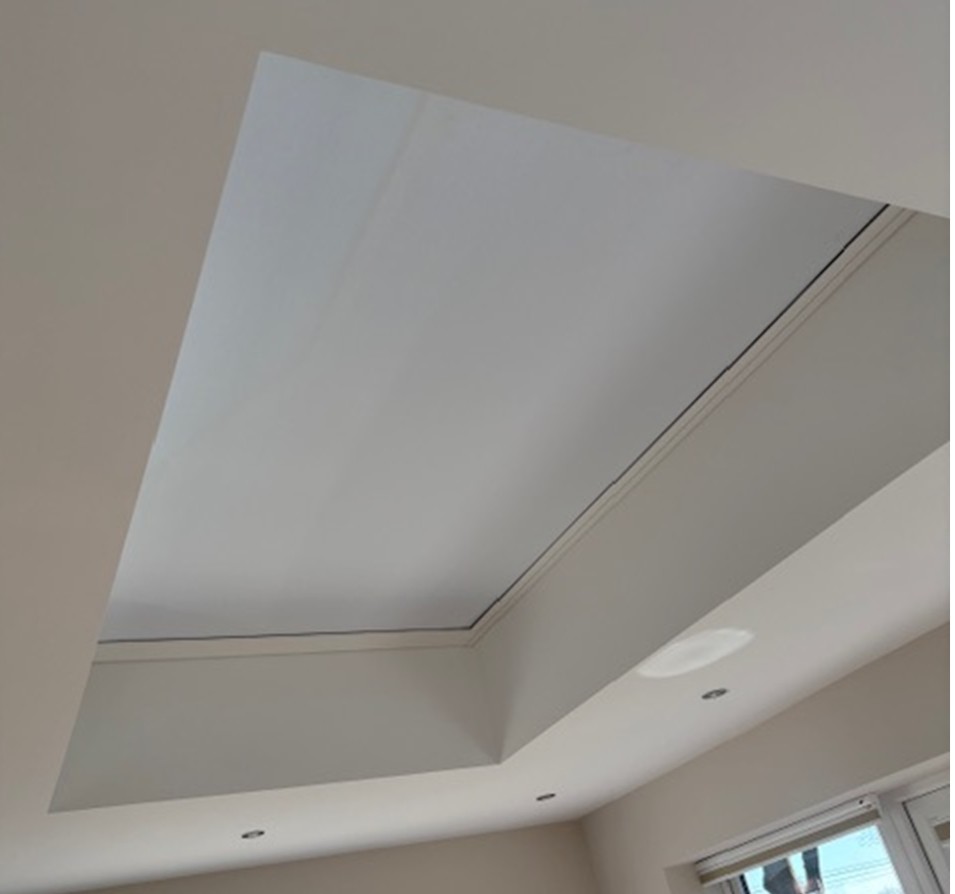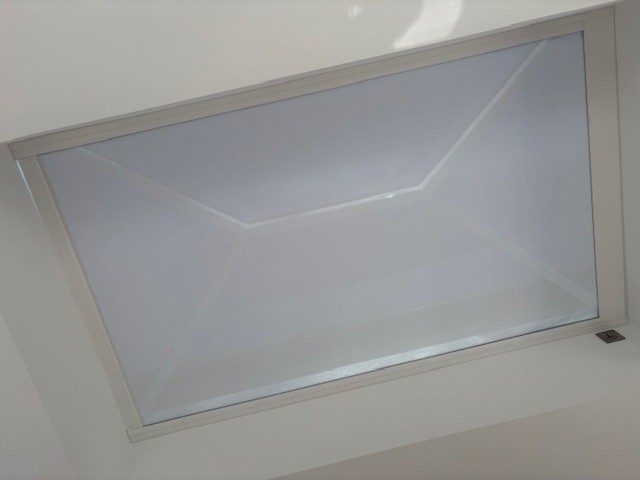
A flat roof lantern blind without visible cords is not created by chance. It is the result of the right engineering, the right installation, and the right dimensionally stable fabric working together. When any one of these elements is missing, the fabric will ripple and sag. When all three are present, the blind becomes a clean, seamless surface that enhances your room’s architecture and keeps the dream alive by delivering a usable space.
Why Zip Systems Exist and What They Actually Do
Zip systems were introduced because roof blind designs struggled to keep the fabric aligned on the fabric roller tube. As blinds opened and closed, the cloth could drift sideways, telescope off the tube, wrinkle, or jam in the side channels. The industry needed a way to guide the fabric, so it travelled straight every time, regardless of its size.
Zip ribbon technology solved this issue.
The welded zip created a guided edge that kept the fabric engaged in the channels, allowing roof blinds to be wider and longer than before.
However, zip systems were never designed to keep fabric flat. The welded joint between the cloth, the zip, and any adhesive introduces stiffness and uneven thickness. When they roll onto an aluminium fabric tube, the thicker zip edges build up more diameter than the centre. This naturally creates rippling along the weld. The larger the blind, the more that waviness spreads into visible ripples and sagging.
Why Constant Tension Systems Could Not Deliver Flatness
Constant tension spring (CTS) roof blinds were originally designed for commercial buildings where appearance mattered far less than function. Manufacturers could add extra spring units and use visible cords to increase fabric tension, and in high ceiling environments such as offices or schools no one objected to seeing them.
These same systems are still commonly used in homes today, but homeowner expectations are very different. The industry removed the cords to achieve a clean, cordless appearance, but those cords had been doing essential mechanical work. Without them, the fabric was left to rely solely on the limited and diminishing force of two hidden constant tension springs.
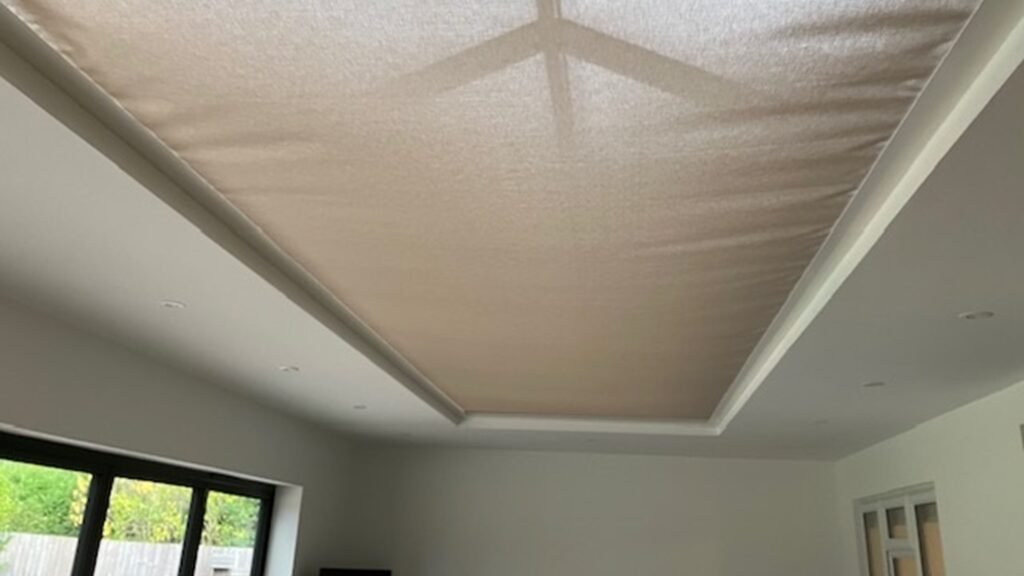
These springs lose power as the blind closes, which means they provide the least tension at the moment the fabric needs the most. With only a few kilograms of force available, they cannot stretch the welded zip joint, counteract diameter build up, or keep the fabric taut. The ripples and sagging is common. The shift from commercial tolerance to homeowners precision exposed the real limitation of constant tension systems.
The Shift to High Tension Roof Blind Systems
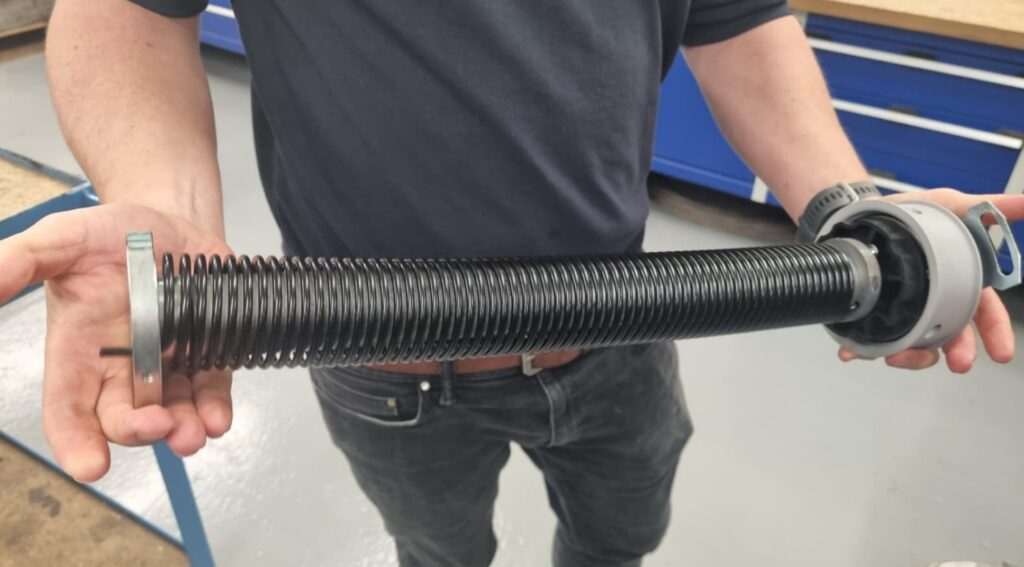
The next step in roof lantern blind evolution was the introduction of torque spring systems, neatly housed inside powder coated headboxes. These springs deliver up to three times more tension than older constant tension units, finally providing the force needed to pull zipped fabrics flat and keep them flat across large spans.
Unlike earlier systems, torque springs maintain consistent tension whether the blind is fully open, fully closed, or anywhere in between. There is no drop-off in force, no compromise to the fabric’s appearance. Steel wire cabling hidden inside the side channels supports the added forces, helping the system stay balanced and aligned under load.
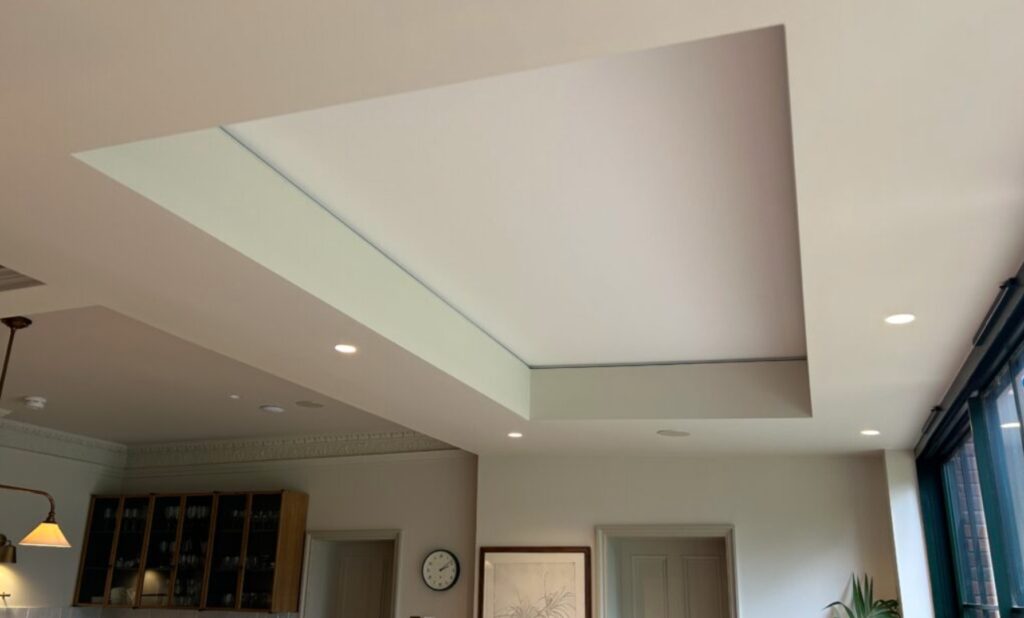
This is also where fabric choice becomes critical. A dimensionally stable fabric is essential. It resists stretching, holds its width under tension, and maintains its shape over time. Without dimensional stability, even the best-engineered system will struggle to keep the fabric flat.
Together, high tension torsion springs and stable fabrics create a blind that behaves like a false ceiling. Tight, clean, and architectural. Engineering can defy gravity but only when every component is working in harmony and that includes the installation.
Why Installation Matters as Much as Engineering
High tension systems demand far more than basic blind fitting skills. They require precision, patience, and a willingness to measure, adjust, remeasure, and fine tune until every component is perfectly aligned. Many companies avoid these types of blinds because they take longer and are far more difficult to install. They leave no room for shortcuts. Even experienced installers will struggle if they are not meticulous.
We saw this ourselves when we hired an installer with decades of experience. He understood fixings and substrates, but not the level of accuracy these systems require. Without that precision, even the best engineered blind will fail to deliver the flat, seamless finish our customers expect. Achieving that standard is never a case of fixing the blind in place and walking away. It is about the extra 10 percent of effort and extra time taken to get every detail right.
In every trade, there are professionals who do more than complete the job. They elevate it. They bring care, accuracy, and pride to their work. Technical electric blind installers are a perfect example. Their contribution often goes unnoticed, yet in architecturally designed homes they stand alongside flooring contractors, kitchen fitters, and electricians. The difference between good enough and exceptional lies in their technical mastery, their respect for the homeowner’s space, and their commitment to delivering a flawless result. In architecturally designed homes, excellence is never about getting it 90 percent right. It is about taking pride in delivering perfection. Going the extra 10%.
Not Such A Success Story For Corrinne’s Roof Blind
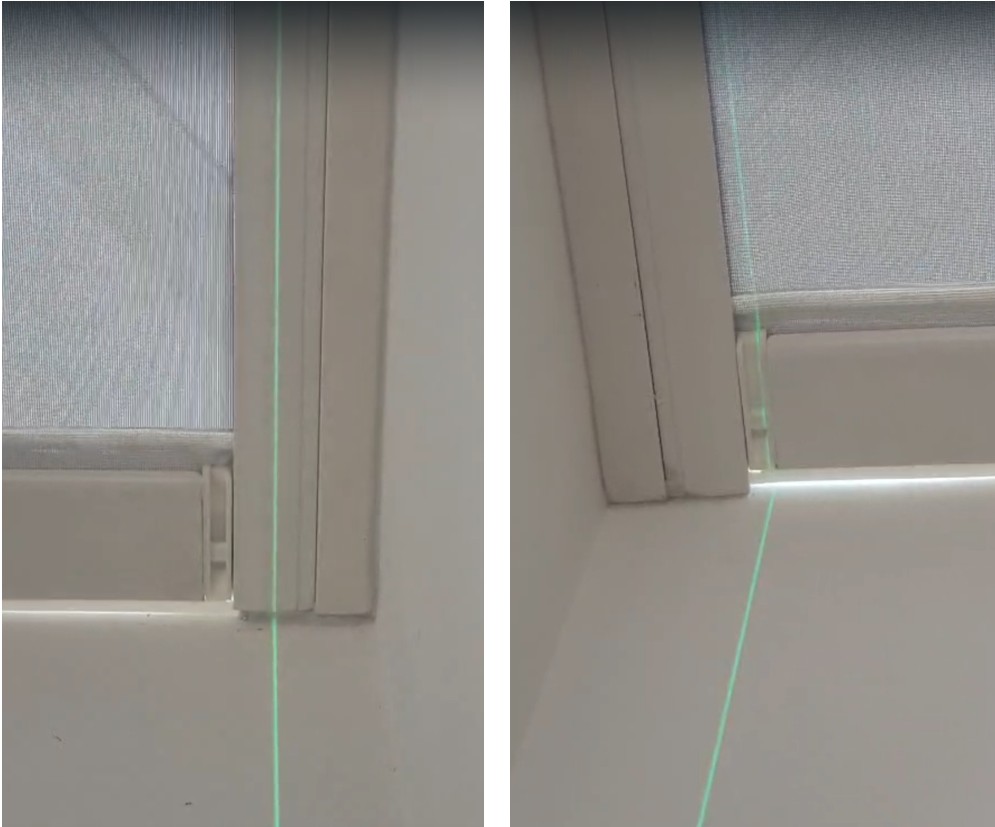
Corrinne invested in our Athena roof blind, but it was badly fitted by the installer and assistant mentioned earlier. The following images show exactly how a lack of attention to detail affects the final finish. The laser line reveals the system is out of alignment. A lantern upstand will always be slightly out of parallel, but the blind itself must be millimetre perfect in both squareness and positioning. Anything less, and the fabric will never sit flat.
What made this situation more difficult was the installer’s refusal to accept the issue or adjust his approach. Parting ways unable to meet the standards required, the work was put right by a regular team Martin & Bryan. Our teams must work with the highest level of accuracy, respect, and care to meet our customers’ expectations. Precision is not optional. It is the foundation of a flawless result.
The Formula for a Flat Roof Lantern Blind Fabric With No Visible Cords
A flat fabric is achieved when four elements work together:
- A zip system that keeps the fabric aligned
- A dimensionally stable fabric that holds its shape under tension
- A high tension system that delivers strong, consistent force on the fabric
- A precise installation carried out with millimetre accuracy
When these elements are combined, the fabric sits tight and smooth, creating the clean, architectural finish homeowners expect. When any one of them is missing, the fabric will ripple or sag because the physics demand better engineering and better craftsmanship.
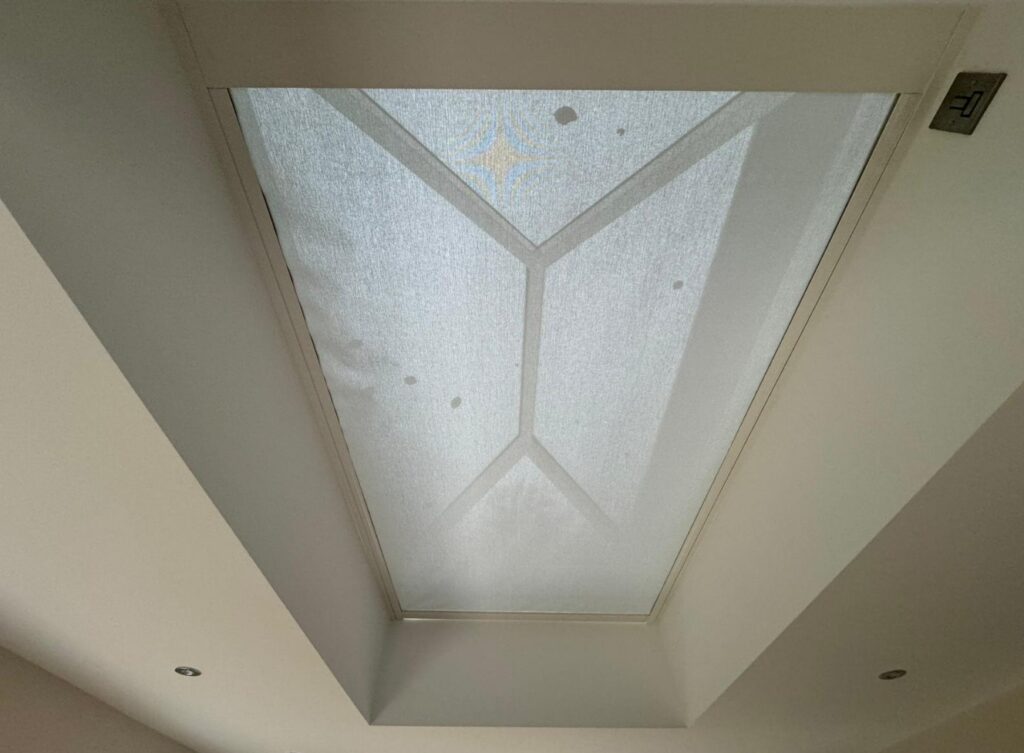
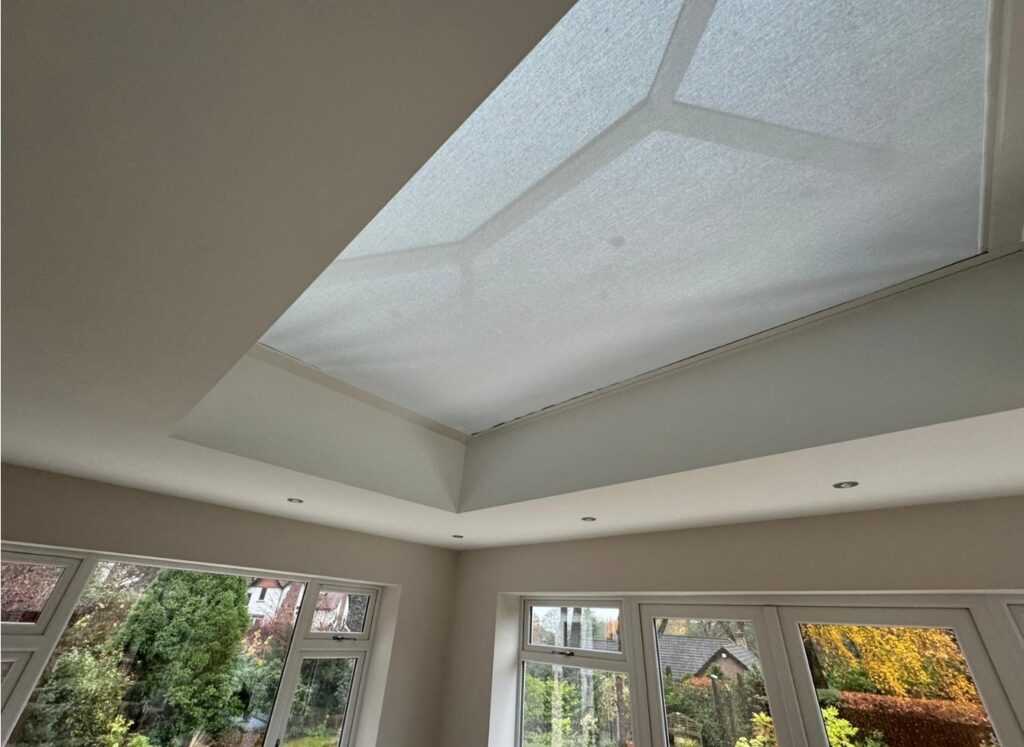
The ripple free fabrics in the images below show Corrinne’s roof blind once re-installed correctly illustrating how great roof blind systems need great installers that go that extra 10%.