







You’ve invested in a stunning glass extension, roof lantern, bifold doors – a space designed to flood with light. Now you’re weighing up your shading options, and one fear won’t go away.
What happens when something fails?
It’s the single most common concern we hear. Whether you’re considering electric blinds concealed in a ceiling, 3M window film applied to your glazing, or an electric awning over your patio doors, the question is the same. Will it last? And if something goes wrong, what then?
It deserves a straight answer.
This guide covers what can go wrong across every shading technology we offer, how premium systems handle it, what daily life actually looks like, and what these solutions genuinely cost to run. We’ll explain how to choose a company that stands behind its work, and we’ll be honest about when each technology is not the right choice for you.
Our goal is to educate you so you can make a confident decision, even if that means you don’t choose us.
Key Insights from This Guide:
- Running a mains-powered electric blind costs roughly 18p per year in electricity which is less than a single takeaway coffee
- 3M window film uses no moving parts at all and delivers a typical lifespan of 10 to 20 years, depending on whether you fit it internally or externally and, of course, who installs it.
- The 5-year warranty from trusted motor brands like Somfy is your strongest reliability signal for motorised products as budget systems often carry just 12 months
- Concealed blinds provide day‑one access for servicing and adjustments. A service call doesn’t mean ripping your ceiling apart
- The biggest reliability threat to electric awnings isn’t the motor. It’s wind exposure and installation quality
- The biggest threat to electric blind reliability isn’t the technology. It’s choosing a budget system that fails within two years
- Professional installation directly determines how long every system lasts
What Do We Mean by ‘Reliability’ Across Shading Technologies?
Each shading technology has a fundamentally different reliability profile, because each one works in a completely different way. Understanding this is the starting point for making a confident decision.
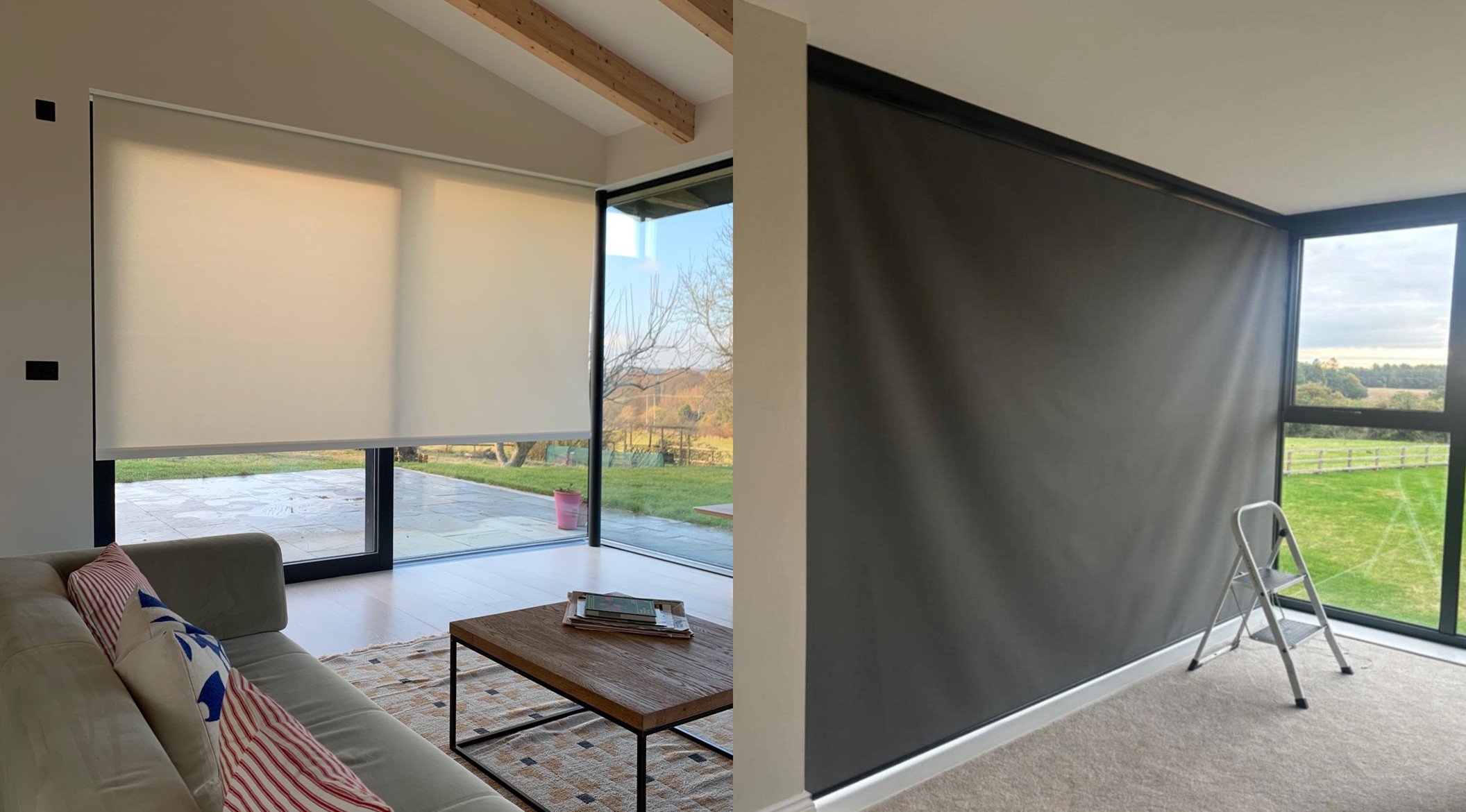
Electric blinds operate as precision‑engineered mechanical systems. They have motors, moving fabrics, and tensioning mechanisms. Reliability here means the motor running quietly for over a decade, the fabric staying perfectly taut, and the whole system operating without attention.
Blindspace® concealed systems are architectural hardware. The aluminium housing that makes your blind invisible. Their reliability depends on precise installation during the build phase and a design that allows full service access years later.
3M window film is a passive technology. No motors, no power, no moving parts. Reliability here is about the film maintaining its optical clarity, heat rejection, and adhesion over time without bubbling, peeling, or discolouring.
Electric awnings are outdoor mechanical systems. They face weather, wind, UV exposure, and temperature extremes that internal products never encounter. Reliability here involves the motor, the fabric, the arm mechanism, and critically, the sensors that protect the system from damage.
Understanding these differences helps you ask the right questions when comparing solutions. If a supplier talks about all shading products as though they’re the same, they may be selling you short.
Why Trust This Guide?
WindowTreat specialises in high-performance shading for large glazed extensions across the UK. We use Somfy motors with a 5-year manufacturer’s warranty, are Trading Standards approved through the Buy With Confidence scheme, and hold SafeContractor accreditation for safe installation. We install electric blinds, Blindspace® concealed systems, 3M window film, and electric awnings using leading components. We’ve helped hundreds of homeowners solve heat and glare problems in their dream spaces, and we live with this technology ourselves every day.
Accreditations give you independent, third‑party proof that your investment is protected. Not just a supplier’s word for it.
What This Guide Covers
Each section below directly addresses a stage of the decision you’re likely wrestling with right now.
- Quick Reference: Reliability Across All Shading Technologies
- Electric Blinds: The Fear of Failure, and Why Premium Systems Address It
- Running Costs: The Numbers That Surprise Everyone
- 3M Window Film: The Passive Solution with No Moving Parts
- What If a Concealed Blind Breaks? The Truth About Blindspace® Serviceability
- Electric Awnings: A Different Kind of Reliability Challenge
- What a Professional Installation Means for Longevity
- Premium vs Budget Electric Blinds: Why Engineering Determines Lifespan
- Choosing a Company That Stands Behind Its Work
- When Each Technology Is NOT the Right Choice
- Frequently Asked Questions
- Your Next Step
- All Reliability and Service Articles
Quick Reference: Reliability Across All Shading Technologies
If you’re comparing options, this table gives you the essential reliability profile for each technology at a glance.
| Factor | Electric Blinds (Premium) | Blindspace® Concealment | 3M Window Film | Electric Awnings (Premium) |
| Moving Parts | Motor, fabric roller | None (architectural housing) | None | Motor, articulated arms, fabric |
| Motor Warranty | 5 years (Somfy) | N/A – no motor in the housing | N/A – no motor | 5 years (Somfy) |
| Product Warranty | 5 years (motor) | Dependent on installation quality | Up to 10 years (3M-backed) | 5 years (motor); fabric varies |
| Expected Lifespan | 10+ years | Lifetime of the building | 10–20 years (internal longer) | 10+ years with proper care |
| Annual Running Cost | ~18p (mains-powered) | £0 | £0 | ~18p per cycle |
| Maintenance | Light dusting | None | Simple cleaning | Seasonal check; dry before retracting |
| Biggest Reliability Risk | Budget motors and poor tensioning | Misalignment during build phase | Mis-specification causing thermal stress | Wind damage and poor installation |
| Serviceability | Motor-swappable by technician | Cover panel unclips for full access | Film can be stripped and reapplied | Motor and arms accessible in cassette |
Detailed breakdowns of each technology below.
Quick Reference: Premium vs Budget Electric Blinds
If you’re comparing electric blind quotes specifically, this table shows where the real cost difference lies – and why the cheaper upfront price often costs more over five years.
| Factor | Budget System | Premium System |
| Motor Warranty | 1 year | 5 years (Somfy) |
| Expected Lifespan | 2 – 5 years | 10 – 15+ years |
| Annual Running Cost | Pennies (battery recharge) | ~18p (mains-powered) |
| Fabric Tension | None (prone to sagging) | Advanced technologies (stays taut) |
| Noise Level | Audible whirring | Near-silent operation |
| Smart Integration | Basic remote only | Zigbee, voice, sensors |
| Serviceability | Often non-repairable | Motor-swappable by a technician |
Electric Blinds: The Fear of Failure, and Why Premium Systems Address It
Having spoken with hundreds of homeowners about electric blinds, the fear is almost always the same. “What if it breaks and I’m stuck?”
That fear is valid. But the real risk isn’t the technology itself.
The real risk is choosing the wrong system. A poorly engineered blind installed on the cheap is far more likely to fail than a properly specified, professionally fitted system.
We see this play out regularly. A homeowner comes to us after discovering what they wish they’d known before buying. The pattern is almost always the same.
Somfy motors earn their 5‑year guarantee by using components built for tens of thousands of cycles.
Running Costs: The Numbers That Surprise Everyone
After failure, the second biggest concern is ongoing cost. Will these systems drain electricity?
The answer genuinely surprises most people.
Electric blinds: A mains-powered electric blind running one full cycle per day costs approximately 18p per year in electricity. That’s not a typo. Running ten electric blinds for an entire year uses less electricity than a single cycle of a modern dishwasher. The motors draw power only during the few seconds they’re actually moving.
For battery-powered systems, the economics are equally reassuring. A full charge on a premium lithium-ion battery typically lasts 6 to 12 months with normal daily use. The cost to recharge is pennies.
3M window film: Zero running cost. No power, no batteries, no maintenance beyond occasional cleaning. It works passively, every hour of every day, at no ongoing expense.
Electric awnings: Running costs are comparable to electric blinds which is pennies per year. The motor draws power only during the brief extension and retraction cycles. Your only real ongoing cost is the occasional fabric clean and keeping the awning dry before long breaks in use.
Blindspace® concealment: Zero running cost. It’s a passive aluminium housing with no power requirement.
Our detailed guide on real-world maintenance and running costs for electric blinds breaks down every ongoing expense you should expect for motorised systems.
So where does the real long-term cost come from?
The initial quality of the system. A cheap blind that needs replacing after two years costs far more over a decade than a premium system that lasts the duration.
| Cost Component | Budget Blind (10 years) | Premium Blind (10 years) |
| Initial Purchase | ~£1,500 | ~£4,500 |
| Replacement (Year 3) | ~£1,500 | £0 |
| Replacement (Year 6) | ~£1,500 | £0 |
| Running Cost | ~£2 | ~£2 |
| 10-Year Total | ~£4,502 | ~£4,502 |
The numbers converge. But with the premium system, you get ten years of flawless performance and beyond. With the budget route, you get disruption, disappointment, and three separate installations.
3M Window Film: The Passive Solution with No Moving Parts
Window film occupies a completely different space in the reliability conversation. The reality is, it’s the only shading technology we offer with absolutely nothing that can mechanically fail.
There’s no motor to burn out. No fabric to sag. No arms to bend. 3M window film sits on your glazing and immediately starts rejecting heat, blocking UV and cutting glare, all without you doing a thing.
What does “reliability” look like for window film?
It means the film maintaining its performance and appearance year after year. Premium 3M films use multi-layer nanotechnology that is colour-stable and they won’t purple, fade, or lose clarity over time the way budget films often do. Lower‑cost films fade because the dye degrades, and their adhesives can let go, creating bubbles and peeling that stand out badly on quality glazing.
How long does it last?
Internal 3M film applied to the inside of the glass typically lasts beyond 20 years. External film, which can perform better on modern double glazing may have a slightly shorter lifespan but is still guaranteed for beyond 10 years.
What can genuinely go wrong?
Both are backed by a comprehensive warranty from 3M which covers defects in the film itself. That’s a manufacturer with a global reputation standing behind the product.
The most significant risk with window film is mis-specification, not the film itself. If the wrong type of film is applied to certain glass, particularly laminated glass, triple glazing, or heavily tinted units, the film can cause thermal stress. Think of it like this: the film absorbs heat, the centre of the glass gets significantly hotter than the edges hidden in the frame, and that stress differential can cause the glass to crack. Steve has software to check the film to glass compatibility so you are in safe hands.
This is precisely why professional specification matters. We mitigate this risk by recommending external films (such as 3M Prestige 70 Exterior) for modern double glazing. External film rejects heat before it enters the glass unit, preventing the thermal build-up entirely. When film is correctly specified and professionally installed, thermal stress is a non-issue.
Maintenance is as simple as it gets. Clean the film with a soft cloth and a mild, non-abrasive solution. That’s it. No servicing, no annual check-ups, no replacement parts. After application, there is a curing period of up to 30 days where small water bubbles or slight haziness may appear. This is completely normal and vanishes as the film bonds fully to the glass. Watch Mike ensure no bubbles are left behind
Where film and blinds work together
The most robust approach to managing heat and light in a glass extension is often a layered one. 3M film addresses the thermal properties of the glass itself – rejecting heat and blocking UV at the glazing surface. Electric blinds then provide adjustable control over light levels, privacy, and room darkening when you need it.
Neither technology replaces the other. They complement each other. Film works passively around the clock; blinds give you active, on-demand control. Together, they protect both the comfort of the space and the furnishings within it.
What If a Concealed Blind Breaks? The Truth About Blindspace® Serviceability
This is the question that stops people committing to concealed systems. “If it’s buried in my ceiling, how does anyone fix it?”
You picture a builder with a saw, cutting into your pristine plaster. That image is terrifying.
The reality is completely different.
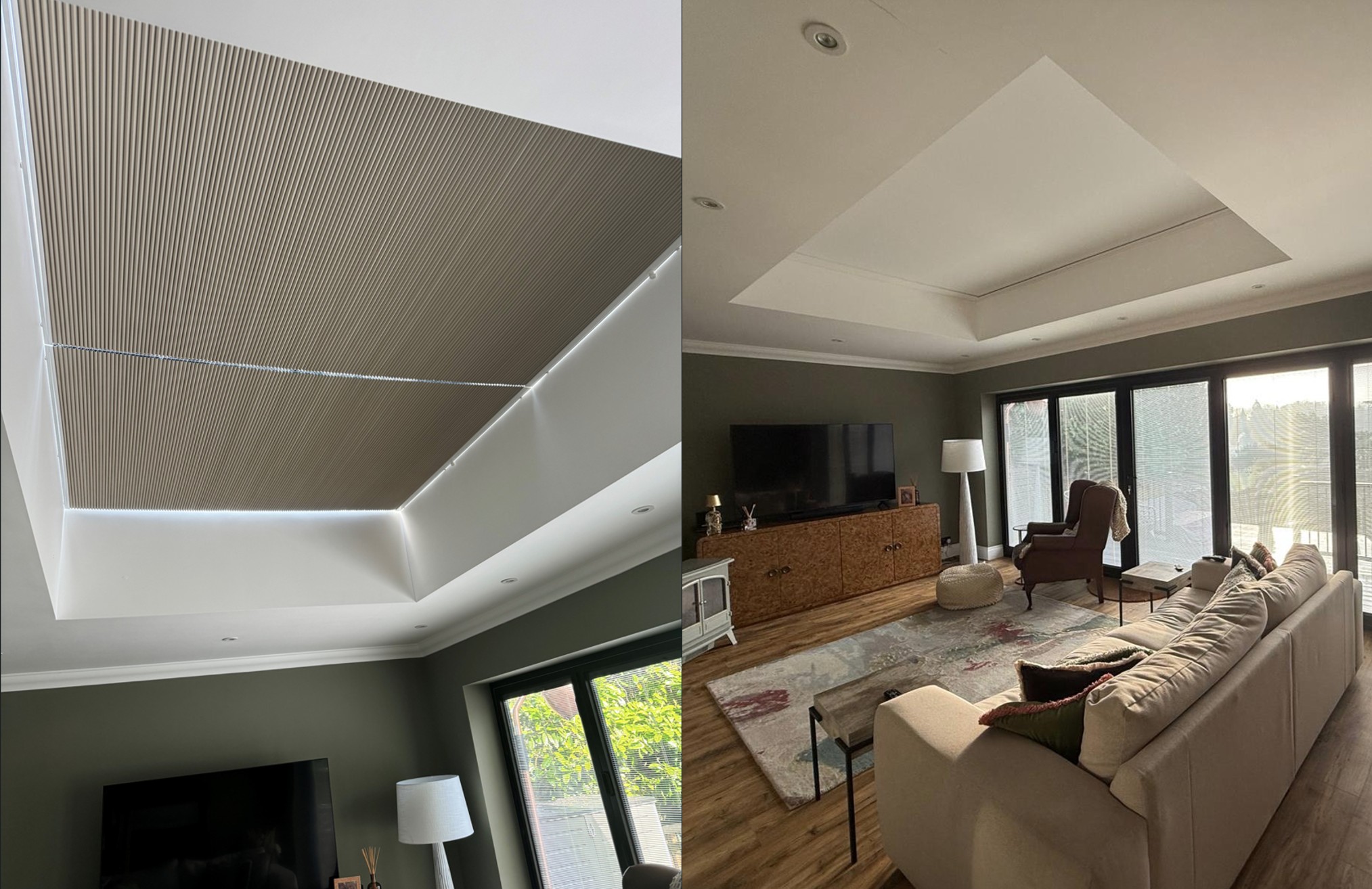
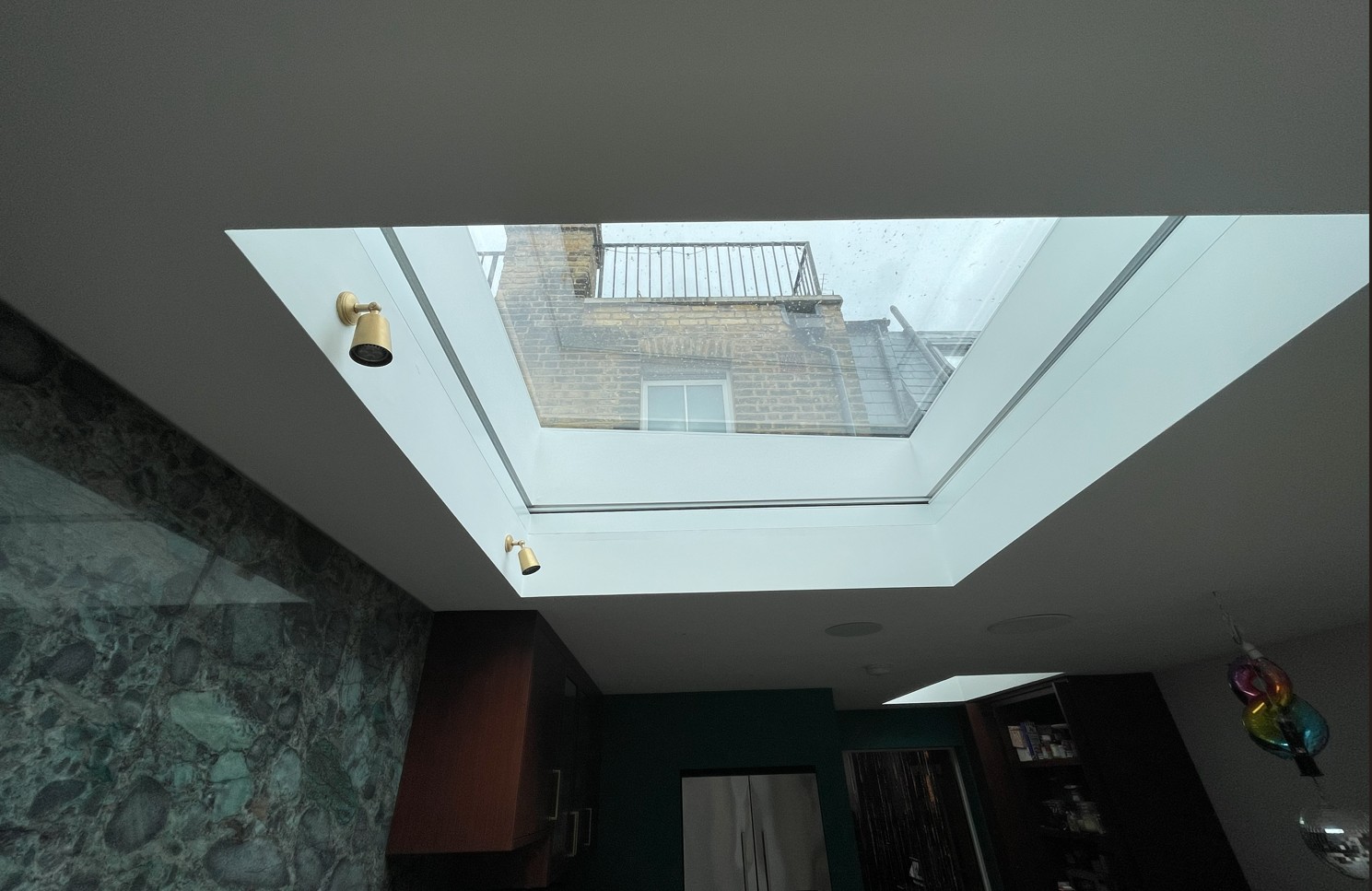
Modern concealed blind systems like Blindspace® are designed for access from day one. This isn’t an afterthought. It’s the fundamental engineering principle behind the entire system.
How the access works
The Blindspace® system uses a detachable closure panel with a patented safety hinge. A technician simply unclips the cover, starting at one end and working along.
No dust. Plaster damage or drama.
The blind mechanism is fully exposed for diagnosis. If it’s a motor issue, the technician slides the blind out, swaps the motor, and reinstalls it. The cover clicks back into place.
Your ceiling looks exactly as it did before the technician arrived.
Our complete guide to what happens if concealed blinds break inside the ceiling walks through the entire service process step by step.
Where Blindspace® reliability actually lives
The concealment housing itself has no moving parts. It’s extruded aluminium, fixed into the building’s structure. It doesn’t wear out or degrade. The reliability question for Blindspace® is really about installation precision during the build phase.
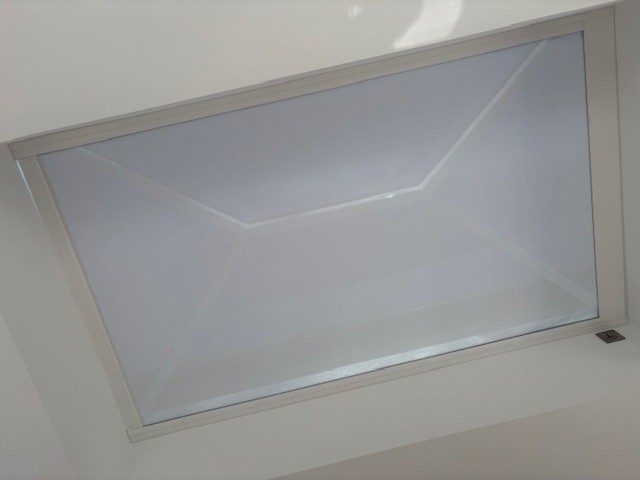
The boxes must be installed before plaster boarding as this is first-fix work. Alignment must be millimetre-perfect. If boxes are misaligned, the cover flaps won’t sit flush, and the seamless aesthetic that makes Blindspace® special is compromised. The plasterer then skims over a skim coat flange leaving the specified gap for the blind to operate.
This is why we champion early involvement. If your architect or builder knows about Blindspace® from the design stage, the structural voids can be planned correctly. Lintels can be positioned higher to create space for the box. Cable routes for the electric blind inside can be incorporated into the first-fix electrical plan.
The most common regret we hear? Homeowners who finished their build and only then realised they could have had concealment, but now the ceilings are plastered and the opportunity has passed.
Future-proofing built in
One thing many homeowners don’t realise is that Blindspace® accommodates future upgrades. The infrastructure of the box, the access and the cable route is built into the walls. If you want to upgrade from a manual blind to an electric one years later, or switch to a different fabric, you can. The concealment system is already there, waiting.
Electric Awnings: A Different Kind of Reliability Challenge
Electric awnings deserve their own honest conversation about reliability, because they face challenges that no internal product encounters.
An electric blind lives inside your home, protected from weather, temperature extremes, and wind. An awning lives outside. It’s exposed to everything the British climate throws at it such as rain, wind, UV, temperature swings, and the occasional hailstorm.
The reality is, this changes the reliability picture entirely.
The motor is rarely the problem
Premium electric awnings use the same Somfy motors as our internal blinds, with the same 5-year warranty and the same engineering for tens of thousands of cycles. The motor is tucked inside a sealed cassette housing, protected from the elements.
The most common reliability issues with electric awnings are actually about what surrounds the motor, not the motor itself.
Wind is the number one challenge. Retractable awnings, even premium ones, act like sails when extended. Wind gust can bend the articulated arms or tear the mounting brackets from the wall. Even the best full-cassette models on the market like Markilux, Weinor, Brustor and BASE are rated to Beaufort Scale 5 (a fresh breeze, around 24mph). They’re sun-shading devices and must not be treated as storm shelters.
Wind sensors and vibration sensors are fitted as safety backups. They detect movement and retract the awning automatically. But they’re not infallible. Gusts can arrive faster than the sensor can respond.
The honest advice? If your location is a coastal cliff or a wind tunnel between buildings, a retractable awning may not be suitable. A permanent structure may be better suited such as Aluminium Pergolas.
Fabric is built differently for outdoors. Premium awnings use solution-dyed acrylic fabrics such as brands like Sattler and Dickson. Their colour runs right through the fibre core, not coated on top. This makes the fabric rot-proof and highly fade-resistant. It’s a world away from the cheap polyester on budget garden awnings.
The one thing to watch? If you retract the awning while the fabric is wet and leave it stored for weeks, mildew can grow on the dust sitting on the fabric surface. The fabric itself doesn’t rot, but the mildew looks unsightly. The simple solution: extend the awning to dry at the next opportunity. 13 Factors That Influence The Cost Of Your Patio Awning
Installation quality matters even more outdoors. An awning mounted with simple raw plugs into a single-skin brick wall above bifold doors will eventually pull away under the dynamic load of extension and retraction. Premium installation means resin-bonded chemical fixings, spreader plates where needed to distribute weight across the structural lintel, and a proper site survey to assess the substrate before any brackets are fitted. When Is the Right Time to Plan an Awning Above My Sliding or Bi-Fold Doors?
What about running costs? The motor draws power for the few seconds it takes to extend or retract which is comparable to an electric blind. Where awning costs differ is in occasional maintenance: out-of-warranty motor capacitor replacements cost around £200, and arm re-tensioning may be needed over a long lifespan.
As our content programme expands, we’ll be publishing dedicated reliability guides for specific awning systems. For now, the core principle holds: buy quality, install it properly, and respect its limitations.
What a Professional Installation Means for Longevity
In our experience fitting hundreds of systems, installation quality is the single biggest factor in long-term reliability. This applies across every product we offer. A perfect motor fitted incorrectly will fail far sooner than it should. A perfectly manufactured film applied to the wrong glass type will cause problems. An awning fixed to an inadequate substrate will eventually come loose.
Professional installation isn’t about getting the product on the wall. It’s about precision.
For electric blinds:
Bracket alignment must be exact. Even a few millimetres of misalignment creates uneven strain on the motor and fabric over thousands of cycles.
Cable routing matters for mains-powered systems. Cables must be properly secured and protected, not left loose behind plasterboard where they can be damaged during future work.
Motor limit calibration ensures the blind stops at exactly the right points. Incorrect limits cause the motor to stall against resistance, dramatically shortening its life.
For concealed systems: Blindspace® boxes must be level, spliced precisely, and coordinated with the builder’s programme so they’re installed at the correct stage. After structural steels but before plaster boarding. Getting this wrong means the difference between an invisible system and a visible compromise.
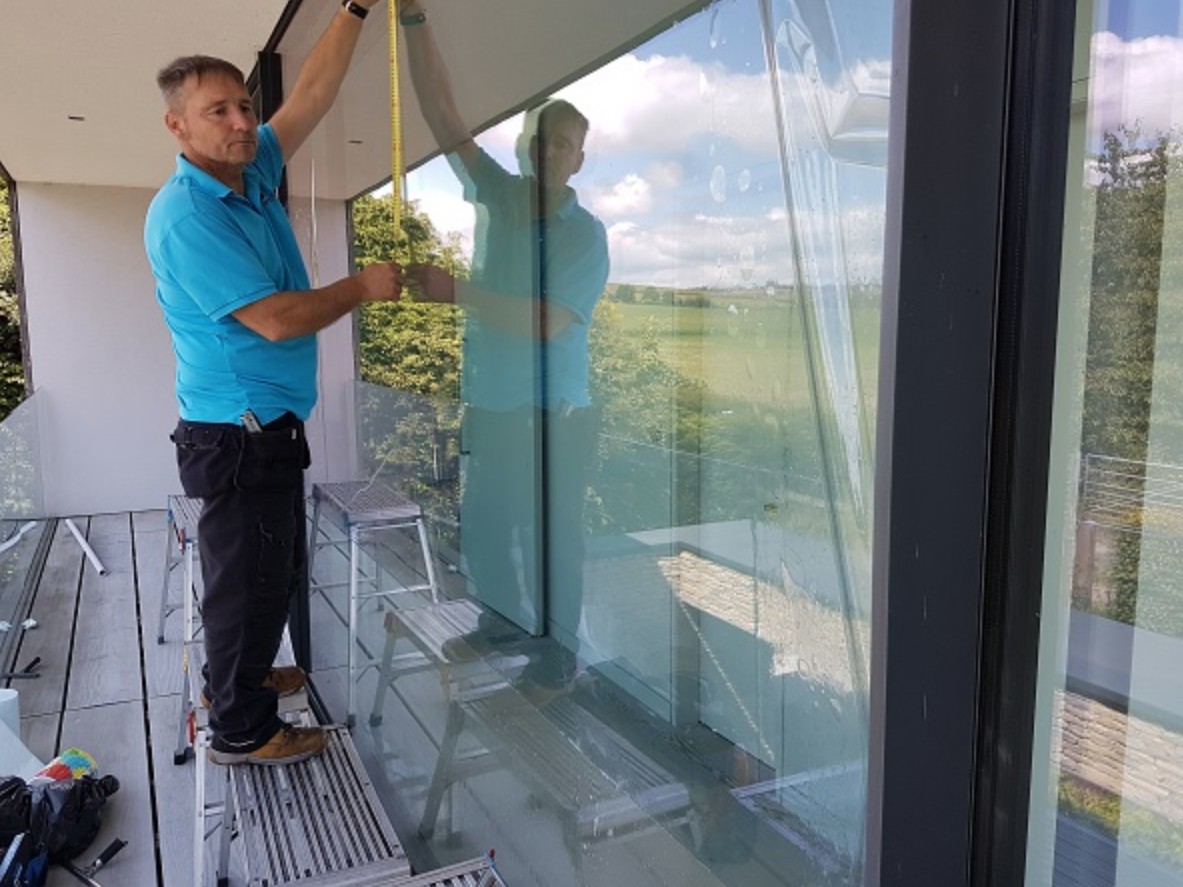
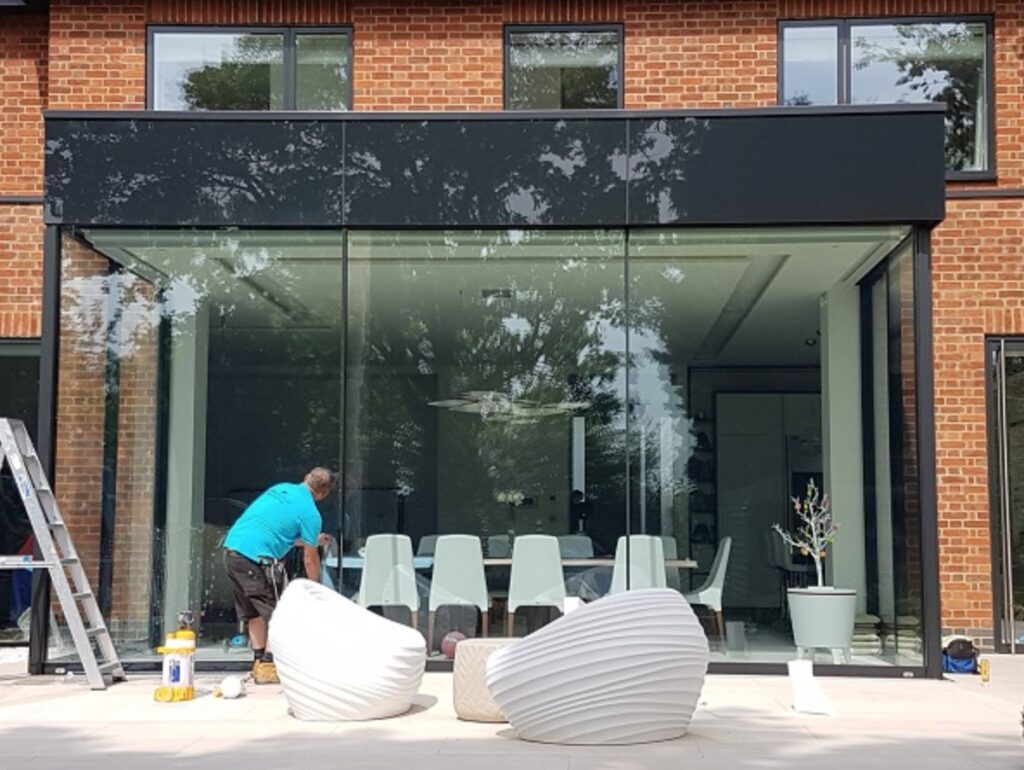
For window film: Glass must be thoroughly cleaned with stainless steel scrapers to remove invisible debris before application. The film is floated onto the glass using a slip solution, then squeegeed under intense pressure to remove water. It sounds straightforward, but the difference between a professional application and a DIY job is the difference between a film that lasts 15 years and one that bubbles within 18 months.
For electric awnings: The mounting substrate must be assessed for load-bearing capacity. Spreader plates or cantilever brackets are often essential on single-storey extensions to bridge the weight onto the structural lintel rather than relying on the top course of bricks.
Understanding the specialist installation process from first call to final fitting shows you what a genuinely professional approach looks like – and why it matters for years to come.
Our installers use on-tool dust extraction, carry £5 million public liability insurance, and hold SafeContractor accreditation. Every installation ends with a full test, a thorough clean-up, and a hands-on handover.
This isn’t about box-ticking. It’s about building a system that runs quietly and reliably for well over a decade.
Premium vs Budget Electric Blinds: Why Engineering Determines Lifespan
The price gap between a £1,500 budget system and a £4,500 premium system is significant. It’s natural to wonder whether the difference is real.
It is. And the difference lives in the engineering you can’t see on day one.
The motor is the heart of the system. Budget motors are louder, weaker, and carry shorter warranties. Premium Somfy motors are engineered for near-silent operation and backed by a 5-year guarantee.
The fabric tensioning is where the aesthetic difference becomes painfully obvious over time. Budget systems rely on simple guide wires. On a large blind, gravity wins. The fabric sags, ripples, and develops what we call “smiley face syndrome.”
Premium systems use zip-tensioned technology. The fabric edges lock into side channels under constant tension. The result is a perfectly flat, taut finish that looks like a solid ceiling and not a saggy afterthought.
Our no-nonsense guide to the real difference between premium and budget electric blinds puts the two side by side with honest pros and cons.
The bottom line: It’s not just how big you can make a blind. It’s how big you can make it and still make it look good, years later.
The “Buy Twice” Reality
We see it more often than we’d like. A homeowner tries to tailor their cloth. Within months, the cheaper blind sags or fails. They call us to replace it with the system we first recommended. They’ve paid twice, endured months of frustration, and their beautiful new space was compromised the entire time.
Choosing a Company That Stands Behind Its Work
The system is only as good as the company installing and supporting it. This applies whether you’re buying electric blinds, window film, awnings, or a concealed system. Five questions separate a genuine specialist from a general fitter.
- “What specific system prevents fabric sagging over time?” A specialist will explain zip-tensioning technology. A generalist will change the subject.
- “Can you show me the motor warranty documentation?” You want to see 5 years minimum from the motor manufacturer, not a vague promise from the installer.
- “What is your public liability insurance level?” Look for £5 million as a baseline for high-value residential work.
- “Are you a member of the BBSA?” The British Blind and Shutter Association signals adherence to industry standards and a code of practice.
- “What happens if something goes wrong after installation?” Listen for a clear, confident answer and not hesitation.
Our detailed guide on what to look for when choosing a specialist electric blind company expands each of these into a proper vetting framework.
Chris’s own experience brings this to life. As one of our specialists, he lives with electric blinds every day. His blinds close automatically about 15 minutes before dusk and open again in the morning.
They’re connected to a sun sensor. If the room gets too warm while he’s out, the blinds close by themselves. He comes home hours later to a comfortable room.
That’s not a sales pitch. It’s the daily reality of a reliable, well-installed system. It takes the technology from being a simple mechanical blind to something with genuine intelligence and working by itself to keep your home comfortable.
When Each Technology Is NOT the Right Choice
We’d rather lose your business than set you up for disappointment. No shading technology is right for every situation, and part of our job is being honest about that.
When electric blinds are not the answer:
You prefer manual control. Some people genuinely enjoy the tactile experience of adjusting their environment by hand. If the idea of a motor doing it for you feels wrong, trust that instinct. A high-quality manual blind is a perfectly good solution.
The window is small, easily reachable, and rarely adjusted. A standard window in a spare bedroom that you open once a week doesn’t need motorisation. It would be overkill, and honestly, a waste of your money.
You’re uncomfortable with any powered technology in your home. This is a completely valid position. If you don’t want electronics embedded in your walls or ceilings, we respect that completely.
Your budget genuinely cannot stretch beyond manual solutions. We’d rather you have an excellent manual blind than a mediocre electric one. A budget electric system that fails is worse than a quality manual one that lasts.
When 3M window film is not the answer:
You need adjustable light control. Film is always on. It can’t be opened on a grey January morning when you want every scrap of daylight. If you need the ability to switch between full light and reduced light, you need blinds, either alone or in combination with film.
Your glazing has specific constraints. Certain glass types carry a higher risk of thermal stress when film is applied. A professional assessment can identify this, but there are situations where the risk means film isn’t suitable.
You want complete privacy. Solar control films reduce glare and can provide daytime privacy (when it’s brighter outside than inside), but they don’t provide privacy at night. For evening privacy, you need blinds.
When electric awnings are not the answer:
Your location is heavily exposed to wind. If you’re on a coastal cliff, a hilltop, or in a wind tunnel between buildings, a retractable awning will spend most of its life retracted or worse, get damaged. A permanent pergola structure or fixed glazing is a better solution for exposed sites.
You expect an all-weather outdoor room. A retractable awning is a sun-shading device, not a weatherproof shelter. If you want to sit outside in the rain, you need a bioclimatic pergola with a solid or louvered roof which is fundamentally a different product.
When Blindspace® concealment is not the answer:
Your build is already finished. If the ceilings are plastered and the walls are complete, retrofitting Blindspace® is invasive and expensive. In this situation, a high-quality surface-mounted cassette system is the more practical choice and a good one can still look excellent. Electric Blinds After the Build: How to Still Get A Premium Finish
Your budget needs to prioritise the blind itself. Concealment adds cost for both the Blindspace® hardware and for the builder’s time to install and finish it. If the budget is tight, it’s better to invest in a high-performance blind with a neat surface cassette than to stretch into concealment and compromise on the blind quality.
Frequently Asked Questions About Shading Reliability
How long should a quality electric blind motor last? A premium Somfy motor is engineered for a minimum of 10 years of daily use. The 5-year warranty reflects this confidence. Budget motors often struggle past 2 to 3 years.
What does it actually cost to run electric blinds each year? A mains-powered blind costs roughly 18p per year. Ten blinds cost less than running a dishwasher once. Battery systems cost pennies to recharge annually.
Can a concealed blind be serviced without damaging the ceiling? Yes. Systems like Blindspace® use a detachable closure panel with a safety hinge. A technician unclips it, services the blind, and clips it back. No plaster damage.
How long does 3M window film last? Internal film typically lasts 15 to 20 years. External film, which faces weather exposure, lasts approximately 10 years. Both are backed by a comprehensive 3M warranty. Budget films from other manufacturers may start degrading. Often appears a purpling, bubbling, or peeling within just a few years.
What’s the biggest risk with window film? Mis-specification. Applying the wrong film type to certain glass can cause thermal stress and, in rare cases, cracking. This is why professional assessment and specification are non-negotiable. When film is correctly matched to your glass, it’s an exceptionally reliable, low-maintenance product.
Are electric awnings reliable in the UK climate? Premium electric awnings from manufacturers like Caribbean Blinds are engineered for UK weather conditions. The motors are protected inside sealed cassette housings and carry the same Somfy 5-year warranty. The key is respecting their limitations as they’re sun-shading devices, not storm shelters. With proper use and sensible retraction during high winds, they’re highly reliable.
What is the most common thing that goes wrong with electric blinds? The motor is the most likely component to need attention over a long lifespan. With premium brands, this is rare within the warranty period. The second issue is fabric sagging, which is almost exclusively a problem with under-engineered budget systems.
Do electric blinds need regular maintenance? For a high-quality roller blind, maintenance is typically light dusting. There are no filters to change, no fluids to top up, and no annual servicing requirements.
Is it worth paying more for a premium system? Over a 10-year period, the total cost of ownership is often similar. But with a premium system, you get a decade of reliable, beautiful performance. With a budget system, you get disruption and replacement cycles.
What should I check before choosing an installer? Ask about motor warranty length, BBSA membership, public liability insurance level, and their specific approach to fabric tensioning. A confident specialist will welcome these questions.
Your Next Step
If you’ve read this far, you’re doing exactly what a careful, informed buyer should do. Researching thoroughly before committing.
The reliability of any shading system comes down to three things. The quality of the engineering. The precision of the installation. And the company standing behind both.
What makes the difference with a specialist is the ability to assess your space. The orientation, the glazing type, the way you use the room and recommend the right combination of technologies. Sometimes that’s electric blinds alone. Sometimes it’s film and blinds together. Sometimes it’s an awning for the patio and concealed blinds for the roof lantern. And sometimes, the honest answer is that you don’t need us at all.
If you want to understand how these factors apply to your specific project, we’re here for a conversation. No pressure, no pitch.
Book a free conversation to discuss your space and explore which shading solutions are the right fit or whether you need them at all.
Or call 01256 345580 for a friendly chat about your project.
All Reliability and Service Articles
Understanding What Lasts
- Electric blinds: what do real homeowners wish they’d known?: The two biggest regrets homeowners share, and how to avoid making the same mistakes with your own project.
- What are the real-world maintenance and running costs for electric blinds?: The surprisingly low ongoing costs, broken down with actual numbers for mains-powered and battery systems.
When Things Go Wrong
- What happens if my expensive concealed blinds break down inside the ceiling?: The full truth about serviceability, access panels, and why modern concealed systems are designed for maintenance from day one.
Choosing Quality
- Premium vs budget electric blinds: what’s the real difference?: A no-nonsense comparison of motors, fabrics, and engineering that explains exactly where your money goes.
- What is the actual installation process for specialist blinds?: Every step from the first phone call to the final handover, so you know exactly what a professional process looks like.
What should I look for when choosing a specialist electric blind company?: The five questions that separate a genuine specialist from a genuine fitter, plus the accreditations that matter.