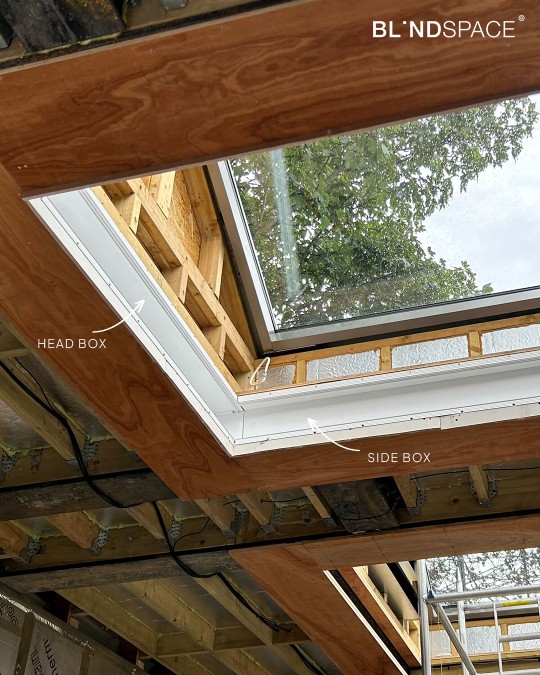
A Guide to Full Concealment Using Blindspace Boxes
The Athena electric roof blind is a fully tensioned, high‑performance shading system designed to manage heat, glare and daylight in roof lanterns and skylights. Its engineered tension system, dimensionally stable fabrics and adjustable reveal channels allow it to span large openings while maintaining a perfectly flat finish.
For many architects and homeowners, the goal is not only performance but a clean architectural aesthetic. This is where Blindspace comes in: a patented concealment system that allows the Athena blind to disappear completely into the structure.
This guide explains how to prepare your roof lantern or skylight for full concealment using Blindspace, what dimensions matter, how to plan the voids, and what alternatives exist if Blindspace is outside the project budget.
Understanding the Athena System Before Designing the Concealment
Headbox Sizes
Athena headboxes vary depending on blind length:
- Up to 3 metres: 125 mm wide x 105mm tall
- Over 3 metres (up to 4.5m): 145mm wide x 125mm tall (These larger cassettes accommodate up to 1.5m of rolled fabric.)
System Sizes
- Single Athena: Up to 3m x 3m or 2.5m x 4.5m
- Twin Athena (two blinds meeting in the middle): up to 3m x 6m or 2.5m x 9m
Side Channels
Athena uses 54mm adjustable reveal channels. Unlike CTS systems, there is no headbox at the opposite end
Most Roof Lantern Blinds Sag. Here’s Why.
Why Blindspace Is the Gold Standard for Concealment
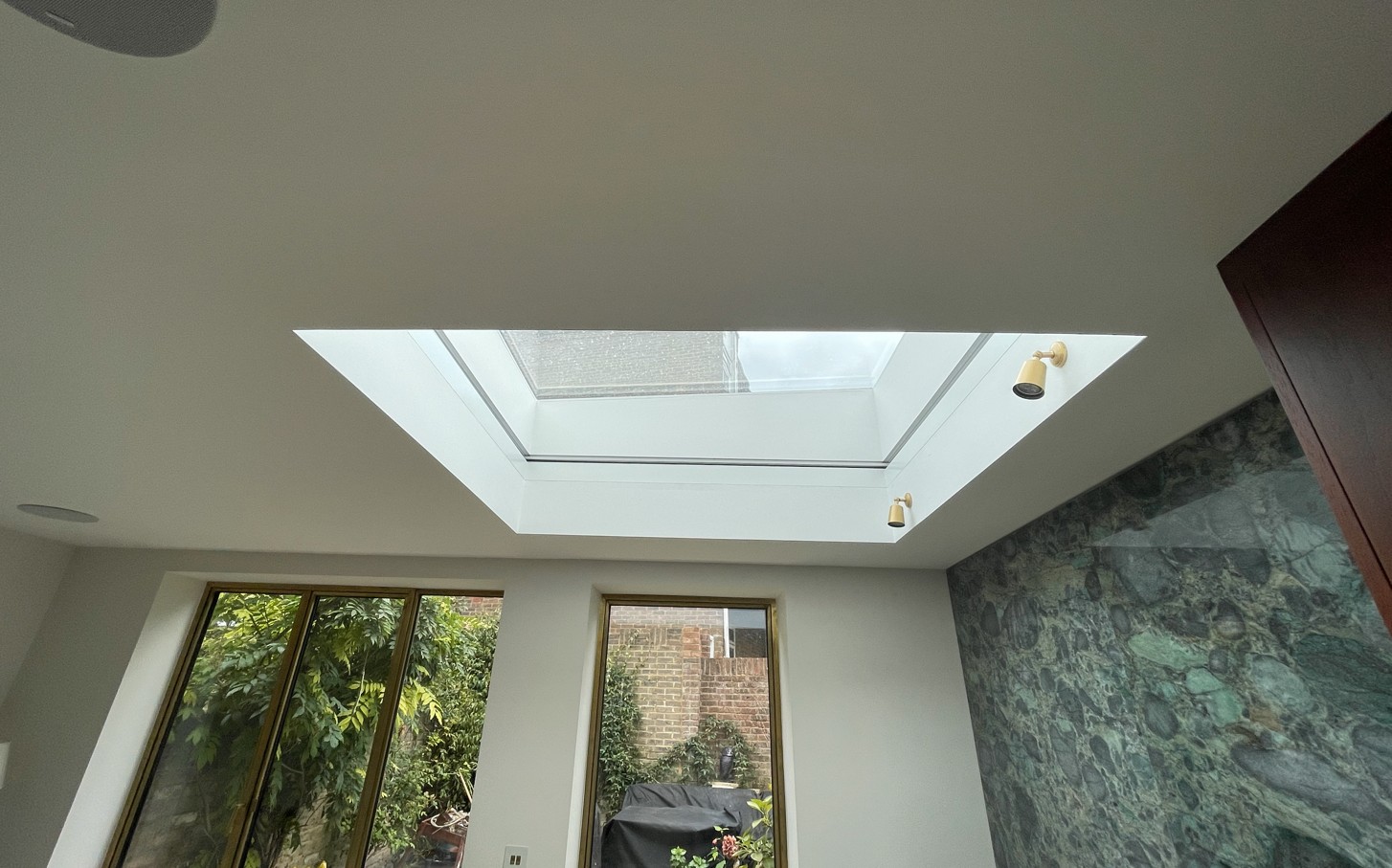
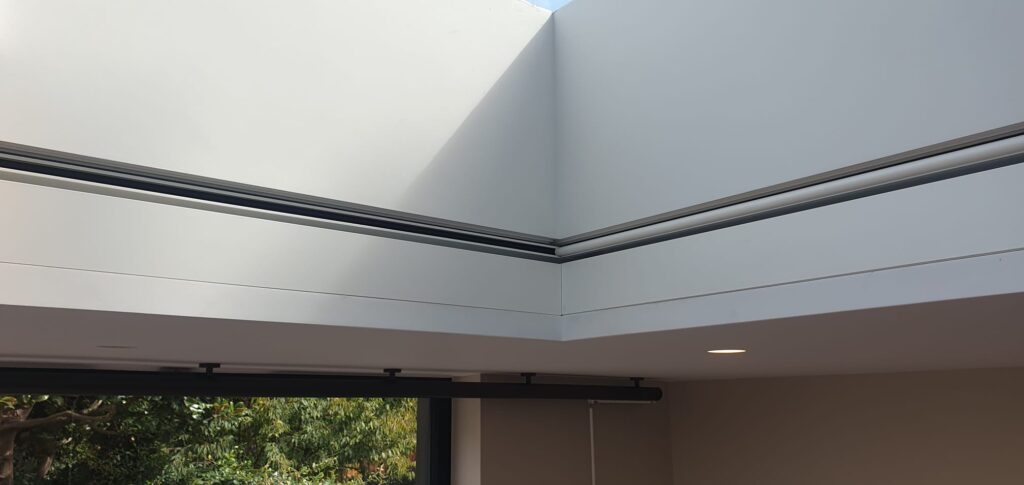
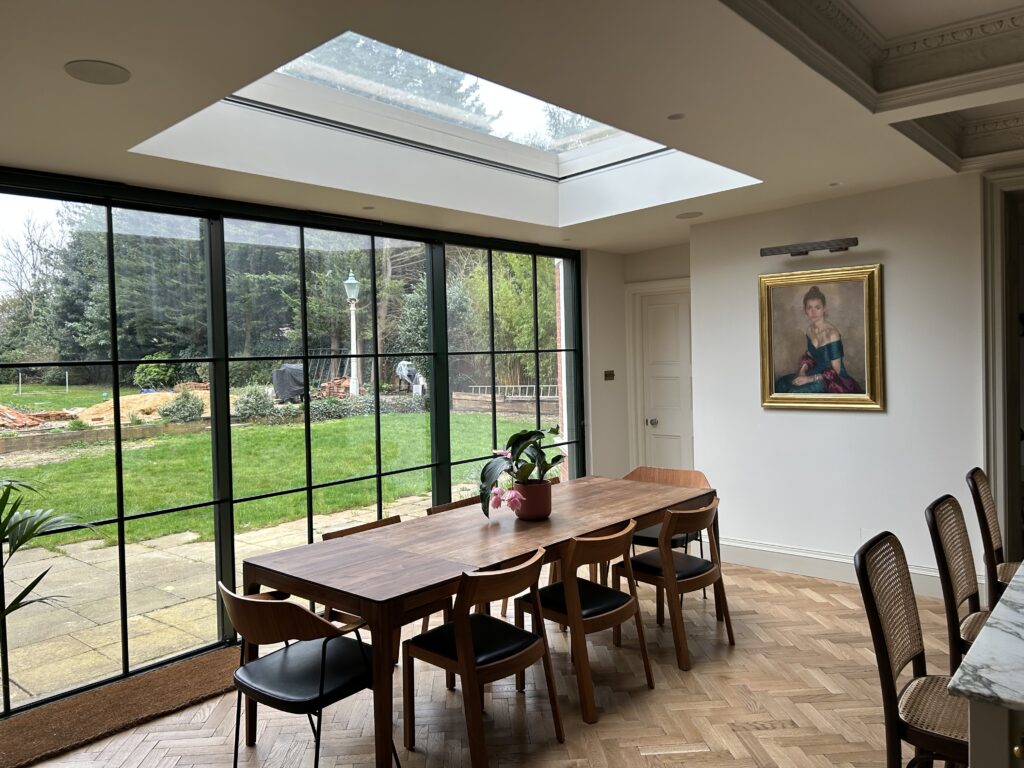
Blindspace boxes allow the Athena blind to be fully hidden within the structure. When installed correctly:
- You see no headbox
- You see no side channels
- You see no hem bar
- You see only fabric when the blind is closed
- You see nothing at all when the blind is open
This is the cleanest, most minimal architectural finish available.
Blindspace is a building product, not a decorative trim. It must be designed in early, sized accurately, and installed with precision.
Budgeting for Blindspace Boxes
Blindspace is a premium product with patented hinges. Example:
- Blindspace for a 2m x 3m opening: £3.5K+ supplied. Ensure within your builders scope of works
- Athena blind at this size: £5K+ including installation
Designing the Opening for Blindspace
There are two approaches:
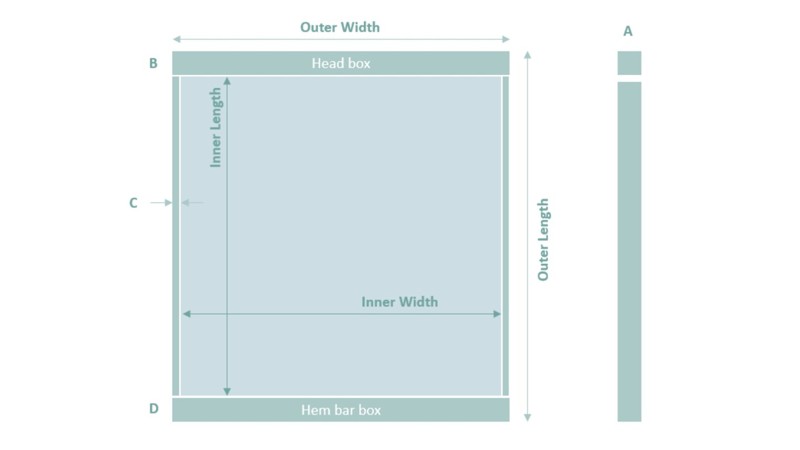
A. Concealment Behind the Upstand (Most Minimal)
The structural opening is the inner width and inner length of the roof lantern. You then build a timber surround that allows for the Blindspace Box dimensions.
This creates a larger void behind the upstand, allowing the blind to appear and disappear seamlessly.
B. Concealment Within the Opening (Reduced Aperture)
Here, the Blindspace boxes sit inside the upstand, reducing the visible opening.
This creates a smaller aperture lower in the upstand, but no meaningful sense of light loss.
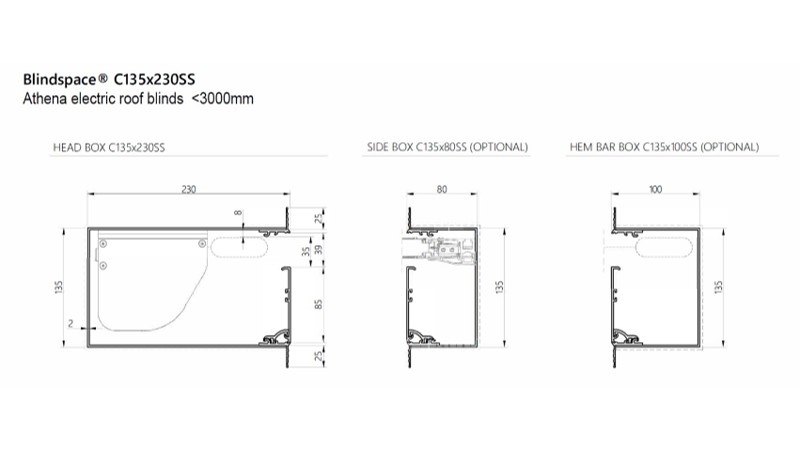
Athena Less Than 3 Metres long
This roof blind system requires
- Custom C135 x 230 for Head Boxes (A x B)
- Custom C135 x 100 for Hem bar Box (A x D)
- Custom C135 x 80 for Side Boxes (A x C)
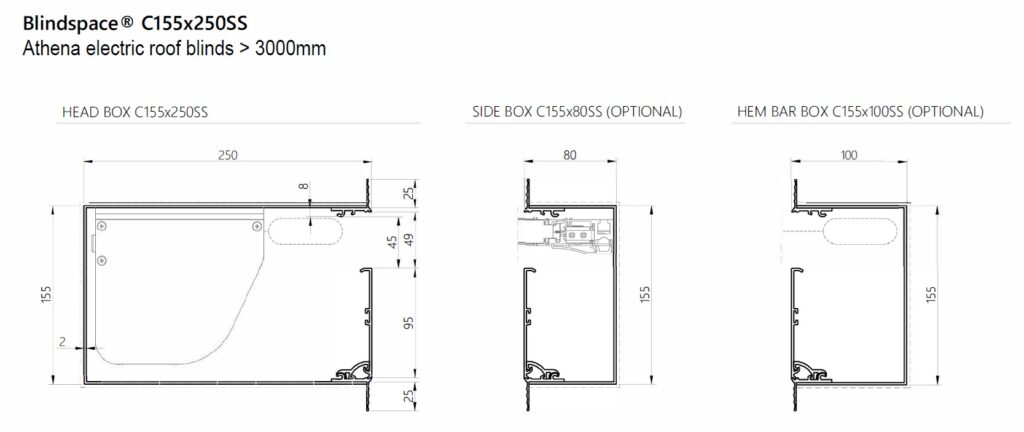
Athena Greater Than 3 Metres Long
- Custom Box C155 x 250 for Head Boxes (A x B)
- Custom Box C155 x 100 for Hem Bar Box (A x D)
- Custom Box C155 x 80 for Side Boxes (A x C)
Single vs Twin Athena: Concealment Strategy
Single Athena
You can choose:
- 3‑sided concealment (headbox hidden, hem bar visible)
- 4‑sided concealment (headbox and hem bar hidden)
A hem‑bar box ensures only fabric is visible when closed.
Twin Athena Systems
Always choose 4‑sided concealment to hide both headboxes.
Thermal Considerations When Positioning the Blind
Roof lanterns and skylights can reach high temperatures. Athena fabrics are dimensionally stable, but all materials have limits:
- PVC & vinyl soften at 60–80°C
- Polyester softens at 70–80°C
- ABS inserts soften at 100°C
To protect the fabric, we typically position the blind 300mm below the glazing in skylights. Avoid placing fabric directly against insulated glazing.
Roof lanterns are less extreme and can be placed higher in the upstand.
Only the Toughest Fabrics Earn a Place in Athena Electric Roof Blind Systems
Preparing The Head Box and Hem Bar Box
Both these boxes need to be cut to size allowing for the 80mm Side Boxes if you are building past the opening. The flanges on these boxes will require 80mm taken off to allow for the Side Boxes.
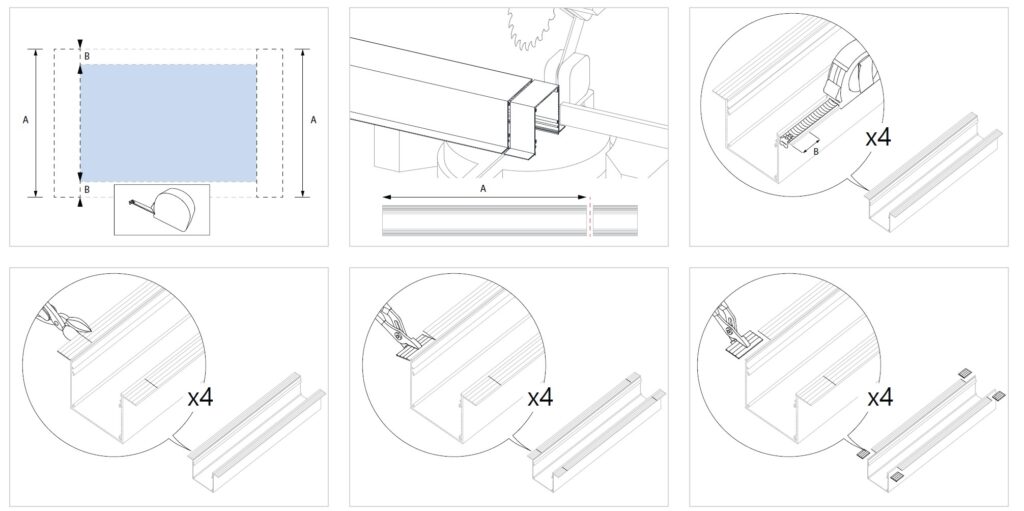
Electrical Preparation for Athena’s Blindspace
Athena requires a 3‑core 0.75 mm² flexible cable fed from a 5A switched fused spur.
- For single systems, one feed is sufficient.
- For twin systems, it is ideal to have a feed at both ends, although one spur can still power both blinds.
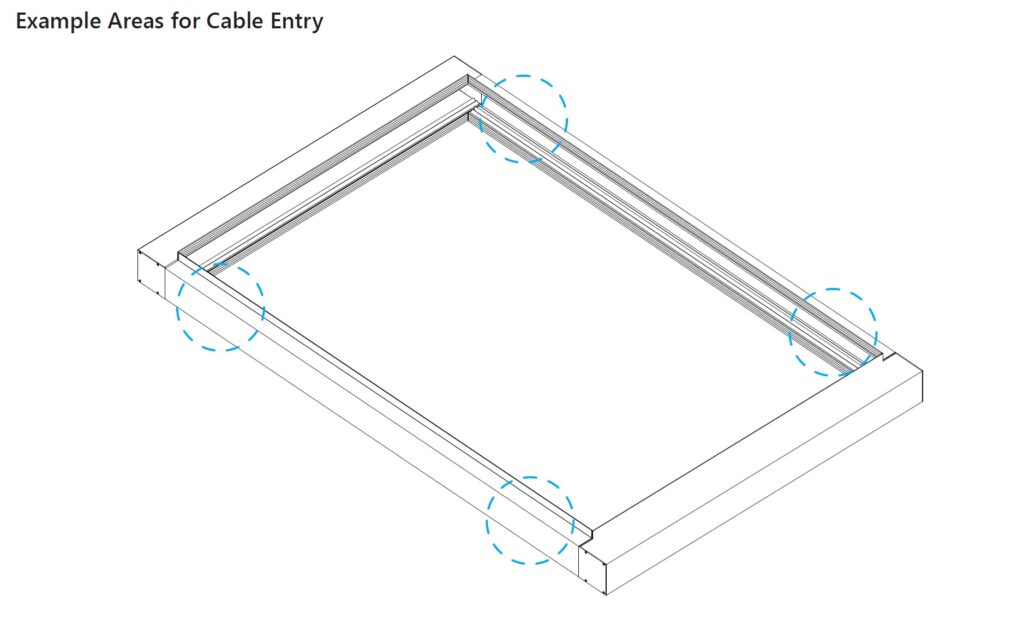
Cable Entry Position
The flex should enter the side channel through a 20 mm hole, positioned:
- 120mm down from the top of the side channel
- 40mm from the top or bottom depending on whether the blind appears from the top or bottom of the box
A cable grommet in the hole is recommended.
Installing Blindspace: Practical Guidance
Blindspace requires precision. Key principles:
- Measure twice, cut once
- Ensure everything is level
- Use countersunk screws
- Fix every 200mm
- Fix through the back of the box and through the skimming flanges
- Skim over flanges using scrim tape
- Fit covers before blind installation
- Covers must remain removable for servicing
- Download and fully understand the preparation and installing instructions below
When Blindspace Isn’t Feasible: The Shelf Approach
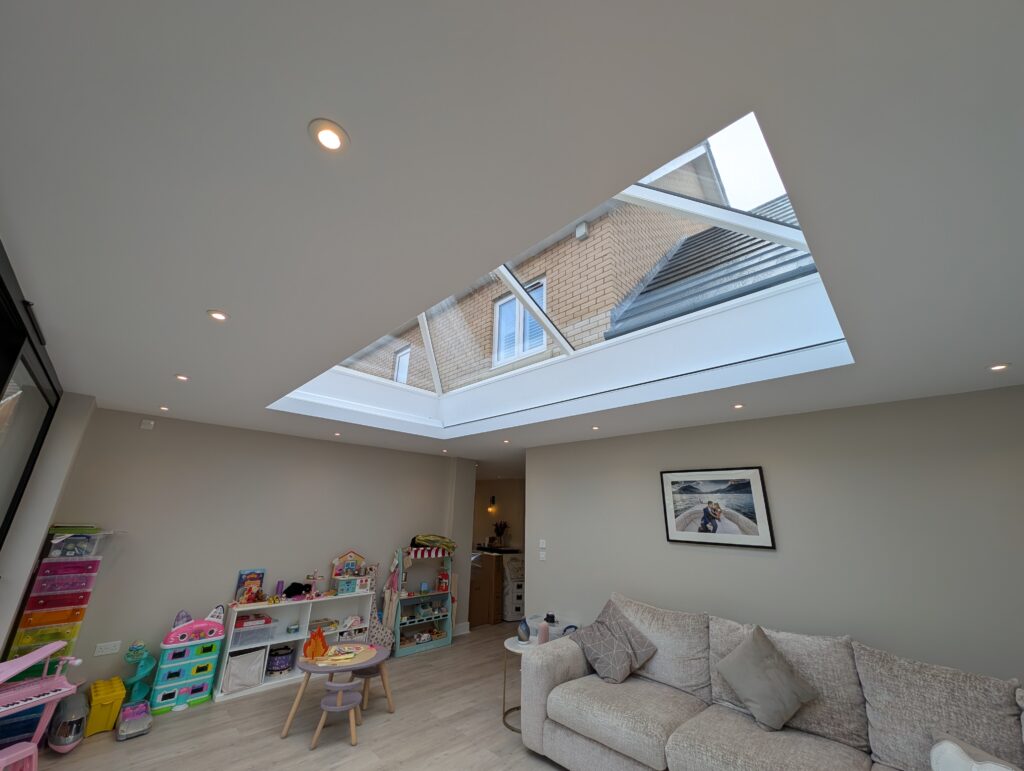
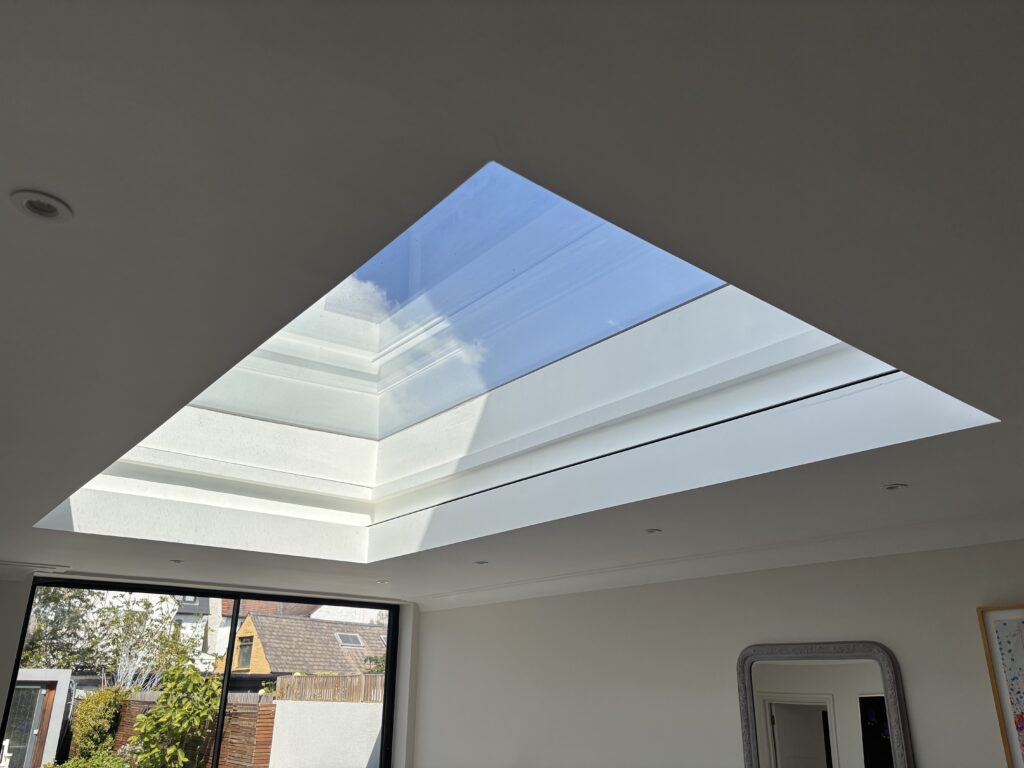
If Blindspace is outside the project budget, you can still achieve a clean architectural finish by building a concealment shelf inside the upstand.
This was the approach used by George and Taz, who:
- Built a shelf to house the Athena headbox
- Integrated LED lighting
- Created a smaller aperture lower in the upstand
- Achieved a premium look without Blindspace costs
This method still hides the hardware and maintains the architectural lines.
Post‑Build Retrofit: The Universal Option
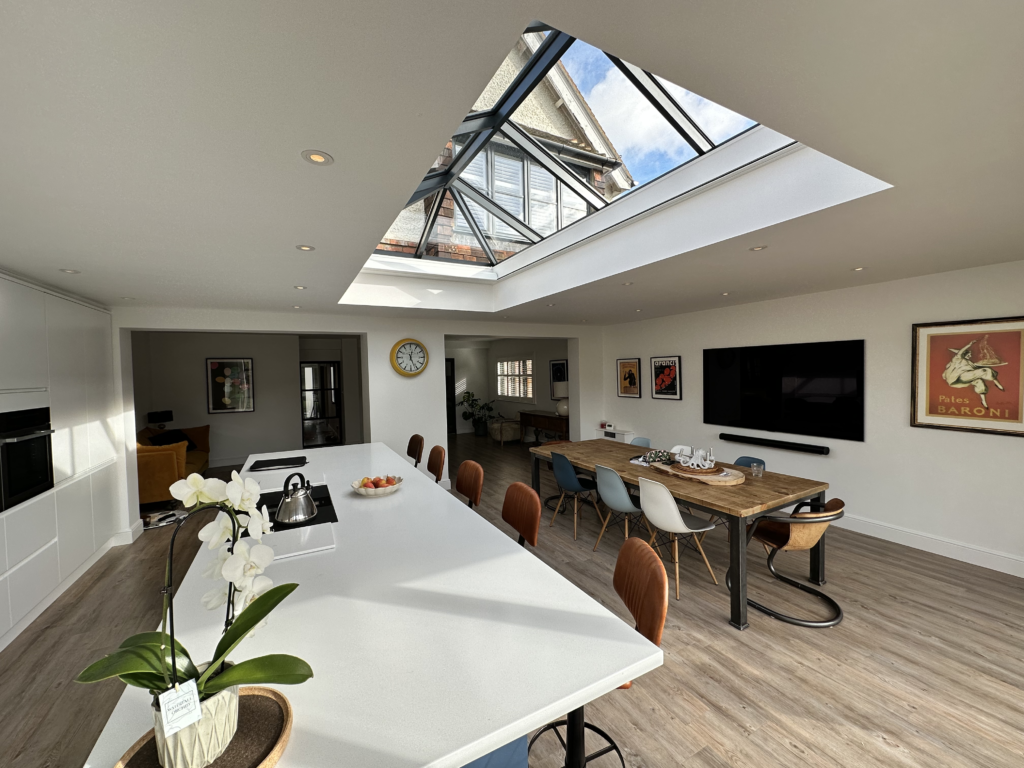
If the build is complete and structural changes are unrealistic, the Athena blind can be retrofitted with:
- A visible headbox
- Visible side channels
This still delivers the performance priorities:
- Heat management
- Glare control
- Light diffusion
- Privacy
- Comfort
Concealment becomes a preference, not a priority.
Making the Right Decision
Your choice depends on:
- Stage of build
- Budget
- Aesthetic expectations
- Performance priorities
- Whether the blind should disappear or simply perform
Some homeowners want the full architectural minimalism of Blindspace (Kristen, Dominic, Ruth). Others prefer the shelf approach (George and Taz). Many homeowners like Stuart retrofit the blind once the build is complete.
What matters is that the decision is informed, and the preparation is accurate.
By reading and submitting The Journey To Your Electric Roof Lantern Blind survey you’ll have a much better understanding of your priorities and preferences.