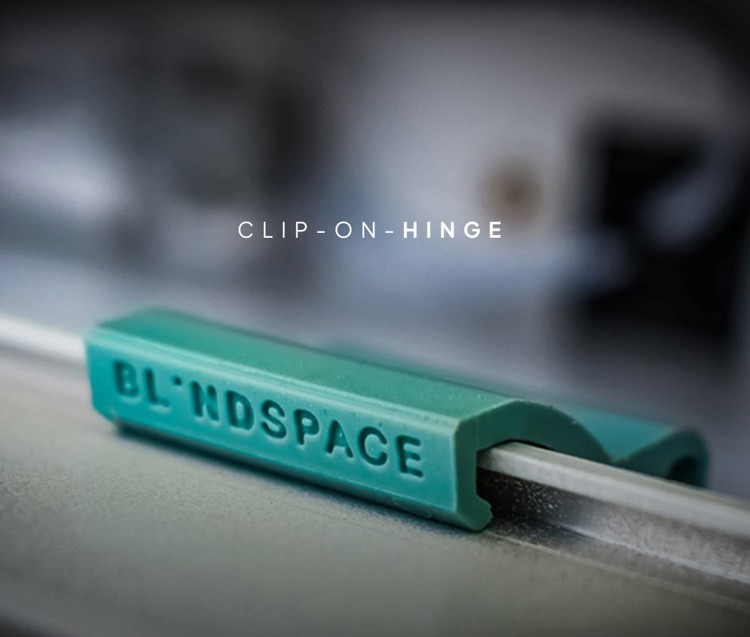
Imagine waking up in your master bedroom, pressing a single button, and watching a blackout blind silently glide away, disappearing completely into the ceiling to reveal the morning sky.
There are no bulky boxes, no visible rollers, and no trailing wires, just the view you paid for and the clean, architectural lines you fell in love with.
This is the “gold standard” of modern glazing.
It is the minimalist dream.
We see this vision come to life in projects like the one we completed for Pavla and Piers in Fulham. As an architect and structural engineer respectively, they designed their dream home with a specific goal in mind: a master bedroom where they could lie in bed and stargaze through a massive glass roof.
Their brief was uncompromising.
They needed total blackout for sleep, but during the day (or night), they wanted the blind to vanish entirely so nothing obstructed the stars. By designing a concealed system into the build from day one, we achieved a theatrical reveal where the blind simply disappears into the structure, leaving nothing but the view.
However, achieving this level of “invisibility” isn’t as simple as buying a blind and screwing it to the wall. It requires planning, investment, and a bit of nerve. You might be looking at your own plans and wondering: “Is this really possible? Why does it cost so much more? And what on earth happens if it gets stuck inside the ceiling?”
We’re going to answer those questions honestly, as we believe you should have all the facts to decide if it’s the right investment for your home. Here are the key things to consider.
Key Takeaways:
- Timing is Everything: Concealed blinds must be planned during the design phase, ideally before first-fix, to integrate seamless pockets like Blindspace®.
- The Cost of Invisibility: Expect a higher investment due to specialist components and multi-trade coordination, not just the blind itself.
- Retrofitting is Possible but Painful: Installing concealed blinds after plastering involves significant disruption, essentially a mini-renovation.
- Maintenance is Easy: Modern systems feature accessible flaps, meaning motor servicing doesn’t require damaging your ceiling.
- Engineering Matters: Cheap alternatives often sag on large spans; investing in correctly engineered systems ensures the fabric aesthetics remain flawless.
Concealed vs. Surface-Mounted: An Honest Comparison
The first decision you face is a fundamental one: do you hide the blind, or do you mount it on the surface?
A surface-mounted blind is the standard approach. It is generally quicker to install, less expensive, and requires less coordination with your builder. The trade-off is visual. You will see the cassette (the box holding the blind roll) and any side channels.
While modern systems can be sleek and colour-matched, they are still an addition to the window frame, an extra layer of “stuff” around your clean glazing.
Concealed blinds, on the other hand, are designed to integrate into the very fabric of the building. Using specialist components like Blindspace® boxes, the mechanism is recessed into the ceiling or wall during construction. When the blind is retracted, it is virtually undetectable and architectural lines remain true.
The choice often comes down to where you are in your build process and how much value you place on that flawless finish.
If you are still in the design phase, concealment is a realistic option. If your plastering then a surface mounting solution might be the pragmatic choice to avoid disruption.
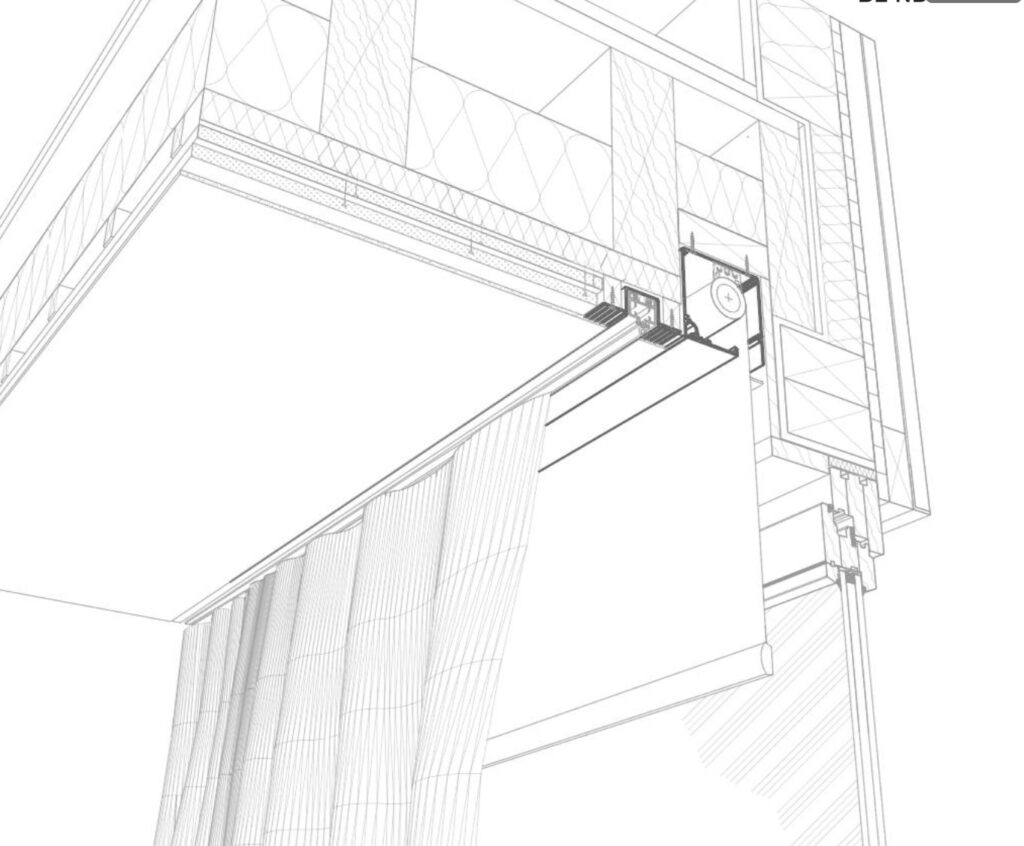
For a head-to-head breakdown, see our full guide:
Concealed or surface-mounted blinds – how to choose? (Honest comparison)
Why Do Concealed Blinds Cost More? A Transparent Price Breakdown
We often hear from homeowners who are surprised by the cost difference between a standard electric blind and a concealed system. It is a fair question. If the fabric is the same, why is the price tag higher?
The reality is that with a concealed system, you are not just buying a product; you are investing in architectural construction.
- Specialist Components: You are paying for engineered concealment boxes (like Blindspace®) that need to be purchased and installed before the blind even arrives.
- Structural Preparation: Your builder or contractor needs to create the specific voids and structural supports to house these boxes.
- Multi-Trade Coordination: It requires precise communication between us, your architect, your builder, and your electrician to ensure the power is in the right spot and the plaster lines are millimetre-perfect.
Concealment systems like Blindspace are a premium solution because they deliver a fully finished, architecturally seamless result. But if the budget doesn’t stretch that far, you can still design the structural space for a blind and install a blind directly. It works, and it preserves the minimalist intent, but it won’t have the same refined, integrated finish as a purpose‑built concealment pocket. If you decide to hide it you need to design a lid that is removeable so the blind can be serviced if required.
The Big Fear: What Happens if a Concealed Blind Breaks Inside My Ceiling?
This is the number one anxiety we hear: “If you bury this blind in my ceiling and the motor fails, do I have to rip my ceiling down to fix it?”
The answer is no, you do not have to destroy your ceiling and should always be designed with that in mind.
Modern concealment systems are designed with maintenance in mind. The Blindspace® boxes we use feature a specially designed, patented hinged cover. This cover hides the blind and leaves the right sized gap for your blind to exit. Note this has to be specified correctly or the blind will not fit or the gap will not be big enough. The cover can even be painted to match the paintwork around it.
If servicing is ever required, the cover can be opened on its hinge, allowing our technicians to access the motor and roller tube without damaging your décor.
It is a clean, non-destructive process.
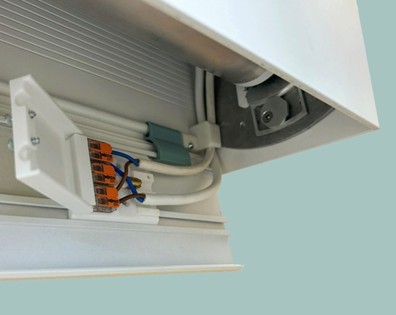
Modern systems like Blindspace® feature clever access flaps, ensuring maintenance never means destroying your ceiling
“Is It Too Late?” How to Retrofit a Concealed Look
Perhaps you are reading this and your extension is already built. The plaster is dry, the decorators have left, and you are now realising that the glare is unbearable, but you still desperately want that minimalist look.
Is it too late?
Ideally, we champion the S.H.A.D.E. principle – Shading, Human-Centred, Architectural, Direct, Environmental which advocates for designing shading in from the very start to avoid this exact situation. However, we understand that real life doesn’t always follow the perfect plan.
If you have missed the first-fix stage, you cannot use the standard Blindspace® boxes that are built into the structure.
We have to be brutally honest here to do so is not a quick, clean job. It effectively involves creating a new bulkhead or lowering a section of your ceiling. It will create dust. It will require a joiner to build the framework, a plasterer to skim it, and a decorator to paint it.
It is essentially a mini-renovation project in itself. But if the alternative is visible boxes that compromise your vision, some homeowners find this short-term pain is worth the long-term gain of a cleaner aesthetic.
Conclusion: Is a Concealed System Worth It for You?
Choosing a concealed blind system is a commitment. It requires more budget, more planning, and more collaboration than simply screwing a blind to a window frame.
But for homeowners who view their glazing as a key architectural feature, like Pavla and Piers with their star-gazing ceiling, it is the only way to maintain the purity of that vision. It turns a functional necessity into a piece of “invisible” engineering that enhances your home every single day.
If you are ready to protect your dream and explore the possibilities of invisible shading, we are here to guide you through the details.
To discuss integrating concealed blinds into your project, call our specialists on 01256 345580, or Book Appointment: for an early-stage consultation.