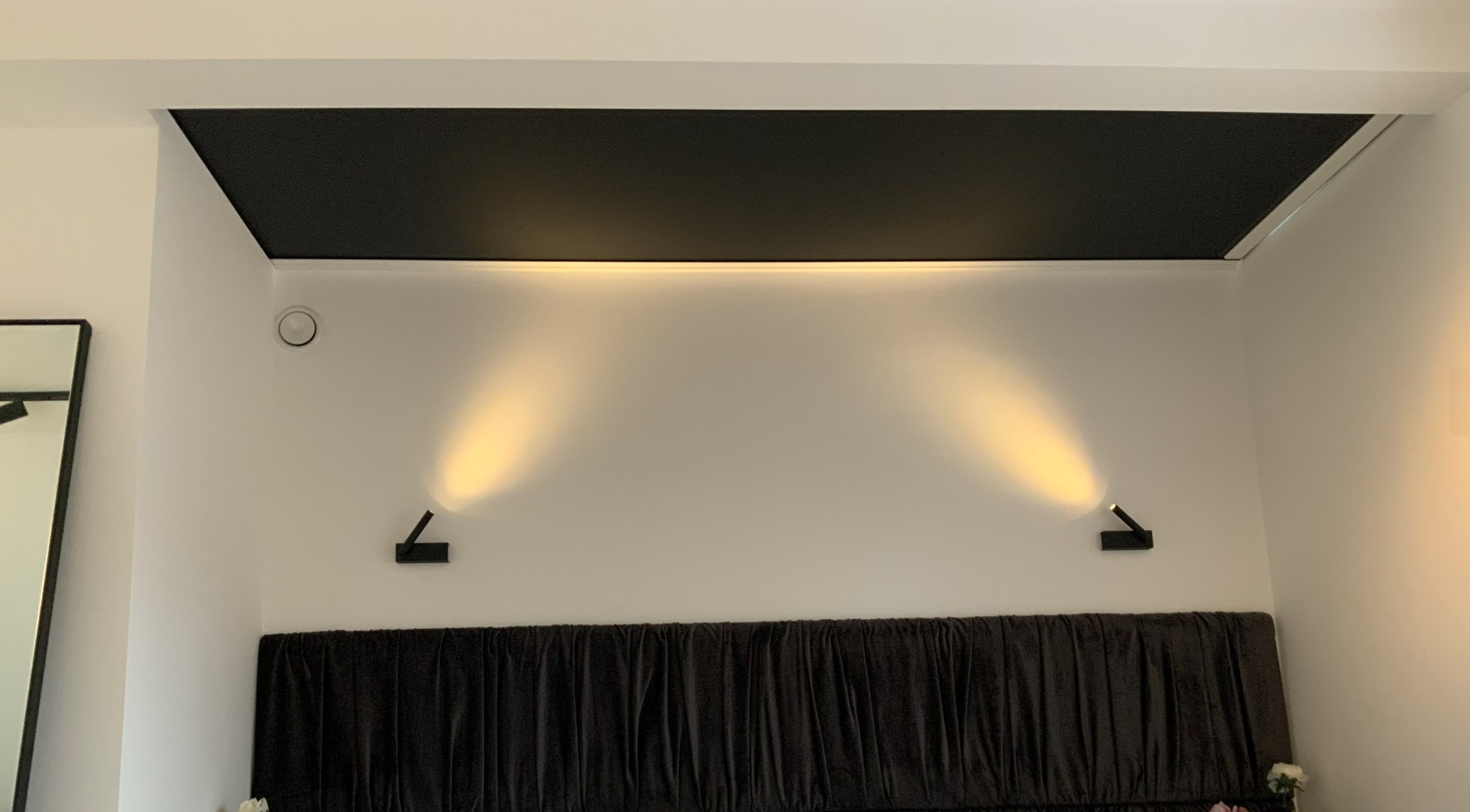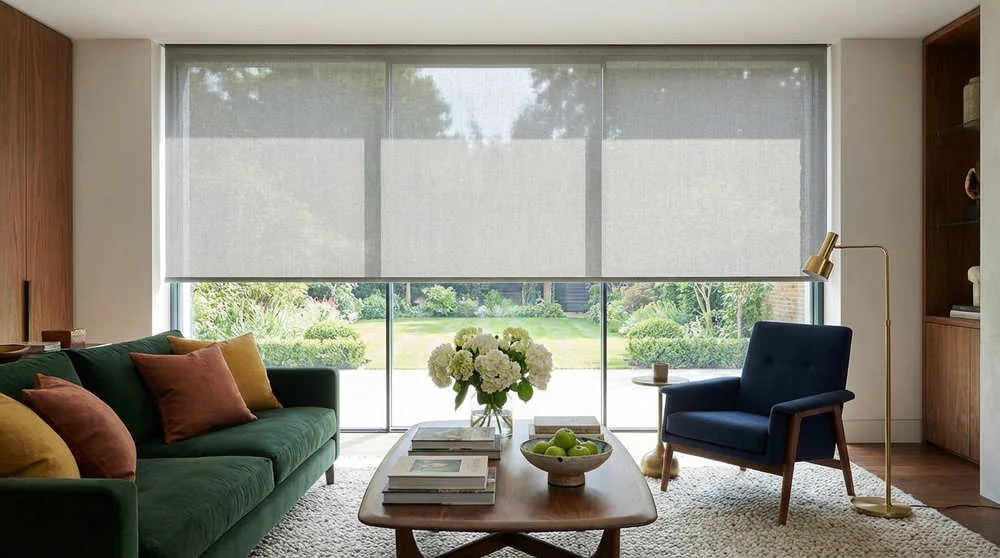








A truly concealed blind leaves no trace on your ceiling. No cassette. No headbox. The system that makes this possible is Blindspace® – a precision-engineered aluminium concealment pocket designed specifically to house electric blinds within your ceiling or wall structure.
Three fears hold most homeowners back from specifying Blindspace®: the cost, the timing, and the nagging thought of a motor failing inside a finished ceiling.
This guide tackles all three head-on. It covers how Blindspace® works, its critical timing requirements during the build, what concealment genuinely costs compared to surface-mounted alternatives, and exactly what happens if a concealed blind ever needs servicing. If your project is at planning or early design stage, this is the moment to act – waiting until build stage could double or triple your concealment costs.
Our goal is to help you make a confident decision. Even if that means you don’t choose us.
Key Insights from This Guide:
- Blindspace® concealment must be planned at RIBA Stage 2, before plasterboard goes up. Miss this window and costs multiply.
- Retrofitting concealment into a finished ceiling typically costs two to three times more than designing it in.
- Modern Blindspace® systems are fully serviceable through detachable access panels. The “sealed cavity” fear is outdated.
- Concealment applies specifically to electric blinds housed in ceiling or wall voids. WindowTreat’s other product lines – 3M window film and electric awnings – do not require or involve concealment systems.
- A high-quality surface-mounted blind is an excellent alternative when the timing for concealment has passed.
- Blindspace® supply for a typical roof lantern starts at around £3,500. This is separate from the blind itself.
Quick Reference: Blindspace® Concealment Investment Ranges
| Application | Blindspace® Supply (Approx.) | Electric Blind (Installed) | Combined Estimate |
| Roof Lantern (2m × 3m) | ~£3,500 | Up to £5,500 | Up to £9,000 |
| Bifold Doors (4m wide) | ~£1,000 | £3,000 – £5,000 | £4,000 – £6,000 |
| Full Room (2 lanterns + 8m bifold) | Up to £8,000 | £12,000 – £17,000 | Up to £25,000 |
These are indicative figures. Every project is unique. A detailed consultation is always needed for an accurate quotation.
Why Trust This Guide?
WindowTreat specialises in high-performance, integrated shading for large glazed areas. We are Trading Standards Approved through the Buy With Confidence scheme and SafeContractor accredited. These accreditations mean you have formal recourse if anything goes wrong, and that the installer working in your finished home meets independently verified safety standards. Our team works daily with Blindspace® concealment systems, Somfy motorisation, and high-performance technical fabrics to help homeowners and architects protect the vision for their homes.
What We Will Cover in This Guide:
- Which WindowTreat products actually need concealment and which don’t
- Why “invisible” matters for your architectural vision
- How Blindspace® concealment actually works
- The critical timing window you cannot miss
- What concealment really costs, and the retrofit penalty
- What happens if a concealed blind breaks? The truth
- It’s not too late. What are the retrofit options
- Concealed vs surface-mounted – an honest comparison
- Who concealment is NOT right for
- Frequently asked questions
- Your next step – protect your vision at the design stage
- All concealed systems articles
Which WindowTreat Products Need Concealment – And Which Don’t?
Before we go any further, it’s worth being clear about scope. WindowTreat provides four main product lines: electric blinds, Blindspace® concealment systems, 3M window film, and electric awnings. Concealment is relevant to two of these. It is not relevant to the other two. Understanding why will help you work out which solutions are right for your project.
Blindspace® + Electric Blinds: The Core of This Guide
Blindspace® exists for one purpose: to hide electric blinds within your building’s structure. The two products are inseparable in any concealment conversation. Every section of this guide is about this pairing. The aluminium extrusion that’s fitted inside a void, and the electric blind (with its motor, roller tube, and high-performance fabric) that lives inside it. If you’re considering a concealed, “invisible” shading solution for a roof lantern, skylight, bifold doors, or large glazed wall, this is the combination you’re looking at.
3M Window Film: No Concealment Needed
If your primary concern is solar heat gain, UV damage, or daytime glare, 3M window film may be the right starting point. It requires no concealment system whatsoever. Film is applied directly to the glass surface itself. There is no mechanism, no motor, and no structural void to plan for. It’s an entirely different type of intervention: one that upgrades the performance of the glass rather than adding a moveable shading layer. In many projects, film and concealed blinds work beautifully together with the film handling heat at the glass and the blind providing privacy or room darkening. But the concealment discussion in this guide applies only to the blind, never to the film.
Electric Awnings: No Concealment Needed
Electric awnings are external products, mounted on your building’s facade or over the glass surface on the outside. They intercept sunlight before it reaches the glazing which is why they’re so effective at preventing heat build-up. Normally they sit outside the building as awnings retract into their own self-contained cassette housing on the exterior wall. They have their own planning considerations (structural fixings, projection clearance, wind ratings), and the Inca awning can be concealed but not using Blindspace. Built-In Electric Retractable Awnings
In short: this guide is about Blindspace® and the electric blinds that sit inside it. If you’re exploring film or awning solutions, we cover those in depth across our other Knowledge Centre guides. But if your goal is to make shading disappear completely into the architecture of your home – read on.
Why “Invisible” Matters for Your Architectural Vision
Having helped hundreds of homeowners achieve seamless shading, we know this: visible blind hardware on a pristine ceiling bothers people more than they expect. Not on day one. On day three hundred and sixty-five.
You’ve invested heavily in clean lines and minimalist design. A visible cassette or headbox creates a permanent interruption, contradicting the very reason you chose all that beautiful glass.
This is the “A” in our S.H.A.D.E. framework, which stands for Architectural Intent. The principle is simple. Every junction, every reveal, every line in your design has purpose. If shading is left too late, that meticulous detailing gets diluted.
Good shading should not interrupt the architecture. It should let it breathe.
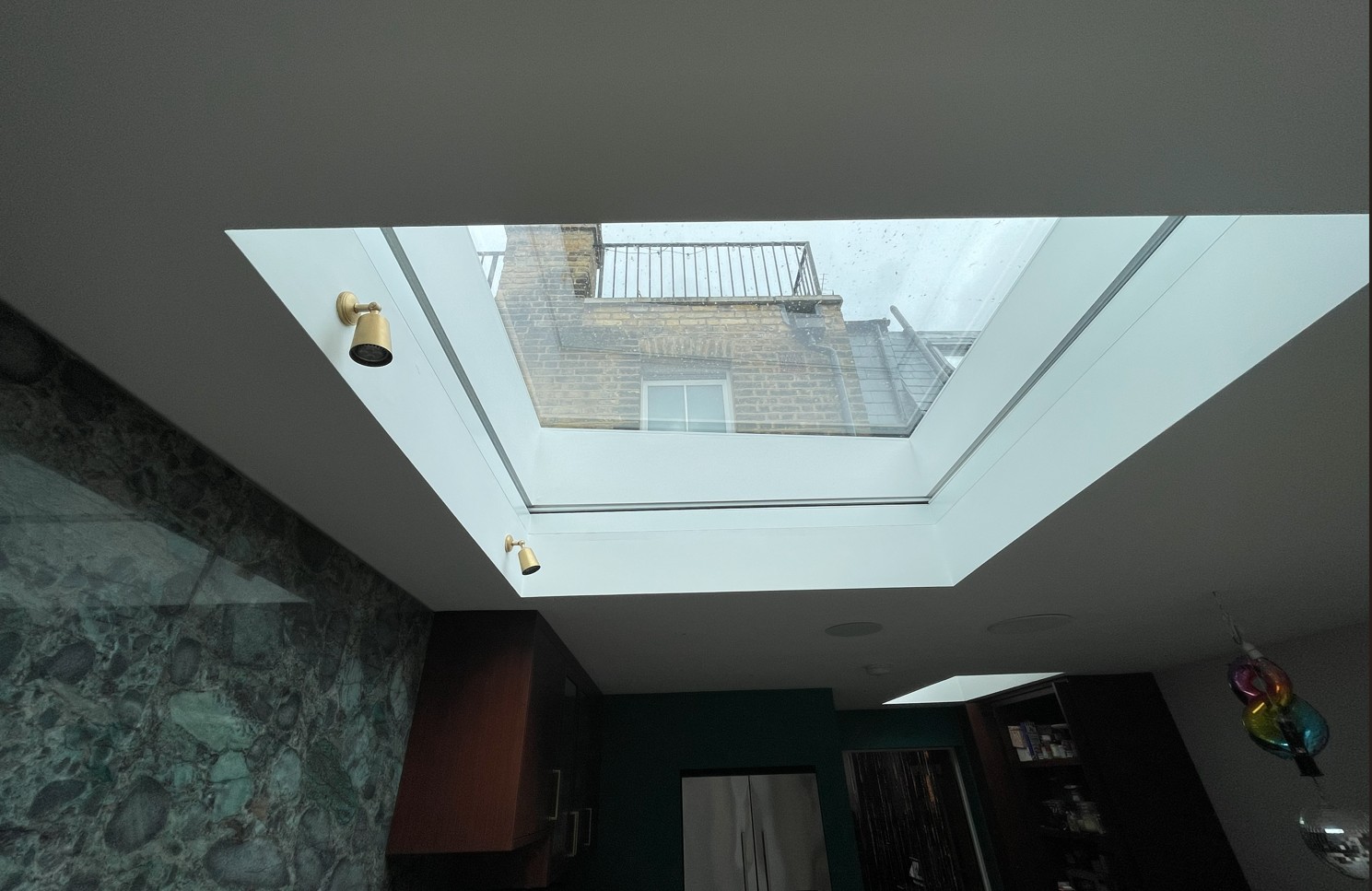
What does perfect concealment actually look like? Consider Dom’s kitchen extension which incorporated a relatively small skylight. As a key feature point Dominic didn’t want this interrupted with hardware but new the rooms comfort would suffer if left unmanaged. Success Story: Dom’s Hidden Roof Blind
That result was only possible because Blindspace® concealment was discussed before it was too late. For Dom the investment was not an extravagance. It was an essential part of making his dream a reality.
And it’s not just bedrooms. James, a classic sports car collector, needed to protect his prized vehicles from UV damage but wanted his bespoke garage with two roof lanterns and wide bifold doors to look sleek and uncluttered. We integrated Blindspace® boxes, colour-matched to the window frames, so smart room-darkening blinds could shield the collection at the touch of a button. When retracted, the blinds vanished completely, letting James showcase his cars in full view. The concealment was the difference between a functional garage and an architectural showpiece. Success Story: James’ Concealed Blackout Blinds for a Luxury Garage Extension
How Blindspace® Concealment Actually Works
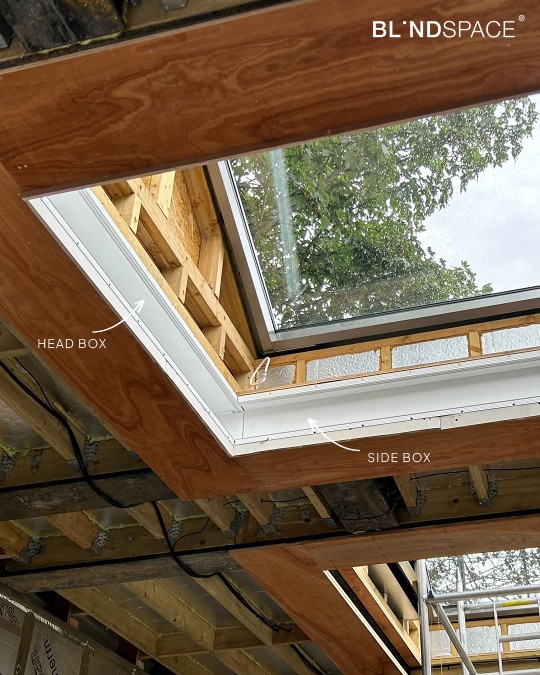
Blindspace® is a precision-engineered aluminium profile system that creates a hidden pocket within your ceiling or wall structure.
The blind, its motor, and the roller tube retract completely inside this pocket. When not in use, nothing is visible except a discreet, hairline slot in the ceiling.
Three components make the system work:
- The aluminium box is installed into the structural void during the build. It is screwed into the timber or concrete substrate above the ceiling line.
- Skim coat flanges allow your plasterer to feather the ceiling finish right up to the box edge. Once painted, the join is virtually invisible.
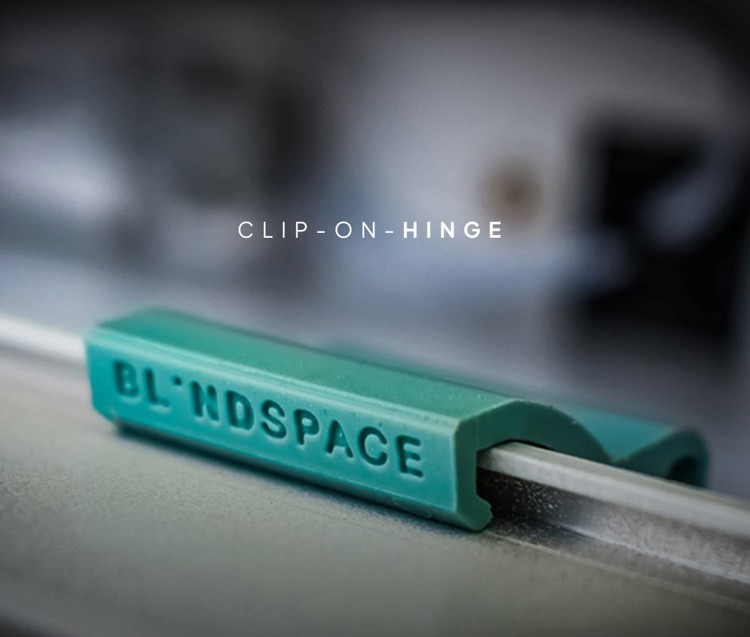
- A detachable closure plate covers the opening. It clips into place with a patented safety hinge, creating a seamless finish that hides the mechanism entirely.
This is not a rough gap plastered over and forgotten. It is an engineered, accessible system designed for long-term performance. You can explore the full Blindspace® range on our dedicated page.
The standard Blindspace® S-Series box measures 100mm × 100mm or 130mm x 130mm and compact enough to fit within most ceiling voids. Larger custom C-Series profiles for dual blind systems or more complex shapes, including the four-sided frames needed for roof lantern and skylight installations. Your architect must account for this space in the structural drawings.
The Critical Timing Window You Cannot Miss
In our experience, timing is the single most expensive mistake homeowners make with Blindspace® concealment. Not the fabric. Not the motor. The calendar.
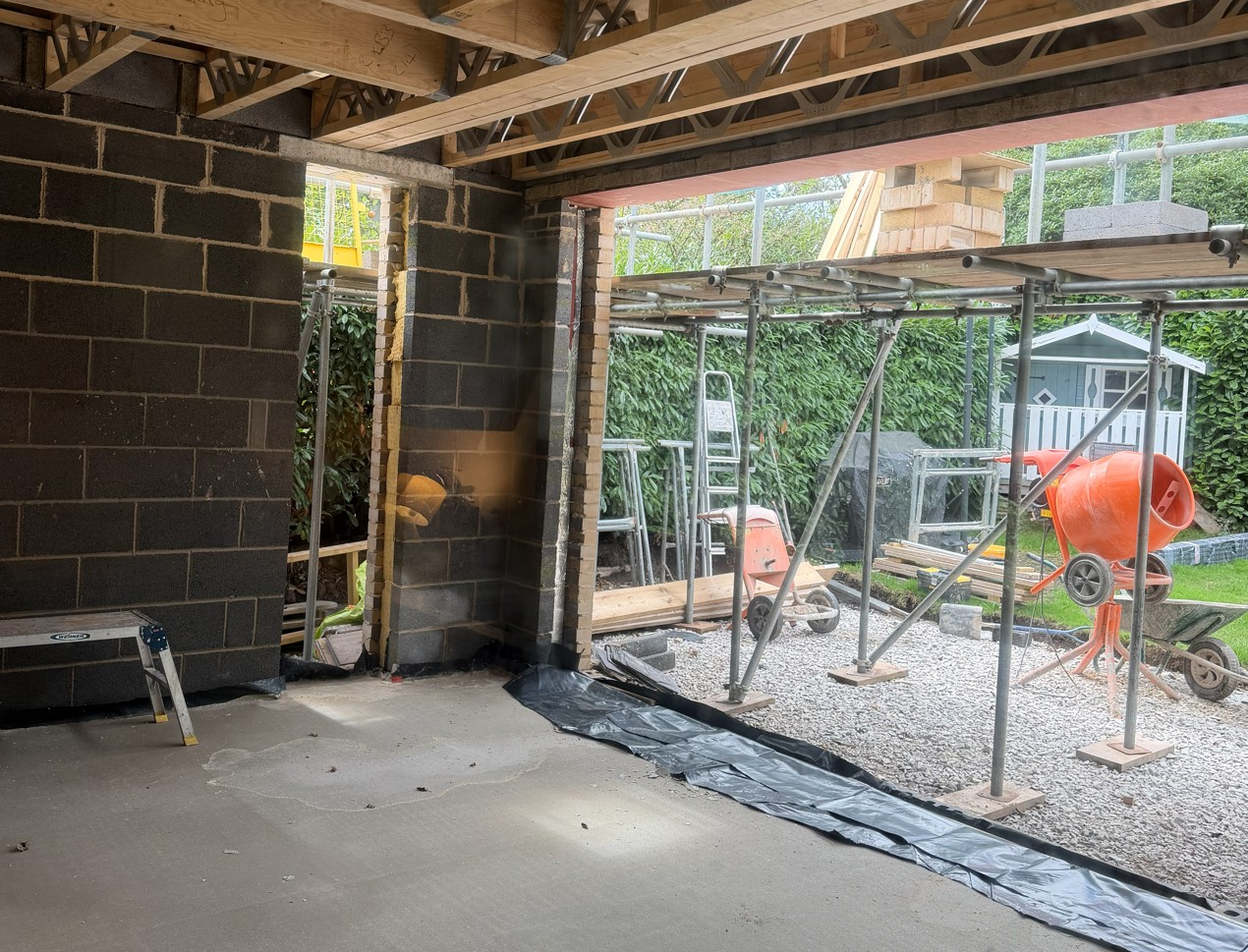
For a truly concealed blind, the Blindspace® box must be installed before the plasterboard goes up. This means the decision needs to happen during the architectural design stage, typically at RIBA Stage 2 (Concept Design).
At this point, your architect needs to account for the pocket in the structural drawings. The power supply must be planned alongside the main electrical first-fix. It sounds early. It is early. And that is exactly why it works.
If shading isn’t on your architect’s drawing at Stage 2, raise it at your next meeting before structural decisions close off your options.
Understanding when to plan electric blinds for your extension is the difference between a seamless result and a costly compromise.
The Retrofit Penalty in Numbers
Designing Blindspace® concealment in during the build is relatively straightforward when it is part of the ceiling construction. Trying to retrofit it afterwards means cutting into a finished ceiling, altering the structure, re-plastering, and redecorating. The cost of retrofitting concealment can be two to three times higher than incorporating it from day one.
A cautionary tale when there are no shading controls planned. Nigel discovered the reality during their first summer. The space was unbearably hot and bright. His subsequent search for solutions revealed that truly concealed options were no longer feasible without major, disruptive building work. The dream was compromised – not by budget, but purely by timing. How Saving Nigel’s Dream Space Launched S.H.A.D.E for Architecturally Designed Builds
What Blindspace® Concealment Really Costs – And the Retrofit Penalty
Since we work with Blindspace® systems daily, the most common reaction we see is surprise at the cost. So let’s be completely open about where your money goes.
The cost is not just for the blind. It is for an architectural process involving multiple trades.
Understanding what makes concealed electric blinds more expensive than surface-mounted alternatives helps you budget realistically.
What drives the cost up:
- Blindspace® profiles are precision aluminium extrusions, not cheap plastic channels. For a 3-metre roof lantern, the supply cost alone is around £3,500.
- Structural building work – a builder must create the void, adding labour and coordination costs.
- Electrical preparation – a qualified electrician installs a dedicated fused spur. In a new build, this is relatively simple (£70 -£120). In a retrofit, it requires chasing walls and re-plastering (£150 – £300+).
- Plastering is needed to skim the ceiling up to the concealment box for that invisible finish.
What drives the cost down:
- Early planning is the biggest cost reducer. Designing in the Blindspace® pocket during the build is a fraction of the retrofit price.
- Grouping controls helps. Fewer, larger blinds cost less in total than many small individual ones.
- Standard fabric choices cost less than specialist heat-rejection textiles, though we always advise weighing this against long-term comfort.
| Cost Scenario | Typical Total (Blind + Concealment) |
| Designed-in during build (roof lantern, 2m × 3m) | Up to £9,000 |
| Retrofitted into finished ceiling (same size) | Potentially £13,000 – £18,000+ |
| Surface-mounted alternative (no concealment) | £5,500 |
The retrofit penalty is real. It is not a scare tactic. It is the cost of coordinating a builder, plasterer, electrician, and specialist installer to work on a finished space.
Worth knowing: If the concealment budget feels stretching using Blindspace then there are other approaches that can be taken. But these often still need to be planned for in roof lanterns or skylights Success Story: George’s Partially Concealed 2m x 4m Athena Electric Roof Blind
What Happens If a Concealed Blind Breaks? The Truth
This is the question that holds people back more than any other. We understand completely. The fear of an expensive mechanism sealed inside a finished ceiling is powerful.
The good news is that this fear is based on outdated practices, not modern engineering.
In the past, a builder might have created a rough cavity and plastered it shut. If the blind failed, the only option was a saw and a lot of mess. That scenario is exactly what Blindspace® was designed to prevent.
Modern Blindspace® systems are built around one core principle: Designed for Access.
The closure plate on a Blindspace® box is not permanently fixed. It clips into place with a patented safety hinge. A technician can carefully unclip it, starting from one end, to gain full access to the blind and motor inside.
No cutting. No dust. No damage to your ceiling.
Once the work is complete, the plate clicks back into place. Your ceiling looks exactly as it did before. For the full picture, read our guide on what happens if concealed blinds break inside the ceiling.
What actually tends to go wrong? In our experience, the most likely component to need attention is the motor. This is why we use Somfy motors, which come with a 5-year manufacturer’s warranty. That gives you a long period of guaranteed, trouble-free performance.
Cheaper systems sometimes use lower-grade motors or plastic components. In the intense heat of a south-facing roof lantern, these parts can become brittle and fail. Investing in robust engineering from the start minimises the chance of needing a repair at all.
It’s Not Too Late – Retrofit Concealment Options
If your build is already complete, we want to be honest with you. The fully integrated, plaster-flush Blindspace® concealment we described above is no longer possible without disruptive building work.
But an elegant result is still very much achievable.
Two practical paths forward exist. The first is a retrofitted plasterboard pocket. A builder constructs a shallow box structure from plasterboard at the top of the window recess. This is then plastered and painted to match your ceiling, creating a discreet slot for the blind.
It requires some construction work. But it is far less invasive than ripping open a finished ceiling to install Blindspace® profiles.
The second path is a high-quality surface-mounted blind. This is not a compromise in quality. A slim, precisely engineered aluminium cassette, powder-coated to match your window frames, becomes a clean, integrated feature rather than an afterthought.
Discovering that your architect didn’t plan for blinds doesn’t mean the minimalist look is lost. It means the approach changes.
A couple in Dorset, Duone and Simon, found themselves in exactly this position. Their garden room was finished but unbearably hot and bright. We installed a high-performance retrofit system. The transformation was remarkable. Their space became comfortable and usable and was a real game changer.
And for heat specifically? If your build is finished and your primary problem is overheating rather than privacy or room darkening, it’s worth knowing that 3M window film and external electric awnings can both tackle solar heat gain without any structural work to your ceiling at all. They solve a different part of the problem and in some cases, they may be all you need. We can advise on the best combination during a consultation.
Concealed vs Surface-Mounted – An Honest Comparison
We sell Blindspace® concealed systems. So we have an obvious bias. Here is the honest comparison anyway.
Understanding how to choose between concealed and surface-mounted blinds saves you from a decision you might regret either way.
| Factor | Concealed (Blindspace®) | Surface-Mounted |
| Aesthetics when retracted | Completely invisible. No hardware visible. | Slim visible cassette. Sleek but present. |
| Planning requirement | Must be designed in at RIBA Stage 2. | Can be installed at any time, even years later. |
| Investment | Higher. Includes Blindspace® profiles, building work, multiple trades. | Lower. Self-contained product fixed to an existing surface. |
| Heat and glare performance | Identical, with the same high-performance fabric. | Identical, with the same high-performance fabric. |
| Room darkening capability | Superior. Integrated side channels seal the edges for near-total room darkening. | Good. Some light bleed around edges is possible. |
| Serviceability | Fully accessible through detachable closure plate. | Fully accessible. All components are surface-mounted. |
| Disruption to install | Minimal during build. Significant if retrofitted. | Minimal at any stage. Clean, efficient process. |
When does surface-mounted win? When the build is finished and you need a solution now. When the budget is better spent on fabric quality and motor specification. When the visible cassette genuinely does not bother you. In all these cases, a premium surface-mounted system is the smarter choice.
When does Blindspace® win? When you are at the early design stage and preserving a flawless, minimalist aesthetic is your absolute priority. When you are creating a dedicated space like a home cinema where near-total room darkening matters. When you cannot accept any visible hardware on your ceiling, full stop.
The performance of the fabric is the same either way. Both options use the same high-performance technical textiles. Both use the same Somfy motors. The difference is purely architectural.
Who Blindspace® Concealment Is NOT Right For
We would rather be honest with you now than have you regret a decision later. Blindspace® concealment is a premium, architectural solution. It is not for everyone.
This is NOT right for you if:
- Your build is already complete and you are not prepared for any structural rework. A surface-mounted system will deliver comfort and performance without disruption. And depending on your main concern, 3M window film or an electric awning might handle the heat problem without touching your ceiling at all.
- Your budget is tight and choosing concealment would mean compromising on the fabric quality or motor specification. A well-engineered surface-mounted blind with excellent fabric is a far better investment than a concealed system with inferior components.
- You live in a listed building where alterations to the ceiling structure require specific consent. A less invasive, surface-mounted approach is almost always required.
- A visible cassette genuinely does not bother you. Some people are perfectly happy with a neat, colour-matched headbox. If that is you, the extra investment in Blindspace® has no value.
- You intend to install the blinds yourself. Blindspace® concealment requires the precise coordination of a builder, plasterer, electrician, and specialist installer. This is not a DIY project.
We would rather lose your business than set you up for a result that disappoints. If Blindspace® is not the right fit, we will tell you honestly and suggest a better path.
Frequently Asked Questions About Blindspace® Concealment
Can Blindspace® be fitted after the ceiling is plastered?
Not without significant rework. The aluminium profiles must be installed before plasterboard goes up. Retrofitting them into a finished ceiling means cutting, structural alteration, and re-plastering. It is possible, but the cost and disruption are substantially higher.
How long does a concealed blind motor last?
We use Somfy motors, which come with a 5-year manufacturer’s warranty. In practice, a high-quality motor is engineered for a lifespan well beyond that. The key is choosing a motor with sufficient power for the blind’s size and weight from the outset.
Will Blindspace® add weeks to my build schedule?
No. When planned early, the Blindspace® box is installed during the standard first-fix stage. It slots into the existing build programme. The blind itself is fitted after decorating is complete. It adds days, not weeks.
Can I upgrade from surface-mounted to concealed later?
Only with disruptive building work. This is precisely why we encourage the conversation early. Moving from surface-mounted to Blindspace® concealed means creating a void in a finished ceiling. It is a construction project, not a simple swap.
Do concealed blinds work with smart home systems?
Yes. The Somfy motors we use integrate with the TaHoma smart hub, allowing voice control through Google Home and Amazon Alexa. You can create automated scenarios like “cinema mode” or “dusk privacy” regardless of whether the blind is concealed or surface-mounted.
What size void does Blindspace® need in the ceiling?
A standard Blindspace® box requires approximately 100mm2 to 130mm2 of void space. Larger customer boxes are available for dual blind systems, roof blinds and even very long fabric drops. Your architect must account for this space.
Do 3M window film or electric awnings need concealment pockets?
No. These are completely different product types that do not involve ceiling voids. 3M window film is applied directly to the glass surface so there is no mechanism to conceal. Electric awnings are external products mounted on the building facade and retract into their own self-contained exterior cassette. Blindspace® concealment is specific to electric blinds installed within the building structure. If you’re wondering which combination of solutions is right for your project, that’s something we can work through together during a consultation.
Is the investment in Blindspace® actually worth it?
That depends entirely on you. If preserving flawless, minimalist lines is your non-negotiable priority, and you are at the right stage in your build, then yes. The investment protects the aesthetic of a space you will look at every single day for decades. If a neat, visible cassette is something you can live with comfortably, you will get the same performance for a lower outlay.
Your Next Step – Protect Your Vision at the Design Stage
If you are in the early stages of planning an extension, this is the moment to act. A 15-minute conversation now can save you thousands and protect the architectural vision you have worked so hard to create.
We are not looking to sell you anything in that first call. We want to understand your project, review your architect’s plans, and advise you honestly on whether Blindspace® concealment is the right fit or whether a surface-mounted solution, window film, an awning, or a combination would serve you better.
Sometimes the honest answer is “you don’t need us yet.” We would rather tell you that upfront.
When you’re ready:
- Book a Free call back to explore the possibilities for your space with our experts
- Or call our specialists on 01256 345580 to review your architect’s plans
If you are still researching, keep exploring the guides below. They cover every angle of the concealment decision in detail.
All Concealed Systems Articles
Understanding the Investment
- How Much Do Concealed Electric Blinds Cost? And Why Are They More Expensive? – A transparent breakdown of where your money goes, from Blindspace® profiles to associated building trades, and why the investment preserves your design.
Getting the Timing Right
- When Is the Right Time to Plan Electric Blinds for Your Extension? – Why RIBA Stage 2 is the critical decision point, and what happens to your options if you miss it.
Making the Choice
- Concealed or Surface-Mounted Blinds – How to Choose? – An honest side-by-side comparison to help you decide which approach fits your project, budget, and priorities.
Addressing the Fears
- What Happens If Concealed Blinds Break Inside the Ceiling? – How modern Blindspace® systems are designed for full access, and why the “sealed cavity” fear is based on outdated practices.
When Timing Has Passed
My Architect Didn’t Plan for Blinds – Is It Too Late for a Minimalist Look? – Practical retrofit options and elegant alternatives when the ideal concealment window has closed.