Staring at a wall of beautiful fabric swatches for your new extension, are you worried that picking the wrong one could be a costly mistake? It’s a feeling we understand completely. When we talk to homeowners, the first thing they naturally focus on is the colour and texture, the ‘fashion’ of the fabric. But the reality is, the success of your blinds hinges on their ‘function’.
This guide is here to give you the confidence to choose a fabric that not only looks stunning but also makes your dream space comfortable and usable all year round.
To help you, here are the key things to remember when making your choice:
- Prioritise performance: Before falling for a colour, decide what you need the fabric to do – stop heat, cut glare, or protect furniture.
- Heat control is key: For keeping a room cool, a fabric’s Solar Reflectance (Rs) is the most important number to look for.
- Dark fabrics improve the view: Darker colours absorb stray light, which reduces glare and provides a much crisper view outside.
- Don’t forget the invisible threat: A fabric’s ability to block UV rays is essential for protecting your floors and furniture from long-term fading.
Understanding How Fabrics Handle Heat
How Fabric Colour Affects Heat
For most standard blind fabrics, there’s a simple rule: light colours tend to reflect heat, while dark colours absorb it. A dark, charcoal-coloured fabric might soak up as much as 90% of the sun’s energy.
We call this Solar Absorptance (As). Think of it like a dark garment on a sunny day – it soaks up the heat and gets hot. Dark blind fabrics do the same, radiating that absorbed heat directly into your room.
Why Solar Reflectance is the Key to a Cool Room
If your main goal is to prevent your beautiful glazed room from feeling like a greenhouse, then this is the number you need to know.
Honestly, for keeping a room cool, Solar Reflectance (Rs) is the hero metric we always look at first.
Think of it as a mirror for heat. The higher the percentage, the more heat is reflected through your window to the outside. This is where modern technical fabrics get really clever.
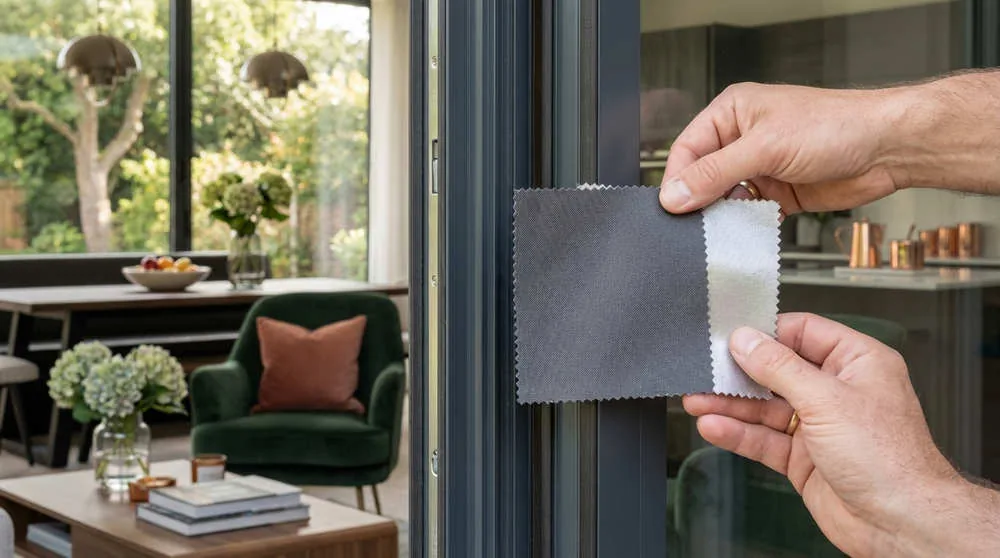
Many have a special reflective or metallised backing, which means you can have a dark, dramatic colour facing into your room while the backing does the heavy lifting of reflecting heat away. You get both the look you want and the performance you need.
Managing Glare and Preserving Your View
When looking at screen fabrics, you’ll often hear the term Openness Factor (OF). This simply refers to the percentage of tiny holes in the fabric’s weave. A low openness of 1% offers more privacy, while 3-5% often strikes a good balance.
But here’s a common mistake we see people make: judging on openness alone. The fabric’s colour plays a huge role.
A dark fabric, even with a lower openness, often provides a clearer, crisper view because it absorbs stray light and reduces glare on TV or computer screens. A light-coloured fabric can diffuse light through its yarns, creating a hazy effect that can make glare feel worse and obscure the view.
This presents a real challenge for standard fabrics: the one that’s best for heat (light) is often worst for glare, and the one that’s best for the view (dark) can make a room feel hotter.
An Invisible Threat: A Cautionary Tale of a Damaged Floor
I remember working with a family a few years ago who had just installed the most beautiful, pale Scandinavian-style wooden flooring throughout their new open-plan living space. They loved how the sunlight poured through their large sliding doors, lighting up the grain of the wood. They chose some stylish, dark decorative blinds, thinking they had solved the problem.
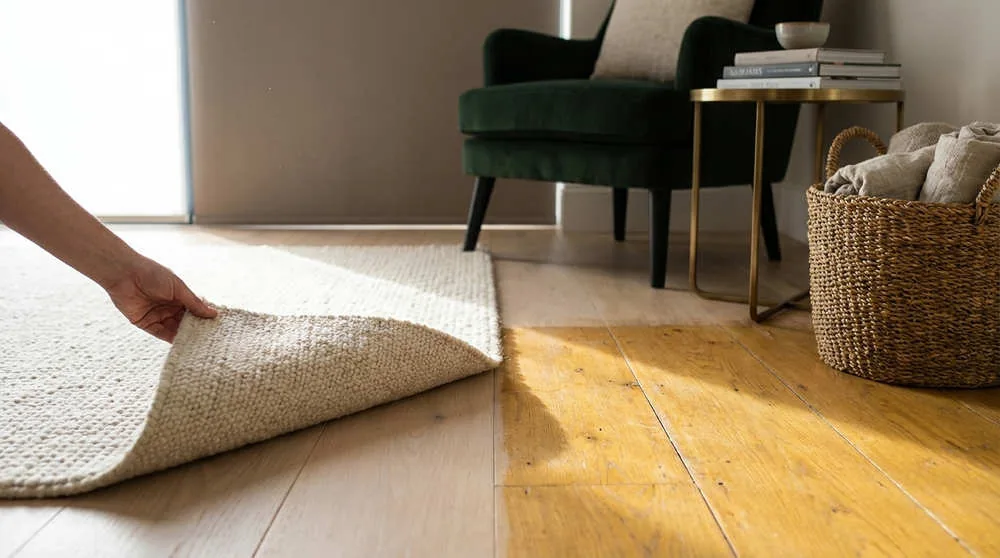
About a year later, they called us. When they moved a large rug that had been in the centre of the room, they were horrified. Underneath, the wood was perfect, but the surrounding floor, which had been exposed to the sun, was a faded, yellowed version of its former self. The sunlight, passing through the blinds they thought were protecting the room, had been silently bleaching their expensive new floor.
This is why we always talk about the ‘agents of destruction’ – the sun’s invisible UV rays. A fabric’s UV Transmittance (Tuv) measures how much of this damaging radiation gets through. It’s the invisible job of a blind fabric, and arguably the most important for protecting your investment. Choosing a fabric with a certified low UV transmittance is a deliberate choice to prevent the silent, costly damage that can happen over time.
Making Your Choice with Confidence
Understanding the Trade-Offs
Life is full of compromises, and standard blind fabrics are no different. It’s about being honest about what’s most important for your space.
If you choose a standard dark fabric for a better view, you must accept the room will get warmer. If your budget only allows for a standard fabric, a lighter colour will be better for heat, but you will have to compromise on glare control and the clarity of your view.
Acknowledging these trade-offs is the key to making a choice you’ll be happy with for years to come.
A Simple 3-Step Process to Follow
We believe that knowledge gives you power. Here’s how you can approach the decision with confidence:
- Define Your Priority: Before you look at a single sample, decide what your biggest problem is. Is it unbearable heat, blinding glare on your TV, or protecting your new wooden floor?
- Ask the Right Questions: When you’re shown a fabric, don’t be afraid to ask for the technical data. A simple, ‘What is the Solar Reflectance and UV Transmittance of this fabric?’ will show you know what you’re talking about.
- Request a High-Performance Option: To make a fair comparison, specifically ask to see technical fabrics with reflective backings so you can weigh them up against the standard options.
Next Steps
If you’d like to talk through the best performance fabrics for your space, our specialists are here to help. Call one of our friendly team on 01256 345580 or book an appointment here.
Choosing the right fabric doesn’t have to be a source of anxiety.
Armed with this knowledge, you can move forward with confidence, knowing your choice will not only look beautiful but will finally make your dream space the comfortable, usable, and protected haven you always imagined.
You’ve invested so much in a home filled with light and a connection to the outdoors. Now you have the understanding to manage that light, ensuring the dream you started with is the one you get to live in, every single day.