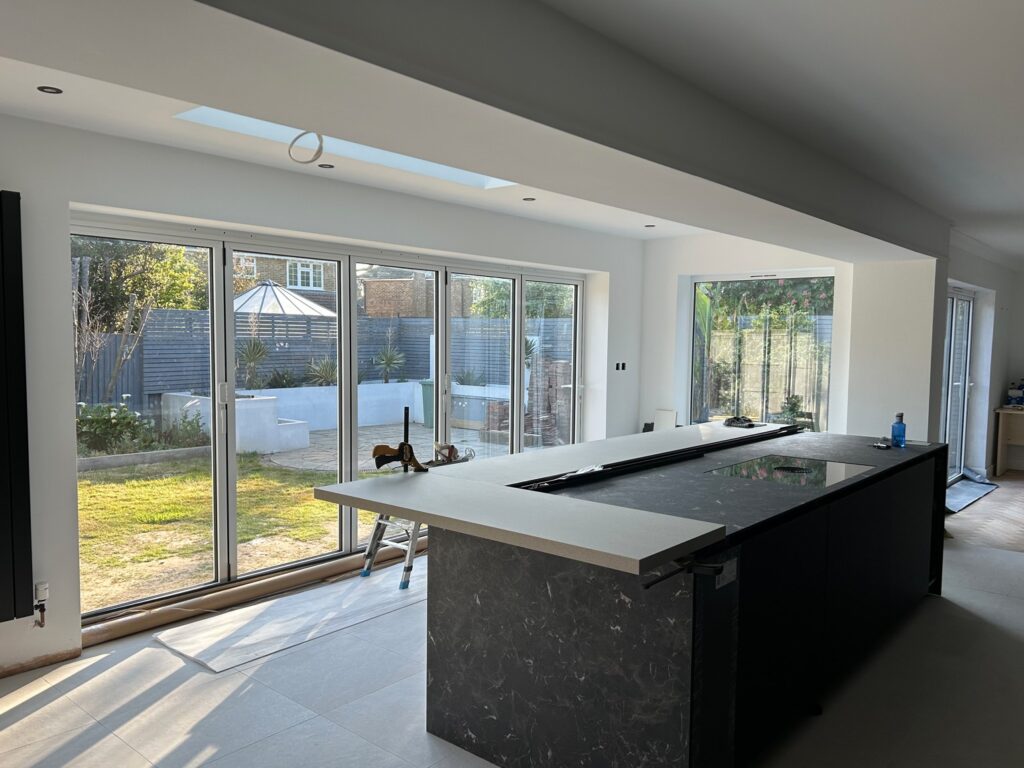
The space is almost complete. The last trades are finishing up, tools are being packed away, and the room is beginning to settle into itself. The glazing is in, the light is moving across the floor, and it no longer takes much imagination to picture everyday life.
It is usually around this point that another thought appears. A practical one. A finishing one.
What about the blinds?
During the build, there were opportunities to hide blinds and wiring. The opportunity for first fix concealment is gone, but the potential for clean lines and an architectural finish is still very much achievable.
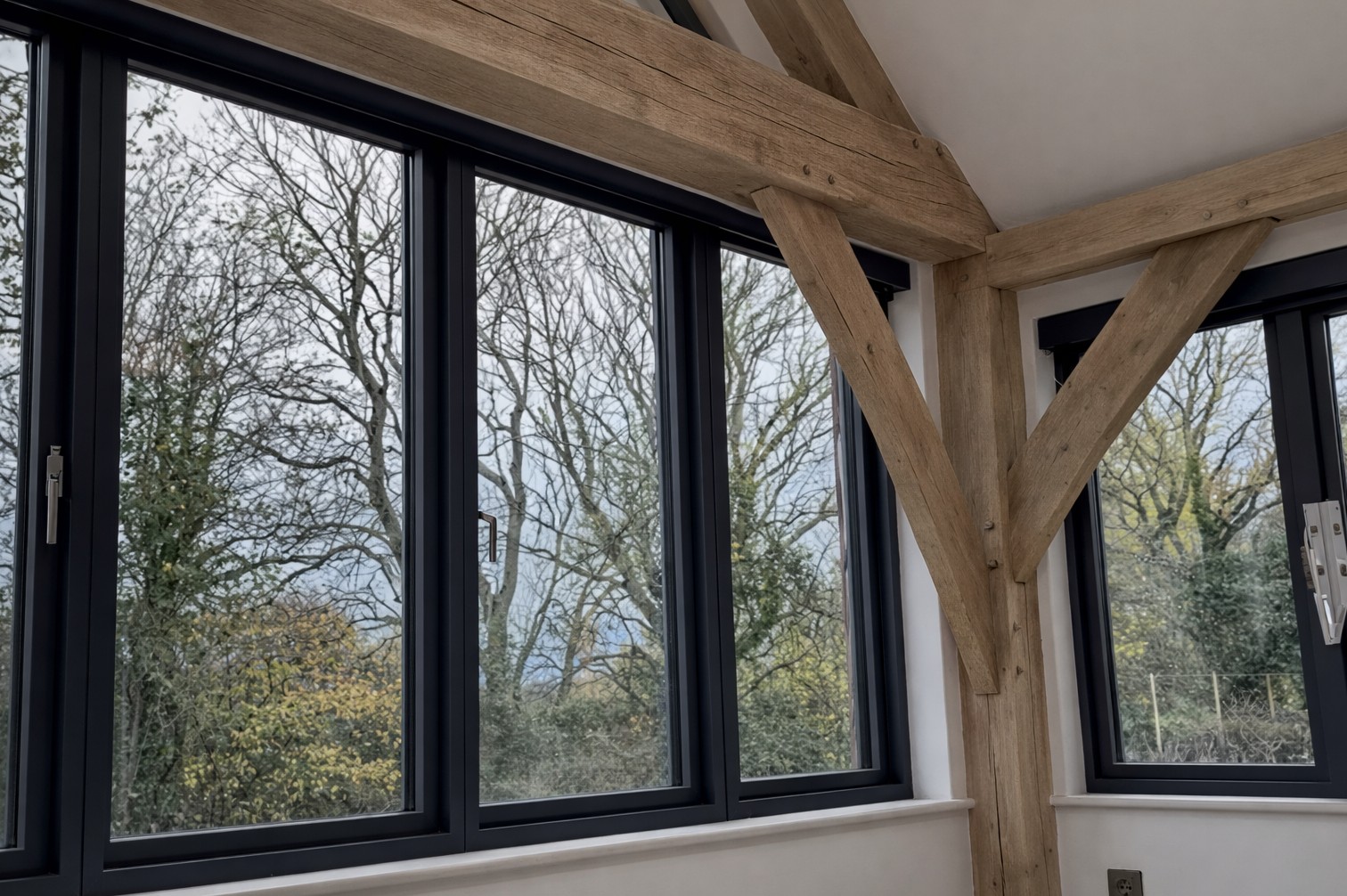
Retrofitting Electric Blinds After the Build
The Technical Realities That Shape a Premium Finish
Once the build is complete, the challenge is simple: how do we add blinds that look deliberate, refined and fully integrated with your glazing? The answer lies in understanding the components, the limitations, and the design decisions that protect the aesthetic of your finished space.
The Cassette: Where Everything Begins
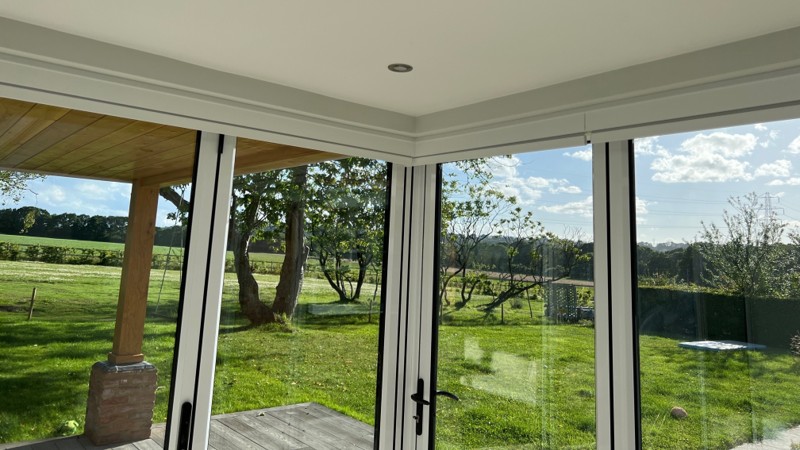
For retrofit projects, the cassette is the most visible part of the system. We use an 80 mm² powder‑coated aluminium box, finished to a specific RAL colour that matches your glazing framework. This colour match is not optional. It is what makes the blind look like it belongs to your architecture rather than being added afterwards.
Inside that cassette, the fabric roll must fit comfortably. Depending on the fabric thickness, you should be able to achieve blinds up to 2400 mm tall.
The Hem Bottom Bar and Everyday Practicality
The 35 mm hem bar is usually positioned on the room side. Away from the glazing is intentional. It keeps the bottom bar clear of door handles and ensures the blind can travel cleanly down the glass without obstruction. It also gives a more consistent visual line when looking at your glazing. This needs to match the cassette and your glazing framework.
Width, Deflection and the V‑Effect
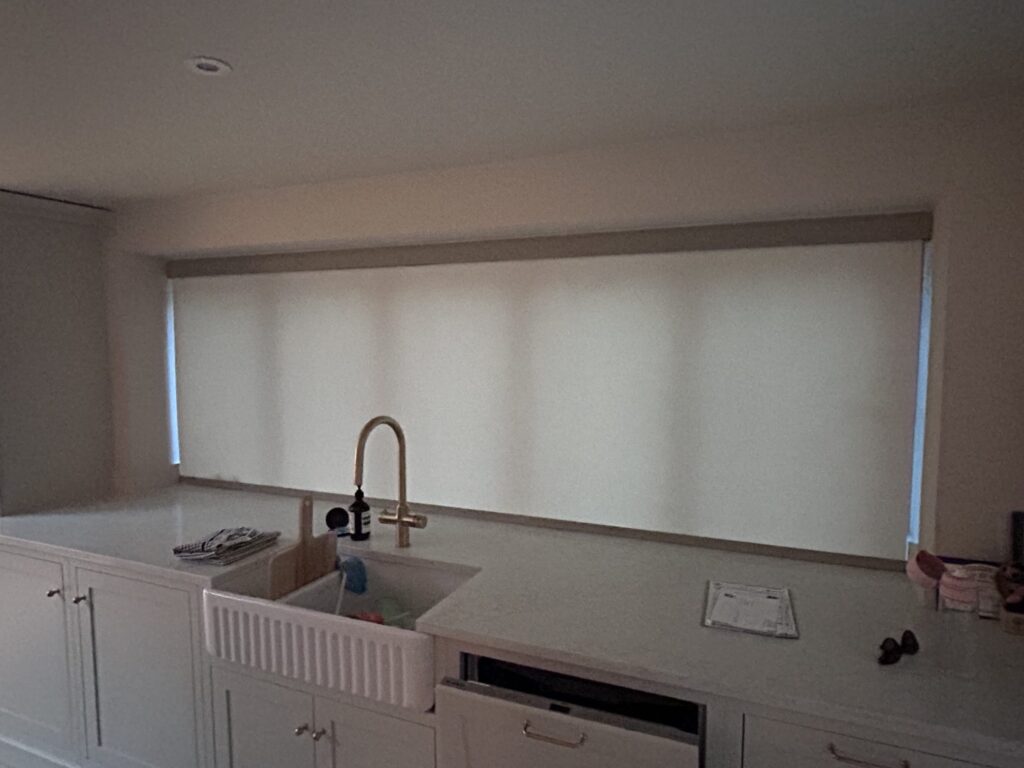
Every blind tube deflects under its own weight including the fabric. The wider the blind, the more visible this becomes. Once deflection exceeds a couple of millimetres, the fabric begins to form a V‑shape. This is known as the V‑effect, and it is the enemy of a clean, flat‑hanging blind.
To avoid this deflection, a single blinds maximum width is calculated and limited depending on the fabric. Typically this will be beween 2000mm & 2500mm. If the goal is a perfectly flat finish, these limitations need to be respected.
Designing for Larger Glazing
When the glazing is wider than a single blind can comfortably span, there are two approaches.
Multiple Blinds, One Continuous Line
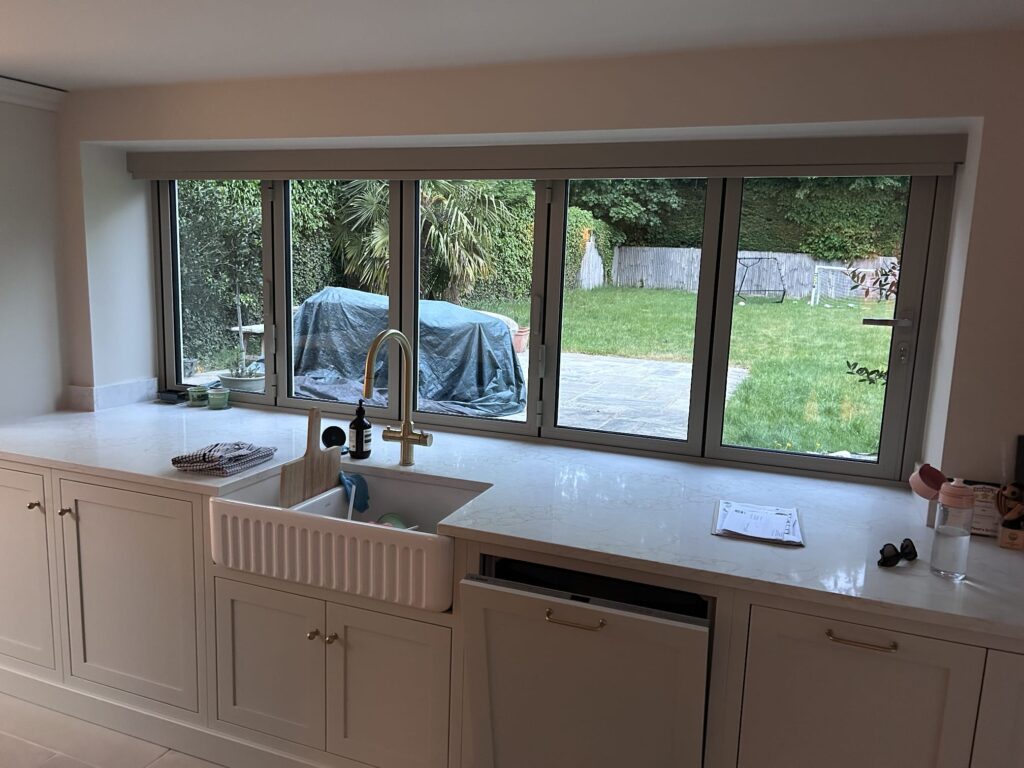
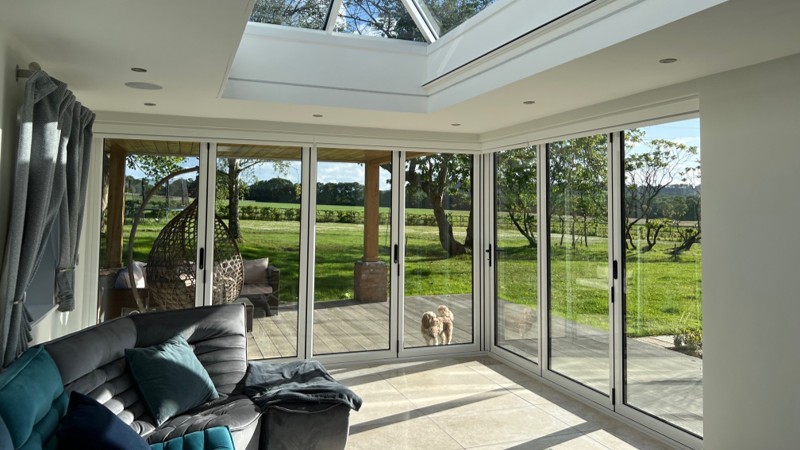
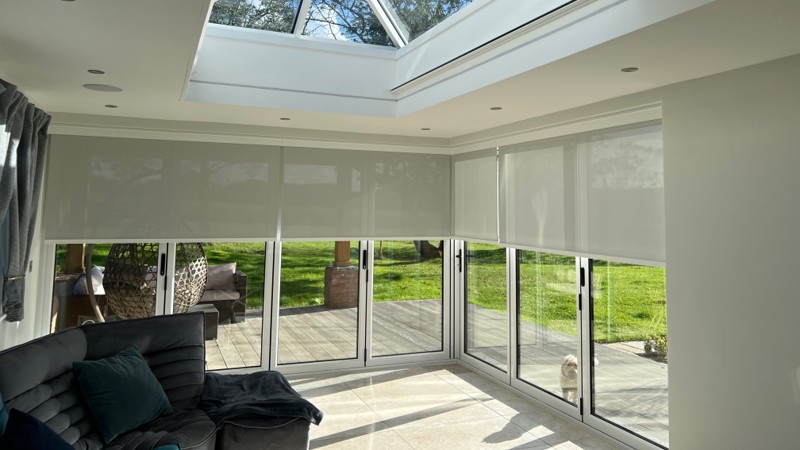
We can install multiple blinds with their headboxes mounted back‑to‑back. This creates a continuous architectural line across the top of the glazing. It also gives you flexibility: one blind can be down for glare control while another remains open for view.
There will be gaps of around 50 mm between the fabrics. These gaps should always be aligned with the glazing framework so the system feels intentional and symmetrical.
Zoom Tech Deflect Zero for Wider Spans
If fewer gaps are preferred, ZoomTech Deflect Zero technology allows for wider blinds while still fitting inside the 80 mm² cassette. The anti-deflection technology eliminates deflection, keeping the fabric flat at larger widths on narrow tubes.
A single ZoomTech designed electric blind could comfortably cover the 4.4 m × 2.2 m bifold doors. For even wider systems, we may combine ZoomTech blinds with standard blinds, but the key is consistency.
Consistency Is Everything
To maintain a unified appearance, all blinds in the space must use:
- the same cassette size
- the same tube diameter
- the same motor type
This ensures the blinds travel at the same speed, retract into identical boxes, and look like one coordinated system rather than a collection of mismatched parts.
The Hero of Retrofit: Somfy Sonesse Battery Motors
Retrofitting is only possible because of the Somfy Sonesse 40 and 30 Li‑Ion motors. These ultra‑quiet battery motors remove the need to run power cables through your finished home. They are discreet, powerful and designed specifically for premium interior shading.
With everyday use, the batteries typically need charging only a couple of times a year. Control is handled through Somfy RTS radio technology, giving you the option of:
- handheld remotes
- timers
- sun sensors
- Alexa voice control
- full automation through the Somfy TaHoma app
This is modern shading without disruption to your finished space.
A Mindset Shift
A finished space deserves solutions that respect the work already done.
A retrofit blind should not interrupt the room or compete with the glazing. It should settle into the architecture with the same quiet confidence as the frame it sits against. When the cassette colour is right, when the fabric hangs true and when the motor moves without drawing attention, the blind supports the room rather than changing it.
Good retrofit design is about clarity. It is about choosing components that work with the structure, not against it. When the system is specified with care and installed with precision, the blind becomes part of the glazing and the room continues to function exactly as it was designed to.
Watch These Blinds In Action
Your vision for your home is worth protecting. Whether planned from the very beginning or added thoughtfully later, the right shading ensures the dream you invested in is one you can live in and love, every single day.
If you’d like to talk through the options for your home, our specialists are here to offer friendly, no-pressure advice. Please call us on 01256 345580
Other Related Articles
What should I know about retrofitting electric blinds? (Pros and cons) – WindowTreat
Large sliding and bi-fold doors. Which blind solutions are best? – WindowTreat
How Saving Nigel’s Dream Space Launched S.H.A.D.E for Architecturally Designed Builds – WindowTreat