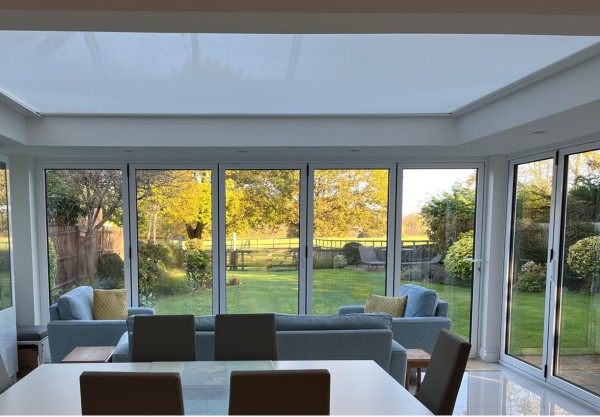
If you’re planning a beautiful glass extension, a new build with large picture windows, or a renovation with stunning roof lanterns, you’re focused on the dream: light, space, and a connection to the outdoors.
But in our experience, the single biggest mistake homeowners make is treating shading as an afterthought.
It’s completely understandable. You’re juggling architects, builders, and a thousand decisions about kitchens and flooring. Blinds seem like a simple finishing touch to be dealt with at the end.
The reality is, leaving shading until it’s too late is the number one regret we hear. Suddenly, that “dream” room is an unusable greenhouse, you’re getting blinding glare on your TV, and the only options left are a compromise.
Planning your shading isn’t just about aesthetics; it’s a critical part of your project’s budget, function, and comfort. This guide will walk you through the entire process, step by step, so you can avoid the pitfalls and protect the vision for your home.
To help you get started, here are the key takeaways from our experience.
Key Takeaways
- Plan for blinds before first-fix to conceal systems and hide power cables.
- Leaving shading late often leads to compromises, but minimalist retrofit options still exist.
- A specialist company diagnoses comfort problems (heat/glare) rather than just fitting a product.
- The true cost includes engineering and performance fabrics, not just the blind itself.
- Cheaper blinds can lead to the “buy twice” problem if they fail to perform or look right.
When is the Right Time to Plan for Electric Blinds?
The simple answer is: as early as possible.
We know it feels like just another decision, but honestly, for any specialist solution, particularly automated electric blinds, planning needs to happen before the plasterboard goes up. Why? Two key reasons:
- Concealed Solutions: If you want that flawless, minimalist look where blinds completely disappear into the ceiling, you need to design in the recess (or ‘pocket’) from the start. This becomes part of the ceiling structure.
- Power: Electric blinds need power. Planning early means your electrician can run the wiring to the correct locations during the first-fix stage, meaning no chasing into your brand-new walls and re-plastering later.
This early planning is the core of our S.H.A.D.E. principle, thinking about shading as part of the architecture, not an add-on. It saves you mess, money, and massive compromises down the line.
For a detailed timeline, read our full guide: When’s the right time to plan electric blinds for my extension?
Common Planning Mistakes Architects & Builders Make
Your architect and builder are experts at what they do, but shading is a highly specialist field. We often find that even the best design teams can overlook a few key details, simply because it’s not their core focus.
Their priority is delivering your architectural vision, maximising light and space. Our priority is making that space comfortable and usable all year round.
Common oversights include underestimating the sheer amount of heat gain (even from high-performance glass), or not allowing the correct amount of space for a concealed blind’s mechanism.
This isn’t about blame; it’s an opportunity for you to be an informed partner in the process.
See the common pitfalls to discuss with your design team: What common glazing and shading mistakes do architects make?
What if My Architect Didn’t Plan for Blinds? (It’s Not Too Late)
First, take a deep breath. If your walls are plastered and your extension is finished, you are not alone. This is the single most common situation we encounter.
You’re probably feeling frustrated that your beautiful new space is unusable, and worried that any solution will look bulky and ruin the clean lines you’ve paid for.
[INSERT PHOTO]
[CAPTION: Planning for power and concealment (left) during the messy build phase is the secret to achieving a flawless, minimalist finish (right) later on.]
While it’s true that a truly concealed, “invisible-in-the-ceiling” solution is probably off the table without major remedial work, it is absolutely not too late to achieve a beautiful, minimalist, and highly effective result.
Specialist retrofit systems are designed for this exact scenario, using ultra-slim headboxes and clever installation techniques to look sleek and discreet.
Explore your options for finished rooms:
- My architect didn’t plan for blinds; is it truly too late to get the minimalist look I wanted?
- What should I know about retrofitting electric blinds? (Pros and cons)
How to Choose the Right Specialist Company
The difference between a high-street blind fitter and a shading specialist is the difference between buying a product and investing in a solution.
A general fitter will typically sell you a standard-size blind from a catalogue. A specialist will first diagnose your problem – is it heat, glare, privacy, or aesthetics? – and then design a bespoke solution that addresses it.
They understand building physics, how to manage heat, and how to integrate technology seamlessly.
Look for a company that has a transparent, expert-led process, asks you questions about your lifestyle, and is honest about the pros and cons of different options.
Read our guide on what to look for: What should I look for when choosing a specialist electric blind company?
Understanding the True Cost: A Transparent Breakdown
Let’s be open about this: specialist electric shading is a significant investment. It’s often more than homeowners initially budget for, and the reality is, the cost isn’t just in the fabric you see.
The true investment is in the precision engineering. It’s in the robust, silent motors designed to last for years, the advanced technical fabrics that actively reflect heat (not just block light), and the sophisticated tensioning systems that stop a 3-metre-wide roof blind from sagging.
When you budget, it’s helpful to think about the “Total Cost of Ownership.” A cheaper blind that sags, fails, or doesn’t solve your heat problem will only lead to frustration and the cost of replacing it.
It’s best to view specialist shading as an essential part of the build, just like your high-end worktops or flooring.
For a complete financial breakdown, explore our cost guides:
- How much do electric blinds really cost? (An honest UK guide for 2025)
- What are the real-world maintenance and running costs for electric blinds?
- How does the cost of specialist shading compare to other high-end extension features?
Premium vs. Budget: What Are You Really Paying For?
This is perhaps the most important question. The price difference between a budget solution and a premium one can be stark, and it’s crucial to understand why.
You’re paying for reliability and performance. A budget system might use a standard motor and simple guide wires. A premium system uses specialist motors and engineered zip-tensioning systems to keep the fabric perfectly taut, no sagging, ever. You’re paying for fabrics that actively manage heat, not just block light.
We see the alternative play out more often than you’d think. A customer came to us, we talked them through the right high-performance system, and the price understandably caused them to pause. They opted for a cheaper alternative from another supplier.
Six months later, the phone rang. It was the same customer. They were frustrated and unhappy. The cheaper blind looked like a “wash line,” it sagged in the middle, and it just didn’t deliver the quality feel their new extension deserved.
They ended up asking us to rip out the other solution and install the system we originally proposed. They bought twice, and went through all the cost, installation, and disappointment twice over.
Now, does this mean budget blinds are always a bad idea? Honestly, no. If you’re in a rental, a utility room, or perhaps selling your home in six months, a simple, off-the-shelf blind might be a perfectly sensible choice.
But for your “dream” extension, where aesthetics and comfort are paramount, investing in the right engineered solution from the start is what protects that dream.
[INSERT PHOTO]
[CAPTION: An intelligent home works for you. A small sun sensor can automatically tell your blinds to close, keeping your home cool and comfortable before you even walk in the door.]
You can see a detailed comparison of the market in our premium vs budget electric blinds guide and an honest breakdown of what you’re paying for versus high-street options here.
What is the Installation Process Really Like?
We know that having tradespeople in your home can be disruptive. A specialist installation should be a clean, professional, and respectful process.
A specialist’s process is built around clarity. It typically starts with an initial chat and a video session to understand your space and your challenges.
This is followed by a detailed site survey where precise measurements are taken. On installation day, the fitting team should carry out the work meticulously, with full respect for your home, and should only leave when the system is working perfectly and you are 100% happy with how to use it.
See what to expect on fitting day: What is the actual installation process for specialist blinds, from first call to final fitting?
The Ultimate Goal: An Intelligent, Effortless Home
All this planning is about more than just a blind. It’s about creating a home that actively looks after you.
As specialists, we live with this technology ourselves. In my own home, I have two electric blinds. They are programmed to close automatically about 15 minutes before dusk, so the house feels private and cosy in the evening without me ever having to think about it. They then open again in the morning.
They’re also connected to a sun sensor. If the room starts to get too hot while I’m out, the blinds will close by themselves.
I can come back three hours later and the room is perfectly comfortable because the blinds have been working for me. That’s the difference between a simple mechanical blind and an intelligent system that becomes a seamless part of your life.
A Final Checklist: What to Ask Your Architect & Builder Today
You are the most important person on your project team. To help you get the conversation started, here are 4 simple questions to take to your next project meeting:
“How are we planning to manage solar heat gain and glare from all this glazing?”
“Have we planned the locations for the mains power supplies for electric blinds?”
“Should we be designing in a recess or pocket now to conceal the blinds for a minimalist finish?”
“What’s our plan for ensuring night-time privacy without compromising the clean design?”
Planning early is key to seamlessly integrating comfort and control into your design. Call us on 01256 345580 to find out more, or Book Appointment for an initial chat and a video session to explore the possibilities for your space.