You’re planning that beautiful glass extension, the one that will connect you to the garden and flood your home with light. But have you ever had that nagging thought: what do people who’ve already done this really wish they’d known about their electric blinds? What if you could sidestep the costly mistakes and get it right the first time? That’s exactly what this is: a collection of hard-won lessons from homeowners just like you.
Here’s what you need to know to protect your dream.
- The “Buy Twice” Trap: Choosing a cheap blind first often leads to disappointment and paying again for a quality solution later. The real cost isn’t just financial; it’s the daily frustration of a product that doesn’t work or look right.
- The Biggest Regret: The most common and painful regret is leaving shading to the end. For the most elegant, minimalist solutions, planning has to happen from day one.
- The Power of Early Planning: Thinking about shading as part of your architecture, not a decorative add-on, is the key to getting a result that enhances your home’s comfort without compromise.
- You’re in Control: Asking your architect one simple question early on can be the difference between a compromised extension and the dream space you envisioned.
The Dream vs. The Uncomfortable Reality
The dream of a light-filled extension is incredibly appealing. But the reality is that in the UK, we’ve traditionally built homes to keep the warmth in, often forgetting what happens when the sun really shines.
The result? That stunning extension can quickly turn into an unusable ‘greenhouse’.
Having been at the sharp end of hundreds of these projects, we’ve seen the frustration that follows. Our goal is to arm you with the knowledge we believe every homeowner deserves, helping you create a space you can love and use, every single day.
Regret #1: “I Wish I Hadn’t Gone for the Cheap Option First.”
It’s completely understandable. You’re deep into a renovation, and the budget is feeling the strain. You see a seemingly similar electric blind for a fraction of the price of a specialist system, and it feels like a sensible place to save some money.
The reality is, for large or complex glazing like roof lanterns and bifold doors, this is often a false economy.
The Story of Buying Twice
We see this so often we call it the story of the customer who bought twice.
It almost always goes the same way. A homeowner comes to us, and we talk them through a high-performance system, properly engineered to look taut and seamless. They pause at the price, and decide to go for a cheaper alternative.
Then, three, six, or twelve months later, the phone rings. It’s the same customer, but now they’re frustrated. The cheaper blind sags in the middle, it looks like my daughters unmade bed, and it just hasn’t delivered.
They end up asking us to rip out the old solution and install the one we first recommended, having gone through the expense and disappointment twice over.
The reason these cheaper systems fail is that they lack the engineering for demanding jobs. The motors can be unreliable, but the biggest let down is often visual. Think of it like this: without an advanced tensioning system, the fabric on a large horizontal roof roller blind will droop, creating an unsightly ‘sack of potatoes’ or ‘duvet cover’ effect that completely ruins the clean, minimalist look you invested so heavily in.
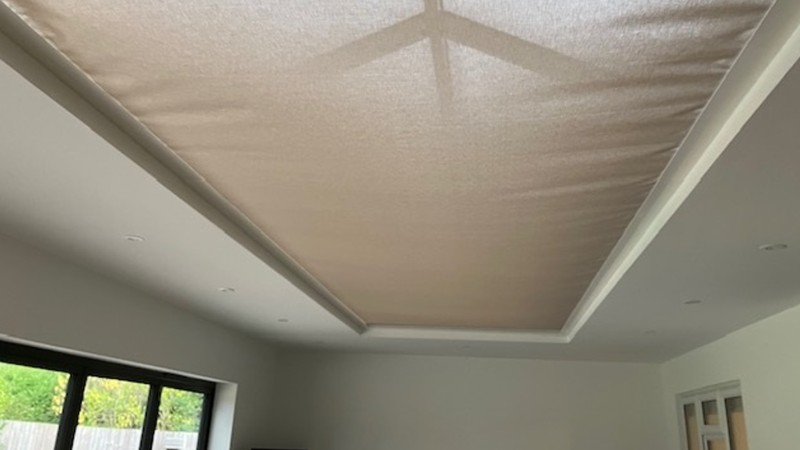
I remember customers Christine and Ricky, who had just finished painting their open‑plan extension with bi‑fold doors and a 2 m by 3 m roof lantern. The build had taken its toll financially, so when they saw the cost of a premium electric blackout system with solar‑charged battery motors, the price came as a shock. As so often happens, they chose a lower‑cost option from a less specialised company, hoping it would be “good enough” and spare them a larger investment.
Less than a year later, I received an email from a distressed Christine who had simply reached the end of her patience. The compromise they had been living with for months had taken the joy out of their beautifully finished extension. When you see the photos below, you can understand exactly why she felt that way.
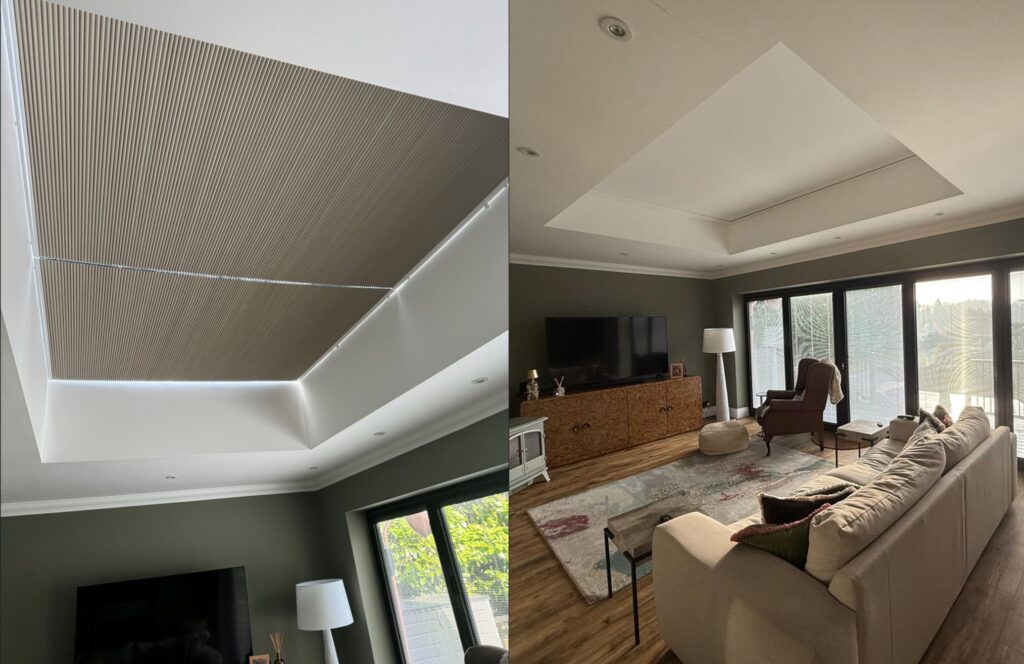
So, When Might a Cheaper Blind Be Okay?
To be completely honest, a premium, specialist blind isn’t for every single window.
If you have a small, standard window in a less-used room where high performance and flawless aesthetics aren’t the main priority, a simpler option might be perfectly adequate.
However, if you’re investing in a signature architectural feature and you value long-term reliability and a finish that honours your design, then a specialist system is for you. It’s for homeowners who want to truly solve the problem of heat and light management to make their investment usable year-round.
Regret #2: “I Wish We’d Thought About Blinds from Day One.”
This is perhaps the most painful regret because, by the time people have it, the opportunity has often passed. Shading is frequently the last thing on the list, an afterthought once the plastering is done.
At that moment, the door closes on the most elegant and minimalist solution: the concealed blind.
The Heartbreak of a Retrofit Compromise
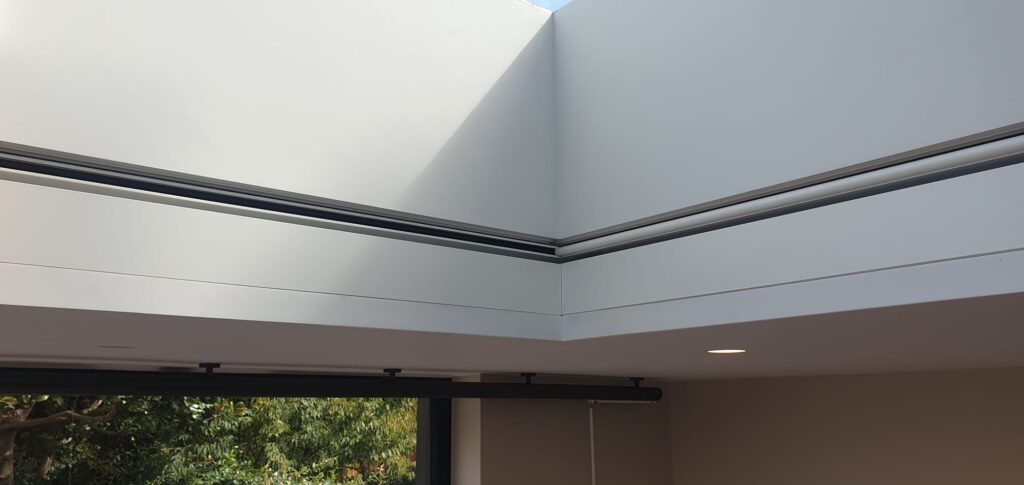
The difference is night and day. A truly concealed blind, planned for early in the build, retracts into a hidden pocket in the ceiling. It magically appears when needed and vanishes completely when not, preserving the architect’s clean lines.
A retrofitted solution, in contrast, requires visible hardware to the wall or ceiling. It does the job, but it can feel like a compromise, an add-on that interrupts the dream.
This is precisely why we developed our ‘S.H.A.D.E.’ principle. It’s not a product, but a simple philosophy: treating shading as an integral part of your home’s architecture from the very beginning. By designing it in, you protect your investment and keep your dream alive.
Even the best architects, focused on light and space, can sometimes overlook the finer details of shading. Having this knowledge allows you to have a more collaborative conversation with your design team, ensuring your comfort is planned for, not just hoped for.
Your Hindsight, In Advance: Two Rules to Remember
If you take anything away from the hard-won lessons of other homeowners, let it be these two rules:
- Rule 1: Think value over price to avoid the frustration and cost of buying twice. A quality system is an investment in your daily comfort.
- Rule 2: Treat shading as part of your architectural plan, not a decorative add-on. Planning for it early unlocks the most elegant solutions.
A simple, practical step is to ask your architect at your next meeting: “Have we planned for how we’ll control the heat and light from all this beautiful glass?” That one question can make all the difference.
From House Extension to Your Dream Space
Ultimately, having this knowledge isn’t just about blinds; it’s about empowerment. It’s about ensuring the significant emotional and financial investment you’re making results in a space you truly love and can use every single day.
The choice is between accepting a compromise later or planning for perfection now.
Your vision for your home deserves to be realised without issue. By thinking about comfort and control from the beginning, you’re not just building an extension; you’re creating the space you always imagined.
Planning early is key to seamlessly integrating comfort and control into your design. For a friendly chat about the possibilities for your space, give our specialists us a call on 01256 345580 or book an appointment online.