The short answer: a made-to-measure electric awning starts from around £5,000 including VAT, survey and installation. A larger setup, such as a 7 metre awning with 4 metre arms, can be £8,000 or more. Width, arm length, the brackets your wall needs and extras such as lighting set the price. For that you get shade at the touch of a button, built for UK weather, that brings itself in when the wind picks up.
What you get for the money.
- A full cassette. When it’s closed, the fabric and arms sit inside a sealed aluminium case, out of the rain and dirt.
- A mains motor, a remote and a wind sensor. The sensor brings the awning in when gusts pick up, even when you’re out.
- Fabric that keeps its colour. 100% solution-dyed acrylic that resists water and dirt, with a 10 year warranty.
- Brackets made for your wall, so the awning goes where you want it and is fixed into structural brickwork.
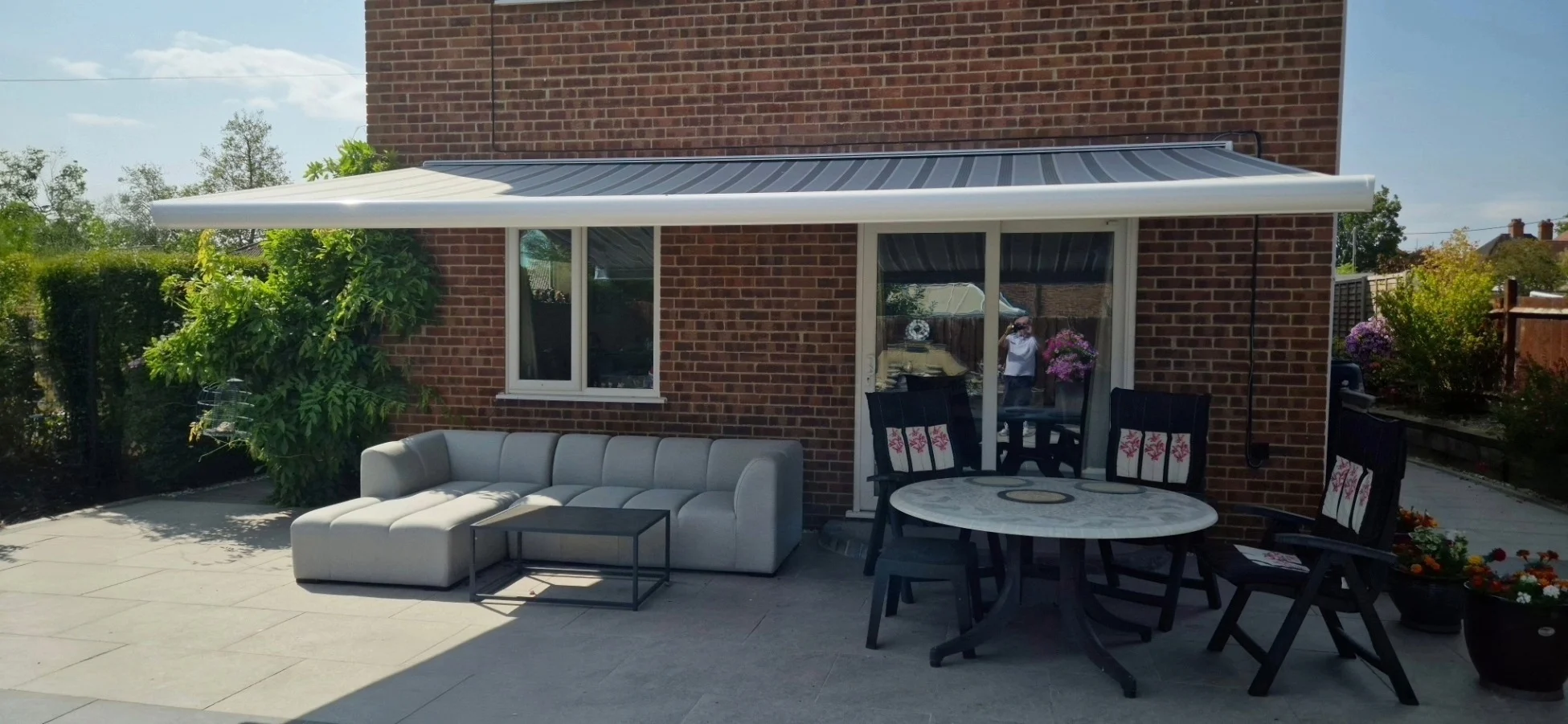
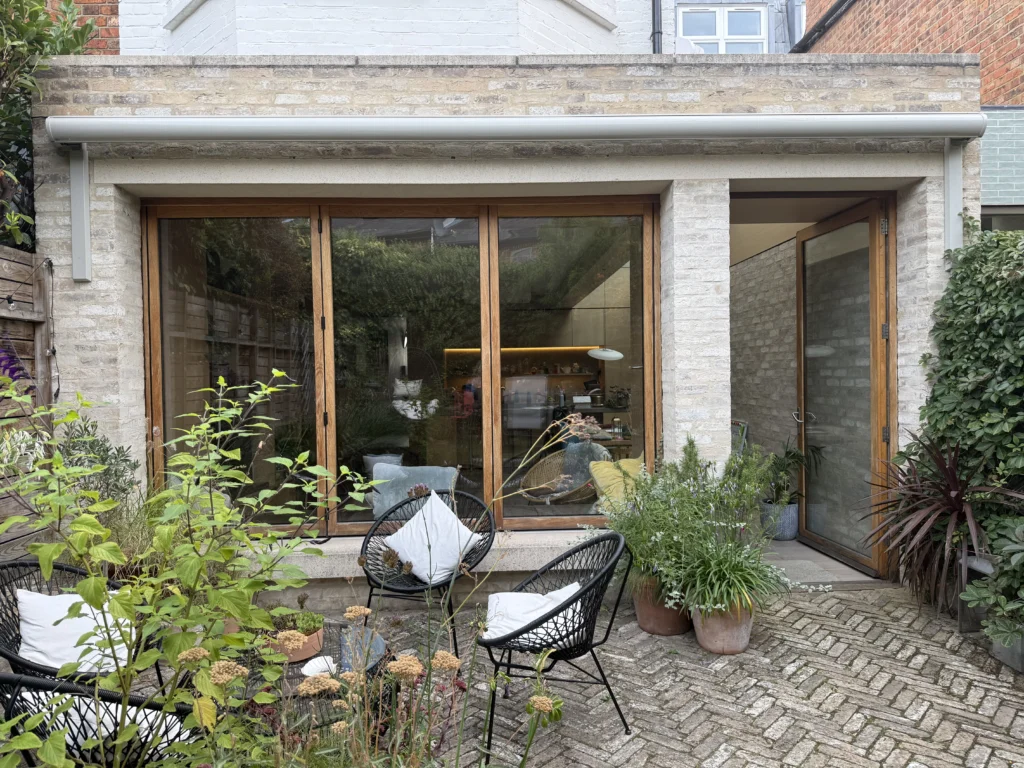
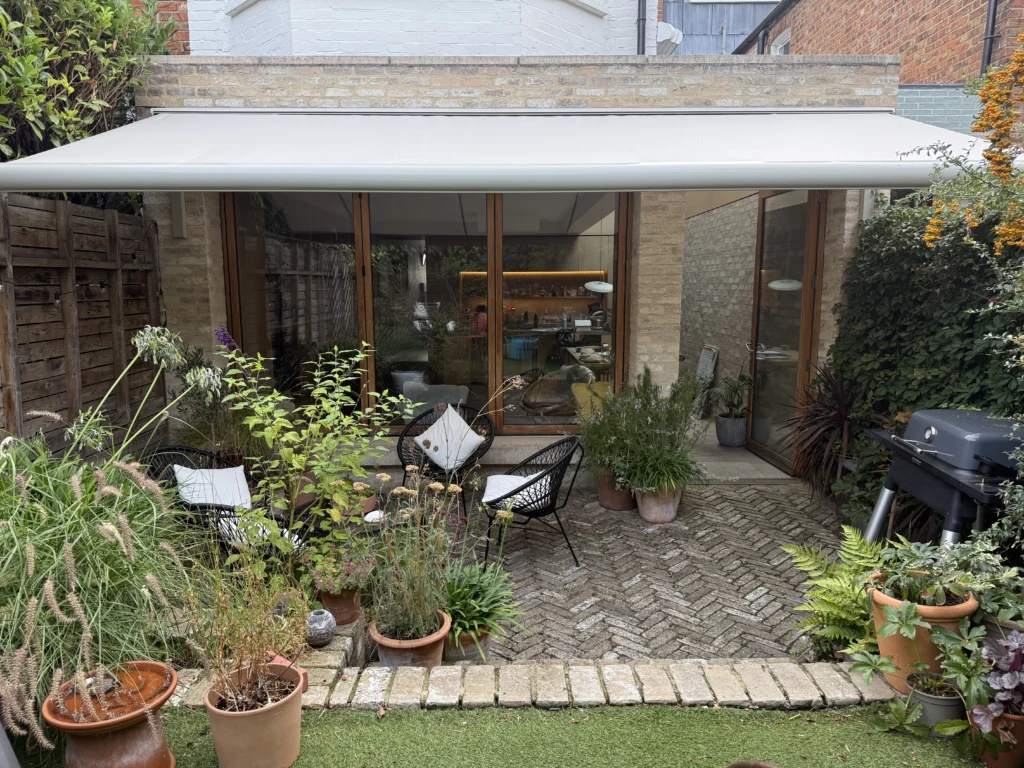
Janice’s extension. After we fitted three awnings over her glass roof, Janice came back for her rear wall: a full-cassette awning over 5 m wide with 2.1 m arms, on bespoke spreader plates, powder-coated to suit the brick. A wind sensor brings it in automatically. Read Janice’s story.
It Is Not Just Fabric. It Is Engineering
The visible part of your awning is only the beginning. The real cost lies in the engineering behind it. Reinforced arms, precision die cast aluminium components, wind sensors, powder coated aluminium cassettes, and a motor that quietly does its job day after day.
The end-fix awnings we fit are rated to Beaufort force 5 (a fresh breeze, up to about 24 mph) when correctly installed, and the heavier multi-fix awning to force 6 (up to about 31 mph). That level of resilience is essential in the UK, where gusty afternoons are just as common as calm ones. Achieving that performance takes serious design, testing, and materials.
Long term reliability depends on rigidity. Die cast aluminium components provide the strength needed to cope with the forces placed on a UK awning. They resist twisting, bending, and fatigue far better than cheaper pressed metal alternatives.
This is one of the biggest differences between a premium system and a budget one.
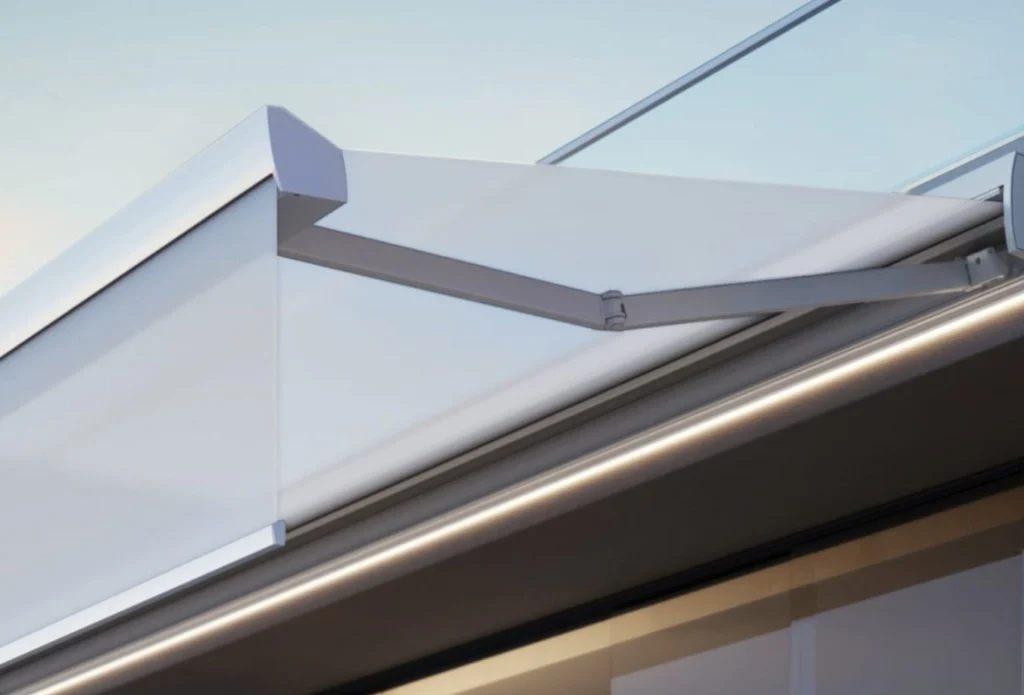
Why the Cassette Matters
The cassette is the protective housing that your awning retracts into. It is one of the most important elements of the entire system.
There are three main types:
- Open cassette
- Semi cassette
- Fully enclosed cassette
A fully enclosed cassette gives your awning the protection it needs. The projection arms and fabric disappear into a sealed aluminium housing, keeping everything safe from rain, dirt, insects, and UV exposure. This dramatically increases the lifespan of the system.
Semi and open cassettes can still be high quality, but they use far less pressure die cast aluminium and offer less protection. This is one of the biggest reasons they sit at different price points prior to cutting corners on quality components.
Fabrics That Perform, Not Just Look Good
Fabric is not an area for cost saving. It is the part of the awning that works the hardest.
A high performance fabric must be:
- Water repellent
- UV resistant
- Mildew resistant
- Fade proof
The best fabrics are solution dyed acrylics with protective coatings. The colour runs through the entire fibre, not just the surface. Think of cutting into a radish, which is white in the centre, compared to cutting into a carrot, which is orange all the way through. A solution dyed acrylic is the carrot. It keeps its colour for years.
OEKO TEX certification ensures the fabric is free from harmful substances and safe for direct skin contact. This matters if your awning shades a dining area, play space, or relaxation zone. It is one of those small details that improves everyday comfort.
The Motor: Why Somfy Matters
The motor is the heart of your awning. Reliability, noise levels, and smooth operation all depend on it.
Somfy is the leading partner in this space. Their motors are backed by a large research and development team and undergo thorough testing. The result is a quieter, more reliable motor with a strong 5 year warranty and technical back up.
Be cautious of alternatives that appear similar on paper. The difference in long term performance can be significant.
Design and Installation: The Final Piece of the Puzzle
Once you put all these elements together, the awning must be designed for your space. It needs the right number of fixings to withstand the weight of the system and the uplift forces created by wind. The installation team must understand your wall type and use the correct fixing methods.
End fix and multi fix systems, along with bespoke bracketry, ensure the awning is safe, secure, and positioned at the correct height for the required pitch.
Only when all these elements are considered are you getting the right investment.
Architect Designed, Built In Awnings
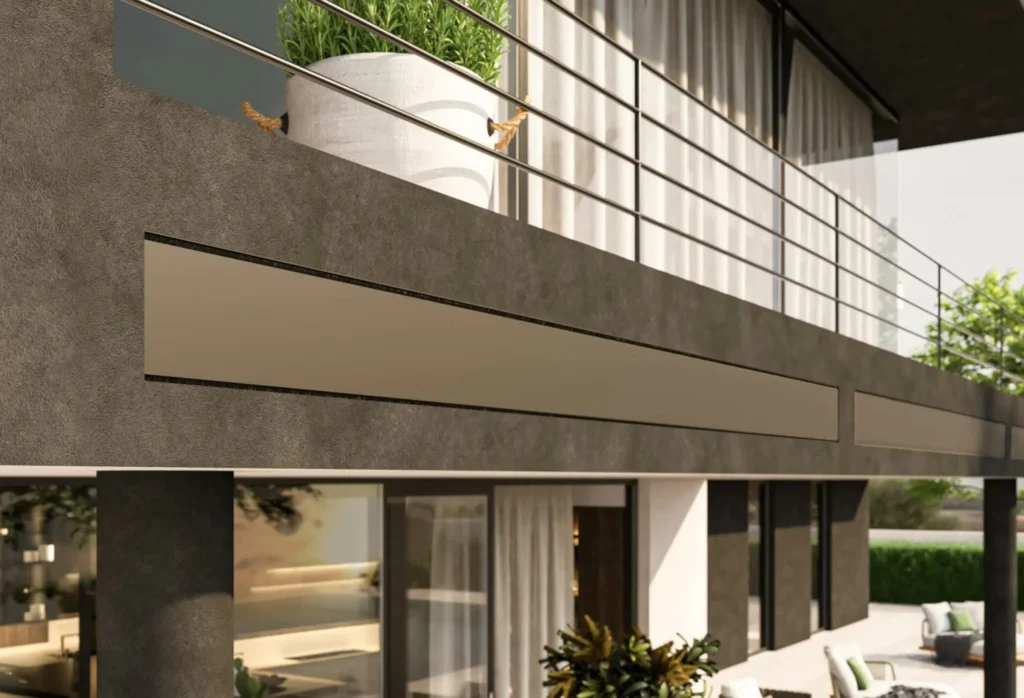
If you are at the build stage, your architect can design a built in awning that retracts into the facade of your new home. This creates a seamless, architectural finish where the awning disappears completely when not in use. It requires early planning, structural coordination, and the right cassette system, but the result is unmatched in terms of aesthetics and protection.
This is only possible when the awning is considered at RIBA Stage 2, when structural decisions and wall build ups are still flexible.
What You Can Expect to Pay
Electric awnings we fit start from around £5,000 including VAT, the manufacturing survey and installation. That covers a full cassette system, a quality motor with remote and premium fabric. As one worked example, a proposal we published for a single end-fix awning under 5.5 m wide with 2.6 m arms and a bespoke pipe bracket was from £6,425 including VAT, survey and installation.
Larger setups, such as a 7 metre wide awning with 4 metre projection arms, can exceed £8,000. Costs increase further when you add options such as:
- Integrated lighting or heating
- Custom RAL powder coating
- Bespoke bracketry for challenging wall types
- Structural engineer reports for single storey extensions
- Architectural integration for built in designs
How to Get a Cheaper Solution
Every element can be downgraded, but each downgrade has a trade off.
- Lower grade fabrics reduce longevity and fade resistance
- Cheaper motors increase noise and reduce reliability
- Open or semi cassettes reduce protection and lifespan
- Pressed metal components reduce rigidity
- Fewer fixings reduce safety and stability
You can still get a good system at a lower price point, but it will not perform at the same level as a fully enclosed, premium specification.
Is Financing Available
Many customers want to invest in high quality shading solutions, but electric blinds and awnings are not always included in the original build budget. Sometimes they become an afterthought, or unexpected project costs reduce the available funds.
To make things easier, we offer flexible financing options designed to smooth out cashflow. In most cases, this involves a 50 percent payment at the point of order, followed by a direct debit spread over 6 to 12 months at the Bank of England base rate, which was 4 percent when we checked in November 2026.
Every project is different, so we will discuss the most suitable approach with you on a job by job basis.
If you would like to explore your options or get advice tailored to your home, we are here for a friendly, no pressure chat.
Call 01256 648000.
To see how these systems look in real homes, read Janice’s story and our 4.5 m single-storey awning proposal.
Explore this topic
Worked quotation examples
Your next step