Are you an architect? Read S.H.A.D.E. for architects.
Glass without shading is unfinished.
You’re building with glass because you want light, a view and a connection to the garden.
Here at WindowTreat, we’ve seen countless inspiring architectural plans for spaces filled with light. But we’ve also seen what happens when one crucial element is overlooked in the early stages: shading.
We’ve spoken to homeowners who’ve built their dream extension, only to find it too hot to enjoy, or the glare unbearable. Their stunning new space, designed for connection and light, ends up with blinds permanently down, hiding the very features they were so excited about.
If you were designing a high-performance sports car, you wouldn’t forget the brakes, would you?
Brakes are why you can drive fast. Shading is why you can build with glass.
S.H.A.D.E. is five principles, and five questions to ask your architect or builder. It stands for:
- S: Shading Deserves to Be Designed
- H: Human-Centred Design
- A: Architectural Intent
- D: Direct the Light
- E: Environmental Performance
S: Shading Deserves to Be Designed
If light is the raw material that floods your new extension, shading is the control that makes it perfect.
Decide it while the glass is still on the drawing. The right glass comes first. The shading is designed to work with it.
Glazing without a thought for shading is an unfinished design.
Ask your architect: what glass are we using, and what is the shading plan for each window, door and rooflight?
H: Human-Centred Design
Your home is for living. Architecture should serve the people within it, creating spaces that feel good to be in.
You should be comfortable by the glass and safe behind it.
Comfort, after all, is more than just the temperature; it’s about feeling calm, present, and able to enjoy your home to the fullest.
Ask your architect: will this room be comfortable on a hot July afternoon and a cold January night? Is the glass safe if it breaks, and hard to break in through?
A: Architectural Intent
You and your architect have likely spent a great deal of time considering every detail of your new space. The clean lines, the smooth junctions, the overall aesthetic. It all matters.
What was drawn is what you should get.
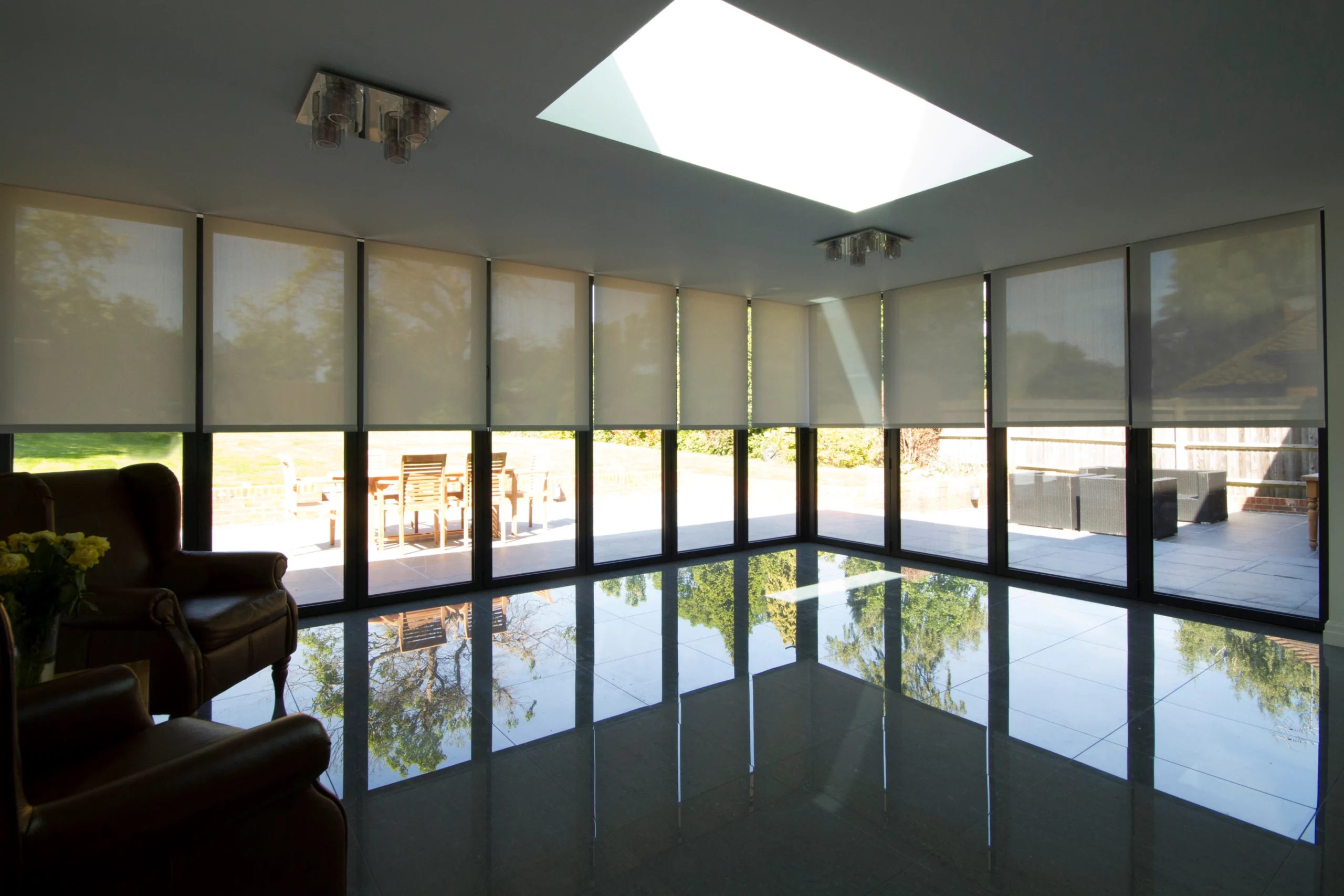
Imagine electric blinds that glide silently out of a hidden recess in the ceiling or wall, only appearing when needed. This means no visual clutter, no compromise on your minimalist aesthetic.
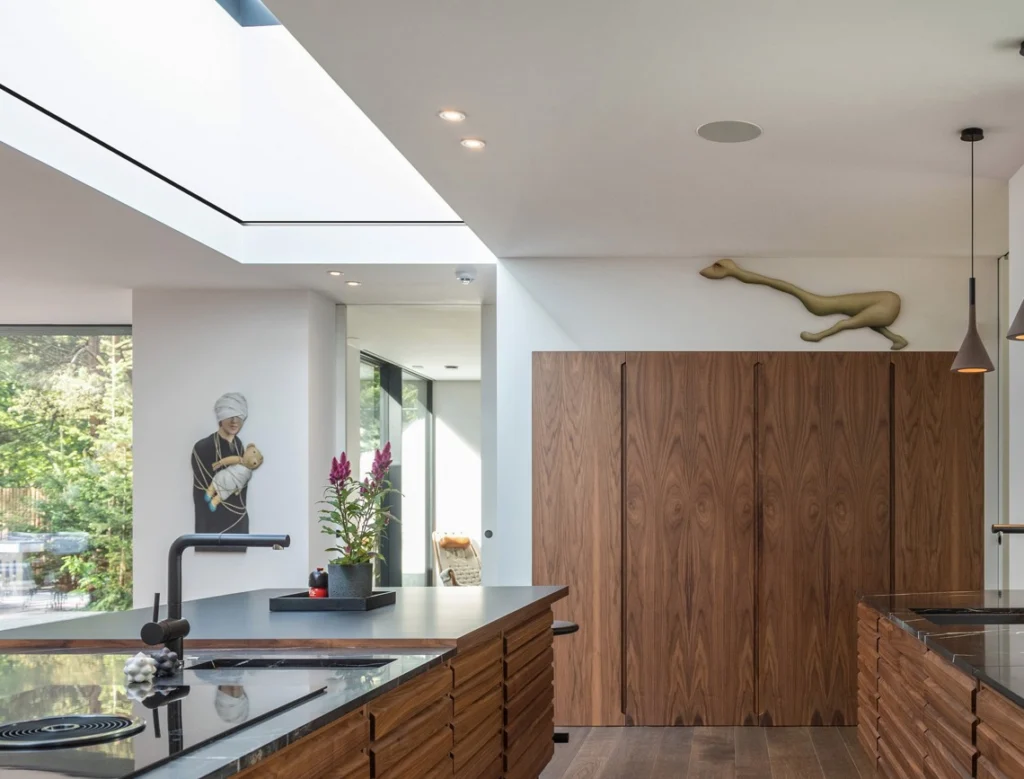
Good shading doesn’t interrupt the architecture; it allows it to breathe.
Ask your architect: where do the blinds go when they’re up, and are the space and power for them on the drawings?
D: Direct the Light
Light is why you chose glass. Shading is why you can be bold with it.
S.H.A.D.E. is about giving you that control. It means designing the glazing and the shading to work together, not in opposition.
You’ve invested in every square metre of your new space, and you deserve to be able to use all of it comfortably.
Ask your architect: where will the sun land at breakfast, at midday and in the evening, and how do we cut the glare without losing the view?
E: Environmental Performance
Thoughtful shading plays a significant role in a building’s environmental performance.
A home on the road to net zero doesn’t air-condition its glass. It shades it.
Stop the heat at the glass, and you never pay, in money or in carbon, to pump it out.
It’s about creating a home that performs well in real life, for the real people living in it.
Ask your architect: will this room need air conditioning? If so, what glass and shading would mean it doesn’t?
Keeping your dream alive
At WindowTreat, we’ve seen the disappointment that can arise when shading is treated as an afterthought. The S.H.A.D.E. principles are our commitment to preventing that.
Visionary comfort isn’t cheap. But compared to unusable space, it’s a bargain.
Still at the drawing stage? This is the best time to call. Start with the right glass, then design the shade.
Already built, and too hot, too bright or too exposed? It isn’t too late. Window film changes what your glass does, and shading does the rest.
Ring 01256 648000, or book a free call below. We’re here to help you keep your dream alive.
Your next step