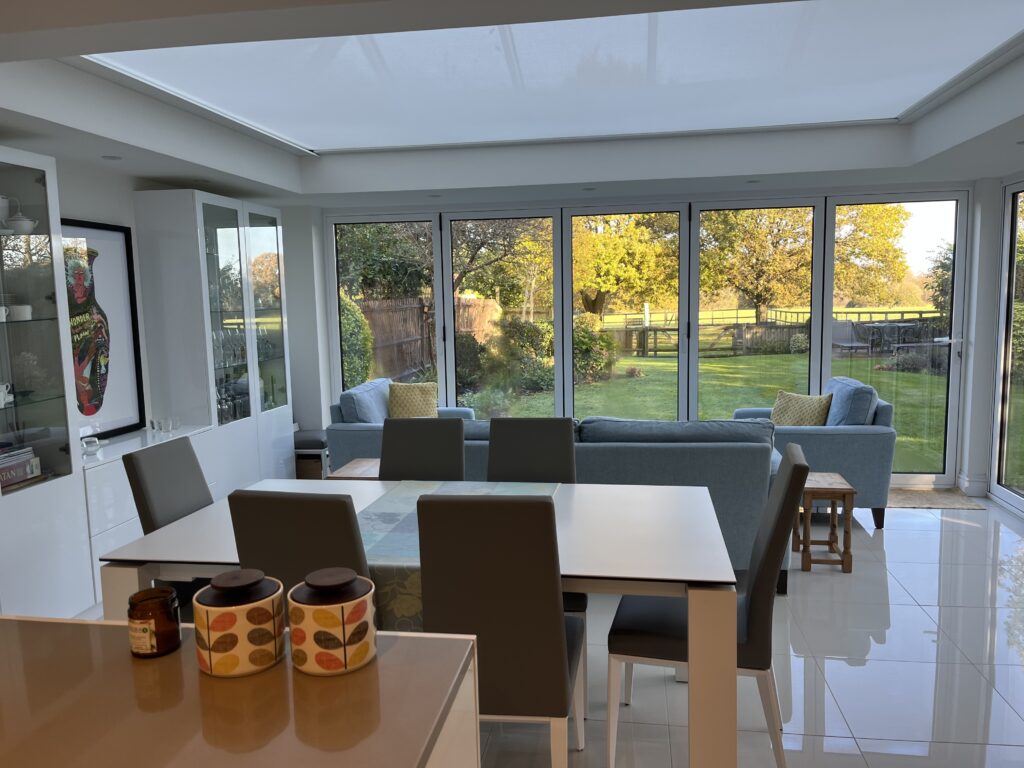
Hercules XL is a large-format electric roof blind designed for roof lanterns and skylights that extend beyond the practical parameters of smaller tensioned roller systems.
However, larger blinds require larger components. The headbox, hem bar and side channels become substantial as the dimensions increase, so the blind needs to form part of the architectural planning of the roof.
This guide explains Hercules XL sizes, how its tensioning system works, what it looks like when open and deployed, the available concealment options, fabric and power considerations, and the likely cost of the finished blind.
What is a Hercules XL electric roof blind?
An ordinary roller blind relies on gravity. That works on a vertical window, but it does not work beneath horizontal or sloping glass. The fabric needs additional support and tension to help prevent excessive sagging.
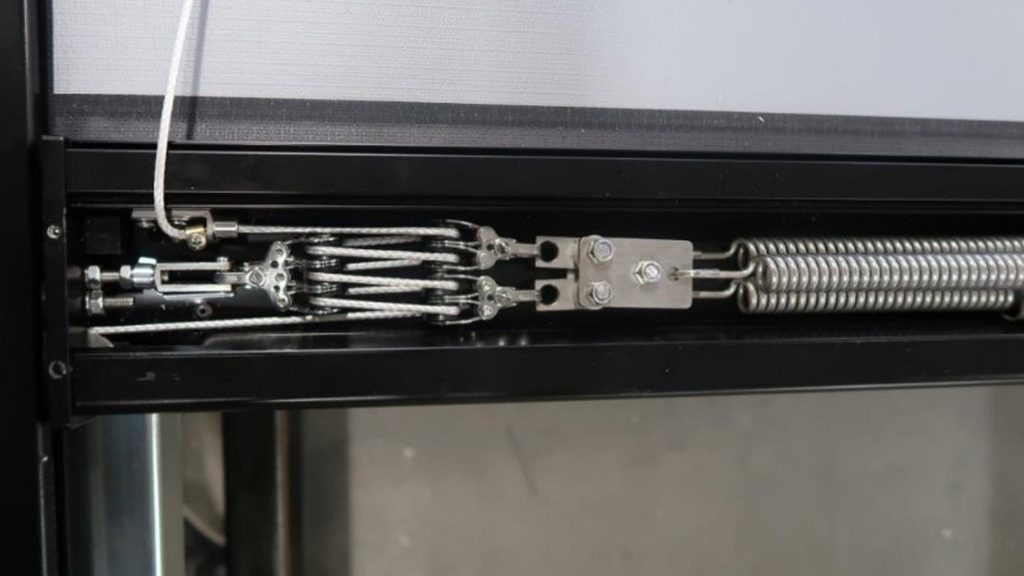
Hercules XL solves this problem with a heavy-duty tensioned mechanism. Extension springs concealed inside the moving hem bar connect to Dyneema cords running through the side channels and pulley system. Together, they maintain fabric tension as the blind travels across the opening.
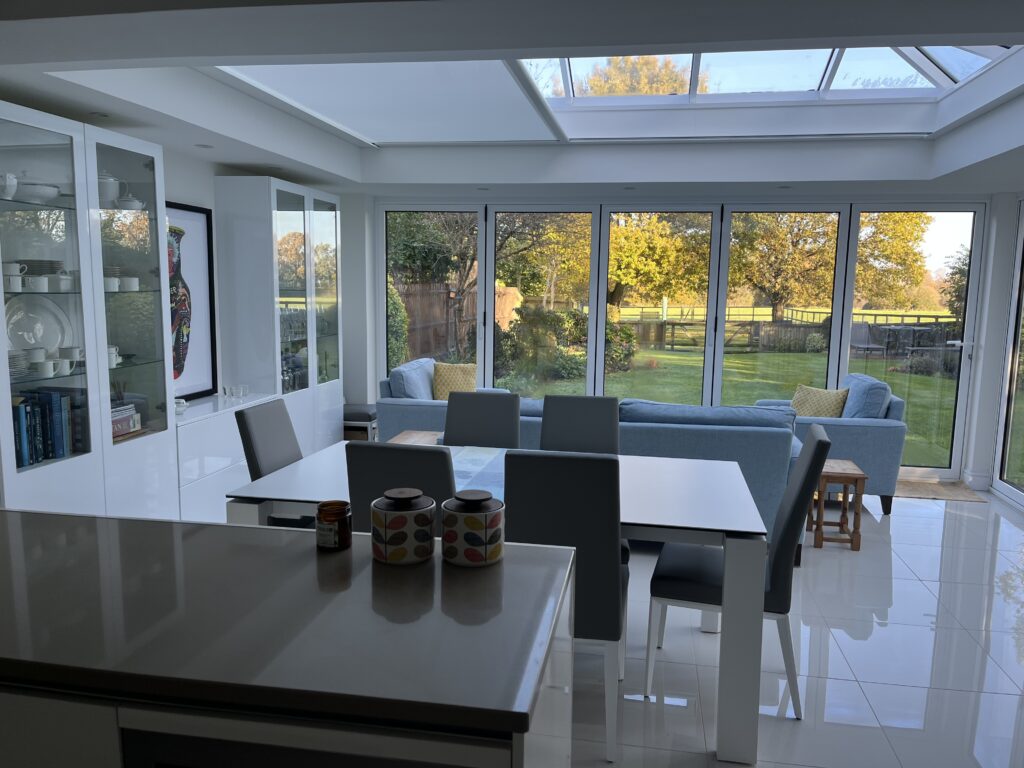
The motorised roller sits inside the headbox at the opposite end. As the blind retracts, the motor winds the fabric around the roller while the spring mechanism remains concealed within the moving hem bar.
Unlike Venus CTS, Hercules XL does not require a separate tension box opposite the headbox. This keeps the tensioning mechanism within the moving part of the blind and allows the system to tackle substantially larger dimensions.
When does Hercules XL make sense?
Hercules XL usually earns its place when a homeowner wants several things at once:
- a roller blind rather than a pleated cellular finish;
- no visible support cords crossing the fabric;
- one large blind is preferable to a Twin system meeting in the middle;
- a tensioning system engineered for unusually large dimensions;
- performance fabrics that help manage comfort in the home; and
- electric operation that makes such a large blind practical for everyday use.
However, a smaller opening may not need the scale or additional engineering of Hercules XL.
Hercules XL comes into its own when the dimensions move beyond smaller systems and the homeowner still wants a large tensioned roller blind beneath the glazing.
Which Hercules XL size do you need?
The dimensions of the roof determine which Hercules XL configuration the project requires.
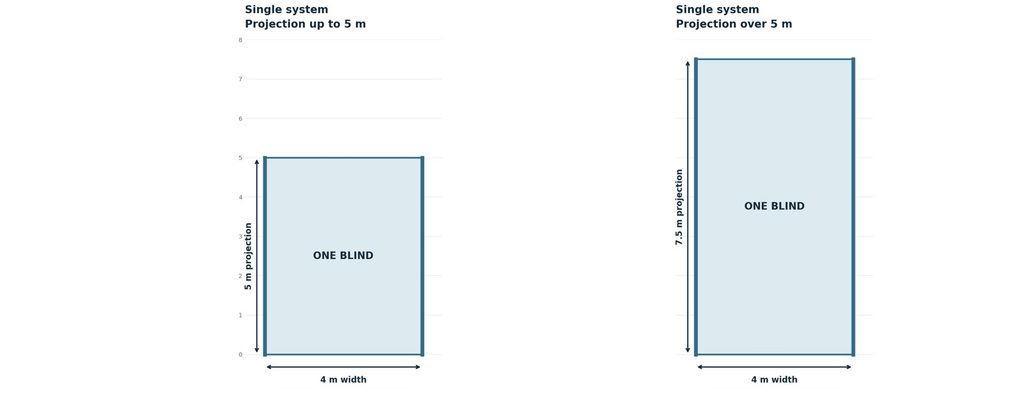
Two system sizes allow the blind to accommodate different projections. Once the projection moves beyond 5 metres, the amount of fabric stored on the roller increases significantly. The blind therefore requires a larger headbox and heavier duty hem bar to avoid deflection.,
Hercules XL under 5 metres
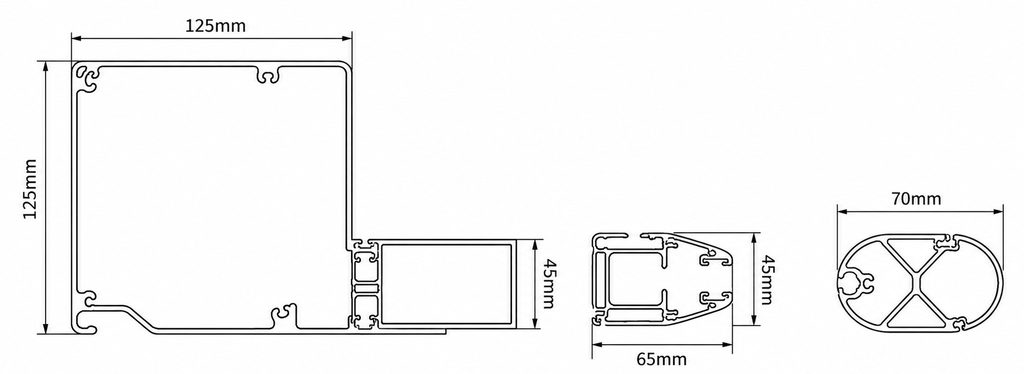
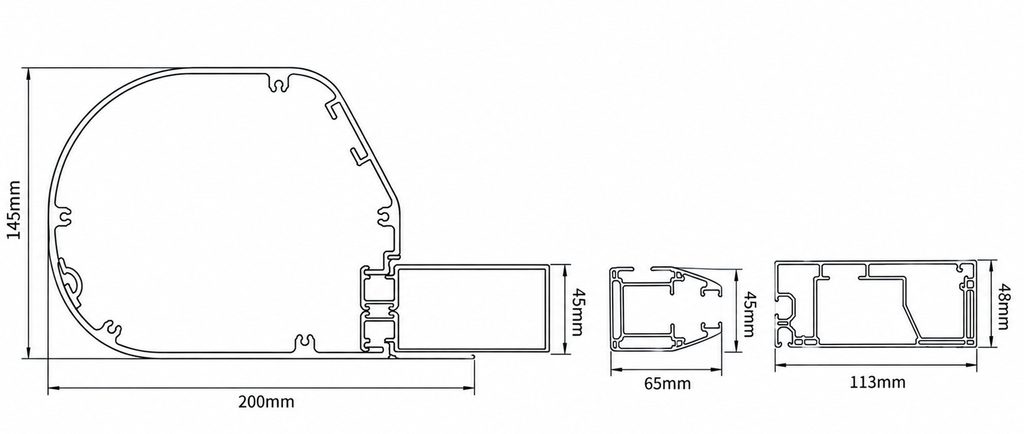
For projections below 5 metres, Hercules XL uses a 125mm wide × 125mm high headbox with a 70mm hem bar.
As a working guide, this configuration can cover openings up to approximately 4000mm wide × 5000mm projection.
The side profile shelving are 80mm wide.
Hercules XL over 5 metres
Once the projection exceeds 5 metres, Hercules XL moves to its larger configuration.
The headbox increases to 200mm wide × 145mm high, while the hem bar increases to 113mm.
The side profile shelving remains 80mm.
As a working guide, this version can extend to approximately 4000mm wide × 7500mm projection as standard.
What does Hercules XL look like when it is open?
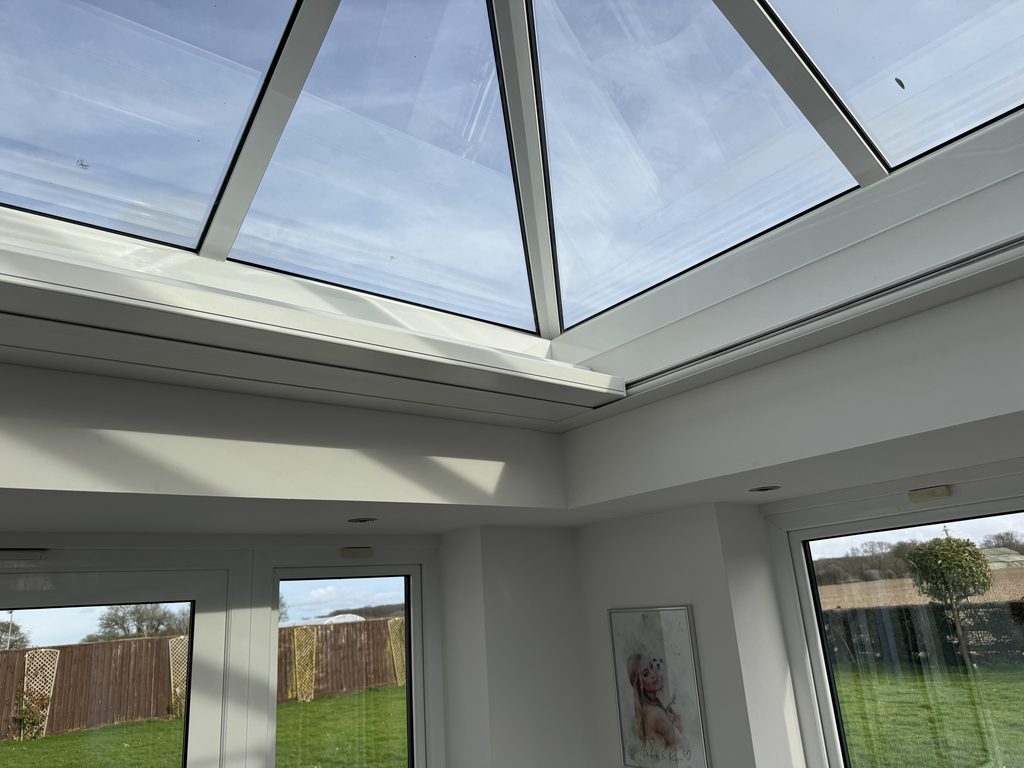
When Hercules XL retracts, the fabric rolls around the tube inside the headbox. The hem bar returns to the headbox end, while the two 80mm side profiles remain along the edges of the opening.
The final appearance depends heavily on how the system was planned.
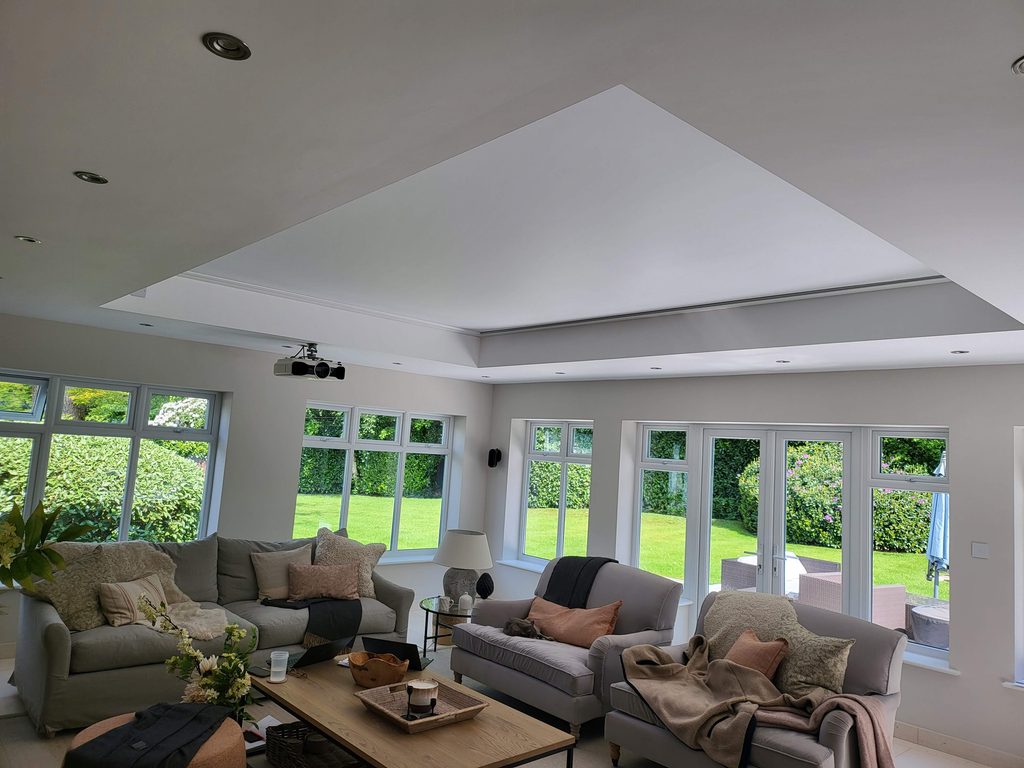
Visible retrofit: The headbox and side profiles remain visible within the finished roof opening. This approach can suit an existing home where major alterations to the roof structure are undesirable.
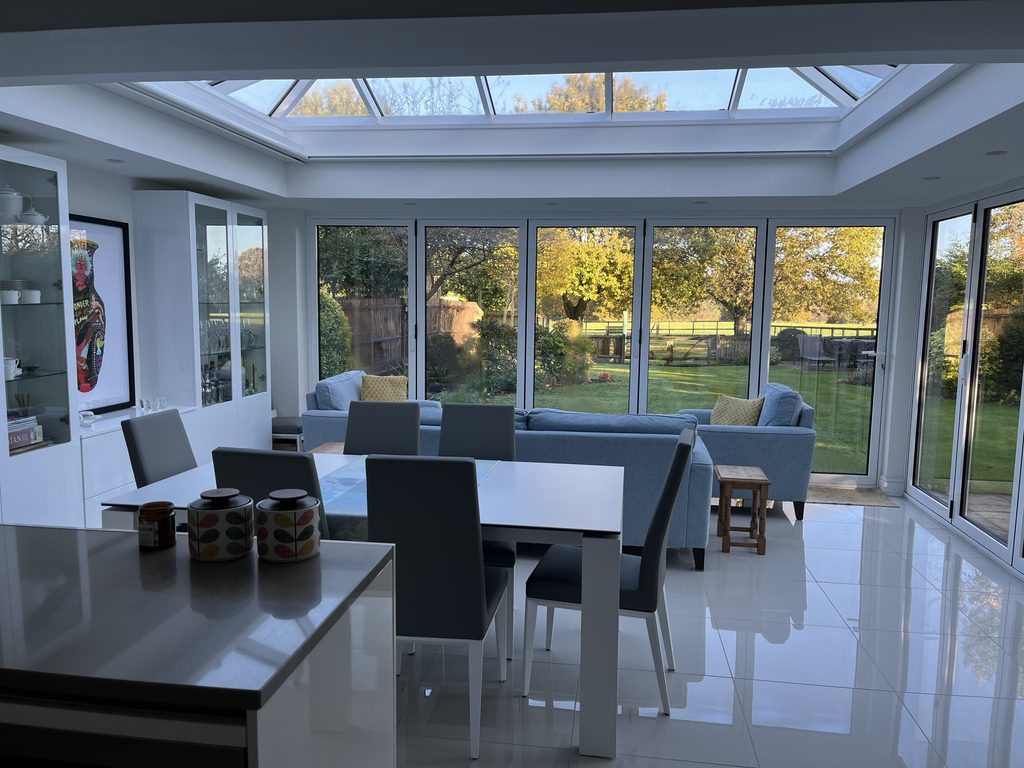
Purpose-built detailing: A builder creates a shelf or reduced aperture that hides the headbox and can also disguise the side channels. This route can create a clean result without a complete concealment system.
Blindspace Concealed installation: Where the roof and blind are designed together, some or all of the hardware may be integrated into the surrounding structure to create a cleaner opening when the blind retracts.
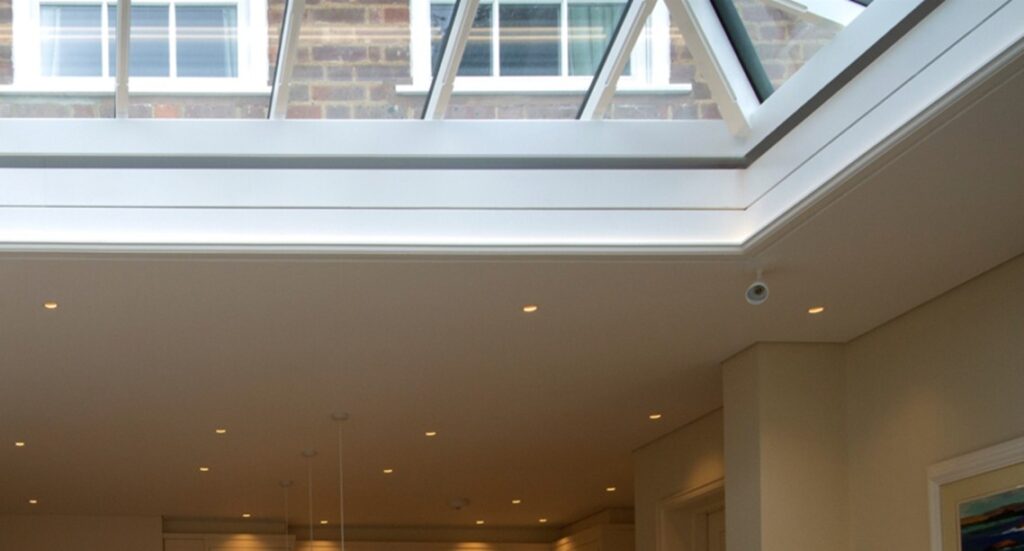
Concealment becomes so important to plan as considerable more space needs to be created to hide the Hercules XL Max system using C190 x 340 Blindspace concealment system
Therefore, discuss 1st fix concealment in the early stages, before the roof and surrounding finishes are completed. Especially when your structural opening is 4500mm to 5000mm to ensure the chosen fabric will fit in the 125mm box system.
What does Hercules XL look like when closed (deployed)?
When deployed, the fabric stretches across what can be a very large roof opening.
The extension springs, Dyneema cords and side channels work together to maintain tension while the zipped ribbon is pulled straighter than less powerful roof blind systems
The objective of Hercules XL is to provide a controlled roller-fabric finish across dimensions that smaller systems cannot practically accommodate.
Planning the fabric clearance below the glass
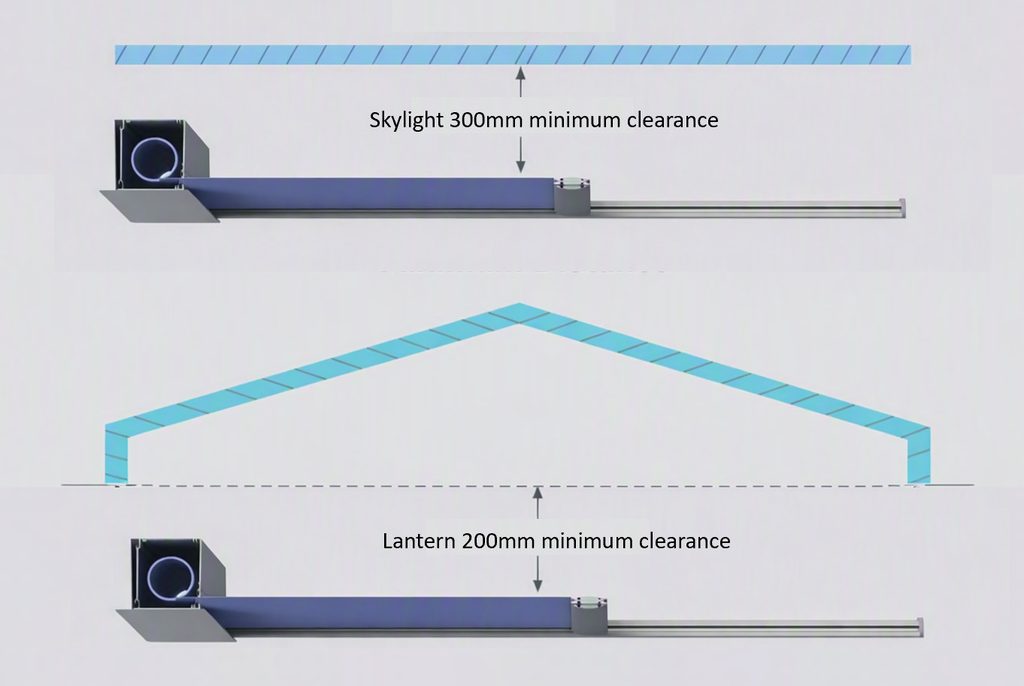
The deployed fabric must maintain the required clearance below the insulated glass. This distance needs to be considered when positioning the headbox, side guides, concealment details and surrounding finishes.
Choosing a Hercules XL fabric
Hercules XL requires the strongest and most dimensionally stable roller fabrics in the WindowTreat range. These fabrics must retain their shape while held under considerable tension across an unusually large opening.
The fabric range is not as extensive as it is for Athena systems, but the approved options can deliver excellent shading results when correctly matched to the homeowner’s priorities.
For many homeowners, reducing summer solar heat gain is the main objective. Others may prioritise brightness and glare control, daytime privacy, improved winter comfort or room darkening. Different performance fabrics provide different combinations of these benefits.
For a closer look at the available options, read Hercules XL Dimensionally Stable Fabric Portfolio for the Largest Roof Lantern Blinds.
Planning mains power and controls
Hercules XL is a mains-powered electric roof blind.
As with other premium electric roof blinds, the electrical supply should terminate in the correct position within the roof structure so that the final connection can remain neat and concealed.
Planning the power supply before plastering and decorating avoids visible cabling and unnecessary remedial work later.
The Hercules XL uses a Somfy Altus 50 RTS 40/17 tubular motor within the roller tube. Radio control allows the blind to operate from a compatible Somfy handset and can support wider control options where required.
The exact electrical position should be agreed alongside the blind orientation, headbox position and architectural detailing. More details on power requirements
Understanding Hercules XL noise levels
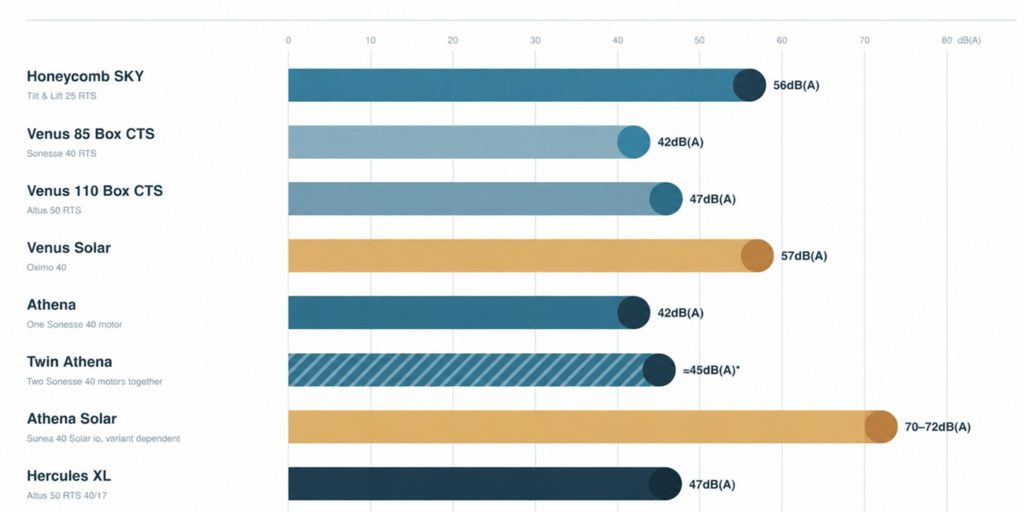
The Somfy Altus 50 RTS 40/17 motor used in Hercules XL has a published sound level of approximately 47dB(A).
However, manufacturer motor ratings do not tell the whole story.
The headbox, roller tube, fixings, blind dimensions and surrounding structure can all influence the sound heard in the finished room. Room size, hard surfaces and reverberation can also make the same motor appear more or less prominent.
Hercules XL needs to move and tension a substantially larger area of fabric than a typical roof blind. Therefore, motor capacity and reliable operation become more important considerations than achieving the particularly quiet operation of some roof blind motors.
How much does a Hercules XL electric roof blind cost?
Hercules XL covers an unusually wide range of sizes, so manufacturing costs vary considerably according to the dimensions and fabric specification.
As an initial guide, the manufactured blind normally falls within these ranges:
| System | Indicative manufacturing cost including VAT |
|---|---|
| Hercules XL under 5m | £4,555 to £7,755 |
| Hercules XL over 5m | £5,600 to £12,000 |
The difference between the bottom and top of these ranges reflects the substantial variation in blind dimensions, fabric area and fabric choice.
A Hercules XL approaching 4000mm × 7500mm contains far more fabric and aluminium than a system at the lower end of the size range. Fabric choice can also have a significant effect on the final manufacturing cost.
WindowTreat does not normally supply tensioned roof blinds without a manufacturing survey and professional installation. The final quotation also needs to consider access because unusually large systems may require additional people, lifting equipment, scaffolding or other specialist arrangements.
What determines the price?
Tensioning components: Hercules XL uses extension springs concealed inside the hem bar together with Dyneema cords and substantial side profiles. These components need to control the fabric reliably across a very large horizontal opening.
Motor and controls: The Somfy motor and selected control method contribute to the manufactured system cost.
Performance fabric: A large Hercules XL can contain a substantial area of specialist fabric. Cost therefore varies according to the dimensions, fabric construction and required combination of solar control, glare management, privacy or blackout.
Aluminium and fabrication: Hercules XL uses significantly larger aluminium components than smaller roof blind systems. Each headbox, hem bar and side profile needs to be cut, machined and assembled for the individual opening.
Installation and logistics: The physical size of Hercules XL can affect transportation, handling and installation. Delivery, travel, installer time, access and site conditions all contribute to the completed project cost.
What is Hercules XL like to live with?
Claire shares how the Hercules XL electric roof blind has transformed her 3.1m × 7m orangery. The large tensioned blind provides shading across the extensive glazed roof, helping protect the room from intense sunlight and manage unwanted summer heat.
When retracted, the orangery remains open to natural daylight. When deployed, the performance fabric reduces brightness and solar heat gain, helping Claire enjoy a calmer and more comfortable living space throughout the summer. Discover Claire’s Success Story or watch her feedback below
Links to other Hercules XL success stories
Success Story: Kathryn’s Hercules XL Roof Blind Transformation
Jay | Hercules Electric Roof Lantern Blind | WindowTreat
Tony I Hercules Electric Roof Blind I Customer Testimonial
The Hercules XL at a glance
These figures provide an initial guide rather than a manufacturing specification or quotation. The final design depends on the exact width and projection, fabric, motor, controls, fixing structure, installation position and access.
| Question | Working guide |
|---|---|
| What type of blind is it? | A motorised, large-format tensioned roller roof blind with zipped fabric edges |
| Where can it be used? | Internally beneath large rectangular roof lanterns and skylights at the correct fabric-to-glass distance |
| Under 5m parameters | Approximately 4000mm wide × 5000mm projection |
| Under 5m headbox | 125mm × 125mm with a 70mm hem bar |
| Over 5m parameters | Approximately 4000mm wide × 7500mm projection |
| Over 5m headbox | 200mm wide × 145mm high with a 113mm hem bar |
| Side profile shelving | 80mm |
| How is the fabric tensioned? | Extension springs concealed inside the hem bar with Dyneema cords running through the side channels |
| Does it need a tension box? | No. The spring mechanism is concealed within the moving hem bar |
| What does it look like? | A large-format tensioned roller-fabric finish with no visible support cords crossing the main opening |
| Installation choices | Visible installation or integration/concealment within purpose-designed architectural details |
| Motor and power | Mains-powered Somfy Altus 50 RTS 40/17 |
| Published motor noise | Approximately 47dB(A) |
| Fabric choice | Dimensionally stable performance fabrics selected according to blind dimensions and required solar, light, privacy or blackout performance |
| Indicative manufacturing cost | Under 5m: £4,555 to £7,755 including VAT Over 5m: £5,600 to £12,000 including VAT |
Next Steps
If Hercules XL appears to meet your requirements, use the calendar below to book a callback at a convenient time.
One of our roof blind experts can review the dimensions of your glazing, discuss fabric and concealment options, and help establish whether Hercules XL is the appropriate system for your project before you progress to a manufacturing survey.