A Venus CTS electric roof blind gives homeowners a practical roller blind for smaller roof lanterns and skylights. It can help control heat, glare and brightness without visible support cords across the opening. It may also provide a more cost-effective solution where a roof requires several smaller blinds.
Venus CTS uses a constant-tension spring mechanism, but the system has limitations. As the blind extends, the tension applied to the fabric reduces. The opening dimensions and expectations for the deployed fabric finish must therefore suit the system.
This guide explains where Venus CTS fits, how the 85mm and 110mm systems differ, what the blind looks like when retracted and deployed, and what homeowners need to plan before ordering one.
What is a Venus CTS electric roof blind?
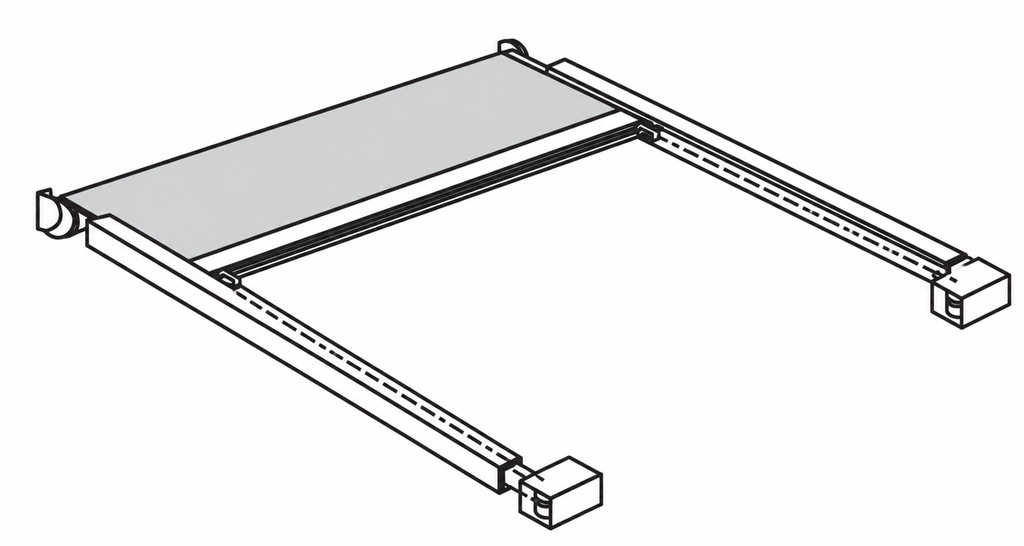
A roof blind needs tension to pull and support its fabric beneath horizontal or sloping glass. The Venus electric roof blind uses two Conston Tension Spring (CTS) units inside a tension box opposite the headbox. The springs apply diminishing tension across the zipped fabric as it travels across the opening and is at its lowest when the fabric is fully deployed. Some waviness, rippling and movement are therefore part of the expected Venus finish. Athena’s torsion-spring system provides greater tension and a more controlled fabric finish. Most Roof Lantern Blinds Sag. Here’s Why.
Venus sits on powder-coated aluminium shelving, which allows the complete system to be installed square and neatly finished. The shelving is 175 mm deep at the headbox and tension-box ends, with 50 mm shelving beneath the side channels. Ideally, both ends should be detailed symmetrically for a balanced appearance.
When does Venus CTS make sense?
Venus CTS usually makes sense when a homeowner wants:
- a roller blind rather than a pleated cellular blind;
- no visible support cords across the fabric;
- a practical solution for a smaller roof opening;
- a less highly tensioned fabric finish is acceptable;
- a lower manufacturing cost than a higher-tension roof blind system; or
- a cost-effective way to shade several smaller openings.
Venus can be particularly cost-effective where a roof has several smaller openings, as the lower manufacturing cost of each blind can produce a worthwhile overall saving.
However, Venus is not the best-value choice when the homeowner expects a highly tensioned, architectural fabric finish. The lower initial cost may not compensate for visible movement or rippling. Athena is the stronger option when fabric control matters more, or when the dimensions exceed Venus’s recommended finish limit.
85 mm or 110 mm Venus CTS Box ?
The blind’s projection determines how much fabric the headbox must store. It also affects the roller tube, motor and expected finish. The powder coated aluminium shelving system remains the same.
The 85mm box system
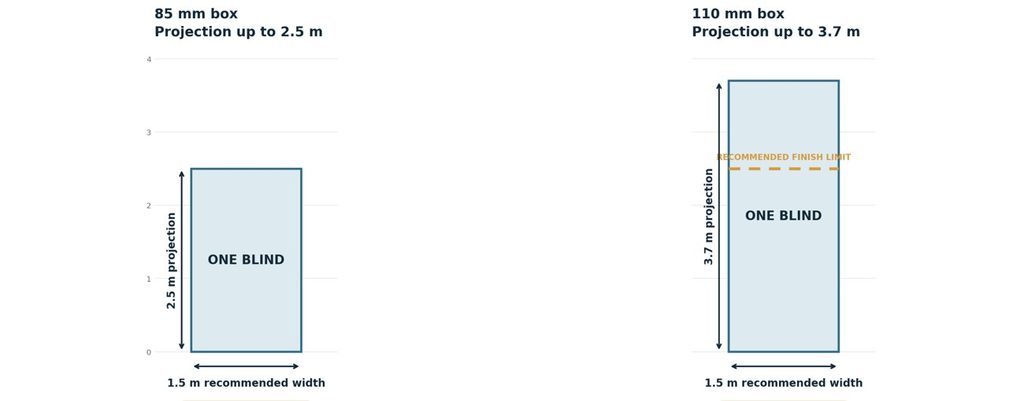
The 85mm headbox suits projections up to approximately 2500mm. This version uses a 60mm roller tube with a Somfy Sonesse 40 motor.
The Sonesse 40 RTS provides radio control, while the Sonesse 40 WT supports a wired control route. The right version depends on the proposed controls and any wider home-automation plan.
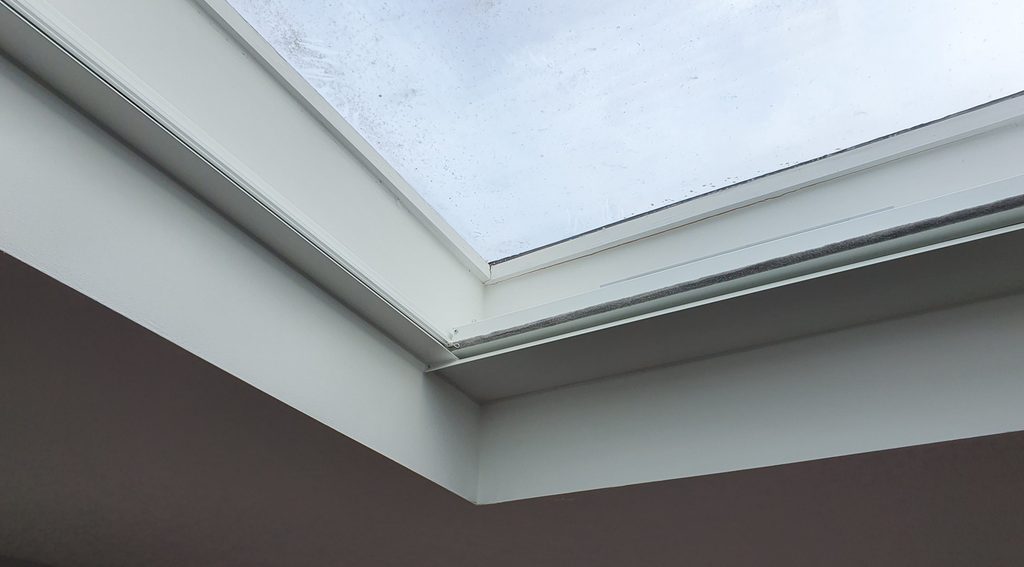
As a working guide, WindowTreat recommends a width up to approximately 1500mm and a projection up to less than 2500mm when the homeowner wants an acceptable domestic roller-fabric finish. The fabric will still show some waviness or movement because these characteristics arise from the CTS mechanism.
Minimum Widths of the Venus CTS 85mm Box
The minimum width is dependent on the type of motor being used within the Venus 85mm Box roof blind system
| Motor Type | Minimum Width of Venus CTS roof blind |
| Short Motor WT (hard wired) | 480mm |
| Somfy Sonesse WT | 620mm |
| Somfy Sonesse RTS | 630mm |
| Somfy Oximo Battery Solar Kit | 580mm |
Note the Short hardwired motor is compatible with an RTS receiver should you require a remote control handset
The 110mm box system
When the projection exceeds 2500mm, the rolled fabric needs more storage space. The Venus then moves to a 110mm square headbox, an 80mm roller tube and a Somfy Altus LT50 motor. This larger system can accommodate a projection up to approximately 3700mm.
However, the larger headbox only increases fabric capacity. It does not increase the spring fabric tension available at its fully deployed position. Consequently, it does not remove the additional deflection and surface movement associated with larger blinds.
For that reason, the recommended finish limit remains approximately 1500mm wide by 2500mm projection. A Venus CTS may extend beyond 2500mm where the specification permits, but the homeowner should first accept the compromised fabric appearance. Where a smoother finish matters, a higher-tension system will usually be the best route to avoid buyer’s remorse.
What does Venus CTS look like when it is open?
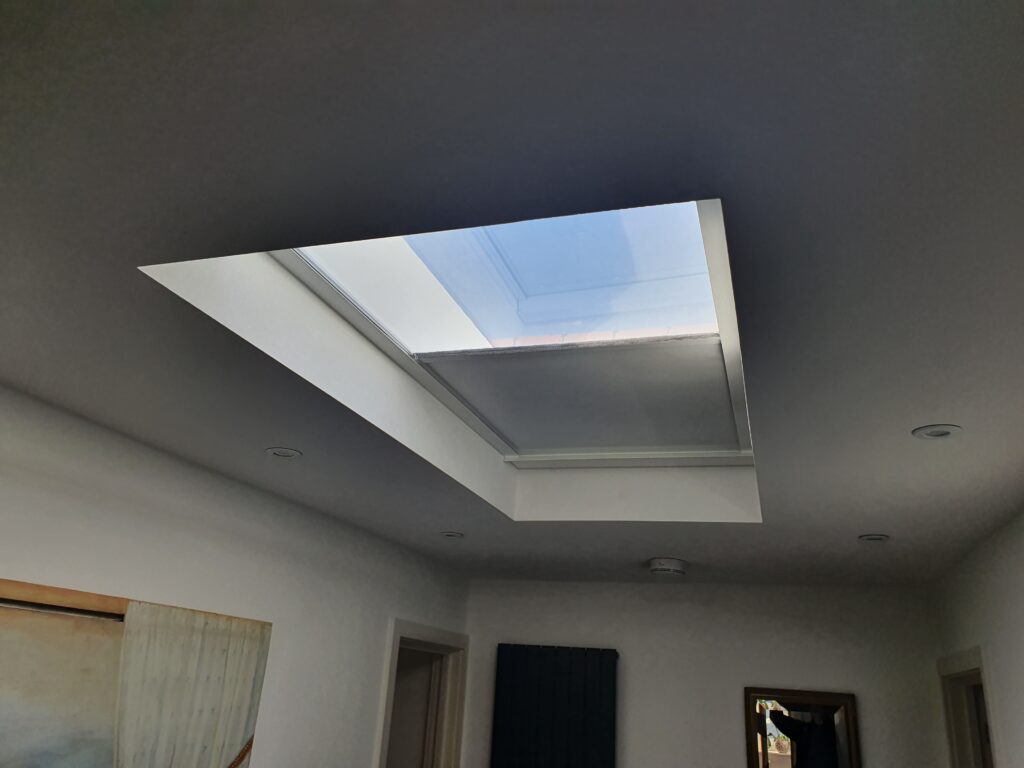
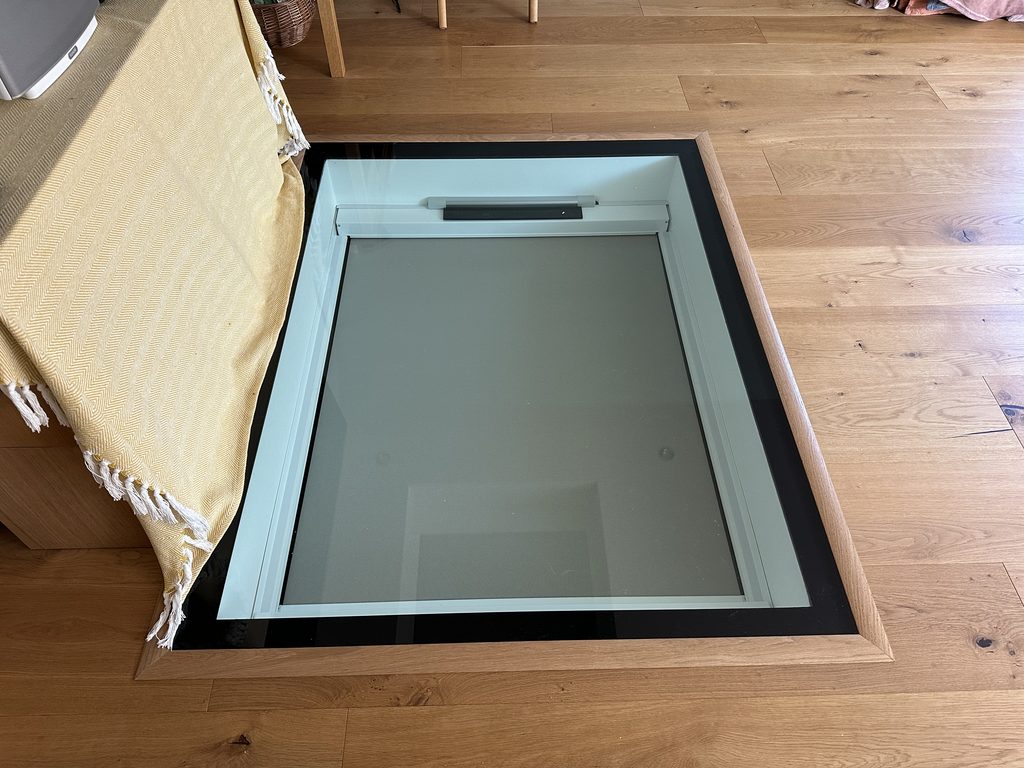
When the blind retracts, the motor rolls the fabric into the headbox. The hem bar returns to the headbox end, while the side channels and the tension box remain around the opening.
The final appearance depends on how the roof and blind were planned:
- Visible retrofit: The headbox, tension box and side channels remain visible within the finished roof opening. This route can suit completed homes because it avoids substantial structural alteration.
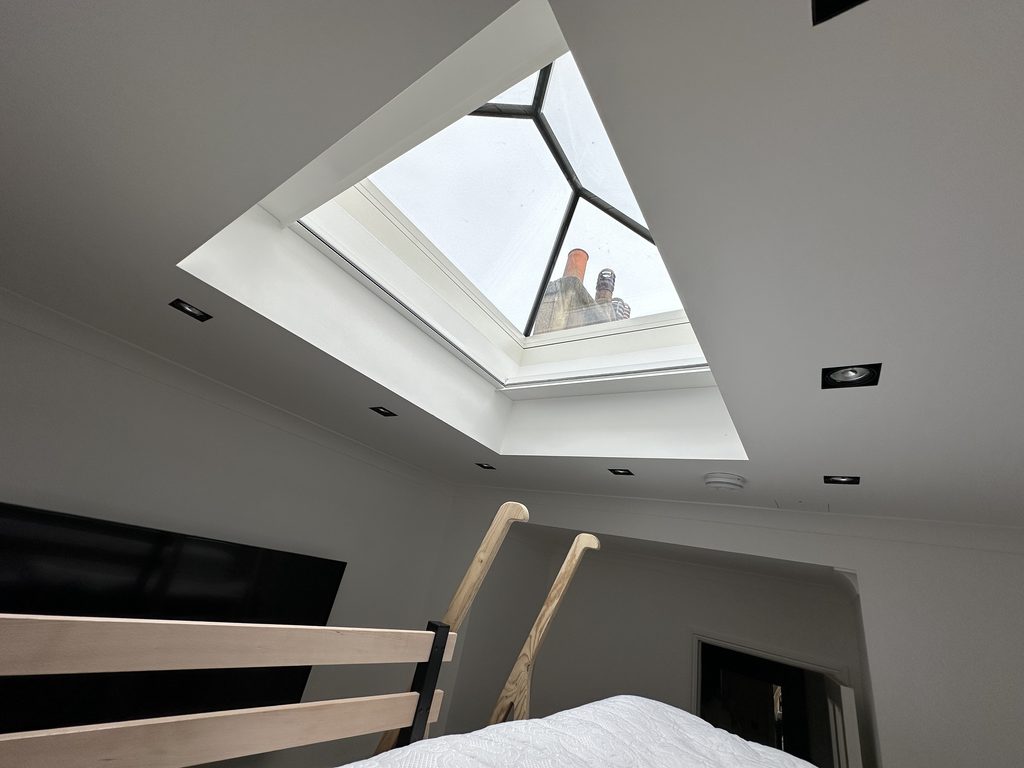
- Purpose-built detail: A builder can form a shelf or reduced aperture to disguise some or all of the hardware. The blind dimensions, glass clearance, access and electrical position must inform the detail. This option needs early coordination with the blind specification and building work.
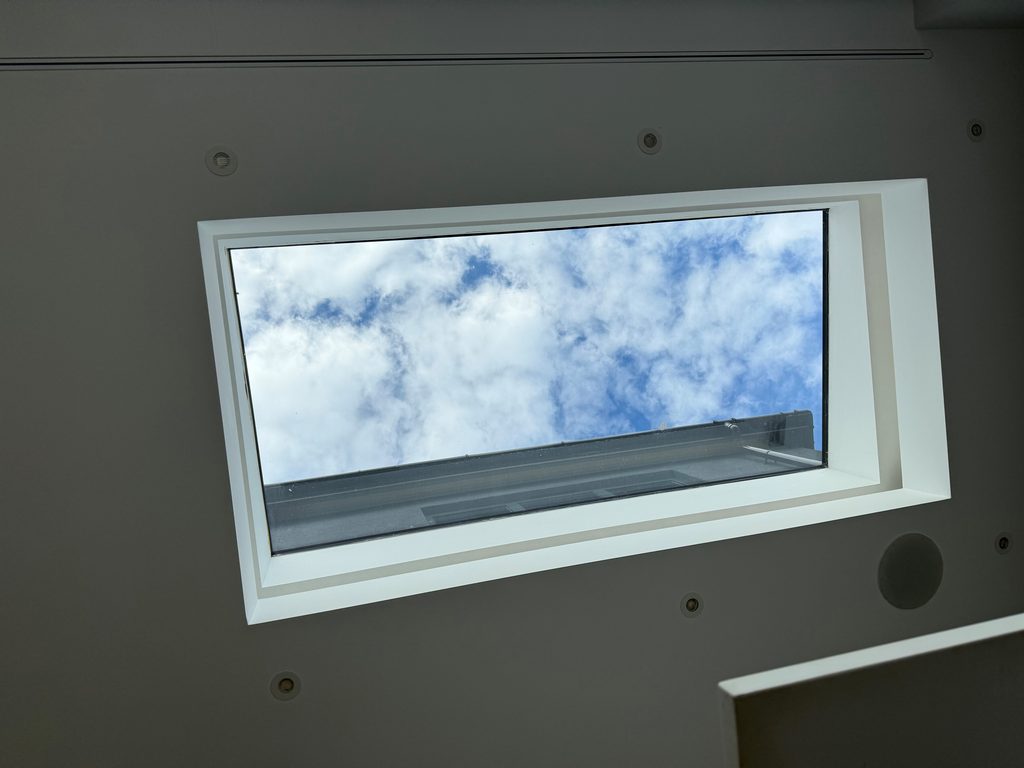
- Blindspace concealment: Purpose-built boxes with patented hinged cover can further conceal the headbox, side channels and opposite tension or hem-bar area within the structure of the roof.
Concealment changes the architectural appearance, preparation and cost. It does not change the CTS tension capability or improve the fabric’s heat and glare performance. When investing in minimalism at this at this level, it makes sense to upgrade to the torsion spring roof blind systems such as the Athena.
What does Venus CTS look like when closed (deployed) ?
When the blind deploys, roller fabric covers the roof opening and becomes a significant visual surface. The zipped edges travel inside the side channels, but the CTS mechanism may not pull those edges fully taut. Rippling can appear along the zipped sides and move further into the body of the fabric. This is mostly visible when the blind is in the closed position.
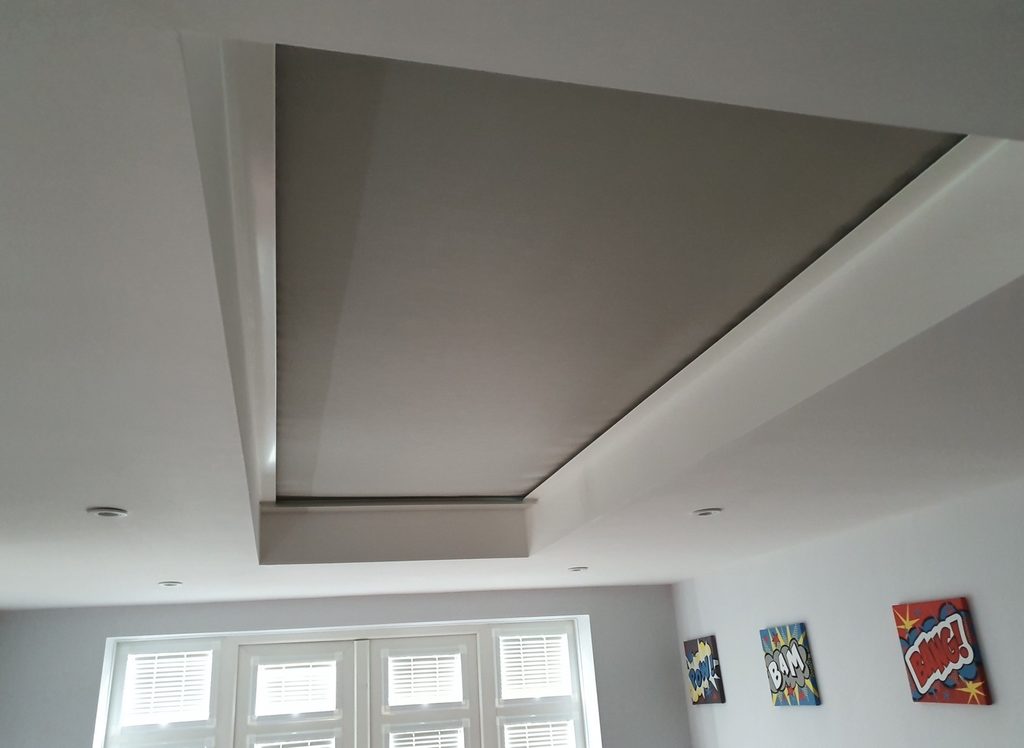
These characteristics do not indicate a manufacturing fault. They reflect how zipped fabrics behave when CTS units are the tensioning mechanism. The homeowner should understand and accept this appearance before ordering, particularly when a proposed blind exceeds any recommended finish dimensions.
Venus CTS provides a practical roller finish, while Athena uses substantially greater and more fabric tension where a smoother finish must take priority.
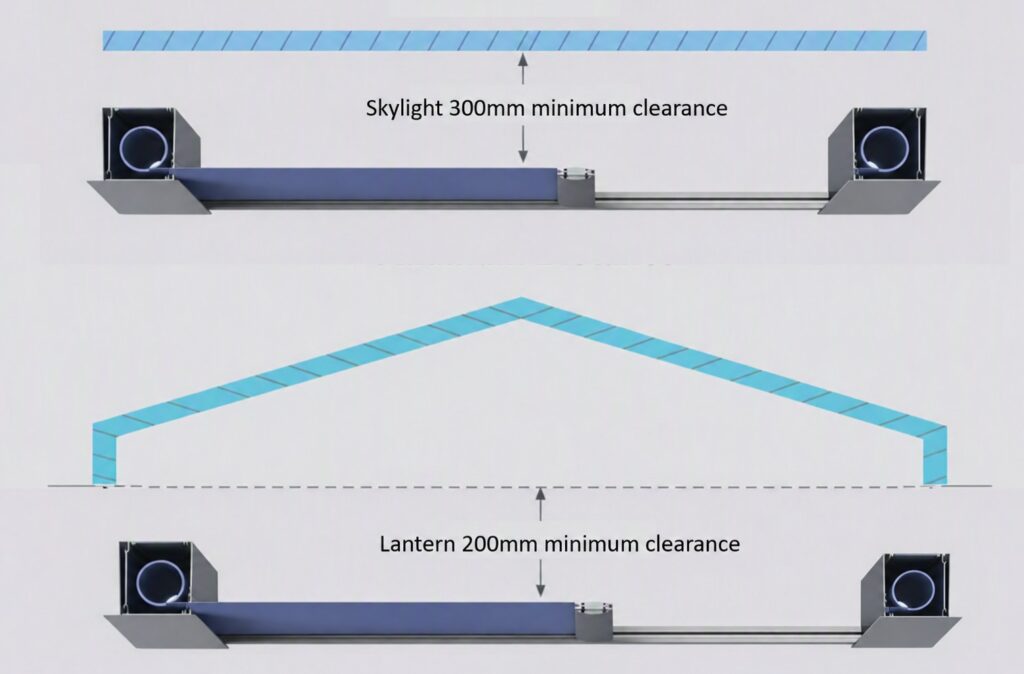
Planning the fabric clearance below the glass
The deployed fabric must maintain the required clearance below the insulated glass. This distance needs to be considered when positioning the headbox, side guides, concealment details and surrounding finishes.
Choosing a Venus CTS fabric
Venus uses a practical but more limited selection from the wider Athena fabric portfolio. The fabric should first address the homeowner’s main problem, whether that is excess heat, strong brightness, screen glare, privacy or the need to darken the room.
The range includes screen fabrics with 1%, 3% and 5% openness factors in different colours. A lower openness factor restricts more direct light and outward view, while a more open weave preserves more connection with the sky. Colour, weave and openness also affect solar and visual performance, so homeowners should choose from the data for the exact fabric rather than from openness alone.
It can also offer vinyl and fabric backed white backed blackout fabrics for good room darkening.
Planning mains power and controls
Venus CTS uses a mains-powered tubular motor inside the roller tube. The electrical supply should terminate within the upstand so the installer can make a clean, concealed connection near the headbox. A supply that stops at the room wall or ceiling can leave visible cable and create additional work.
The final connection position depends on the blind height, glass clearance, motor end and concealment design. It may use a 5A fused spur or a suitable fuse-backed flexible cable. Where Blindspace boxes form part of the roof, coordinate the cable entry with those boxes before the finishes are completed.
The 85 mm Venus can use a Somfy Sonesse 40 RTS motor for radio control or a Sonesse 40 WT motor for a wired control system. The 110mm Venus uses Somfy Altus LT50 RTS or WT. Confirm the control route before manufacture because it affects the motor selection and electrical preparation.
For more detail, read Electric Power Requirements for Premium Interior Roof Blinds.
The Venus Solar Kit
The Venus Solar Kit allows the roof blind to operate without a mains supply at the upstand. It combines an external lithium-ion battery pack with a solar panel mounted on top of the Venus headbox and an upgraded Somfy Oximo 40 RTS motor.
This option can make a retrofit far more practical. If the ceiling and upstand are already finished, installing a mains supply may be difficult or undesirable. By avoiding electrical installation and subsequent decorative work, the Solar Kit can help offset its additional £750 cost over the mains powered Athena version.
Understanding Venus CTS noise levels
As can be seen on the motor comparison chart below, the 110mm Venus has a noisier motor than the 85mm Venus. These figures describe the motor under its stated test conditions, not the precise sound that a homeowner will hear from the completed blind.
The headbox, blind size and surrounding structure can all influence the installed sound. Room size, hard finishes and reverberation also affect how prominent the motor seems. If several Venus blinds operate together, the combined result will sound more noticeable than one blind operating alone.
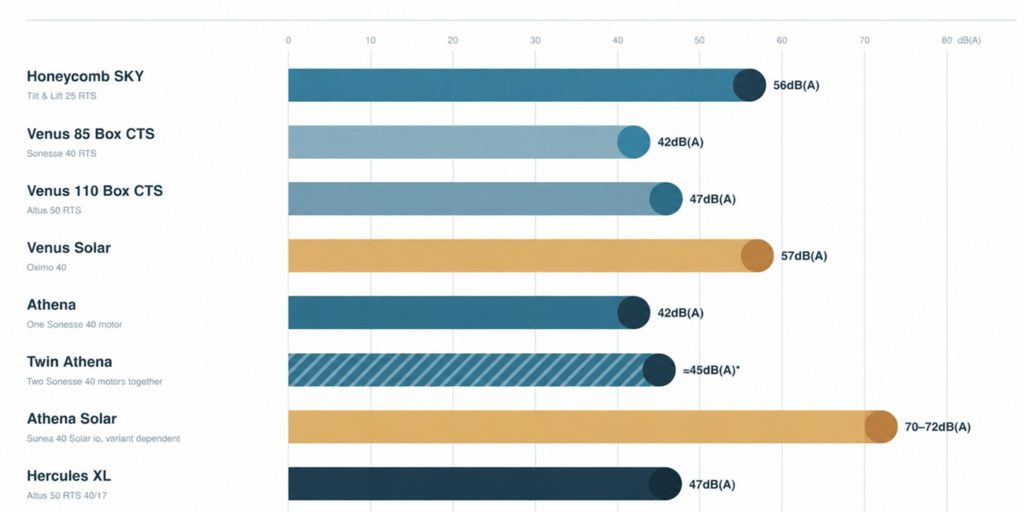
Therefore, treat the motor rating as a useful comparison point rather than a promise for the finished room. Where quiet operation is a leading priority, confirm the proposed motor and complete blind specification before ordering.
How quickly does Venus CTS operate?
The Somfy Sonesse 40 in the 85mm Venus moves the fabric at approximately 2.3m per minute. It retracts at the same speed, so the return journey takes approximately the same time.
How much does a Venus CTS electric roof blind cost?
As an initial guide, the manufactured blind normally falls within these ranges:
| System | Indicative blind cost including VAT |
|---|---|
| Venus CTS 85mm Box | £2,000 to £2,800 |
| Venus CTS 110mm Box | £2,500 to £3,200 |
These prices include the manufactured blind, a mains-powered motor, compatible fabrics, a one-channel remote control handset and VAT.
WindowTreat does not normally supply Venus CTS without a manufacturing survey and installation. Add £1,900 including VAT for the manufacturing survey and standard installation of up to two tensioned roof blind systems. This comprises a £650 manufacturing survey and £1,250 installation.
This standard pricing applies to typical roof lanterns and skylights in accessible ground-floor extensions. Unusually high installations or projects requiring scaffolding, lifting equipment or other specialist access are assessed and priced separately.
Where suitable, the Venus Solar Kit adds £750 to the manufactured blind cost. The final quotation depends on the exact dimensions, box size, fabric, power option, quantity and site conditions
What determines the price ?
- Conston Tensioning Springs The springs, zipped ribbon technology, hem bar and associated mechanisms maintain fabric tension across a moderate horizontal opening.
- Motor and controls: The price depends on the Somfy motor, control method and number of motors. A twin Athena requires two motors.
- Venus Solar Kit adds £750 per motor to the blind cost. However, avoiding a new mains supply and subsequent decorative work can offset some of this additional expense.
- Performance fabric: The fabric must keep its shape under tension. Cost also varies with the fabric area, width, weave and required combination of solar control, light management, privacy, acoustic comfort and insulation.
- Aluminium and fabrication: The headbox, profiles and supporting components must be cut, machined and assembled for the individual opening. Aluminium, factory energy and other manufacturing input costs fluctuate over time. London Metal Exchange, Office for National Statistics.
- Installation and logistics: Delivery, travel, fuel, parking, installer time, access and site conditions all contribute to the completed project cost.
What is Venus CTS like to live with?
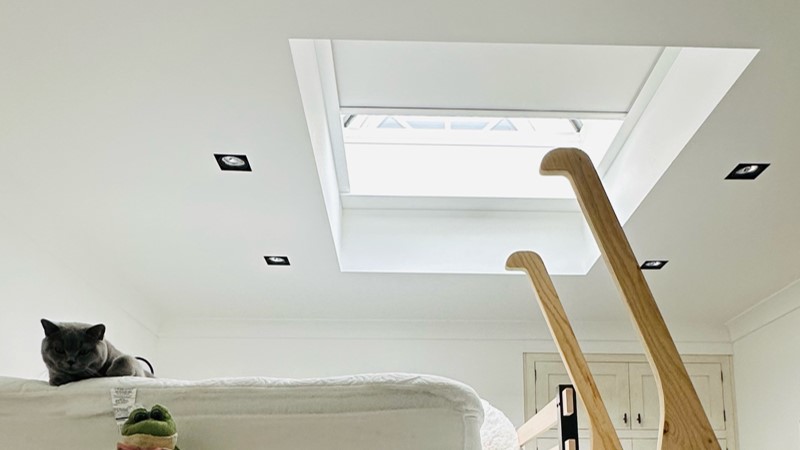
Judy shares how the Venus CTS electric skylight blind has improved her son’s bedroom. The compact 85mm box and blackout fabric help reduce unwanted light at night, supporting a darker sleeping environment and his natural circadian rhythm.
In the morning, the blind opens automatically to let daylight into the room, helping him wake naturally and supporting a healthier sleep-wake routine.
Venus CTS at a glance
These figures provide an initial guide rather than a manufacturing specification or quotation. The final design depends on the exact width and projection, fabric, motor, controls, fixing structure, installation position and access.
| Question | Working guide |
|---|---|
| What type of blind is it? | A motorised CTS roller roof blind with zipped fabric edges |
| Where does it fit? | Internally beneath suitable rectangular roof lanterns and skylights at the required distance from the glass |
| Recommended finish dimensions | Approximately 1.5m wide by 2.5m projection |
| 85mm system | Up to 2.5m projection, with a 60mm tube and Somfy Sonesse 40 RTS or WT motor |
| 110mm system | Up to 3.7m projection, with an 80mm tube and Somfy Altus LT50 motor |
| Important size condition | The 110mm box increases fabric capacity, but the recommended finish limit remains approximately 2.5m projection |
| What does it look like? | A practical roller-fabric finish with no support cords across the opening, but with expected waviness, rippling and deflection |
| Installation choices | Visible retrofit, a purpose-built architectural detail or coordinated Blindspace concealment |
| Fabric choice | Selected 1%, 3% and 5% openness screen fabrics, plus a blackout option |
| Motor noise | Between 42dB to 57dB depending on mains or Battery solar powered and headbox size. The sound is affected by the complete blind and room |
| Indicative blind manufacturing cost | £2000 to £3200 including VAT, subject to size and fabric choice. |
| Survey and standard installation | £1,900 including VAT for a manufacturing survey and standard installation of up to two tensioned roof blind systems |
Is Venus CTS the right roof blind for you?
Choose Venus CTS when you need a practical roller blind for a modest roof opening and accept the natural surface movement of a lower-tension system. It can be especially useful where a project has several smaller roof openings and the budget needs careful control.
Keep the blind within approximately 1.5m wide by 2.5m projection. Although the 110mm system can extend to approximately 3.7m, its larger box does not overcome the reduction in fabric tension. If a smoother, more architectural finish takes priority, compare the project with Athena before ordering.
For the wider choice between cellular, CTS and higher-tension systems, read How to Choose an Interior Electric Roof Blind for Your Roof Lantern or Skylight.
Next steps
If Venus CTS appears to suit your roof opening, the next step is to confirm the width, projection, glazing type, required fabric outcome, expected finish, power position and installation access. WindowTreat can then establish whether Venus remains the right value choice or whether another system would better meet your expectations.
Use the calendar below to book a call back at a convenient time.