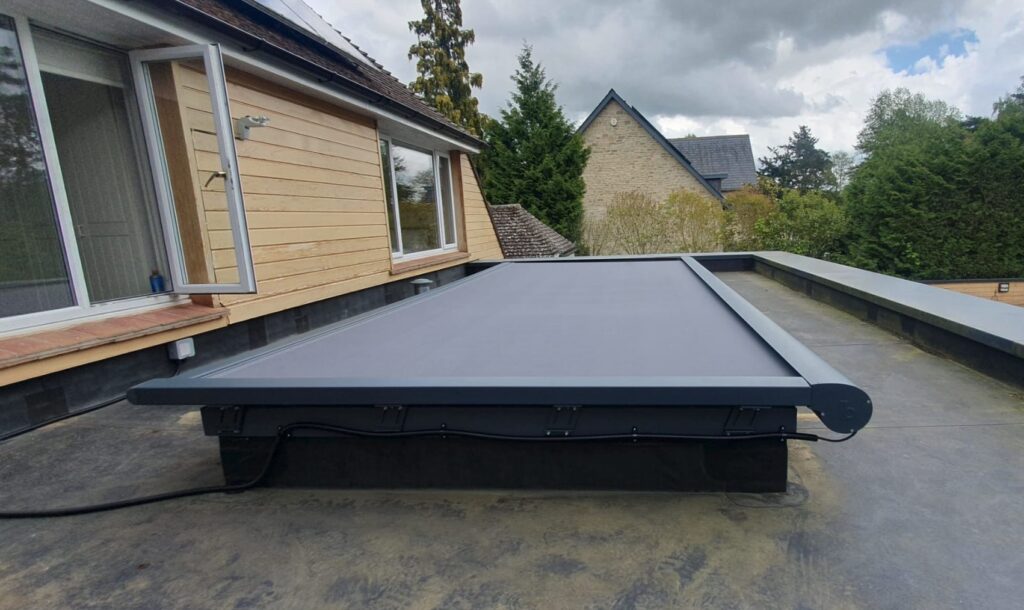
Understanding Heat Gain with Modern Skylight Glazing
Modern double and triple glazed skylights provide excellent insulation. Their low U‑values slow down heat loss in winter, keeping your home warm and energy efficient.
Summer is different. A skylight with a g‑value of 0.7 allows 70 percent of the sun’s solar energy into your home. This is a significant thermal load. Without shading, the room beneath becomes uncomfortable and often unusable during peak sunlight.
To manage this heat effectively, it is important to understand solar energy and its relationship with modern glazing. Getting the g-value performance to the right level.
Why Internal Shading Often Struggles
Internal shading sits beneath the glass. By the time the fabric interacts with sunlight, the solar energy has already entered the glazing system.
How Solar Energy Behaves
- Sunlight arrives as shortwave radiation.
- Internal fabrics attempt to reflect this energy back through two or three panes of glass, Argon cavities and low emissivity coatings.
- Most fabrics cannot achieve this.
- If the fabric absorbs the energy, the absorbed heat converts to longwave radiation.
- About 90 percent of the longwave radiation cannot escape back through the modern glazing.
- The heat radiates into your living space below
This is why honeycomb dimout Duette style fabrics and dark roller fabrics perform poorly. These internal fabrics become overhead radiators and do not improve the g-value of your skylight.
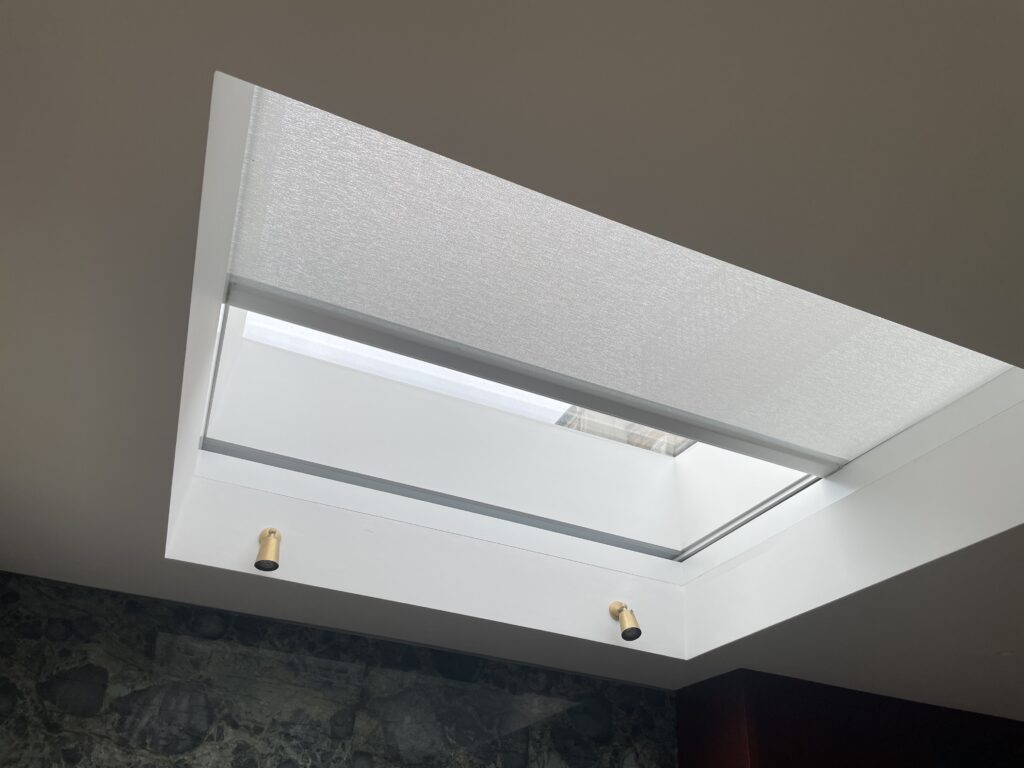
When Internal Shading Can Work
Internal shading can be effective only when the fabric has:
- High solar reflectance (Rs percent)
- Headbox fabric protection from dust that diminishes performance
- White or metallised backed fabrics designed to reflect shortwave energy
A fabric such as Solaye Sunshadow Alu can reflect 80 percent of shortwave energy back towards the glass. Even with this best in class internal fabric, the g‑value typically drops from 0.7 to around 0.3.
This is a dramatic improvement compared to poorly selected fabrics, and will give significant relief from solar heat gain.
External Shading: The Gold Standard of Performance
External shading stops solar energy before it enters the glazing system.
When the fabric blocks or reflects solar energy outside:
- Total Solar Energy stopped at source (Reflected Rs% and Absorbed As% Solar Energy)
- Absorbed heat dissipates to the outdoor environment rather than your living space.
- Total energy entering the room can drop by more than 90%
- Achievable g‑values can be better than 0.1
The External Artemis Skylight Blind
The Homeowners Feedback on External Skylight Shading
Limitations of External Skylight Shading
External systems are exposed to weather. Wind is the primary risk.
Wind and Sun Sensor Behaviour
Most homeowners choose wind sensors to protect their external blind systems. On the Artemis skylight external roof blind, the Somfy Soliris sensor is configured with fixed delays.
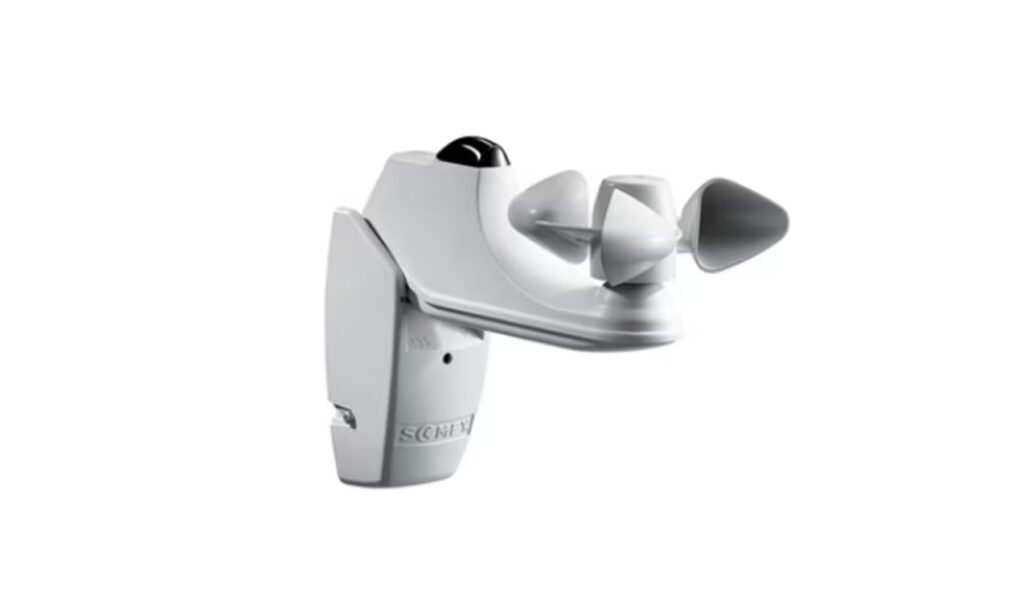
- Retracts at Beaufort 5 (24 mph)
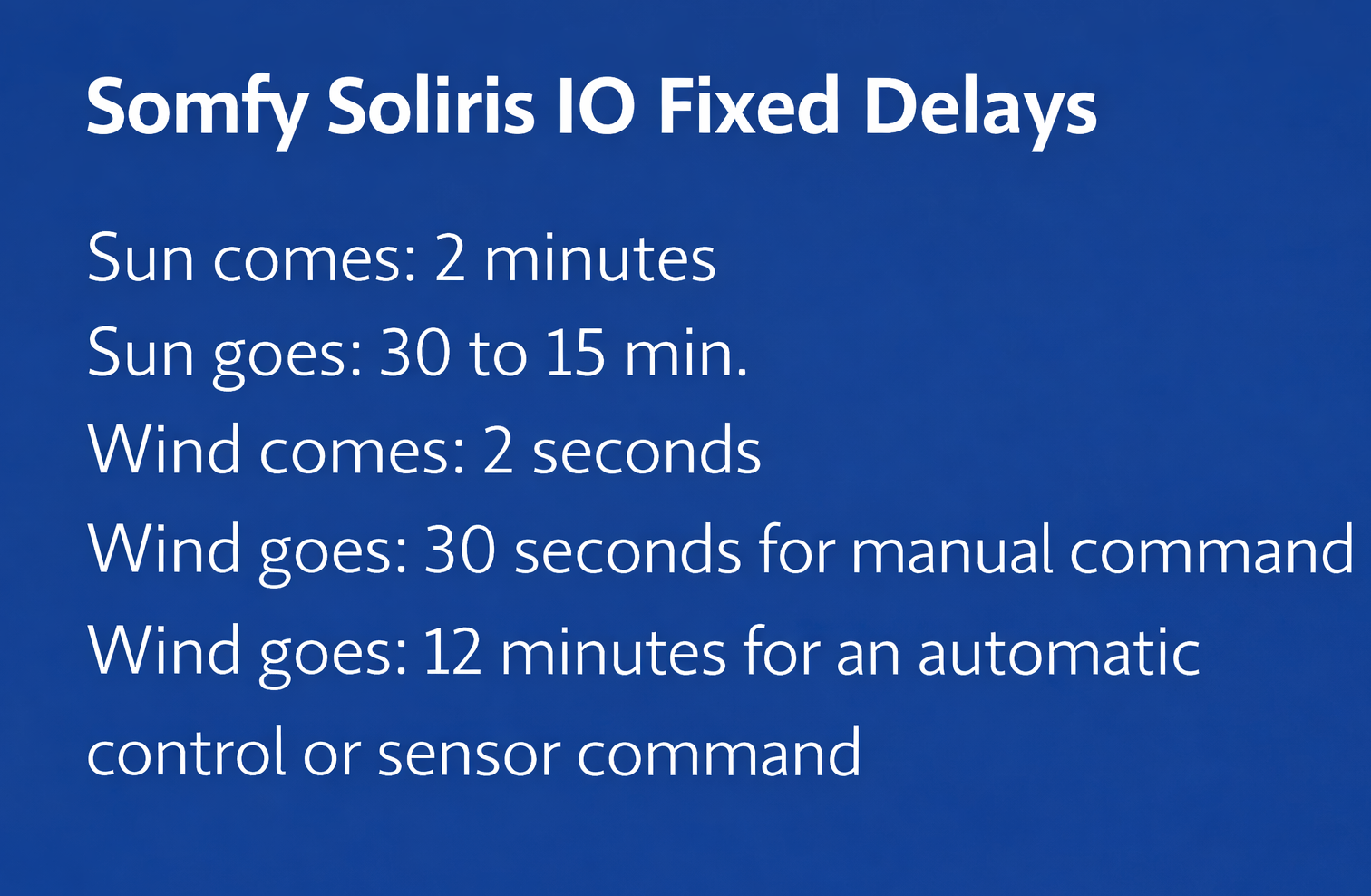
- Manual redeployment possible after 30 seconds if no excessive wind
- Automatic redeployment after 12 minutes without excessive wind
- Sun sensor deploys after 2 minutes of high
- To avoid motor thermal cut out, the blind remains deployed for up to 30 minutes after LUX drops below threshold
These sensors can help protect both your home and the Artemis system, but they are not a guarantee. Homeowners will remain accountable for not using external systems in adverse weather.
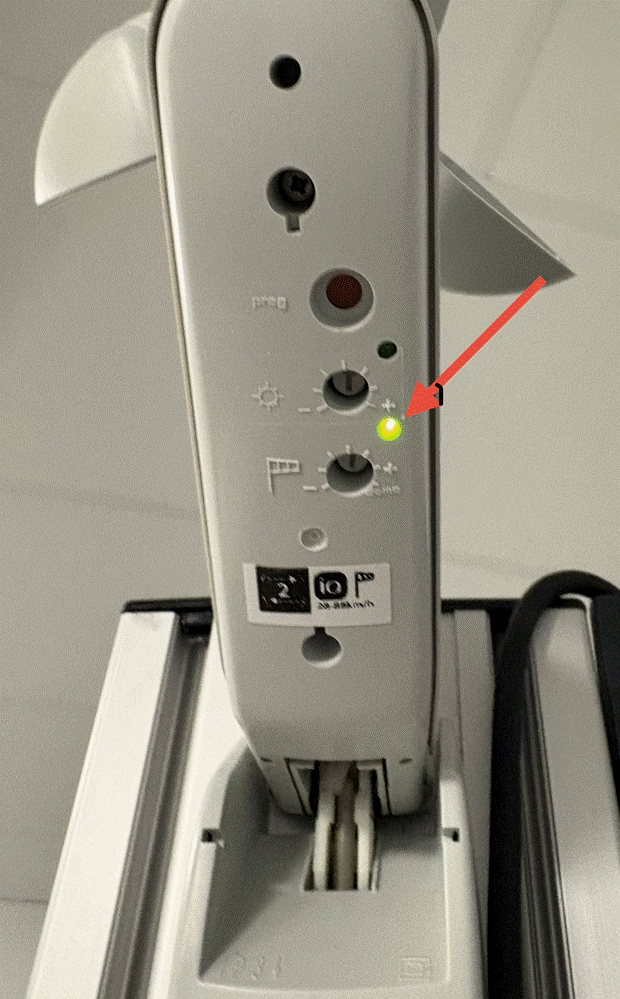
Somfy Soliris Sensor Dials and LED Indicators
The Soliris sensor used on the Artemis Skylight Roof Blind has two adjustment dials on the underside of the unit. These control the wind threshold and the sun threshold. Each dial has a corresponding LED indicator that lights up when the sensor is actively responding to conditions.
Wind Threshold Dial
The wind dial is factory set to match the wind capability of the Artemis system, positioned at approximately 11 o’clock. Increasing sensitivity requires turning the dial anti clockwise toward the minus symbol, meaning the blind will retract with less wind. Decreasing sensitivity requires turning the dial clockwise toward the plus symbol, meaning more wind is needed before retraction. The dial must never be turned beyond the plus symbol into the demo position, as this reduces delay thresholds and is only intended for testing.
When wind speeds exceed the preset limit, the wind LED will illuminate. This confirms that the sensor has detected excessive wind and has retracted the blind for protection.
Sun Threshold Dial
The sun dial is factory set to a normal light threshold at 12 o’clock. Increasing sensitivity requires turning the dial anti clockwise toward the minus symbol, meaning the blind will extend with lower levels of sunlight. Decreasing sensitivity requires turning the dial clockwise toward the plus symbol, meaning higher light levels are required before the blind extends.
When sunlight exceeds the preset LUX threshold, the sun LED will illuminate. This confirms that the sensor has detected high sunlight and has extended the blind for solar protection.
Handset Control of the Sun Sensor
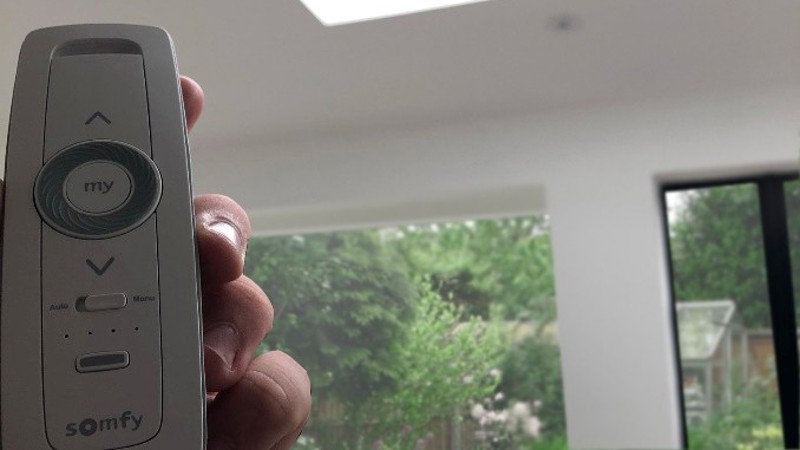
The sun sensor can be switched off using the handset. Changing the handset mode from Auto to Manual disables the sun sensor. When this change is made, the Artemis roof blind will shunt to confirm the mode change. To reconnect the sun sensor, switch the handset from Manual back to Auto. The Artemis will shunt again to confirm that the sun sensor is active.
This allows homeowners to disable automatic sun protection during winter months when solar gain may be desirable, while still retaining full wind protection from the Soliris sensor.
Rain Considerations
Rain run off requires a pitch of 14 degrees. Many skylights are horizontal or shallow. The Soliris can be paired with the Somfy Ondeis rain sensor to reduce pooling risk.
Sensor Positioning
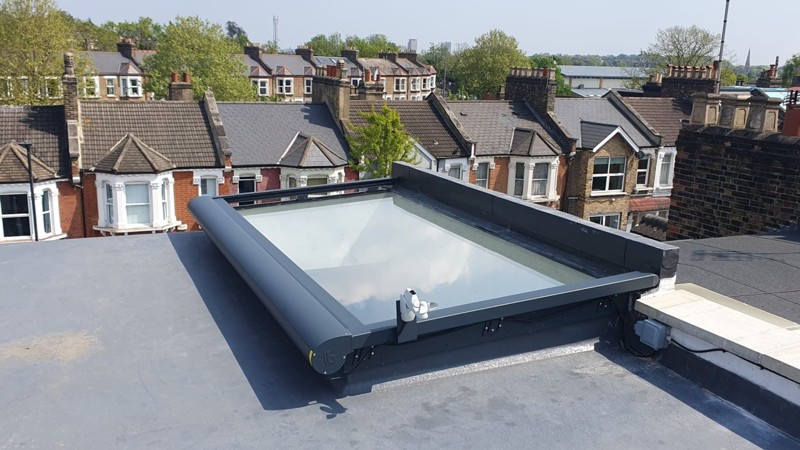
Sensors must represent the conditions experienced by the skylight.
Sensor Costs
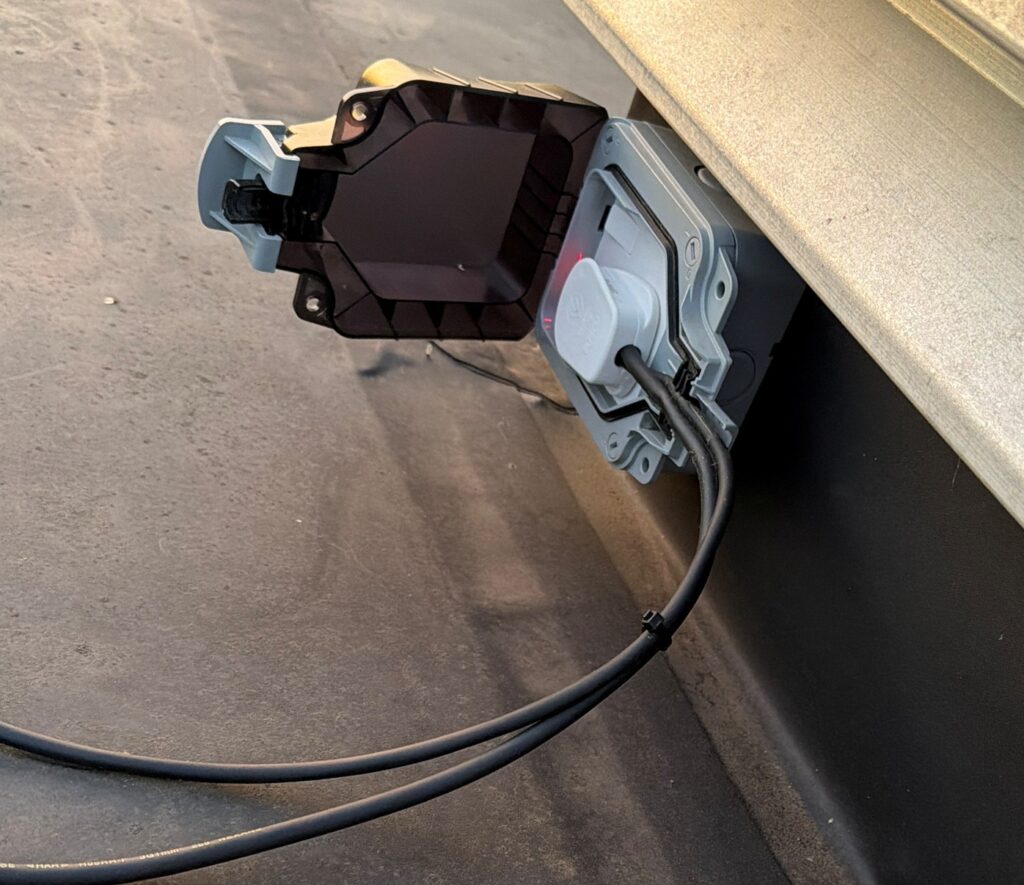
When installed at the same time as the Artemis Skylight Roof Blind, each sensor is supplied and fitted from £190 inclusive of VAT. This applies to both the Soliris wind and sun sensor and the Ondeis rain sensor. Installing sensors during the main project ensures correct positioning, shared power routing through the same 13 Amp plug or fused spur, and avoids the additional labour costs associated with retrofitting.
Hybrid Protection: Adding Solar Film
Some homeowners apply 3M Prestige 70 Exterior to skylights without self cleaning coatings. This provides:
- g‑value around 0.38
- Significant near infrared heat rejection
- High visible light transmission
- A final layer of protection on windy sunny days
This effectively upgrades the skylight to solar glass.
The same approach can be used with internal electric roof blinds to help reduce the overall g-value, when paired with high performance fabrics.
Summary
- Internal shading can work, but only with high reflectance fabrics.
- External shading delivers the best performance, reducing heat by more than 90 percent.
- External systems require wind and rain management.
- Sensor positioning is critical.
- Solar film can act as a backup layer for windy sunny days.
- Choose internal shading if you need guaranteed deployment.
- Choose external shading if you want maximum comfort and performance.
Next Step
Visit Chris’s diary at the bottom of this article and book in a callback at a time that suits you best. It can be really useful to upload a couple of photos in advance.
He can also be reached through info@windowtreat.co.uk.
Supporting Links
Success Story: How External Shading Made Helen Fall In Love With Her Home Again – WindowTreat
Best Solar Control Films for Modern Glazing: 3M Prestige Exterior Compared – WindowTreat
Success Story: Sharon’s Electric Roof Blinds Bring Comfort Back to Her Home – WindowTreat
Gail & Demetris I Artemis External Roof Blind I Customer Testimonial