Applies to: Standard electric patio awnings, Awnings with LED integrated lighting, and Awnings paired with infra‑red heaters.
1. Power Consumption
Electric patio awnings, with or without LED under‑awning lighting, typically draw around 1.1 amps during normal operation. When the motor starts, the current briefly rises to about 2.2 amps. This load remains low, so a 3 amp or 5 amp fused connection handles it comfortably.
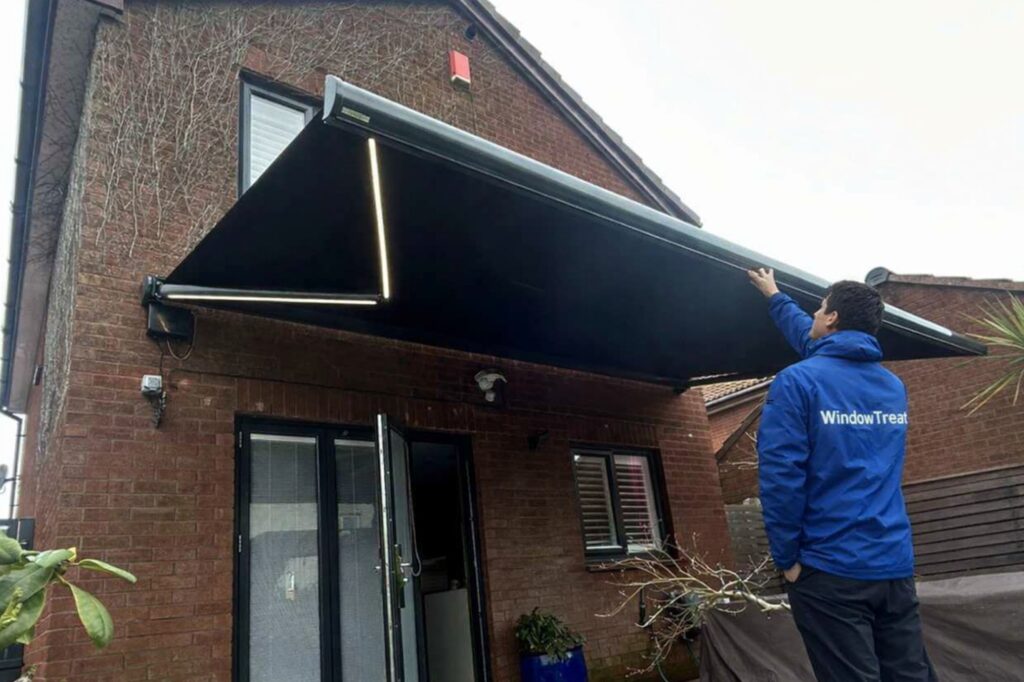
When using integrated LED lighting an electrical transformer box is required. Available in light grey or black consideration of where this should be situated is needed. Sometimes this around the side of the house to help preserve the view from the rear garden.
2. Motor Cable Specification
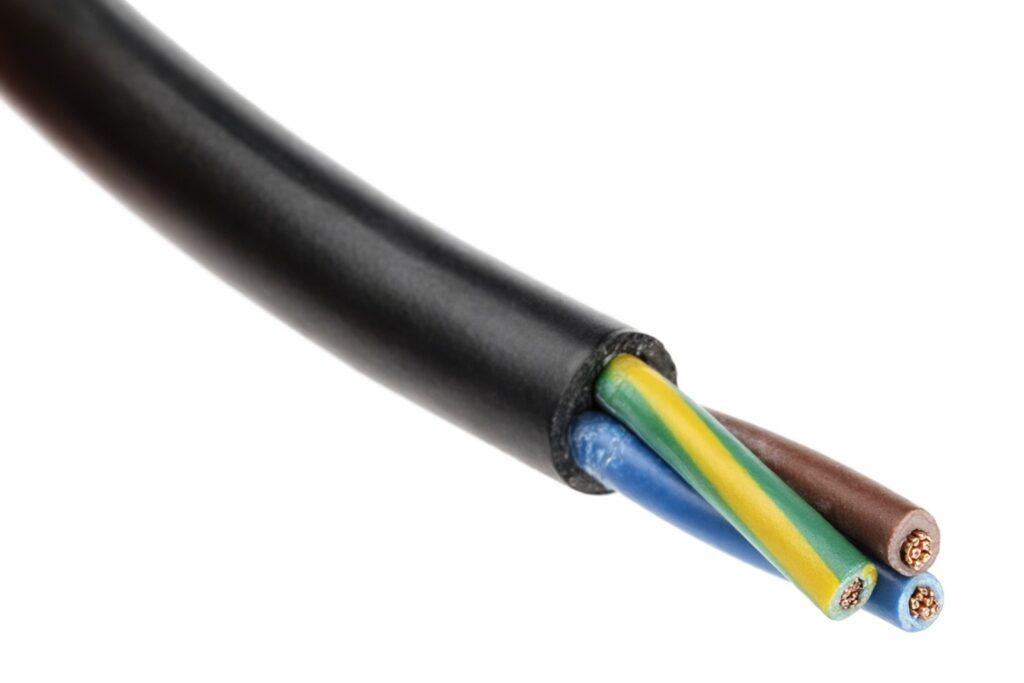
Each awning uses a tubular motor inside the roller tube on either the left or right side. A sealed 3 core black cable extends up to five metres from the motor and carries live, neutral and earth. The first metre of this cable contains the radio antenna. Cutting this section short reduces the remote control range.
Under normal conditions the range reaches up to 200 metres in open space or around 20 metres through reinforced concrete walls. Local interference from Wi‑Fi routers or phone masts can also affect performance.
3. Power Connection Options
Homeowners can choose between two simple connection methods.
Option A: Plug‑in Connection
Fit the motor cable with a fused 3 pin plug rated at 3 amps or 5 amps. Then plug it into a standard socket. This approach works well for quick installations, temporary setups or when spare sockets are avaialble.
Option B: Fused Spur
For a cleaner and more permanent finish, hard‑wire the motor cable into a fused spur rated at 3 amps or 5 amps. This removes visible plugs and keeps the wiring discreet. This option involves your electrician to ensure it’s done correctly.
4. Cable Routing
Most awnings sit at first floor height, so installers can drill a sealed and capped hole through the wall behind the awning. The cable then feeds into the adjacent first floor room, often a bedroom, where it connects to a spare socket or fused spur. This method keeps the exterior tidy. If your cabling is going to an external spur or socket you will need to think about the route it will be taking.
Somfy IO awnings motors come with a 3m black cable as standard but this can be increased to 5m black if required. The black cable is protected from UV exposure.
5. Adding Infra Red Heaters
Infra red heaters require their own electrical feed. Each heater draws around 1.5 to 2kW, so it must connect to a 13 amp fused spur or socket. The heater circuit should never share the awning’s low amp supply. If the installation includes two heaters, each one needs a separate 13 amp connection to ensure safe operation.
6. Adding LED Lighting
The LED lighting package is available on most of our awnings.
LED lighting can dim to 50% and can be controlled from your Somfy handset via the Somfy IO-home lighting receiver.
This is housed in an electrical box together with a transformer prior to connecting to the mains. (light grey or black). Dimensions of the electrical box is 230mm x 180mm x 88mm
You can see it in the image above. Some customers position it around the side of the house so it’s less in view.