Have you just seen a quote for concealed electric blinds and are now staring at the number, wondering, “Why on earth is it so much more just to hide it?”
It’s a question we hear all the time, and it’s a completely fair one. When you’re creating a new space, you want to understand where your investment is going.
You’ve invested so much heart and soul into designing your dream extension with those stunningly clean lines, and the last thing you want is an unexpected cost forcing a compromise you’ll regret.
You want the clean lines, but you need to know if the budget will stretch. So, let’s break down exactly where your money goes, what creates that price gap, and what you should actually expect to pay.
Understanding the Electric Blind Market: Three Tiers of Choice
Not all electric blinds are created equal. The market divides broadly into three tiers, each defined by its engineering, aesthetics, and performance. Knowing the difference helps explain the price.
Tier 1: Entry-Level Systems These use basic components (often plastic) paired with lightweight fabrics such as pleated or basic rollers materials. Motors can be minimal because the loads are light. Many of these systems are mass-produced and sold as DIY kits, though they’re also installed by blind companies offering measure-and-fit services. They work, but they’re not built for demanding environments or comfort improvement. These systems use a branded motor to disguise the substandard blind.
Tier 2: Performance Systems This tier introduces heavier screen fabrics with advanced weaves, requiring stronger components and more capable motors such as Somfy. These systems are designed for comfort, durability, and visual refinement. They can become very much part of the architectural design and can be game changers in your home.
Tier 3: Specialist Systems At the top end are large blinds engineered to prevent fabric deflection, using technologies such as ZoomTech. Zipped tensioned systems allow blinds to travel at angles and maintain fabric stability across wide spans. These solutions are designed for situations where the challenge demands genuine engineering intelligence, whether that is size, wind exposure, or precise concealment. They require accurate specification and coordination across trades to ensure the system performs correctly and looks refined within the architecture.
You should be looking for a company that operates in Tier 2 or Tier 3 if you want your architecturally designed home to work the way it was intended, both in performance and in appearance.
What Makes Some Companies So Expensive?
When you see a higher price for a system, it’s often a reflection of what’s happening behind the scenes. Premium companies invest in factors that ensure a better long-term result:
- Superior Engineering: High-performance systems use tensioning technology and more powerful, quieter motors. Higher‑tier systems also use higher‑grade aluminium for all structural components, manufactured through pressure die casting to achieve strength, precision, and long‑term stability.
- Advanced Fabrics: They offer technical fabrics engineered for specific jobs, like reflecting solar heat or providing near-total blackout, which cost more than standard decorative cloths.
- Longer Warranties: Confidence in the product is often backed by longer guarantees. For example, leading motor brands like Somfy provide a 5-year warranty, reflecting the higher quality of their components.
- Specialist Service: You’re paying for expertise. This includes detailed consultations, precise site surveys, and installation by highly trained technicians who understand the complexities of architectural integration.
Why Are Some Companies So Cheap?
A lower price almost always involves a compromise, even if it is not immediately obvious. Cheaper systems typically reduce costs in several key areas.
Lower‑Grade Materials These systems often use thinner fabrics, lightweight plastics, and simplified mechanisms that are more prone to wear, distortion, and early failure.
Lack of Specialisation Many low‑cost options are supplied by general blind companies without the technical expertise required for complex installations such as roof lanterns, large spans, or concealed systems.
Components Not Designed for Size Some companies build oversized blinds using systems that were never engineered for large dimensions. The result is fabric deflection, poor visual aesthetics, and reduced longevity.
A Focus on Selling, Not Solving A significant number of companies prioritise selling a blind rather than solving the underlying comfort or design challenge. Investing in a system that is not fit for purpose is worse than spending nothing at all.
Installation Quality Even the best blind systems will not operate or look as they should if the survey and installation are not carried out by skilled technicians. The performance of any system is only as good as the expertise behind it and their worth.
The Hidden Numbers: Initial Cost vs Lifetime Value and Comfort
The initial price is only part of the story. A quality system will last more than twice as long as a budget alternative and can be maintained over time by replacing individual components such as the fabric or motor rather than the entire blind. This alone changes the long‑term cost picture.
But the real value goes far beyond lifespan.
The true return on investment is the ability to use your space all year round. Without effective shading, large areas of an extension can become unusable for months at a time due to heat, glare, or cold. If you have invested heavily in additional living space within an architecturally designed extension, every square metre should remain comfortable and functional for decades.
Performance‑led electric shading systems make this possible. They manage heat, glare, and insulation so the space works as intended. Concealment then protects the architectural intent, ensuring the design remains clean, uninterrupted, and visually calm.
A Look Back: How We Got to Today’s Prices
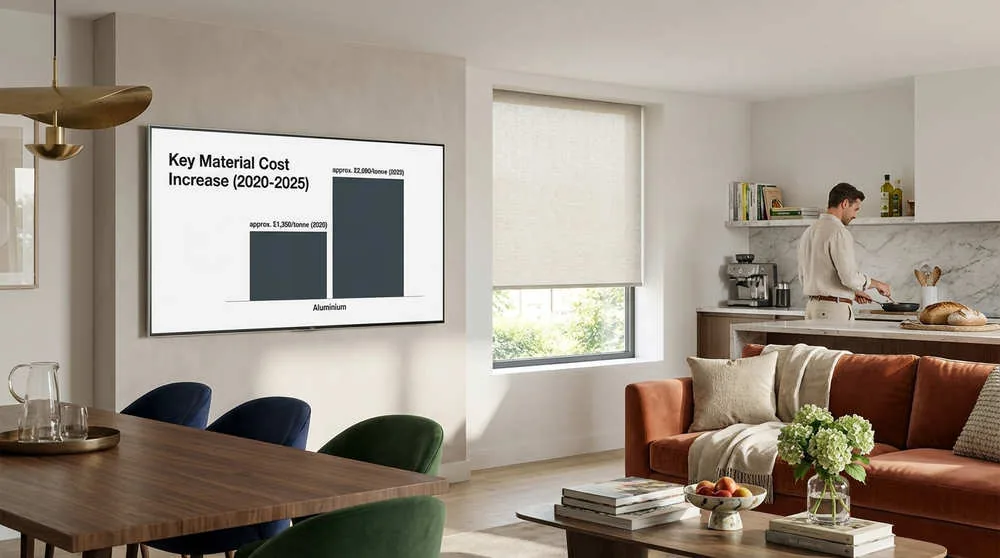
The cost of high-quality systems has also been influenced by significant market pressures over the last five years. It’s not just arbitrary price rises; it’s a reflection of real-world events. Between 2020 and 2025, the industry faced a perfect storm: the price of aluminium (a key component) rose by over 50%, global supply chains were disrupted, and a shortage of skilled labour pushed up installation costs. This has established a new, higher baseline price for specialist goods across the UK.
Why Surface-Mounted Blinds Cost Less
Surface‑mounted blinds cost less because they avoid the additional design work and cross‑trade coordination required for concealment. There is no need to create structural pockets, no need for builders to form recesses, no need for electricians to position power within a hidden void, and no need for plasterers to finish the opening to millimetre accuracy. The blind is simply fixed to the face of the frame or wall, which removes a significant amount of labour, planning, and risk. This simplicity is the main reason surface‑mounted systems sit at a lower price point.
Concealed blinds are different in every respect. They rely on engineered pockets that must be built into the structure, and systems such as Blindspace introduce a premium level of precision and material quality. Even the smallest profiles start at more than £200 plus VAT per linear metre, before any labour is considered. That investment buys pristine minimalism and the ability to preserve the architectural intent of the space. When the goal is a clean ceiling line, uninterrupted glazing, and a blind that disappears completely, the engineering and coordination behind concealment are what make it possible.
The Engineering of ‘Preservation’: Where the Investment in Concealment Really Goes
So, if a surface-mounted blind is a simple addition, a concealed system is more like a minor piece of construction. The cost is in the process, not just the product.
1. It Starts on the Drawing Board: Early-Stage Planning
For a truly invisible finish, the decision must be made during the architectural design phase. This is where our S.H.A.D.E. framework is so important. It’s about deciding to protect the clean lines of your home from the very beginning, treating light control as a fundamental part of the architecture itself.
2. Building the ‘Blind Space’: Structural Work & Specialist Materials
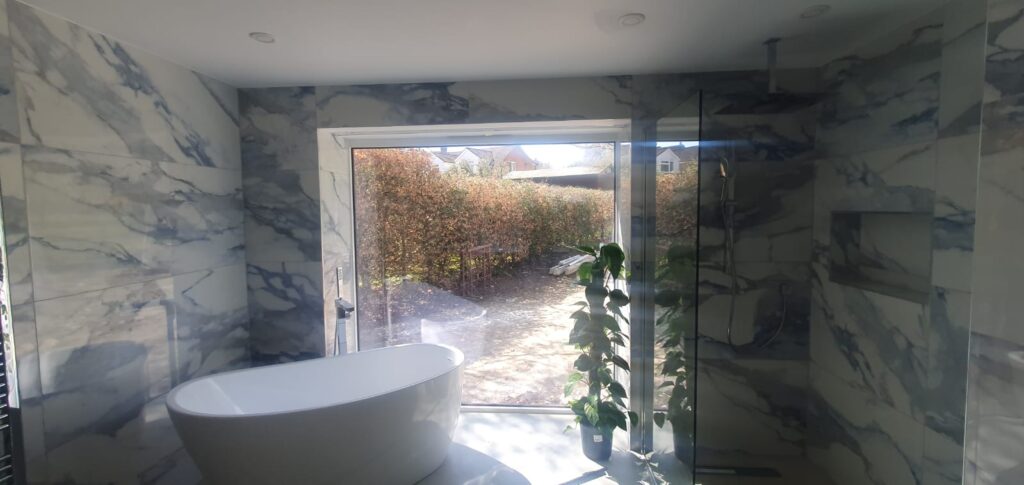
This early planning allows for the physical work to happen. A structural pocket has to be created in the ceiling or wall where the blind will eventually live. This requires specialist components like Blindspace® boxes, which are precision-engineered aluminium profiles installed within the structure. They are designed to be plastered over, creating a perfectly seamless finish. A Blindspace profile for a 3-metre window could be supplied for over £800, with the total builder’s work being costed separately as part of their works.
This is where timing becomes a financial factor. Creating this pocket during the build phase is relatively straightforward, it’s just part of the ceiling construction. However, trying to “dig” this pocket out of a finished ceiling later is a different story. Retrofitting a concealed pocket involves precise cutting, structural alterations, and extensive re-plastering. The cost of retrofitting concealment can be two to three times that of incorporating it into the build from day one. This is why we champion the S.H.A.D.E. framework, planning early isn’t just about getting a better result; it’s about protecting your budget.
3. A Team Effort: The Deconstructed “Hidden Costs”
A surface-mounted blind is installed by one person. A concealed system requires a team, and it’s vital to budget for these ancillary costs:
- Structural Work: As mentioned, creating the pocket for the blind to retract into.
- Electrical Preparation: A qualified electrician must install a dedicated power supply backed by a fuse spur to the motor’s location. In a new build, this is relatively simple and part of the overal wiring scheme, but discussions need to be had so all trades are on the same hymn sheet.
- Plastering: A plasterer is needed to skim the ceiling up to the concealment box for that invisible finish.
- Specialist Installation: Finally, our fitters arrive to install the blind itself into the prepared space.
This coordination across different trades adds complexity, time, and cost that simply doesn’t exist with the simpler approach.
An Inspiring Example: The Architect’s Secret Star-Gazing Ceiling
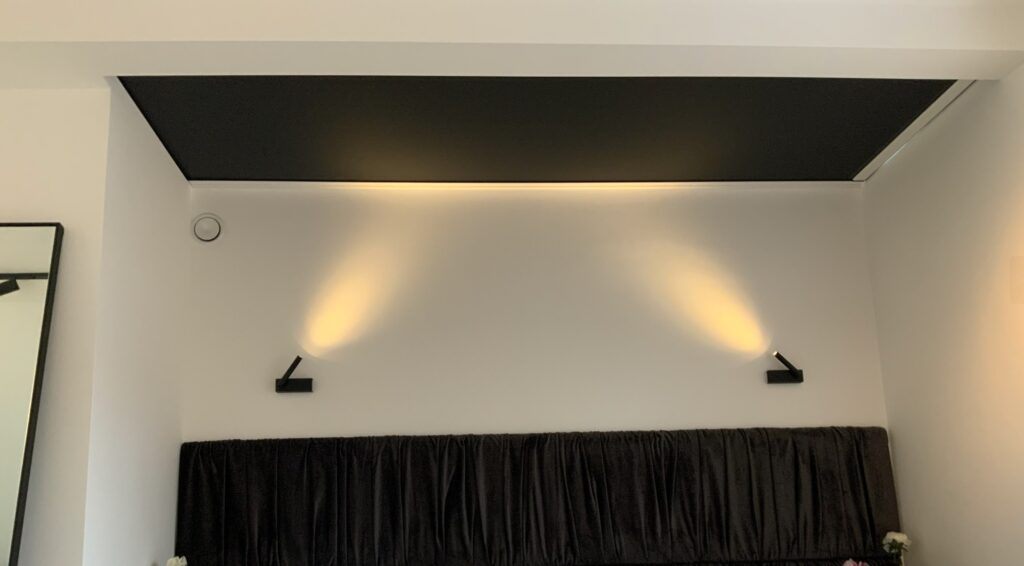
For some homeowners, preserving the design dream is non-negotiable. We worked with Pavla, an architect, and her husband Piers, an engineer, who had a very specific vision for their master bedroom: to lie in bed and look directly up at the night sky through a large roof light.
A standard electric roof lantern blind with its visible cassette would have completely ruined the minimalist aesthetic.
It would have created a permanent, intrusive frame around their view of the stars. The very idea of adding a clunky box to their clean, white ceiling was unthinkable; it would have felt like a constant compromise.
The solution was to integrate a completely concealed blackout blind. During the build, a recess was created in the ceiling. Now, when not in use, the blind is completely invisible.
At the touch of a button, the fabric glides out of the hidden slot to create what feels like a solid, dark ceiling. For them, the extra investment wasn’t an extravagance; it was an essential part of making their special dream a reality.
So, What Should You Expect to Invest? An Honest Look at Our Pricing
Okay, let’s talk numbers.
Please remember that the following are indicative costs for our specialist, high-performance systems to give you a helpful ballpark figure. Every project is different, but this will give you a sense of the investment required.
- Concealed Roof Lantern Blind (Typical Size: 2m x 3m): For a latest-generation electric roof blind, fully installed, the investment can be up to £5,500. The separate supply of the Blindspace® components to create the hidden recess would be around £3,500.
- Concealed Blinds for Bifold Doors (Typical Size: 4m Wide): To supply and install the electric blinds into a prepared pocket would typically range from £3,000 to £5,000. The separate supply of the Blindspace® system to create that pocket would be around £1,000.
Our bespoke, high-performance systems sit within this premium, specialist category. The final price depends on the exact size, your choice of fabric, and the installation’s complexity, but this gives you an honest starting point.
How Do People Pay for a Project Like This?
For a significant home improvement, understanding your payment options is key. In the high-end, bespoke market, the financing landscape is different from mass-market retail.
While many high-street retailers offer 0% APR deals, this is uncommon for specialist, low-volume installers. The reality is that “interest-free” credit isn’t free; the retailer pays a subsidy to the finance company, which is built into the price. For bespoke projects, this model doesn’t work as effectively.
Many of our customers want to invest in high‑quality shading solutions, but we know that electric blinds and awnings aren’t always included in the original build budget. Sometimes they become an afterthought, or unexpected project costs mean the budget simply won’t stretch as far as planned.
To help make things easier, we offer flexible financing options designed to smooth out cashflow. In most cases, this involves a 50% payment at the point of order, followed by a direct debit spread over 6–12 months at Base Interest Rates (3.75% at the time of writing).
Every project is different, so we’ll discuss the most suitable approach with you on a job‑by‑job basis.
Most of our clients fund projects of this scale in other ways:
- Cash Purchase/Staged Payments: Often as part of a larger, budgeted renovation project.
- Personal Bank Loans: For those with a strong credit history, this is a very cost-effective route. As of mid-2025, rates from major UK banks for loans in the £7,500 – £15,000 bracket are very competitive, typically around 6% APR. This is often a better value option than third-party retail finance, which can have APRs from 12% to over 20%.
So, Is the Investment Really Worth It?
This is the most important question. A concealed system is a significant investment, but its value goes far beyond the mechanism. It’s a capital improvement to your property. High-end homes with seamlessly integrated smart technology command a premium and are known to sell faster. Furthermore, the high-performance fabrics can lead to tangible energy savings by reducing solar gain in summer and heat loss in winter.
But perhaps most importantly, it protects your original vision. It ensures the beautiful, light-filled space you dreamed of is also comfortable and usable year-round, without the visual clutter of a retrofitted solution.
Your Questions, Answered
“What drives the price of a concealed system down?”
TThe biggest driver in lowering cost is simple: avoiding full concealment. You can still place blind systems into pre‑prepared voids without using a dedicated concealment product, but the desire for a pristine, perfectly aligned finish is what leads customers to systems like Blindspace. These profiles are engineered for minimalism and precision, and that level of refinement carries a premium. When you remove the need for that finish, the cost naturally drops.
The second major cost driver is early planning. If the Blindspace boxes are specified before the ceiling is boarded, the installation is efficient and clean. Leaving it until after the plaster is dry forces expensive remedial work and compromises the final look. You can also lower cost by choosing lighter components or simpler fabrics, but this comes at the expense of comfort and long‑term usability. If you have invested in a new living space, the goal should be to protect that investment. Performance‑led shading ensures the space remains comfortable and functional for decades, rather than becoming an area you avoid during parts of the year.
“Are there high-quality surface-mounted blinds?”
Absolutely. There are some excellent premium surface-mounted systems that will do an equal job of improving home comfort and liveability. However, they are still ‘additions’. They cannot achieve the complete architectural integration and total invisibility that a concealed system provides, which remains the ultimate choice for a truly minimalist aesthetic.
“What happens if a concealed blind breaks?”
This is a valid concern. You’re embedding something into the fabric of your home. These systems are designed specifically for serviceability. The closure panels on Blindspace® boxes are removable, giving full access to the blind and motor for maintenance without having to damage the ceiling.
Bringing It All Together
Choosing between these two options comes down to what you value most. The higher cost of a concealed system is a direct reflection of the work required to protect your home’s design.
Ask yourself these honest questions:
- On a scale of 1 to 10, how much would it bother you to see blind hardware sitting over your slim glazing sightlines every day?
- Is preserving the clean, uncluttered lines of your new space a nice-to-have, or is it a must-have for you to feel your investment has truly delivered?
If your answers lean towards 10 and ‘must-have’, then you’re not just paying to hide a blind. You’re investing in ensuring your home lives up to the dream you had for it, with zero compromise.
Planning early is the key to seamlessly integrating comfort and control into your home. If you’re at the design stage or simply want to understand the possibilities for your space, we’re here to help.
Call one of our specialists for a friendly chat on 01256 345580 or book appointment online.