3M Prestige Exterior solar control film is made for long-term outdoor use. It has a durable, scratch-resistant surface that stands up well to normal professional window cleaning.
Most homeowners can continue using their existing window cleaner. Water-fed brushes and traditional bucket-and-squeegee cleaning can both work well when the cleaner uses suitable tools and plenty of water.
With correct installation and sensible care, there is every reason to expect the film to perform throughout its warranty period. It may also continue giving useful service for years beyond it.
Is 3M Prestige Exterior Easy to Look After?
Yes. The film does not need a complicated maintenance routine or a specialist cleaning product.
3M protects the surface with a durable hard coat. This coating helps the film resist the light contact and movement that occur during installation and normal cleaning.
How Has 3M Tested the Surface?
3M does not rely on description alone. The 3M Prestige exterior series requires independent abrasion testing. It specifies ASTM D1044, commonly known as the Taber Abraser test, which measures how well a surface resists rubbing and wear.
The specified test uses CS-10F abrasion wheels for 50 cycles at a 500 gram load. The increase in transmitted haze must remain below 5%. In simple terms, the test checks that repeated surface contact does not cause the film to become significantly cloudier.
This gives homeowners useful evidence that Prestige has a genuinely abrasion-resistant surface. It does not mean that the film is impossible to scratch. Trapped grit, damaged tools and metal scrapers can still mark it. However, clean window-cleaning tools and a gentle wet method should not present a problem.
See the Film Being Installed
During installation, Mike uses hard-plastic squeegees firmly across the wet film. These tools remove the application solution and help the film bond evenly to the glass. The durable hard coat is designed to cope with this professional application process.
The video below shows Mike using these tools during an installation. It gives a useful picture of how robust the film surface is when someone uses clean tools correctly.
Will the Film Make the Glass Easier to Clean?
In everyday use, it should help.
3M Prestige exterior films have a hydrophobic surface. This means water beads and releases from the film more readily. Loose dust and dirt can therefore rinse away more easily, with less need for scrubbing.
The film is not self-cleaning, so pollen, bird mess and everyday pollution will still need attention. However, regular gentle cleaning should keep the filmed glazing looking clear and smart.
Can My Window Cleaner Use a Water-Fed Brush?
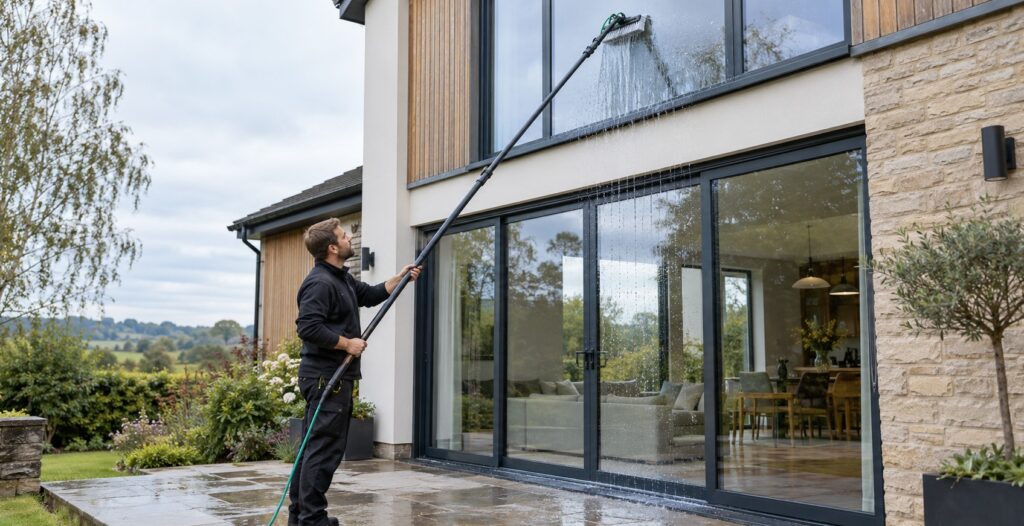
Yes. The vast majority of WindowTreat customers use water-fed brush systems, and we are comfortable recommending them for Prestige Exterior.
These systems normally use soft, splayed polymer bristles. The bristles flex against the glass and spread the pressure across the surface. As a result, a clean and well-maintained brush provides a gentle way to wash the film.
WindowTreat asked 3M to confirm this point directly. In August 2026, 3M confirmed that the system should present no issue when the brushes remain clean and free from defects.
The cleaner should simply:
- Use a soft brush designed for glazing.
- Keep the brush clean and in good condition.
- Rinse away loose grit before brushing.
- Keep plenty of water flowing across the pane.
- Use light, controlled pressure.
At my own home, the window cleaner uses purified water through a pole-mounted brush. I am comfortable with their approach and never see them needing to apply excessive pressure.
In fact, the only cleaning damage WindowTreat has seen did not involve a water-fed brush. A new apprentice accidentally used the hard back of a squeegee instead of the correct working edge. This was incorrect tool use rather than a problem with normal window cleaning.
Can My Window Cleaner Use a Bucket and Squeegee?
Yes. Traditional cleaning with a bucket and squeegee also works well once the film has fully cured.
First, wet the pane thoroughly. Use a clean synthetic sponge or soft cloth with a mild, non-abrasive detergent to loosen the dirt. Then draw the water off with a clean, smooth squeegee blade.
Keep the water, sponge and cloth clean throughout the job. When cleaning several windows, rinse the cloth or sponge regularly and replace the water and detergent solution before it becomes dirty. This prevents grit and dirt from being carried back onto the film.
Before starting, inspect the squeegee blade for trapped grit, splits, rough edges or other damage. Keep the hard back, metal channel and any clips away from the film surface.
This method closely follows the wet process used during installation. However, routine cleaning requires much less pressure.
How Soon Can the Film Be Cleaned?
Leave the film for at least 30 days after installation before cleaning it. This gives the adhesive time to cure and allows any remaining installation moisture to dry.
During this period, you may notice a little haze or small water patterns. These normally disappear as the film dries.
Cold or damp weather can slow the process. Therefore, speak to WindowTreat before cleaning if the film still shows noticeable curing moisture after 30 days.
How Often Should the Film Be Cleaned?
The right frequency depends on the property, the glazing angle and the local environment.
As a simple baseline, we suggest:
- Clean ordinary vertical glazing at least every six months.
- Clean roof or sloping glazing at least every three months.
- Clean sooner after building work, heavy pollen, bird deposits, sea salt or wind-blown grit.
You do not need to wait six months between cleans. A normal domestic window-cleaning visit every four to eight weeks is also suitable when the cleaner follows the correct method.
In practice, the condition of the glazing matters more than the calendar. Clean it when dirt starts to build up, and remove bird mess or other stubborn deposits promptly.
A Simple Water-Fed Brush Method
- Show the cleaner which panes have exterior film. Lighter Prestige grades can look very similar to untreated glass.
- Check that the brush feels soft and remains clean, undamaged and free from trapped grit.
- Rinse the pane before the brush makes full contact. This carries away loose dust and grit.
- Wash the wet pane using light, controlled brush passes. A correctly installed and fully cured film edge should remain firmly bonded during normal brushing.
- Rinse the pane from top to bottom. Purified water can then dry naturally without leaving the usual hard-water marks.
A Simple Traditional Cleaning Method
- Wet the pane thoroughly with clean water.
- Use a mild, non-abrasive window-cleaning solution.
- Loosen the dirt with a clean synthetic sponge or soft cloth.
- Draw a clean squeegee blade across the wet film.
- Wipe and inspect the blade between passes so it remains free from grit.
- Rinse the cloth or sponge regularly and replace dirty cleaning water.
- Finish by checking the pane, film edges and drainage points.
You do not need a special film cleaner. A mild, pH-neutral glass cleaner provides all the cleaning power normally required.
What Should the Window Cleaner Avoid?
Prestige Exterior is durable, but abrasive or damaged tools can mark any coated surface.
For that reason, do not use:
- Razor blades or window scrapers
- Abrasive pads or cleaning blocks
- Stiff, dirty or damaged brushes
- Powdered or abrasive cleaning products
- Strongly acidic or alkaline chemicals
- Dry brushing or polishing
- Damaged squeegee blades
- Concentrated pressure-washer jets
Clean water, suitable tools and a gentle wet method provide the best combination..
What About Wind-Blown Dust and Sand?
Normal UK airborne dust should not create a serious concern. The film faces ordinary outdoor exposure every day.
However, hard grit can scratch many coated surfaces if a cleaner traps it beneath a brush or squeegee. Rinsing first removes most of this risk.
Homes near building work, exposed fields, unmade roads or the coast may collect more grit or salt. In these locations, rinse the glazing after unusually dusty or salty weather.
Use more water rather than more pressure. This helps loose dirt leave the surface before the cleaning tool moves across the film.
Does Roof Glazing Need Different Care?
Rooflights, lanterns and sloping glazed roofs collect more settled dirt than vertical windows. Rain often moves that dirt towards the lower edges and drainage points.
For that reason, inspect and clean roof glazing more frequently. Pay particular attention to any place where leaves, dirt or standing water collect.
Where water or snow can remain against an edge, 3M may require edge sealing during installation. This relates to prolonged moisture exposure. Normal gentle brushing should not lift a correctly installed and cured film edge.
Always use a safe cleaning method. Never assume that roof glass can support a person, ladder or cleaning equipment.
How Long Should 3M Prestige Exterior Last?
For the UK climate zone, 3M provides a 10-year warranty for vertical Prestige Exterior installations. It provides seven years for sloping or horizontal glazing.
These periods are warranties, not replacement dates. Correctly installed film does not suddenly stop working when the warranty ends.
With suitable cleaning and normal exposure, the film may continue controlling solar gain and looking good beyond the warranty period. We assess older film by its actual condition rather than its age alone.
When Should I Contact WindowTreat?
Most installations need nothing beyond normal cleaning. However, please contact us if you notice:
- Persistent scratches or unusual haze
- A damaged or lifted edge
- Bubbles that appear after the curing period
- Peeling, cracking or delamination
- A sudden change across several panes
First, clean the pane gently and allow it to dry. Then send us a photograph of the whole pane and a closer view of the affected area.
Please do not polish, scrape or attempt to repair the film before we inspect the photographs.
The Takeaway
3M Prestige Exterior combines strong solar-control performance with a durable surface that fits into normal household window cleaning.
Water-fed brushes work well when they remain soft, clean and free from damage. Traditional wet cleaning with a sponge and squeegee also works well.
Use plenty of clean water, rinse away grit before making contact and keep every tool in good condition. These simple habits should help the film look good throughout its warranty period and potentially for years beyond it.
For help choosing the right Prestige film for your glazing, read Best Solar Control Films for Modern Glazing: 3M Prestige Exterior Compared.
Supporting Links
Primary 3M Sources
- 3M Prestige 70 Exterior Product Bulletin, April 2026
Current scratch-resistant surface, application, cleaning, drying and edge-sealing guidance. - 3M Prestige 50 Exterior Product Bulletin, May 2025
Current cleaning guidance, including a wet, non-abrasive cleaner with a pH of 6 to 8. - 3M Exterior Prestige Series Technical Specification, April 2019
Detailed ASTM D1044 Taber abrasion test, 50 cycles, 500 gram load, CS-10F wheel and less than 5% increased haze. It also covers plastic installation squeegees and cleaning after 30 days. - 3M EMEA Window Film Warranty, valid from 1 October 2024
Supports the 10-year vertical and seven-year sloping or horizontal Prestige Exterior warranty for the UK climate zone. - 3M UK Prestige Exterior product page
Current product-family overview and access to 3M resources.
Additional 3M Evidence
- 3M Prestige Exterior family card
Exterior durability and edge sealing where water can pool. - 3M Prestige 40 Exterior technical sheet
Describes the hydrophobic hard coat and its role in helping the surface look cleaner. - 3M Prestige 70 Exterior technical sheet
Also records the hydrophobic hard-coat benefit.
Taber Test Information
- Taber Industries ASTM test-method directory
Identifies ASTM D1044 as a Taber Abraser method for transparent plastics. - Taber CS-10F abrasion-wheel information
Explains the CS-10F wheel and its use for transparent plastics and safety glazing.
WindowTreat Content