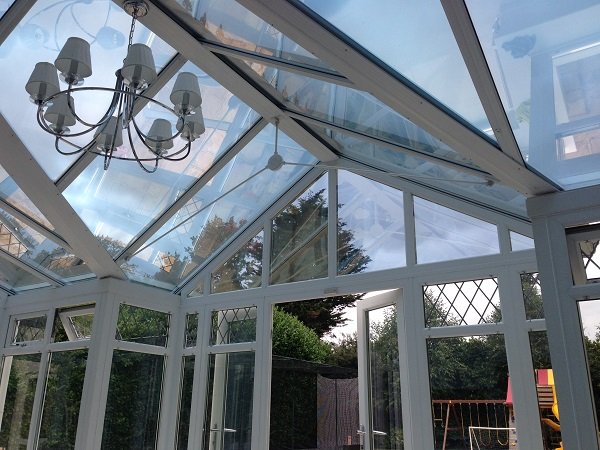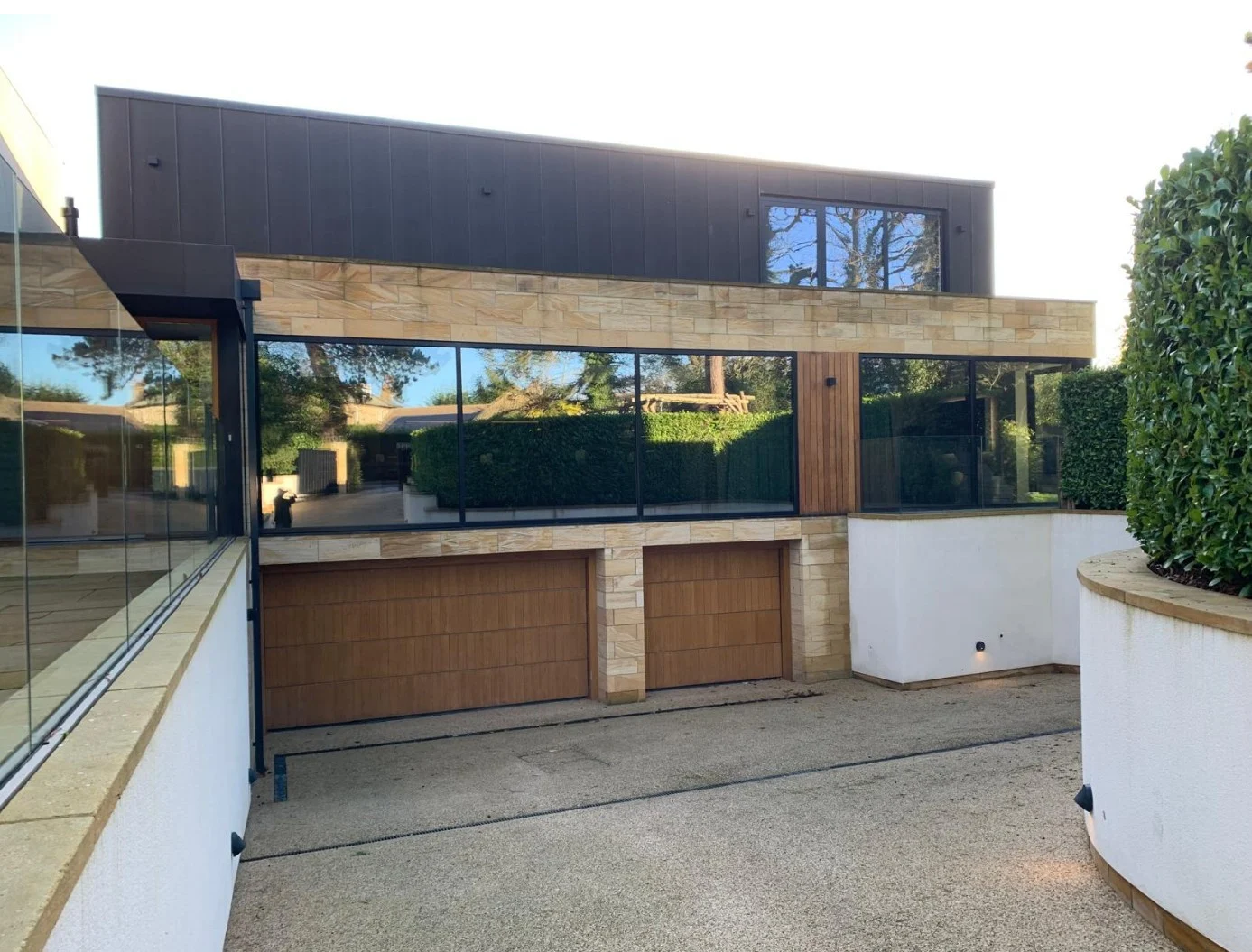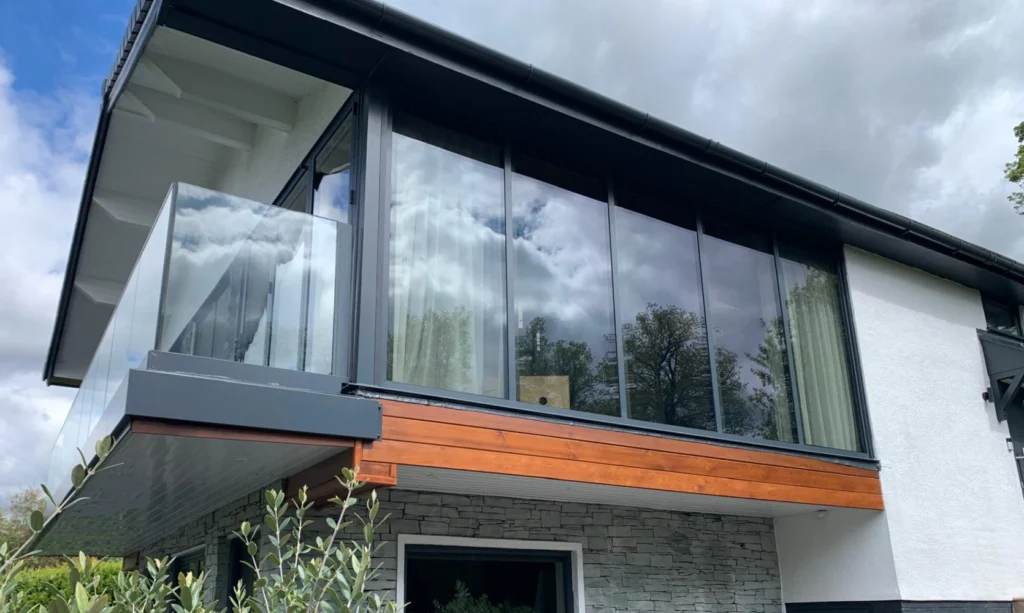
Solar control window film reduces the amount of daylight passing through your glazing. That is real. But if your room suffers from severe solar gain, the more important question is whether that reduction in daylight is a bigger problem than the overheating you are trying to solve.
Very often, it is not.
An hour when you decide to switch on a light is not equivalent to an hour when a room is too hot to use comfortably. If your room is already becoming excessively hot, causing you to close blinds, avoid parts of the room or struggle with glare, choosing a film solely because it lets the most daylight through can leave the main problem unsolved.
Our approach is simple: use the lightest film that adequately controls the solar problem. That protects daylight without losing sight of why the film is being considered in the first place.
Window film does reduce daylight
There is no point pretending otherwise. Every solar control film reduces visible light to some degree. The amount depends on the film and the glass it is applied to.
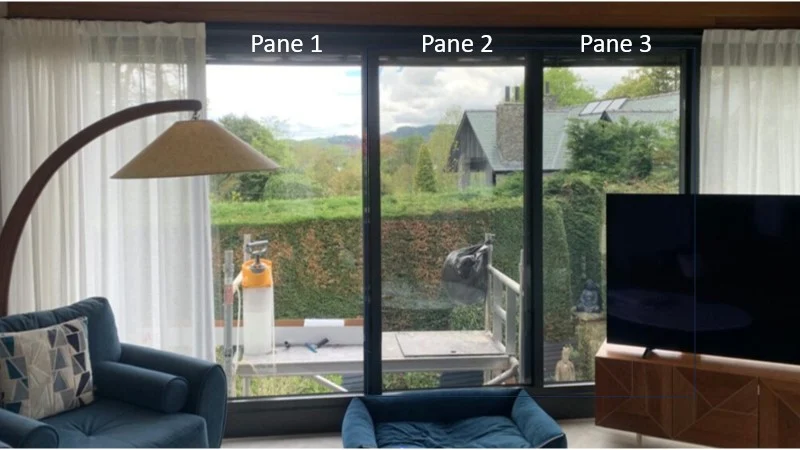
Using 3M’s published EN 410 data for clear double glazing as an example:
| Glazing | Visible light transmission | g-value |
|---|---|---|
| Clear double glazing without film | 79% | 0.70 |
| 3M Prestige 70 Exterior | 64% | 0.41 |
| 3M Prestige 50 Exterior | 45% | 0.31 |
Prestige 70 therefore preserves considerably more daylight than Prestige 50. But this table does not tell us whether a particular room will feel too dark.
A room does not have a percentage brightness. Its usefulness depends on the amount and distribution of daylight it already receives, the depth of the room, other windows, surrounding buildings or trees, the surfaces inside it, what people do there and how our vision adapts to changing light levels.
Sources: 3M Prestige 70 Exterior product bulletin and 3M Prestige 50 Exterior product bulletin. The figures are for 3M’s reference clear double glazing, not automatically for the glass in your home.
A percentage reduction in light does not mean the room feels equally darker
Our eyes and brain continually adapt to changing light levels. Walk indoors from bright sunshine and a room can initially appear dark. A short time later, the same room can look normal.
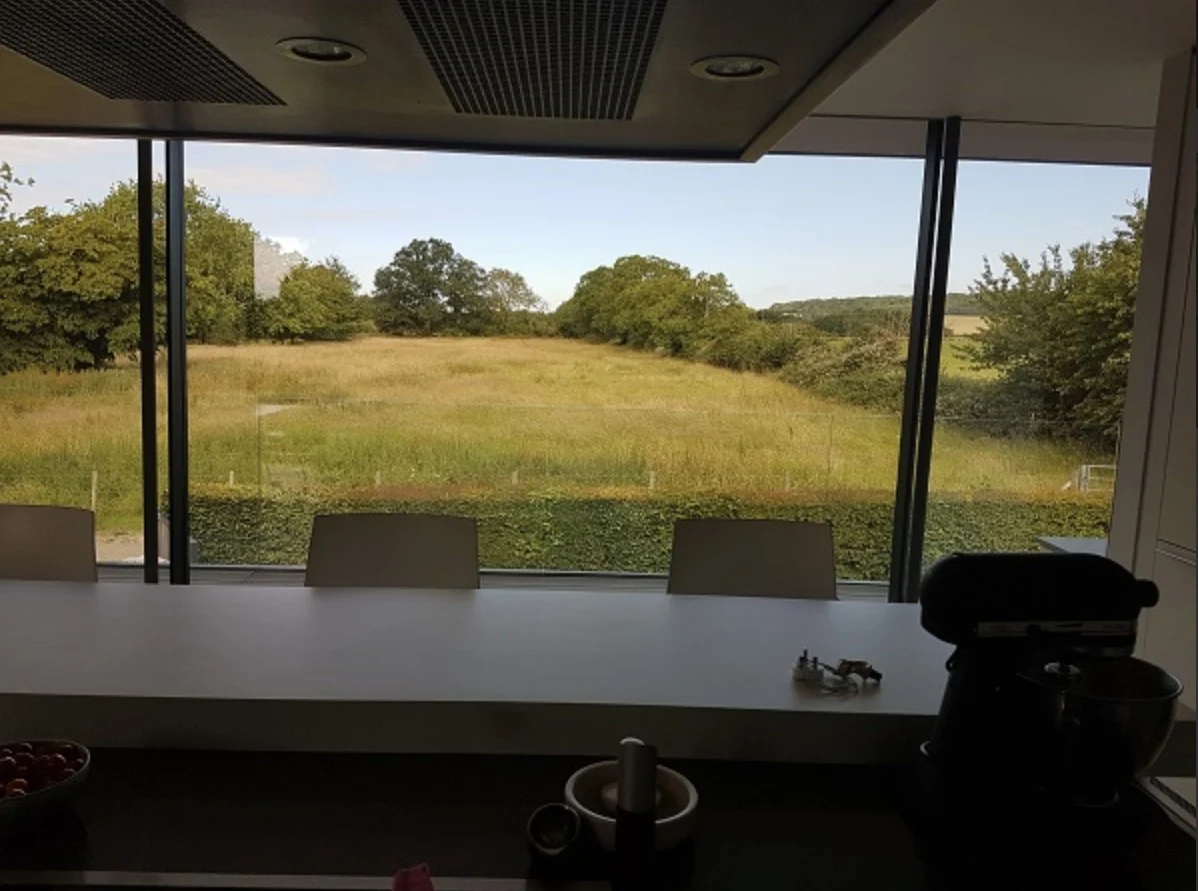
Cameras also adapt, although by different mechanisms, by changing exposure. That is why both photographs and human perception can make large changes in measured light appear less dramatic than a transmission percentage might suggest.
Photographs are therefore useful. They can show tint, appearance and the relationship between treated and untreated glazing. But neither a photograph nor a visible-light transmission number tells you, on its own, whether the finished room will feel too dark.
The practical question is not simply “How much light have we lost?” It is “After treatment, will there still be enough useful daylight for the way this room is used?”
Not every lost hour of daylight has the same consequence as an hour of overheating
This is the point that is easily missed.
Suppose a film means that on some dull winter afternoons you switch the electric lights on earlier than you do now. That is a disadvantage, but it has a straightforward remedy: you turn on a light.
Now compare that with a room suffering severe solar gain. Once large amounts of solar energy have entered through the glazing, the room can become too hot to use comfortably. People move away from the glazing. Curtains or blinds get closed. Screens become difficult to see. Windows are opened in an attempt to release heat. The room may remain hot long after the strongest sunshine has passed.
There is no switch that instantly removes the heat already absorbed by the room.
A year has 8,760 hours, but those hours are not equal. An hour requiring electric lighting and an hour in a severely overheated room are not equivalent.
If solar gain is making a valuable living space difficult to use, controlling that problem can be considerably more important than avoiding some additional hours of electric lighting.
The blinds can completely change the daylight argument
What do you currently do when the sun becomes too strong?
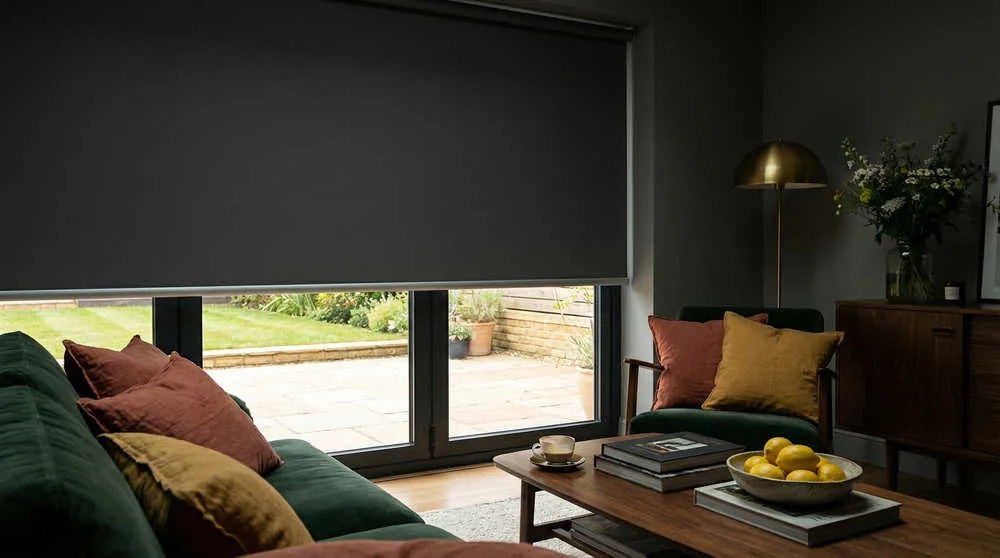
If the answer is close the curtains or lower the blinds, then the untreated glass is not really giving you maximum useful daylight during those periods. You may have glazing with very high visible-light transmission and then deliberately block much of that light because the solar conditions have become intolerable.
You also lose the view you installed all that glazing to enjoy.
A suitable solar control film can sometimes allow blinds or curtains to remain open for much longer. That creates an apparent paradox: a glazing system that transmits less light through the glass can sometimes give you more usable daylight and more time enjoying the view because you no longer need to block the window.
That will not be true in every room. Film may not eliminate glare completely and blinds may still be needed for privacy, sleeping or very low sun. But where heat and solar glare are the reasons the blinds are being closed, it is a central part of the decision.
So should I choose Prestige 70 or Prestige 50?
This is where the trade-off becomes useful rather than theoretical.
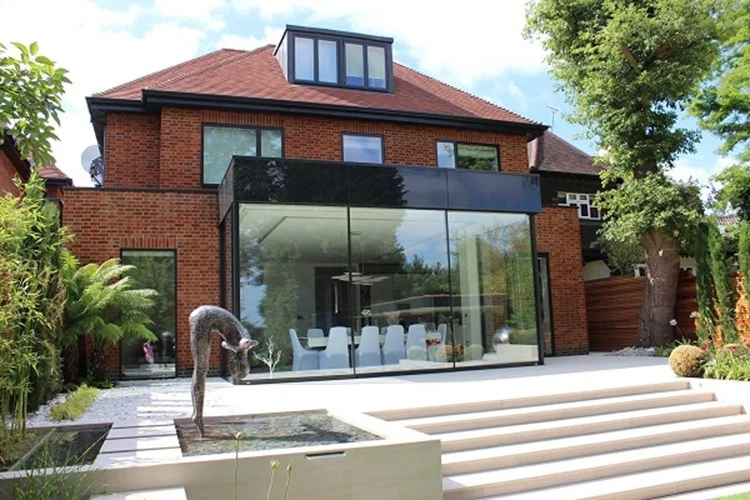
Prestige 70 Exterior is often our starting point where retaining natural light and a discreet appearance are particularly important. On 3M’s clear double-glazing reference system it provides visible light transmission of 64%, compared with 79% for the untreated glass. It preserves much more daylight than a darker solar control film while still materially reducing solar gain.
See the 3M Prestige Exterior films we install.
Prestige 50 Exterior allows less visible light through, but it also gives stronger solar control. On the same 3M reference glazing its visible light transmission is 45% and its g-value is 0.31, compared with 0.41 for Prestige 70.
If Prestige 70 is sufficient to solve the overheating problem, there may be little reason to sacrifice the additional daylight by moving to Prestige 50. But the reverse is equally important.
If a lighter film leaves the room seriously overheating, choosing it simply because its visible-light figure looks more reassuring is not a successful specification.
The film has to solve the problem it was installed to solve. Our objective is not to fit the darkest film or the lightest film. It is to select the lightest solution that adequately controls the solar problem.
There are rooms where preserving daylight should win
This argument is not a reason to put stronger solar film on every window.
Some rooms are already relatively dark. A north-facing room surrounded by trees or neighbouring buildings may have little direct solar gain but highly valued daylight. If overheating is modest and daylight is already marginal, permanently reducing the incoming light may be a poor trade.
The better solution might be a lighter film, treating only the most exposed glazing, treating roof glazing but leaving vertical glazing clearer, adjustable blinds or external shading, or deciding that solar control film is not appropriate at all.
This is why WindowTreat starts with the room and the problem, not with a favourite product.
What about winter?
Daylight is only one winter concern. Solar control film also reduces some solar heat gain during winter, which raises a related question: are you giving up useful free heat in order to control summer overheating?
We have looked at that question separately because it deserves a proper answer.
Read: Will solar control window film make my home colder in winter?
The conclusion is similar. Useful winter solar gain is real. But more solar gain is not always better. Once a room has enough heat, additional solar energy simply becomes excess heat that must be managed.
The right decision comes from considering the building throughout the year, rather than optimising a single glazing figure.
What does this look like in a real home?
One of the best ways to judge the trade-off is to see what happened when somebody else had a serious solar-gain problem.
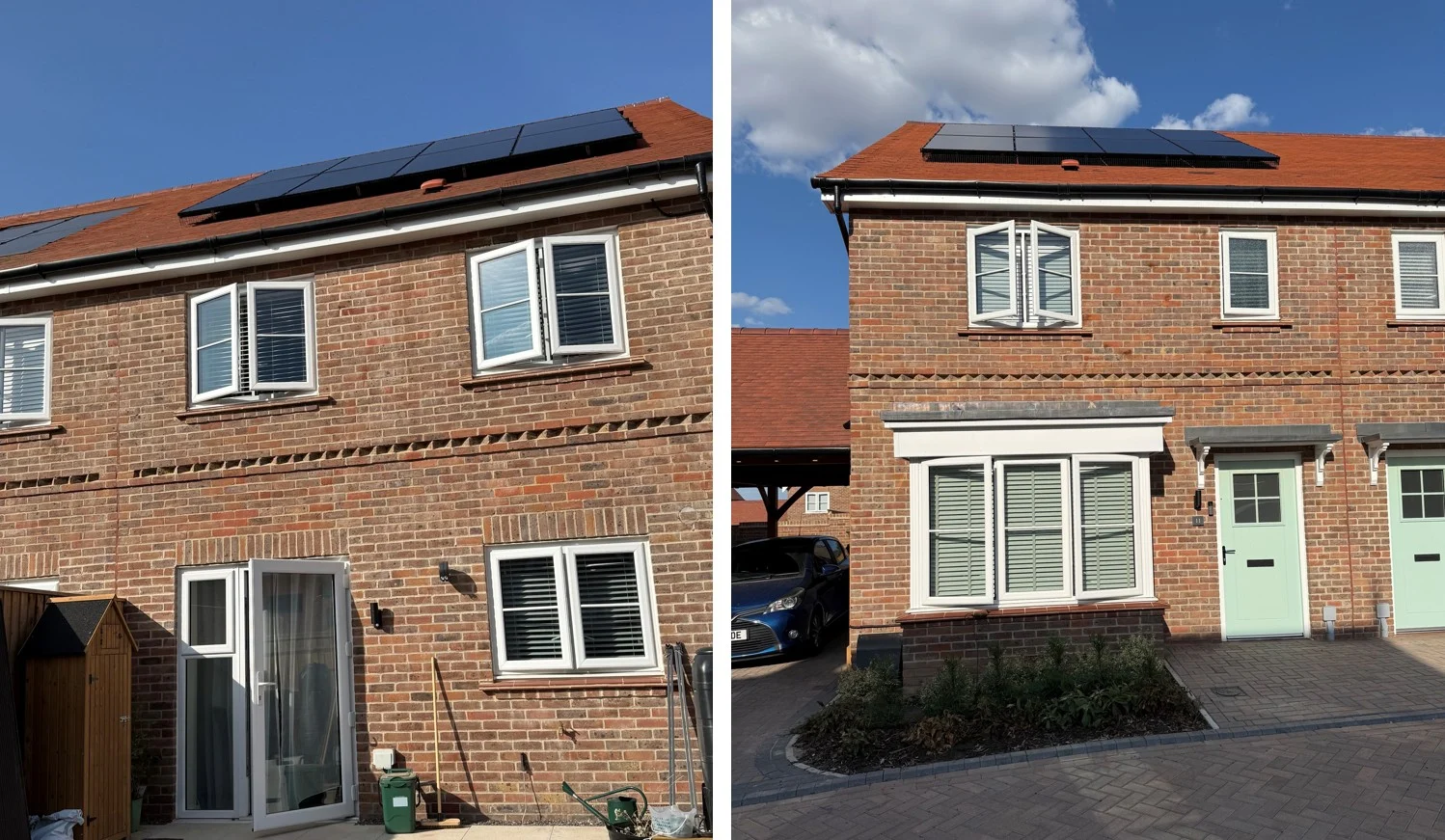
Our new-build case study shows 3M Prestige 70 Exterior being used to reduce heat while preserving a relatively light, neutral appearance.
See the customer story: Cooling a New Build with Heat Rejecting 3M Window Films.
It is also worth understanding what the performance figures actually mean before comparing products.
Read our guide to making sense of window film performance data.
Start with the problem, not the percentage
If you are worried that window film will make your room too dark, ask these questions first:
- How serious is the solar problem now? Does the room become mildly warm, or so hot that you stop enjoying it?
- What do you do when the sun is strongest? If you already close blinds or curtains for hours, the daylight currently passing through the untreated glass may not be as useful as the transmission figure suggests.
- Is the room already short of daylight? A deep or shaded room deserves much more caution than a bright room with extensive glazing.
- Which glazing is causing the problem? It may not be necessary to treat every pane or every elevation in the same way.
- What level of solar control is actually required? Once we know that, we can preserve as much daylight as possible without compromising the main objective.
The aim is a better room, not a better laboratory number
It is easy to become preoccupied with whether one film transmits 64% or 45% of visible light. Those numbers matter, but they are inputs to a decision, not the decision itself.
If severe solar gain is making a room uncomfortable or unusable, solving that problem can be considerably more valuable than avoiding some additional hours of electric lighting.
Equally, there is no virtue in unnecessarily darkening a room when a lighter film would control the heat adequately. The right result sits between those two mistakes.
At WindowTreat, our job is to help you find that balance.
Explore the decision in the order that helps you most:
- Understand the problem: read our guide to solar heat gain in heavily glazed homes.
- Settle the winter concern: will solar control window film make my home colder in winter?
- See a real customer result: Cooling a New Build with Heat Rejecting 3M Window Films.
- Understand the figures: making sense of window film performance data.
- Compare the product: see the 3M Prestige Exterior films we install.
- Check the likely cost: see our window film pricing guide.
- Decide what suits your room: book a free conversation with Steve or Chris.
Tell us which room is causing the problem, when it becomes uncomfortable and what you most want to preserve. We will help you decide whether film is the right answer and, if it is, how much solar control you actually need.