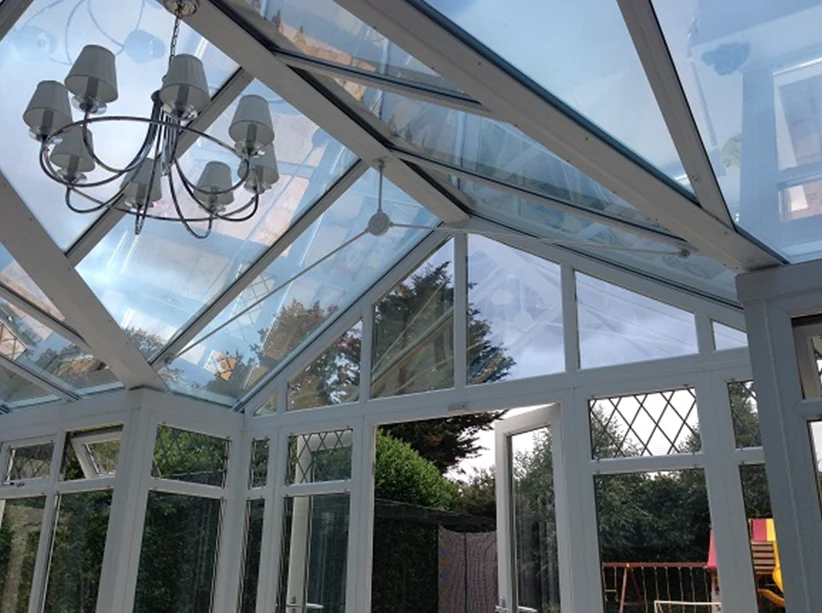
At midday on 4 May my light meter read 68,000 lux in the garden. Inside my filmed conservatory it read 7,500. The living room managed 100 to 150. The conservatory was comfortable, and still about ten times brighter than the top of the guidance for an office. That is the first thing to know about choosing conservatory window film: the room is far brighter than you think, and the sample in your hand will lie to you about how dark the film looks.
Choosing the right film is a sequence of small decisions, not a product search. Answer these ten questions in order and the right film usually becomes obvious. If you want the verdicts first, read does conservatory window film work?, our honest review; this guide is about getting the decision right for your room.
The short version
- Glass roof: a reflective film fitted inside; on a low-pitch, low-level lean-to roof, only 3M All Seasons 35. Polycarbonate roof: a film made for polycarbonate, fitted outside.
- Heat is the problem: 3M All Seasons 35. Glare and screens are the problem: Low Reflect Extreme. Money is the problem: Silver 20.
- Roof first, then the side windows that catch the sun, filmed from the outside with a clear film such as 3M Prestige Exterior.
- Judge samples at home, in the light you will live with, and expect the fitted film to feel lighter than the sample.
1. What is your roof made of?
Everything else follows from this. Tap it: glass rings, polycarbonate sounds dull and flexes slightly. Polycarbonate usually shows ribs or chambers when you look up through it.
- Glass roof: film goes on the inside, and it must be reflective. The rest of this guide assumes a glass roof unless it says otherwise.
- Polycarbonate roof: a reflective film made for polycarbonate, fitted outside (we use Solar Gard Silver 20 for polycarbonate), or solar inserts slid into the chambers. An internal coating such as Coolkote tames glare but does little for heat.
2. How old is the glass, and is it coated?
This is the question almost nobody asks and it changes everything.
- Older double glazing, roughly pre-2003, clear with no coatings: every reflective film works well on it. This is the glass that most film adverts are closest to.
- Modern low-e double glazing: designed to keep heat in, which also traps the heat an internal film reflects. Internal films do roughly half of their headline figure here. Choose the film with the most radiant heat rejection (All Seasons 35) rather than the darkest.
- Blue or bronze solar-control roof glass (sold as Active Blue, BioClean and similar): the roof is already doing some of the work, but a hot summer will still beat it. A reflective roof film still helps; filming the side glass often adds as much again.
- Self-cleaning and easy-clean coatings: many conservatory roofs have one on the outside of the glass, and film will not stick to it. It is one reason we fit roof films inside, including All Seasons 35 on coated lanterns and skylights.
Not sure what you have? Look for a faint blue or bronze tint against a white cloud, check any paperwork from the conservatory company, and send us photos. We model the film on your actual glass before recommending anything.
3. Is it heat, glare or both?
Heat and glare are different problems with different answers. Heat comes mainly from the sun’s radiant energy, the part that makes you feel hot even when the air is cool. Glare is simply too much light.
- Heat: a spectrally selective reflective film such as 3M All Seasons 35, which rejects more of the radiant heat while letting through more daylight than a silver film.
- Glare: a much darker film such as Low Reflect Extreme, cutting glare by about 93%. To use screens comfortably you usually need to cut glare by more than 90%.
- Both: Low Reflect Extreme on the roof, with a lightly tinted exterior film such as 3M Prestige 50 Exterior on the side glass.
4. How do you use the room?
A dining room wants daylight. A TV room wants darkness in the afternoon. A home office wants both: no glare on the screen but enough light to feel awake. A playroom wants a cool floor and no faded toys. Say honestly how you use the room, or how you would like to, and the choice between a light film and a dark one makes itself.
5. Which way does it face?
Everyone worries about south. In high summer the roof takes the brunt from a sun almost overhead, and the east and west windows gain more than the south ones, because the morning and evening sun comes in low and straight through the glass. Even north-facing glass catches the sun in June, when it rises in the north-east and sets in the north-west. Orientation tells you which side windows deserve film and which can be left alone.
6. Roof first, then which windows?
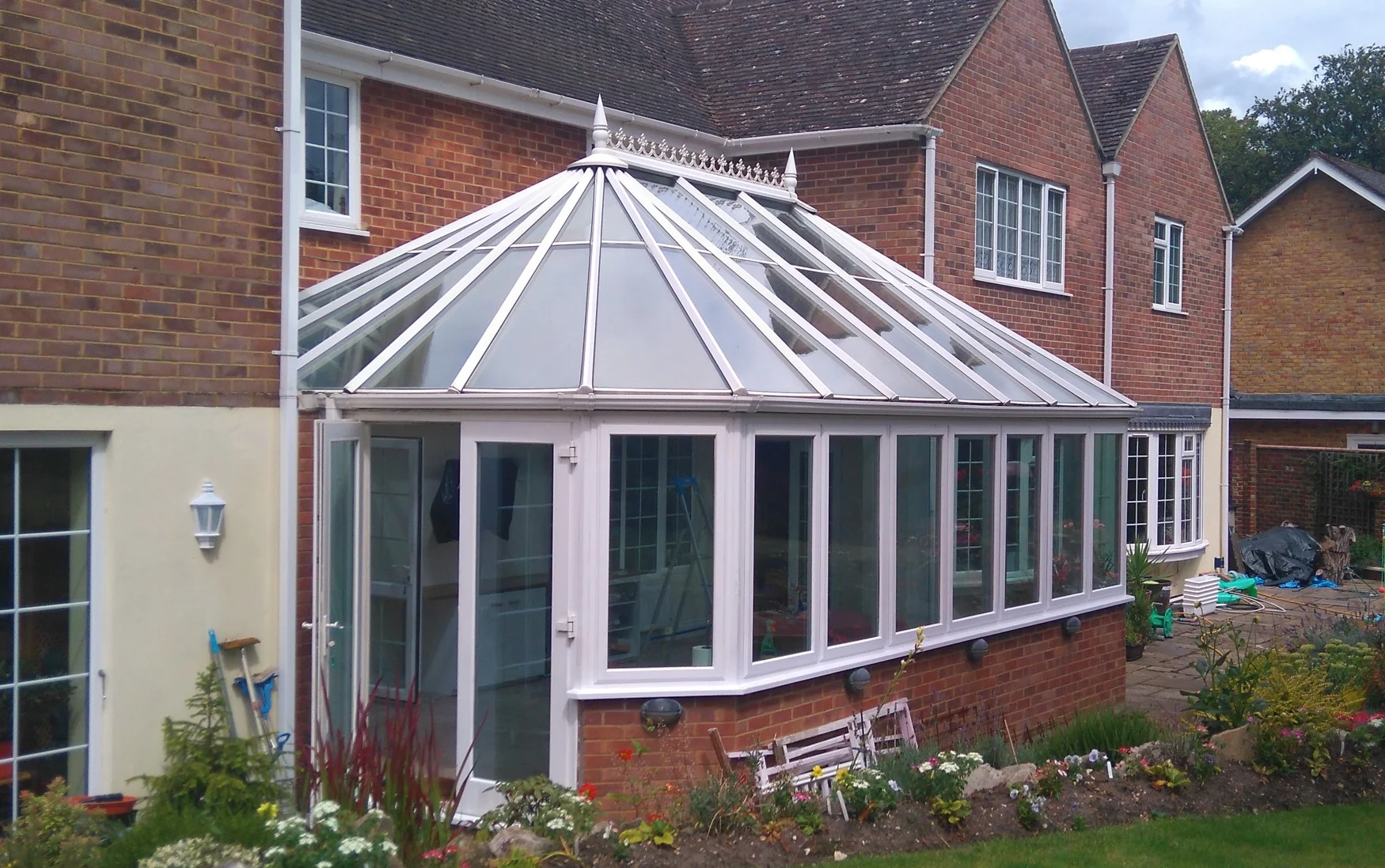
Most of the heat comes through the roof, so the roof comes first. If the budget stops there, you will still feel a big difference. Filming the side glass is what lets you sit next to the windows in comfort and makes the whole room usable rather than the middle of it; in our modelling of a south-facing Edwardian conservatory, roughly 40% of the sun’s heat came through the sides.
You do not have to film every window. 3M Prestige 70 Exterior is so subtle that you can film the east, south and west windows and leave the rest.
7. Inside or outside?
Roof: inside. We fit glass roof films inside, not outside, for three reasons. Many conservatory roofs have a self-cleaning or easy-clean coating on the outside of the glass, and film will not stick to it. Getting onto the roof to fit film risks disturbing the seals and causing leaks later. And conservatory roofs are fragile: Health and Safety Executive guidance is to avoid working on fragile roofs wherever there is another way. A high-performing internal film such as 3M All Seasons 35 solves the heat problem for the great majority of conservatories without anyone going on the roof.
Side glass: outside. An exterior film stops the heat before it gets into the double glazing, so it does far more than the same film inside. 3M Prestige Exterior is metal-free, built from hundreds of microscopically thin layers that each reflect part of the sun’s spectrum, so there is no metal to corrode and the view stays clear. Silver 50 Exterior is the good-value alternative, a little more reflective.
8. How dark is too dark? (The sample is lying to you)
Hold a film sample up to a bright sky and it looks alarmingly dark. Fit the same film to your roof and the room feels far lighter than the sample suggested. Your eyes adjust like a camera lens: the pupil closes in bright light and opens as the room dims, so the drop in brightness you notice is much smaller than the drop a light meter records. Based on a perception chart published by Solar Gard, a film that lets through a third of the light looks roughly two-thirds as bright once your eyes have adjusted.
Remember my readings: 7,500 lux inside a heavily filmed conservatory at midday, against 100 to 150 in the living room. A conservatory roof lets in roughly three times as much light as the side glazing, so a darker roof film is rarely a problem. Samples usually push people towards a film that is too light to solve their problem.
If you do judge by sample: look through it, not around it towards the light; ignore the contrast with the bare glass next to it, because that disappears once the whole pane is filmed; and if you use the room at night, look at the sample at night too.
9. What is the budget, honestly?
Roof film is priced by floor area, side film by glass area. A budget reflective roof film costs about £70 to £100 per square metre of floor, a high-performance film such as All Seasons 35 about £140 to £200; a premium exterior side film about £150 to £220 per square metre of glass. Real examples and what pushes the price up or down are in our conservatory window film cost guide.
If spending as little as possible is the priority, Silver 20 on the roof is hard to beat. It is older technology that still does a good job; it is dark and the colour a little colder, which is no bad thing if you suffer from glare. Spend more only when the extra buys something you want: more daylight (All Seasons 35), a clearer view through the sides (3M Prestige 70 Exterior), or a stronger fix for a hot room (3M Prestige 50 Exterior).
10. Is it chilly in winter too?
A conservatory is a glass room, so it is cold in winter without heating. If you want to use it for more months of the year, two things help. 3M All Seasons 35 on the roof also cuts heat loss through that glass by around 11% on 3M’s clear double-glazing reference. On the side glass, a low-e film such as Solar Gard EcoLux reflects the room’s warmth back inside and reduces the cold spots near the glass. Radiant heaters, which warm people and surfaces directly rather than the large volume of air, pair well with both.
Putting it together
| If this describes you | Roof | Side glass |
|---|---|---|
| Glass roof, love the light, too hot | 3M All Seasons 35 | 3M Prestige 70 Exterior on the sunny sides |
| Glass roof, TV or laptop, glare | Low Reflect Extreme | 3M Prestige 50 Exterior |
| Glass roof, tight budget | Silver 20 | Silver 50 Exterior, or leave for now |
| Low-pitch, low-level lean-to glass roof | 3M All Seasons 35 inside, the only film we recommend here | 3M Prestige 50 Exterior |
| Polycarbonate roof, too hot | Silver 20 for polycarbonate, outside | As above |
| Polycarbonate roof, glare only | Coolkote inside, or solar inserts | As above |
| Lantern or skylight with self-cleaning glass | 3M All Seasons 35 inside | Not applicable |
| Cold in winter as well | 3M All Seasons 35 | Solar Gard EcoLux |
One warning about performance claims
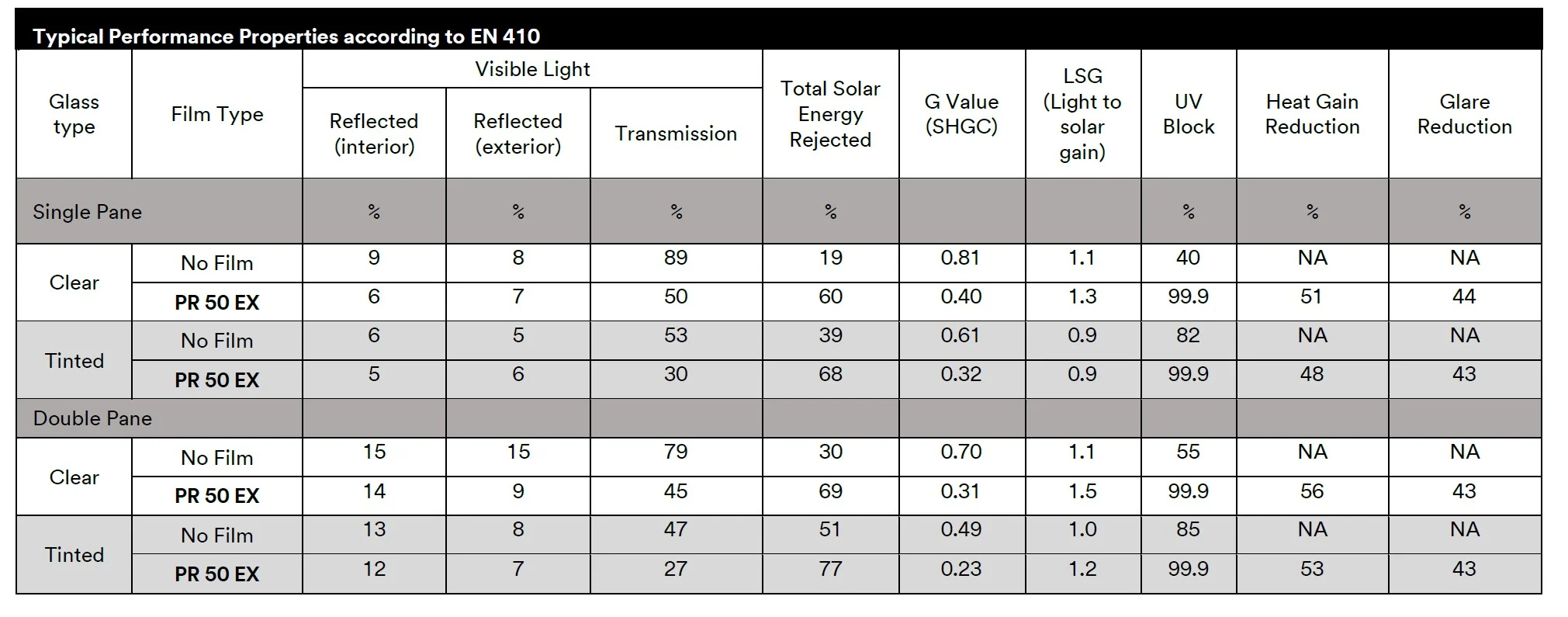
The number most companies quote is not the improvement you will get. Most window film figures are measured on a single pane of clear glass, and the headline often includes the heat the bare glass already turns away, so the film looks better than it is. Your conservatory almost certainly has modern double glazing that already does part of the job. Every figure we quote is the improvement you can expect over the glazing you have now.
Figures such as “rejects up to 78% of the sun’s energy” are almost always measured on a single pane of clear glass, like a greenhouse, and include the heat the bare glass already turns away. On a modern double-glazed conservatory roof the improvement from the same film is often about half that. Ask any installer two questions: what glass is that figure measured on, and what will it do on mine? We answer both with modelling on your glazing, using software from the Lawrence Berkeley National Laboratory. Does conservatory window film work? shows the numbers, making sense of window film performance data shows how to read a data sheet, and why internal solar control films struggle on modern double glazing explains the physics.
About the author
Steve Gargett BSc (Hons) is Managing Director of WindowTreat, a 3M accredited dealer that has been diagnosing and fixing overheating, glare and fading in glazed rooms since 2006. The lux readings above are from his own conservatory. Email info@windowtreat.co.uk.
Your next step
Send us three photos: the roof from inside, the side glass from outside, and the room as you use it. We will answer the ten questions with you and tell you which film fits, or whether film is the wrong answer for your room. Book a free call using the calendar below, or compare the films on our conservatory roof film and conservatory side window film pages, work out how much heat your roof lets in with our conservatory roof heat calculator, see what it costs in our conservatory window film cost guide, or start from our conservatory and orangery window films overview.