The short answer: electric blinds for bifold doors cost about £3,000 to £5,000 for a quality concealed system, fitted, on a typical 4 metre bifold or sliding door. Very wide openings cost more: an 8 metre span usually needs two synchronised blinds and comes to about £7,000 to £10,000. In a real quote we published, internal electric blinds ranged from £1,500 to £4,975 including VAT depending on size, technology and finish, and an external zipped screen for 5.7 metre sliding doors was £4,960 including VAT, with survey and installation priced separately. Width is the biggest price driver, then concealment, fabric and motor.
The short version
- Prices by type of blind, side by side
- Real doors, real prices: a Marlow install, a London quote, an 8 metre span
- What to know before you buy: concealment, power and width
- Your questions answered: integral blinds, the best blinds for bifolds, smart home
The decision behind the price. Three choices set most of the cost. One blind across the whole opening, or several smaller ones. Hidden in the ceiling, or in a slim cassette you can see. And inside the glass, or outside it, where it stops far more heat. Decide what matters most to you on each, and the price follows. See the electric blinds for bifold and sliding doors we fit.
Electric blinds for bifold and sliding doors: prices by type
| Option | Price guide | Best for | Watch out |
|---|---|---|---|
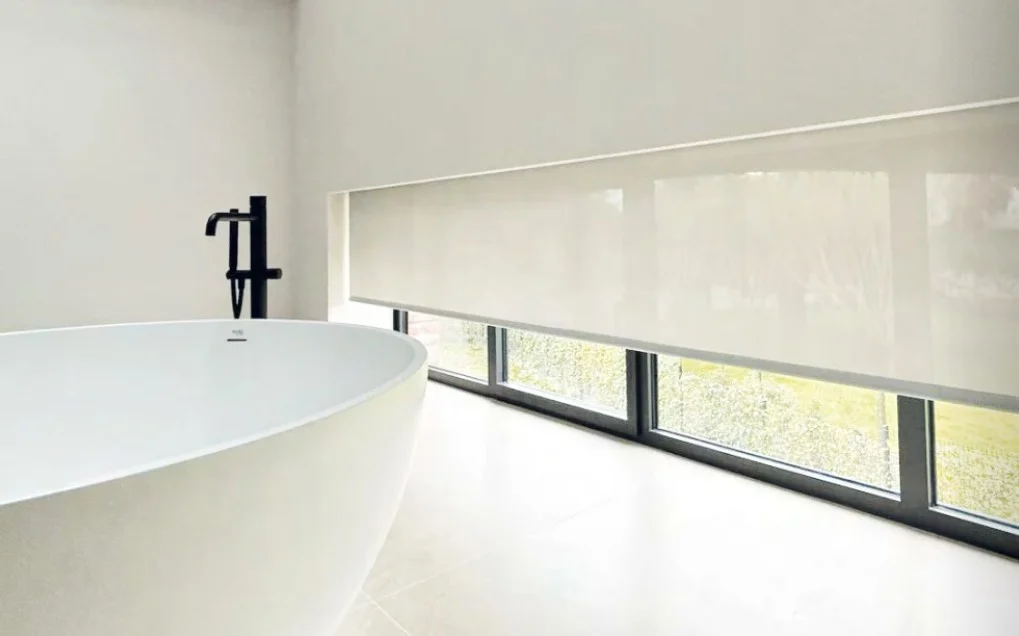
| Electric roller blind in a slim cassette | £1,500 to £4,975 including VAT in our worked quote, by size and finish, before survey and installation. A visible cassette adds about £100 to £200 | Existing openings and retrofits | You will see the cassette, though it can be colour-matched to the frames |
| Concealed in the ceiling (Blindspace) | About £3,000 to £5,000 fitted for a typical 4 metre opening | New extensions where the blind should disappear | The box must go in while the ceiling is built. Retrofitting a pocket can cost £800 to £1,500 or more before the blind |
| One wide blind with ZoomTech Deflect Zero | Included in the bands above; width drives the price | One seamless blind with no light gaps | Wide blinds need this engineering to stay flat; cheap wide blinds sag |
| Two synchronised blinds for very wide spans | About £7,000 to £10,000 as a total project for an 8 metre span | Glass walls too wide for one blind | Two blinds and two motors, synchronised to move as one, so a bigger project than a single blind |
| Dual blind: sheer by day, blackout by night | Significantly more than a single blind; priced from your sizes | Glare control by day and privacy at night | Two fabrics and two motors, so a bigger investment |
| External zipped screen (Harmonia XL) | £4,960 including VAT for a screen up to 5.75 m by 3 m, plus £550 for a built-in headbox, before survey and installation (June 2026 quote) | Stopping heat: 88 to 93% heat gain reduction | Up to 6 m wide and under 3 m high; wind rated up to 31 mph |
Prices are taken from our own published guides and quotes and were correct when quoted. In the worked quote, survey and installation were separate lines (£650 and £1,250 a day). Your quote depends on your doors.
Real doors, real prices
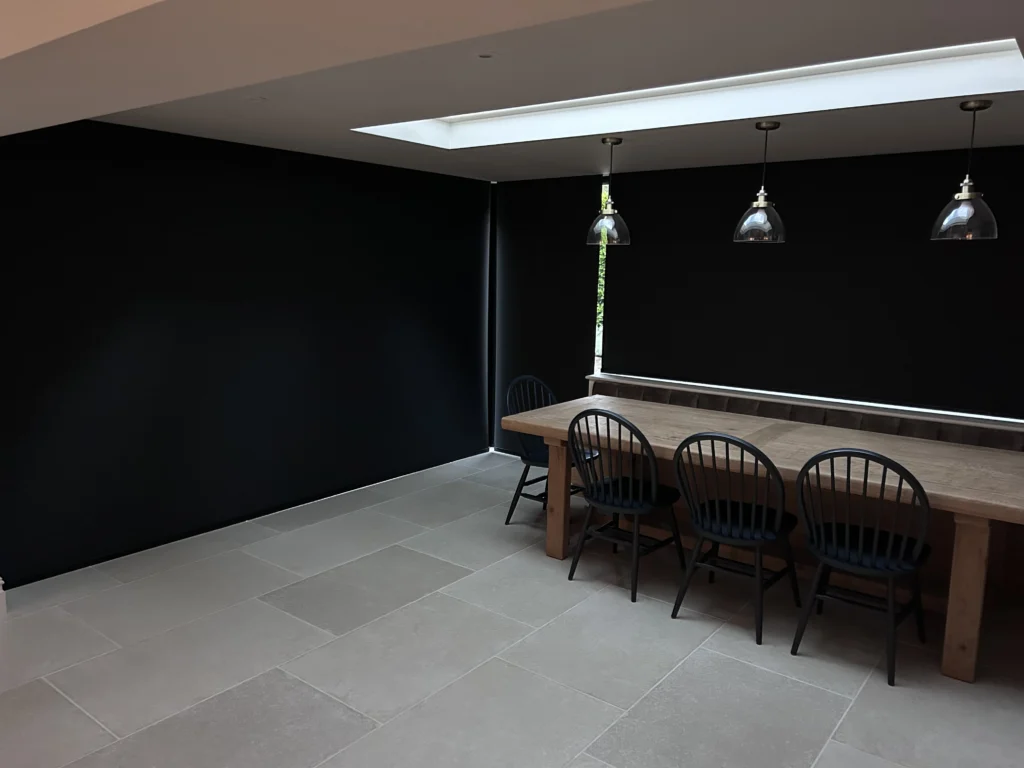
- James in Marlow. One continuous blind across nearly 4 metres of sliding doors, hidden in an S100 Blindspace box his builders fitted from our drawings. In the original cottage, steel meant nothing could be recessed, so a slim cassette powder-coated to match the black frames does the same job “hidden in plain sight”. James: “We’re incredibly happy… it gives us the minimalist, streamlined look we were hoping for.”
- Sliding doors in London, 5.66 metres wide. An anonymised proposal we published in full, with prices: internal electric blinds from £1,500 to £4,975, an external Harmonia XL zipped screen at £4,960, and 3M Prestige Exterior film at £2,950 fully installed, all including VAT. Survey and installation for the blinds and screen were priced separately.
- The eight-metre challenge. Eight-metre sliding doors with an eight-metre roof lantern. One blind cannot span that width, so the answer is two synchronised blinds, typically £7,000 to £10,000 as a total project.
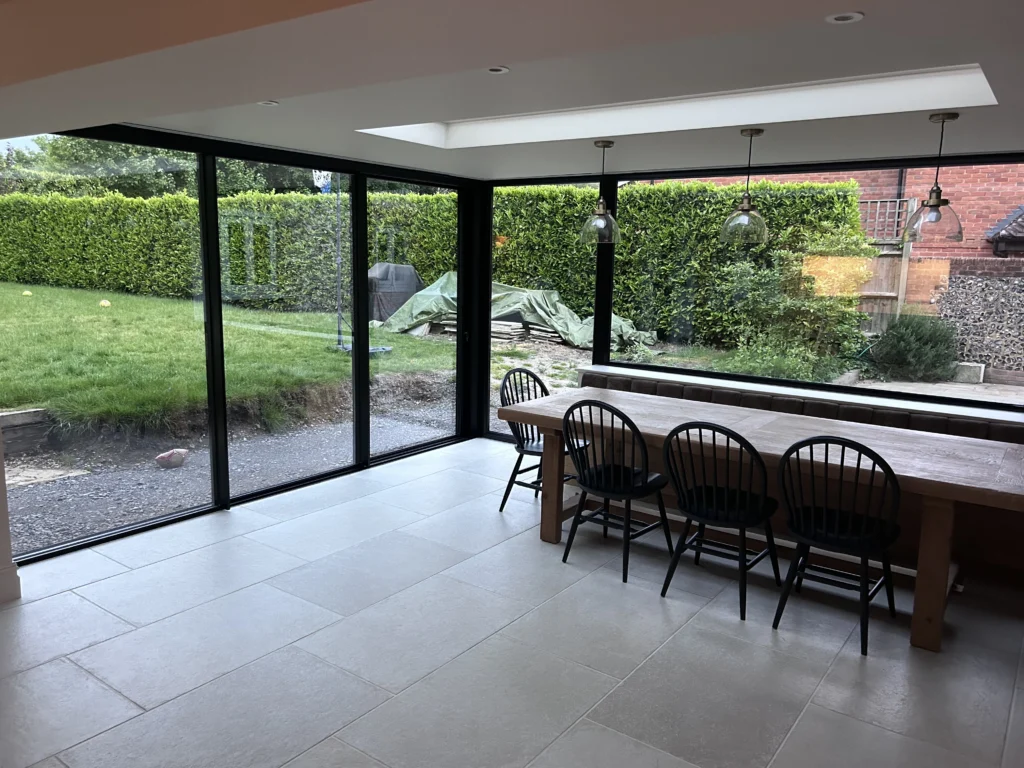
You’ve invested so much in creating that beautiful ‘wall of glass’ with stunning bifold or sliding doors, but are you now finding the reality of heat, glare, or a lack of privacy is compromising your dream?
And is there a nagging worry that any blind you add will be a bulky, clumsy afterthought that spoils the clean, minimalist look you worked so hard to achieve?
We completely understand that feeling. It’s a conversation we have with homeowners every single day. So, before we get into the detail, let’s get straight to the point with the most important things you need to know.
Key Takeaways
- A Performance Fabric that is designed to deliver dynamic stability across its span, can weigh over twice as much g/m2 as a budget fabric covering the same area.
- The Wider the Blind, the Higher the Cost: The main price driver is the width. A single, seamless blind covering a wide span requires significant engineering to prevent sagging, which is where the real investment lies.
- A Realistic Budget: For a quality, professionally installed electric blinds system for a typical 4-metre bifold door, you should expect to invest between £3,000 and £5,000. Very large or complex projects will cost more.
- Cheap Blinds are a False Economy: We’ll be blunt. A cheap blind on a large, expensive door is a recipe for disappointment. The risk of sagging, poor performance, and mechanical failure is high.
- The “Dual Blind” is the Ultimate Solution: For true, no-compromise comfort, a dual system with one sheer fabric for daytime and one blackout for night is the best solution, but it is a higher investment.
First, Let’s Talk About the Dream (and the Reality)
That beautiful extension is the heart of your home, your connection to the garden, can so quickly become an unusable ‘greenhouse’.
Honestly, what we hear most often is that homeowners feel like they’re losing parts of their home because the dining table is caught in a constant glare or the living area is just too hot to relax in. The very feature that was meant to bring joy becomes a source of daily frustration.
We often say it’s like having a performance sports car with no brakes; it’s full of promise, but without control, it’s compromised.
Having seen this exact problem countless times, we think of ourselves as ‘doctors for glass’. Our job is to help you find a solution that not only works perfectly but feels like it was always meant to be there. A solution that truly protects your dream.
Lifetime Value vs. Initial Outlay: An Investment in Lasting Comfort
One of the most critical considerations in any significant home improvement project is the balance between the initial price and the long-term value.
With specialist electric blinds, this distinction is paramount. A lower upfront cost can be tempting, but it often conceals future expenses, frustrations, and a compromised experience that ultimately undermines the very reason for the investment.
We often speak with homeowners who have learned this lesson the hard way. They opted for a cheaper alternative, only to find that within a year or two, the motor becomes noisy, the “smart” features stop working, or the fabric starts to look tired.
This is the “2-year cliff” we see so often, the point just after a standard warranty expires when the compromises in quality begin to show.
Our system components have a 5-year warranty and reflects the superior engineering of our systems, designed to protect you long after the guarantees on cheaper alternatives have expired. A high-performance system’s components are engineered for a lifespan of up to 25 years, whereas mass-market alternatives often last just 2 to 5 years before needing complete replacement.
What to know before you buy
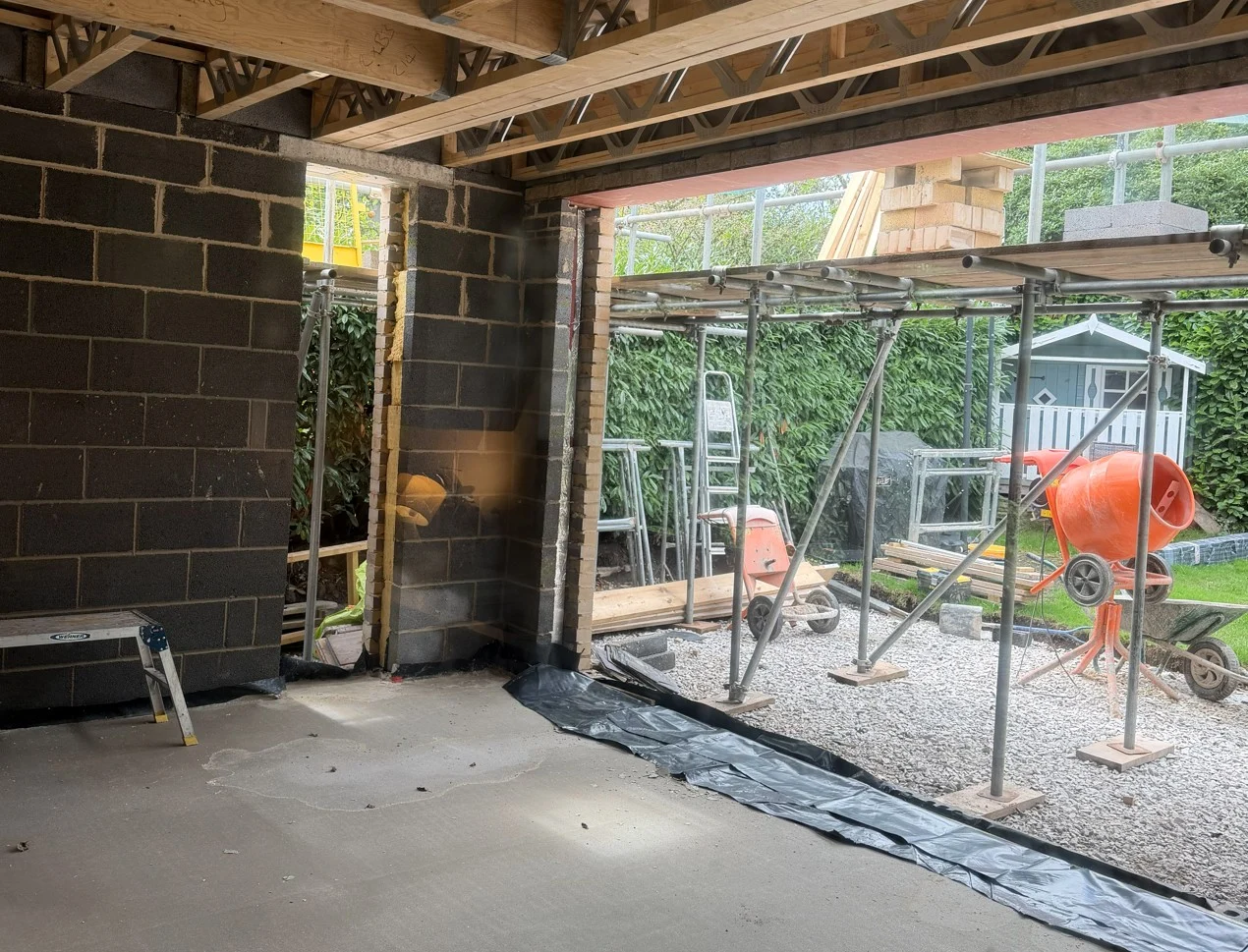
- Concealment is decided early. A blind that disappears into the ceiling needs its box fitted before plastering. Later, it becomes a building job. Our guide to concealed blinds for sliding and bifold doors explains what to plan and when.
- Power. Mains-powered blinds need a supply at the head of the doors, best planned before decorating. Battery-powered Somfy options exist where wiring is hard.
- Width. Over about 3 metres a standard roller tube sags into a V. Wide blinds need heavier tubes or ZoomTech engineering, which is a big part of the cost.
- Inside blinds don’t stop heat like outside ones. An inside blind catches the sun after it has come through the glass. If heat is the main problem, look at an external screen or exterior solar film.
- Per-panel clip-in blinds move with each door leaf, but add a frame to every panel, which can make slim aluminium doors look busy.
What Really Drives the Cost? The ‘Span vs. Simplicity’ Challenge
The biggest factor that determines the cost of electric blinds for large doors is the choice between one single, seamless blind or multiple smaller ones. This is what we call the ‘Span vs. Simplicity’ challenge, and it’s where basic window coverings end and proper engineering begins.
The reality is, the wider you make a blind, the more physics works against you. The tube wants to sag in the middle under its own weight known as deflection, creating an unsightly V-shape on the fabric. To stop this, the engineering has to be far more robust.
A standard blind might use a small 30-35mm roller tube, but a blind spanning over 3 metres could need a tube over 110mm in diameter just to ensure the fabric is perfectly flat. That increase in material, technology, and precision is what you’re investing in.
Here are the key things that contribute to the final price:
- The Motor: A powerful and reliable motor is the heart of the system. We use trusted brands like Somfy because they have the strength to lift large, heavy blinds smoothly for years. A quality motor might add a couple of hundred pounds to the cost, but it’s essential to avoid the frustration of a weak or noisy system that fails prematurely.
- The Fabric: For large glass doors, fabric choice is about performance, not just colour. Specialist high-performance fabrics that reflect over 80% of the sun’s heat are a step up in price from standard materials, but they are what actually make a south-facing room comfortable.
- The Concealment: For a truly minimalist look, nothing beats a concealed blind that disappears into a hidden ceiling pocket when not in use. This is a premium choice that needs to be planned during the build. The specialised cassettes for this ‘blind space’ are an architectural feature in themselves and a key part of the investment.
So, What Should You Expect to Pay? Real-World Price Ranges
We believe in being upfront about cost. While every project is unique, these real-world examples should give you a realistic idea of the investment required for a professionally installed, specialist solution.
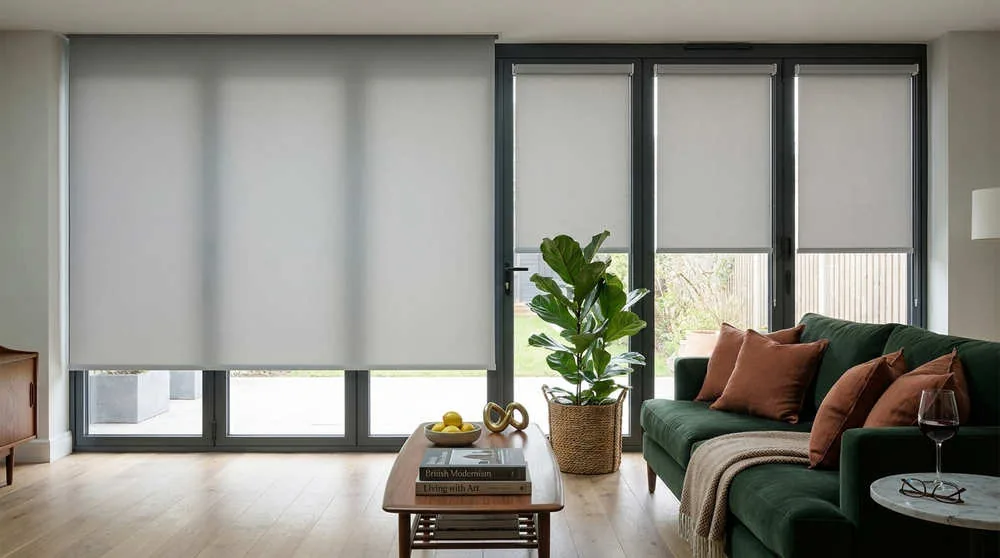
For a typical 4-metre wide set of blinds for bifold doors, a high-quality concealed electric blind system will likely be in the range of £3,000 to £5,000.
This price reflects the bespoke engineering, the high-performance fabric, the robust motor, and the specialist installation required to get a flawless result.
For a truly exceptional space, like the one in our ‘Eight-Metre Challenge’ story, the investment will be higher. We recently had a customer with an eight-metre-long set of sliding doors and an eight-metre-long roof lantern.
When you’re dealing with glass on that scale, it knocks most competitors out of the running. For an 8-metre span, a more complex solution using two synchronised blinds is needed, with a total project cost typically between £7,000 and £10,000. The investment is significant, but the result is a breathtaking, truly seamless finish that standard solutions simply cannot achieve.
The Ultimate No-Compromise Solution: The Dual Blind System
A common frustration is the day versus night dilemma. You want a sheer fabric to soften daylight and keep the view, but you need a blackout blind for privacy and cosiness in the evening.
The solution is a dual blind system, which fits two different fabric blinds into one discreet unit. Think of it like modern, automated net and heavy curtains. It is the ultimate investment in your lifestyle, but as it involves two blinds and two motors, you should expect it to be a significantly higher investment than a single blind system.
Why Some Companies Are So Expensive (and Others Deceptively Cheap)
The price differences you see online can be confusing. Let’s be honest about what you’re actually paying for, so you can spot true value from a false economy.
Premium solutions cost more because of the specialist engineering, the superior and quieter motors with long warranties, and the high-performance fabrics that genuinely solve your heat and glare problems. You’re investing in a complete, professionally installed service that is designed to last and protect the comfort of your home.
Cheaper alternatives are a risky compromise. They simply can’t handle the width of large doors and will inevitably sag, ruining the clean lines you paid for.
We see it more often than we’d like: a homeowner tries to save money, and within a year, they call us, frustrated that their cheaper blind performs so poorly. They end up buying twice, and that is always the most expensive option.
How Can You Make Electric Blinds More Affordable?
We know that budget is a real consideration, and there are ways to manage the cost. But it’s our job to be honest about what you’re giving up in return.
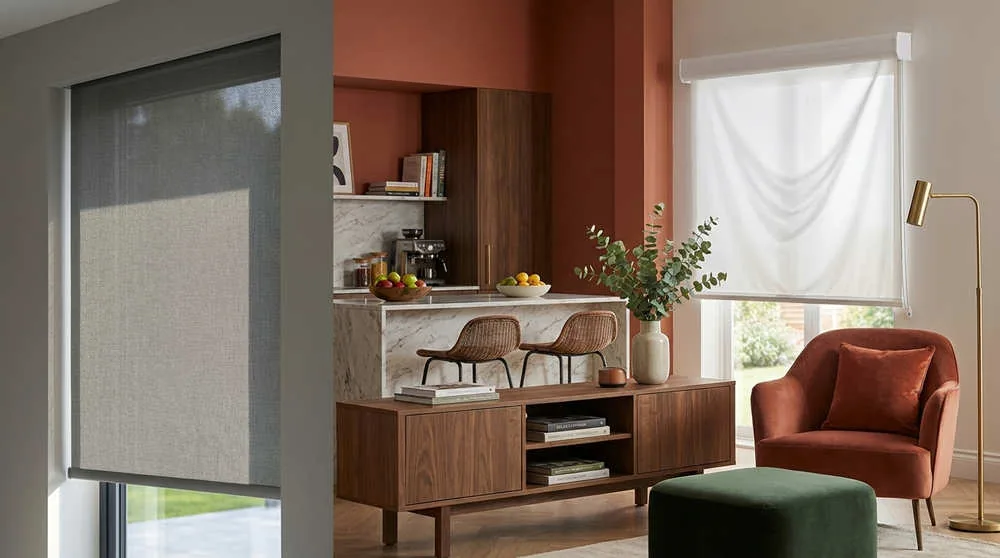
- Splitting the Span: Using multiple smaller blinds instead of one large one is the most effective way to lower the price. The compromise is purely aesthetic as you will have light gaps and a less minimalist look.
- Standard Fabrics & Motors: You can opt for simpler materials, but you will be sacrificing performance. The blind might not solve the heat issue as effectively, or the motor may not be as quiet or long-lasting.
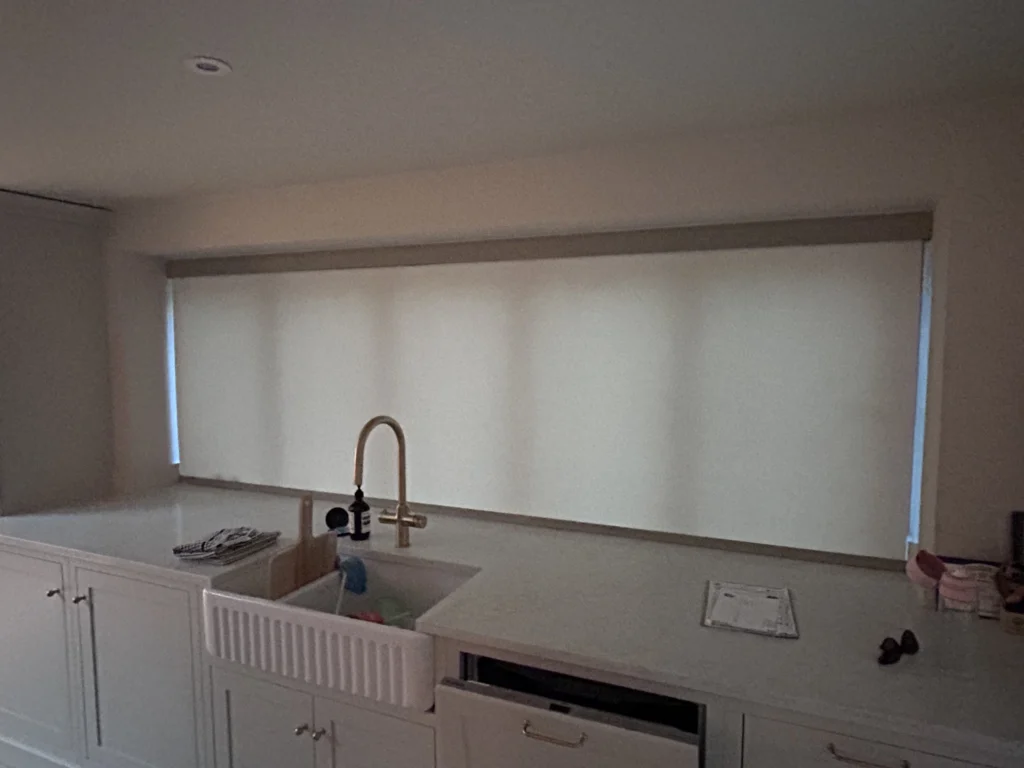
- Visible Cassettes: A blind that retracts into a visible headbox is cheaper than a fully concealed pocket. It’s a practical solution, but again, the trade-off is the seamless, minimalist aesthetic.
Financing Your Investment
We understand this is a significant investment.
Many of our customers want to invest in high‑quality shading solutions, but we know that electric blinds and awnings aren’t always included in the original build budget. Sometimes they become an afterthought, or unexpected project costs mean the budget simply won’t stretch as far as planned.
To help make things easier, we offer flexible financing options designed to smooth out cashflow. In most cases, this involves a 50% payment at the point of order, followed by a direct debit spread over 6–12 months at the Bank of England base rate (4% when we checked in November 2026).
Every project is different, so we’ll discuss the most suitable approach with you on a job‑by‑job basis.
Major UK banks consistently offer competitive rates, and this approach maintains a clear distinction between your product investment with us and your financing arrangement.
Be wary of “0% finance” deals from mass-market retailers; the cost of credit is often absorbed by inflating the product price.
Your questions answered
Q1: “Can I integrate these blinds with my existing Alexa/Google Home?”
Answer: Absolutely. We use a dedicated smart hub, like the Somfy TaHoma, which acts as a secure bridge between your blinds and your home’s Wi-Fi, allowing for simple voice commands and integration into smart home routines.
Q2: “What’s the real cost difference between a visible cassette and a fully concealed pocket?”
Answer: A visible cassette is part of the blind and adds around £100-£200 to the cost. A concealed pocket is a structural element. In a new build, the cost is minimal. However, retrofitting a pocket into an existing room is a multi-trade job that could cost £800 – £1,500 or more before the blind is even installed.
Q3: “Is a dual-blind system really worth the extra investment?”
Answer: For ultimate control, yes. It gives you a translucent screen for daytime glare control and a full blackout fabric for evening privacy. It’s unparalleled flexibility that a single blind cannot offer.
How much are electric blinds for bifold doors?
About £3,000 to £5,000 for a quality concealed system on a typical 4 metre bifold, fitted. Smaller or simpler blinds cost less; very wide spans cost more, about £7,000 to £10,000 for 8 metres.
How much do electric blinds for sliding doors cost?
The same as for bifolds of the same width: width matters more than the door type. In one published quote for 5.66 metre sliding doors, internal electric blinds ranged from £1,500 to £4,975 including VAT depending on size, system and finish, before survey and installation.
Are electric blinds expensive?
On wide doors, more than a window blind, because a blind that stays flat across 4 metres or more needs proper engineering and a strong motor. A cheap blind on a big door usually sags or fails, and then you pay twice.
What are the best electric blinds for bifold doors?
For most people, one wide roller blind across the whole opening rather than a blind on each panel, engineered so it doesn’t sag, and concealed in the ceiling if you are still building. If heat is the problem rather than glare or privacy, an external zipped screen does far more. Our guide to the best blinds for large sliding doors and bifolds compares the options.
How much do bifold or patio doors with integral (built-in) blinds cost?
Blinds built into the glass are bought with the doors, so the door supplier prices them; we don’t supply doors. What we fit instead is one electric blind across the whole opening, which keeps the view clear of per-panel lines and can be serviced without touching the sealed glass unit.
Can I have one blind across the whole bifold opening?
Usually, yes. With ZoomTech Deflect Zero engineering, blinds can stay flat at widths over 7 metres, and 5 metre blinds fit in an 80 mm cassette or an S100 Blindspace box. For very wide spans, such as 8 metres, we use two synchronised blinds.
Do electric blinds need a power supply?
Mains blinds need a supply at the top of the doors. Where that is hard, battery-powered Somfy blinds are an option.
Can I get motorised blackout blinds for bifold doors?
Yes. For privacy and darkness at night a blackout fabric works, and a dual blind gives you a sheer for daytime and blackout for evenings in one unit.
Do you fit electric bifold blinds near me?
We fit across most of England, and further afield for bigger projects. Book a free call and have a photo of the doors from inside and the width of the opening ready.
So, Is It Worth the Investment?
This is the most important question. After all the talk of cost, it comes down to what you value. We suggest asking yourself a few simple questions:
- What is the real cost of having a room that’s unusable for months of the year?
- How much do we value preserving the clean, beautiful look of our new doors?
- Is a short-term saving worth a long-term compromise on our dream space?
Choosing the right shading is a key decision. We believe in giving you the time and information to make it with confidence. It’s about creating a solution that feels right, works perfectly, and stands the test of time.
If you are in the planning stages, bringing us in early is the best way to seamlessly integrate comfort and control into your design. This proactive approach is the core of our S.H.A.D.E. principle, which treats shading as an integral part of the architecture, not an afterthought. Call us on 01256 648000 for a friendly chat about your options.
Book a free call using the calendar below. Tell us the width of the opening, whether you are still building, and whether heat, glare or privacy matters most, and we’ll tell you which system fits and give you a realistic price guide.
Ultimately, choosing the right shading isn’t just an expense; it’s the final, crucial step in making sure your beautiful extension lives up to its promise. It’s about reclaiming your space and ensuring it performs as beautifully as it looks, for years to come.
Explore this topic
Compare options and costs
- The complete guide to specialist shading costs
- Concealed blinds for sliding and bifold doors: what to plan before plastering
Worked quotation examples
Your next step
See the electric blinds for bifold and sliding doors we fit and your options