








You likely arrived here because you are dreaming of a minimalist, light-filled extension but are terrified of ruining the clean lines with bulky boxes.
You want the “Grand Designs” look, where technology is invisible, but you need to know if it is actually possible for your project.
Our goal is to educate you so you can make the best decision, even if that means you don’t buy from us.
What is a Concealed System?
A concealed system is a shading solution where the entire blind mechanism and fabric roll disappear completely into a structural pocket within the wall or ceiling when not in use.
Unlike surface-mounted options, these blinds are integrated into the fabric of the building itself. This leaves your glazing completely clear and your architectural lines uninterrupted until you actively choose to deploy the shade.
What we will cover in this 2026 Guide:
- The Philosophy of Concealment
- How It Works (The Systems)
- The Critical Importance of Timing
- Cost Implications
- Service & Maintenance
- Frequently Asked Questions
The Philosophy of Concealment
True luxury is often what you don’t see.
When you invest in large expanses of glass, you are buying a connection to the outdoors. Conventional blinds can interrupt this connection with visible headboxes and side channels.
We define this approach through the “Architectural Intent” pillar of our S.H.A.D.E. framework. This principle asserts that good shading should not clutter the design; it should allow the architecture to breathe.
Consider the story of Pavla and Piers, an architect and engineer couple we worked with in Fulham.
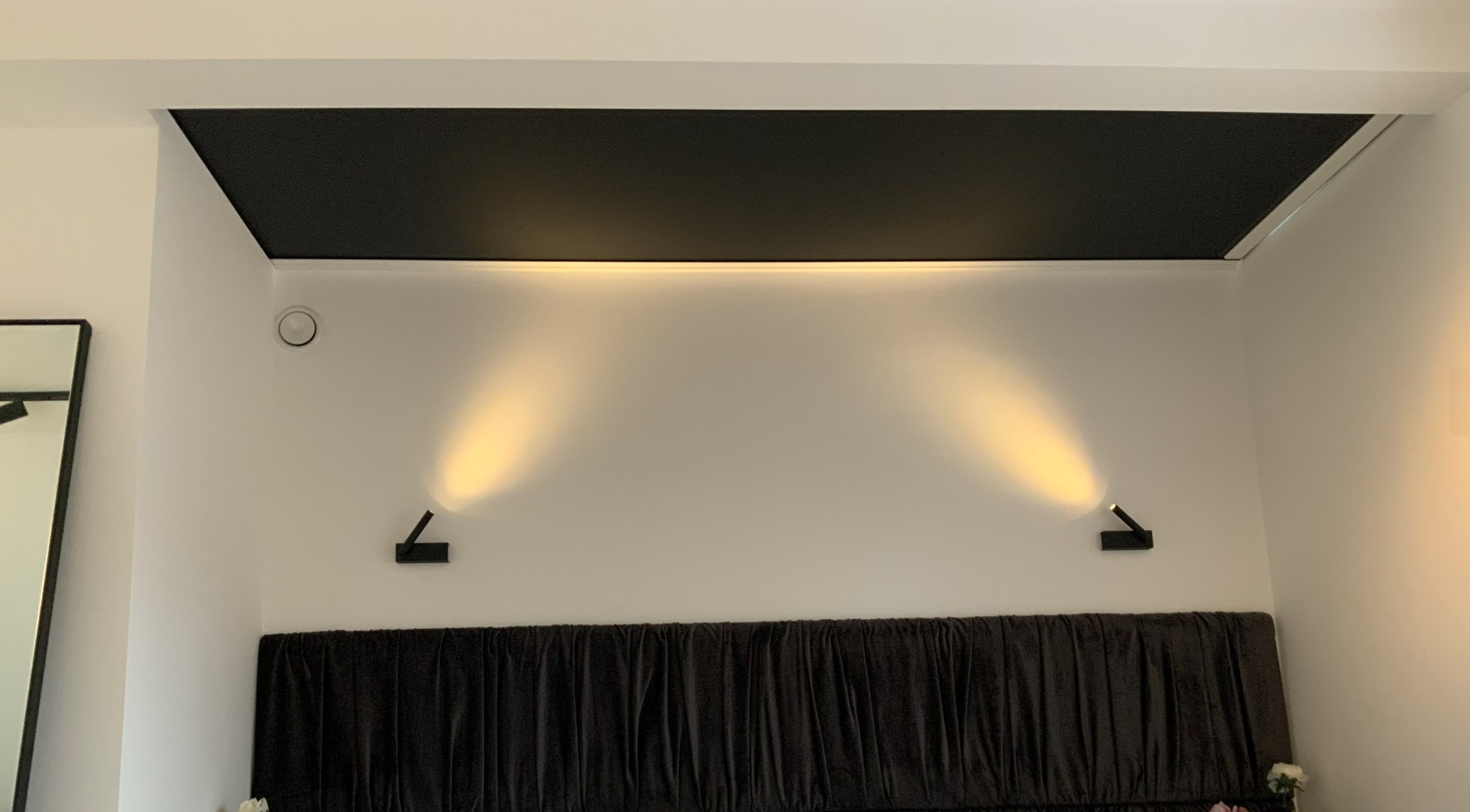
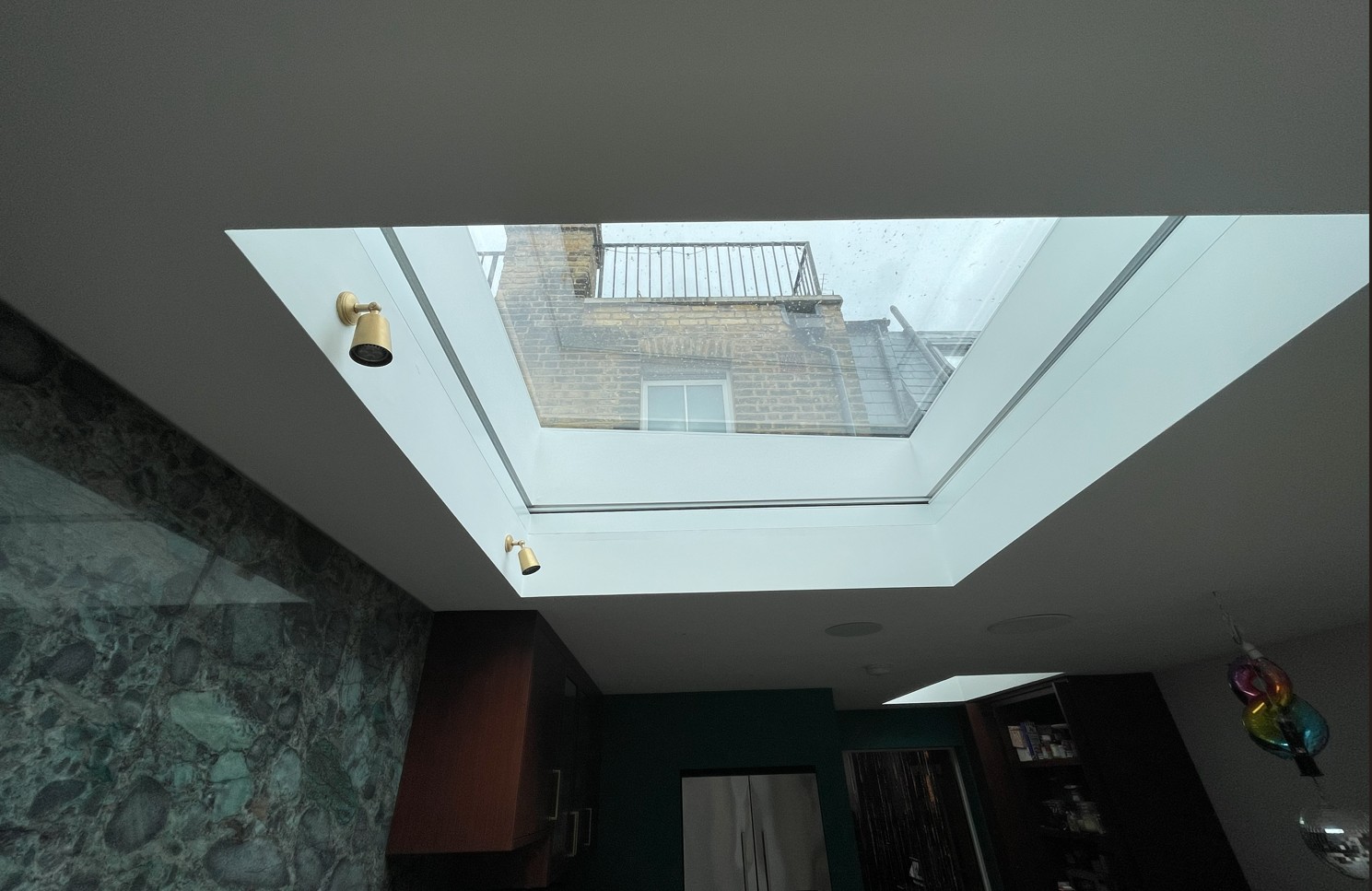
They designed a master bedroom with a large rooflight positioned directly above the bed for stargazing. A visible blind box would have ruined the view and the minimalist aesthetic they craved.
By using a concealed system, the blackout blind vanished completely during the day. It allowed them to maintain the “wow” factor of their design while ensuring they could still sleep in total darkness.
We also faced the “Eight-Metre Challenge” with a client who had an 8-metre set of sliding doors.
Any standard solution would have cluttered the massive span. By integrating a concealed system, we ensured the blind was the only thing that moved, appearing seamlessly to manage heat without compromising the sheer scale of the glazing.
To decide if this level of purity is right for you, you must weigh aesthetic perfection against practical flexibility.
Learn more in our detailed article: Concealed or surface-mounted blinds – how to choose? (Honest comparison)
How It Works (The Systems)
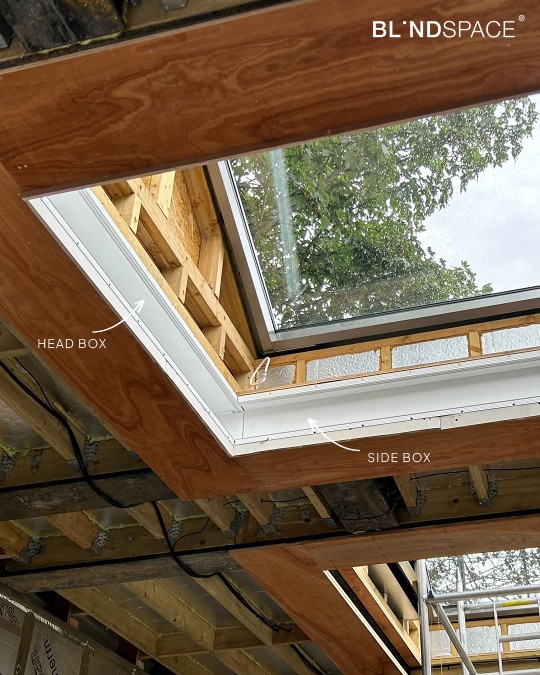
Concealed systems work by using a pre-formed pocket, often using Blindspace® Hidden Blinds, that is installed before the ceiling is plastered.
These aluminium profiles create a crisp, clean recess that sits flush with your ceiling or wall. The blind mechanism is installed inside this pocket, and a special closure plate can be used to hide the slot almost entirely.
This engineering allows for the seamless look you see in high-end design magazines. It transforms shading from a “bolt-on” accessory into a fundamental part of the building’s structure.
This approach is particularly effective for Blinds For Sliding Doors where keeping the head of the window clear is essential for the transition between inside and out.
The Critical Importance of Timing
The single biggest factor in achieving a concealed finish is planning during the architectural design phase (RIBA Stage 2).
If you wait until the builders are on-site, it is often too late to install the necessary pockets without significant disruption. The structural void must be designed into the drawings before the first brick is laid.
We often see homeowners who realise they need shading only after the plaster has dried.
If you miss this window, you are not entirely out of options, but the path becomes harder. You can learn more about when to plan electric blinds to ensure you do not miss this critical milestone.
However, if your build is advanced, you might be asking if you have missed the opportunity completely.
It is possible to create a “retro-fit” concealed look by building a plaster bulkhead or “cornice” to hide the blind. This mimics the look of a recessed system but requires a joiner and plasterer to construct a box on top of the existing wall.
While effective, this is an addition to the room rather than a true integration into the structure.
Learn more in our detailed article: My architect didn’t plan for blinds; is it truly too late to get the minimalist look I wanted?
Cost Implications
Concealed systems are significantly more expensive because you are paying for structural integration and specialist profiles, not just the blind itself.
A surface-mounted blind is a single product installation. A concealed system is a construction project involving builders, electricians, and plasterers.
You must budget for the Blindspace® profiles themselves, which are precision-engineered aluminium components.
Additionally, you have the cost of the builder’s labour to install these boxes perfectly level and square. This process requires a higher level of precision than standard construction work.
We believe in being upfront about these costs. It helps to understand what makes concealed systems more expensive so you can allocate your budget effectively.
For a typical project, the cost of concealment can add thousands to the overall package compared to surface-mounted options.
Learn more in our detailed article: What makes concealed electric blind systems more expensive than surface-mounted ones?
Service & Maintenance
Modern concealed systems are “Designed for Access” with detachable cover plates that allow maintenance without damaging the ceiling.
A common fear is that a blind hidden in the ceiling will be trapped there forever if the motor fails. Homeowners worry they will have to tear down their pristine plasterwork to fix a simple issue.
This is a myth born from older, poorly designed installations.
Premium systems like Blindspace® feature a clever “flap” or cover plate that can be unclipped. This reveals the entire roller mechanism and motor.
A technician can simply open the flap, remove the blind, service the motor, and replace it without creating any dust or damage.
Professionals choose these systems for their own homes specifically because they are serviceable.
You can read more about what happens if concealed blinds break to put your mind at ease regarding long-term reliability.
Learn more in our detailed article: What happens if my expensive concealed blinds break down inside the ceiling?
Frequently Asked Questions about Concealed Systems
Q: Can I retrofit concealed blinds into a finished ceiling? A: It is extremely difficult and disruptive. It requires cutting out plasterboard, altering joists, and re-plastering the entire ceiling. Building a bulkhead (cornice) is usually a better retrofit option.
Q: How much space do I need for the pocket? A: Typically, you need a void of at least 100mm x 100mm, but this varies depending on the drop of the blind and the thickness of the fabric.
Q: Do I need a specialist builder? A: You need a builder who is capable of high-precision work. The pocket must be installed perfectly level, or the blind will not hang correctly.
Next Steps for Your Project
Achieving the “dream” aesthetic of invisible shading requires early action.
By treating shading as a core architectural element rather than a decoration, you can ensure your home looks exactly as you imagined. The result is a space that is visually stunning and perfectly comfortable.
If you are in the early stages of your project, now is the time to specify these details.