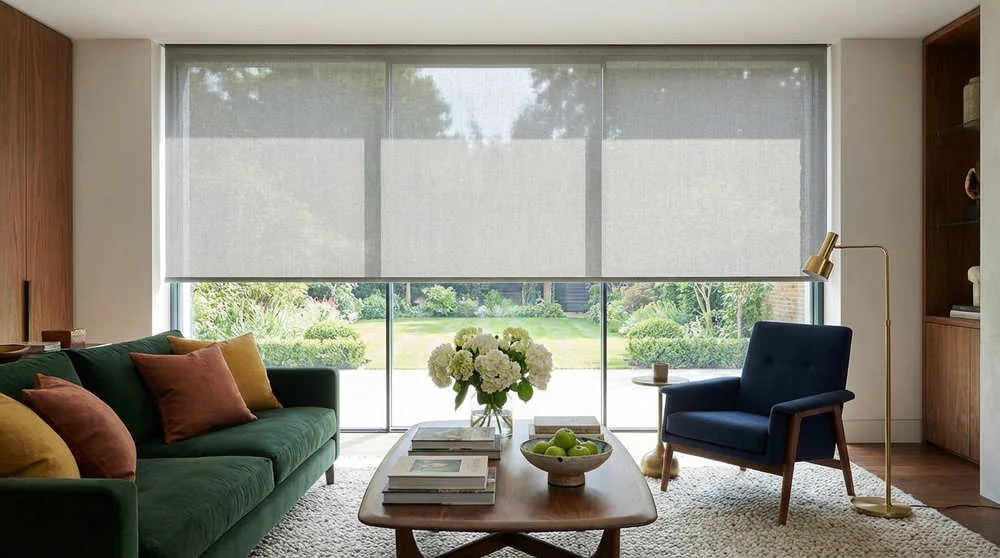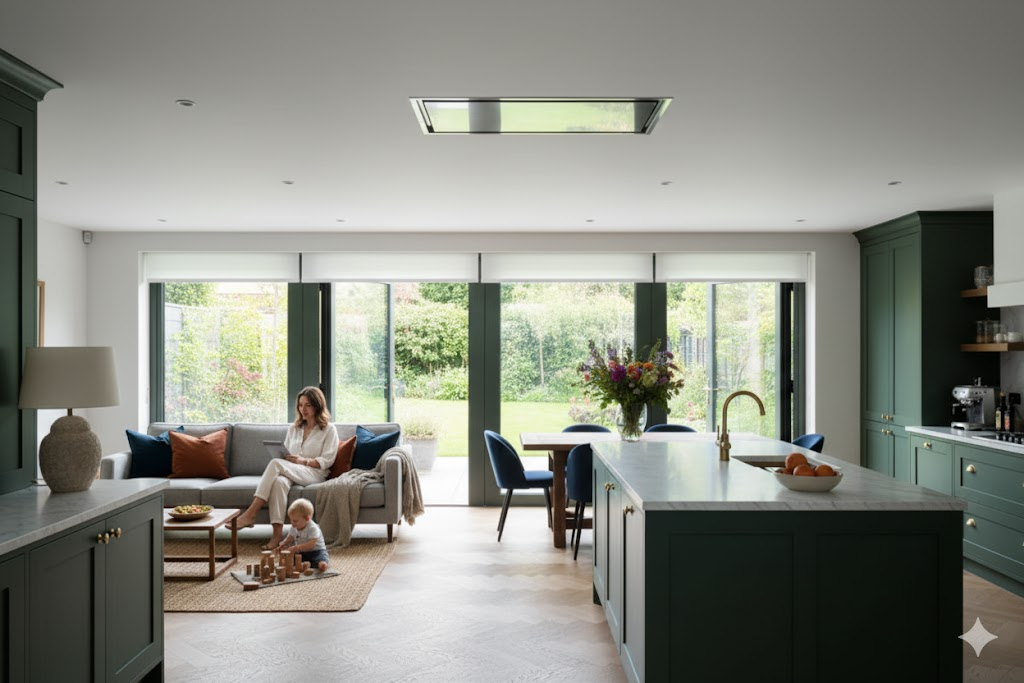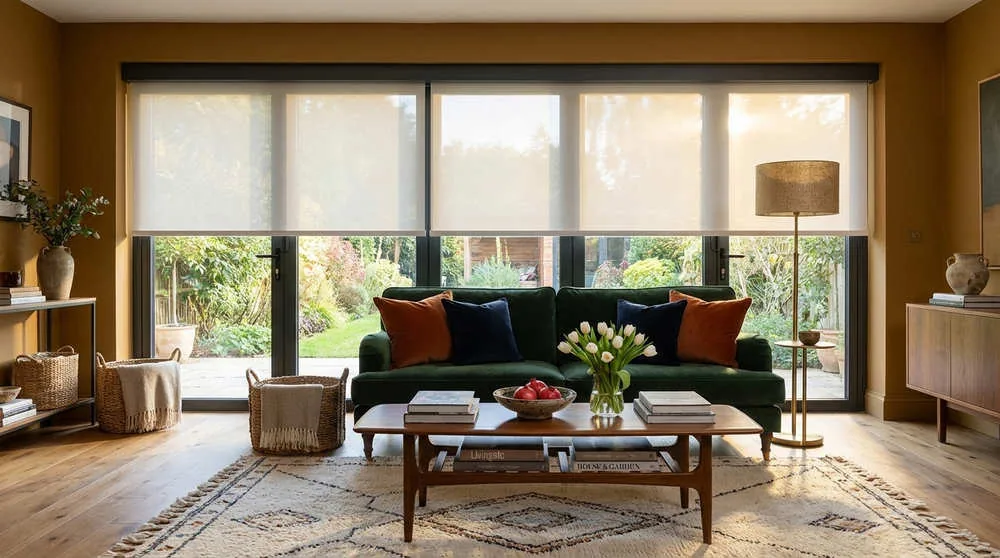








You’re planning a beautiful glass extension, imagining light flooding your new kitchen or living space. But a nagging question keeps surfacing: when do you actually need to think about blinds? Could leaving them to the “decorating stage” be a costly mistake?
This timing anxiety is justified — making the wrong decision here could cost you thousands and compromise your dream space.
This comprehensive planning resource walks you through the exact stages when shading decisions must be made, explains the S.H.A.D.E. framework that ensures your home is both stunning and comfortable, reveals the financial and aesthetic cost of leaving this too late (including a real-world £300k extension that became unusable), and honestly tells you who this early-planning approach is NOT suited for.
By the end, you’ll have a clear action plan to integrate comfort and control into your design from day one, protecting the dream you’re building.
Our goal is to educate you so you can make the best decision, even if that means you don’t buy from us.
5 Critical Decisions That Determine Shading Success or £300k Mistakes
- The critical window for seamless blind integration is RIBA Stage 2 (Concept Design) — miss this, and you face 2-3x higher costs or aesthetic compromises
- Planning shading early isn’t about spending more — it’s about avoiding the £1,000-£2,000 retrofit penalty that comes from late decisions
- The S.H.A.D.E. framework treats shading as architecture, not decoration, ensuring your £150,000+ extension remains comfortable and usable year-round
- Most architects overlook shading integration — understanding common architectural oversights empowers you to ask the right questions
- Even if you’ve missed the ideal timing, effective retrofit solutions exist — it’s rarely “too late” for quality results
Quick Reference: Planning Timeline and Cost Impact
Detailed stage-by-stage guidance and cost breakdowns below.
Why Planning Shading at RIBA Stage 2 Saves £2,000+ Per Window
Planning & Design, in the context of electric blinds, means strategic integration of light and heat management during the architectural development phase — not as a decorating afterthought. Understanding this distinction could save you from the costly mistake of treating essential infrastructure as decoration.
It encompasses identifying the critical RIBA stages when decisions must be made, understanding how to create structural “blind space” for concealment, coordinating with architects and builders to preserve aesthetic intent, and applying frameworks like S.H.A.D.E. to ensure your home is both visually stunning and comfortable year-round.
How to Avoid 4 Costly Shading Mistakes That Trip Up 80% of Projects
- The £300,000 Mistake: Why Timing is Everything
- Introducing S.H.A.D.E.: A Better Way to Build with Glass
- The Critical Timeline: When Decisions Must Be Made
- Why Architects Miss This (and How to Have the Conversation)
- What Happens When You Plan Early vs. When You Don’t
- Your Action Plan: The Right Questions to Ask at Each Stage
- The Financial Cost of Late Planning
- The Aesthetic Cost: What You Lose
- Who This Early-Planning Approach is NOT For
- Your Decision Framework: Should You Act Now or Wait?
The £300,000 Mistake: Why Timing is Everything
I remember a project near Portsmouth that perfectly illustrates what’s at stake.
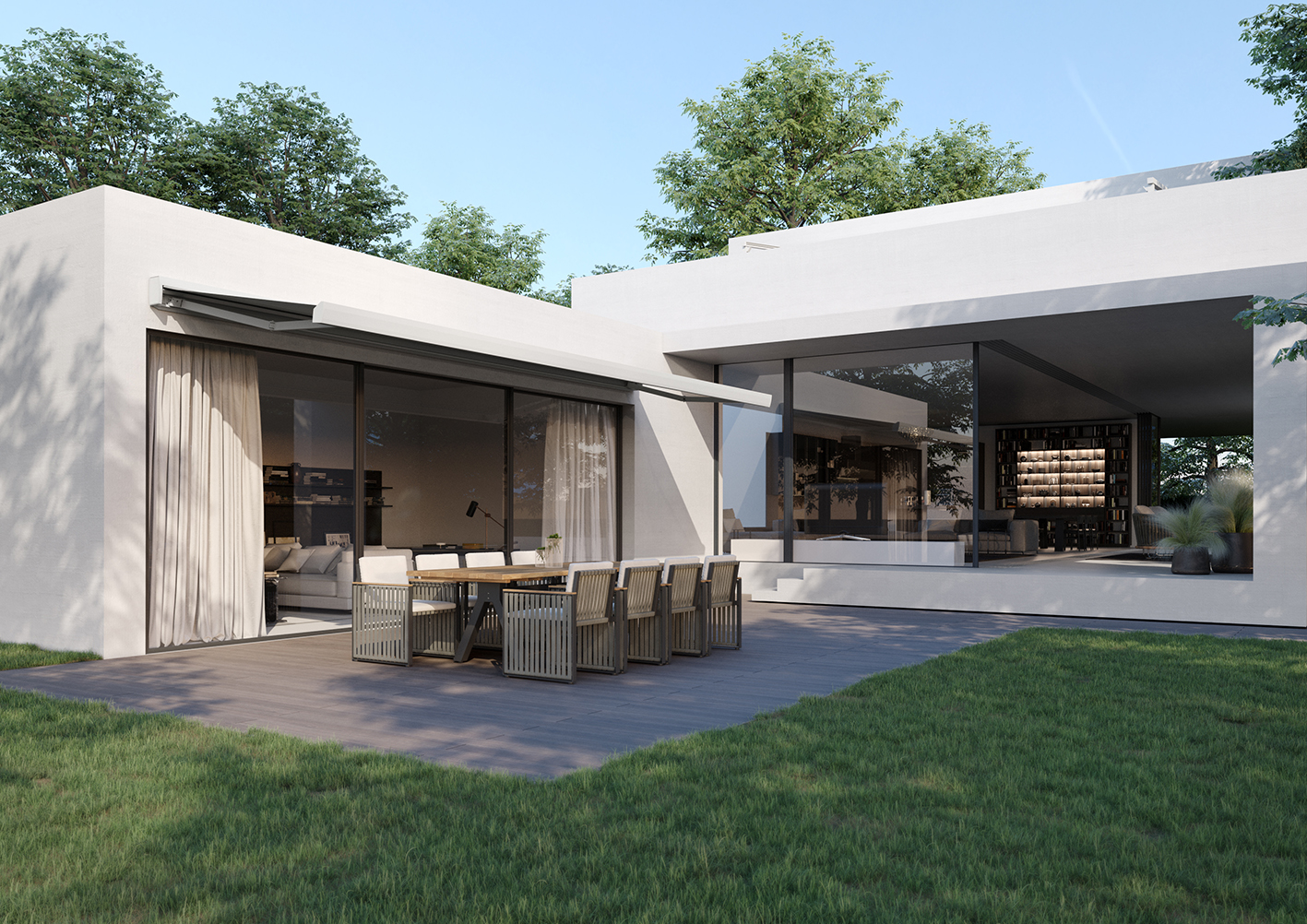
The clients built a stunning dining room extension — essentially a glass box with around 50 square metres of south-facing glass on one side and another 50 square metres on the other. Three-metre-tall panels. Architectural ambition at its finest. This setup might sound familiar if you’re planning something similar — and the outcome reveals a critical planning mistake you need to avoid.
The vision was breathtaking: living in a glass house, connected to the outdoors. If this matches your own vision, you need to know what went wrong to avoid the same fate.
No shading controls were planned. The assumption was that high-performance glass would be enough. This assumption — that many homeowners make — led directly to their £300,000 mistake.
When the build completed in spring, it looked incredible. But as summer arrived, the dream turned into a nightmare. The room became stiflingly hot — an unliveable greenhouse. The blinding glare meant the family literally couldn’t see each other across the table.
The £300,000 investment in their dream dining space was, for large parts of the day, completely unusable.
When they finally contacted shading specialists, they discovered the brutal truth: because the structure was finished, only retrofit solutions were possible. This meant bulky, surface-mounted cassettes that interrupted the ceiling lines they’d invested so heavily in. The installation required electricians and plasterers to return, creating mess and additional expense.
The financial sting wasn’t just the blind cost. It was the 2-3x retrofit premium on top, plus months of disappointment living in a compromised space.
The overwhelming feeling was profound regret. If only they’d involved a shading specialist six months earlier, during the architectural design phase, the entire system could have been concealed seamlessly within the structure. Invisible when not needed, emerging perfectly when required. Same comfort outcome, half the cost, zero aesthetic compromise.
This is why timing isn’t a minor detail. It’s everything.
Understanding when to plan electric blinds for your extension prevents this exact scenario. The critical window is narrower than most people realise.
Introducing S.H.A.D.E.: A Better Way to Build with Glass
For decades, the UK construction industry has treated blinds as “soft furnishings” — a decorating decision made at the end. When you’re building with large architectural glazing, this outdated mindset leads to unusable rooms, retrofit compromises, and profound disappointment.
S.H.A.D.E. is the alternative: treating shading as architecture, not an accessory.
We developed this principle after seeing too many beautiful homes fail the comfort test. It stands for Shading deserves to be Designed, Human-centred, respects Architectural intent, Directs light, and improves Environmental performance.
S – Shading Deserves to Be Designed
Shading is as essential as the glazing it complements. If light is the raw material flooding your extension, shading is the control that makes it perfect.
Without it, light overwhelms. Or you lose the view by keeping blinds permanently down. When shading is designed-in early, it keeps light where it belongs, preserving both comfort and architectural vision.
In a warming world, this isn’t optional. It’s responsible design.
H – Human-Centred Design
Architecture serves people. Unfiltered light interferes with focus, disrupts sleep, and robs spaces of calm.
S.H.A.D.E. protects how you live in the space. It filters glare, preserves views, and balances brightness with softness. This aligns with WELL building standards and BREEAM Hea 01 (Health and Wellbeing). But more fundamentally, it’s about your daily comfort in the home you’ve invested in.
It’s the difference between a room that looks good in photos and one that feels good to live in.
A – Architectural Intent
You and your architect have considered every detail. But if shading is retrofitted, those clean lines get cluttered with visible headboxes and fixings.
S.H.A.D.E. ensures blinds are invisible when retracted — concealed within the structure. The minimalist aesthetic you designed is never compromised. Good shading doesn’t interrupt architecture. It lets it breathe.
D – Direct the Light
Glazing is opportunity, but uncontrolled, it becomes a liability. You’ve created a vision, but without control, only part of it can be comfortably lived in.
S.H.A.D.E. gives you that control — directing how light enters, where it lands, and how it behaves. Glazing and shading are designed together, not in opposition.
E – Environmental Performance
Thoughtful shading helps your home work with its climate. It cuts summer solar gain (reducing cooling needs) and retains winter warmth (reducing heating bills).
This improves EPC ratings, strengthens Part O compliance (overheating prevention), and supports BREEAM/RIBA 2030 Climate Challenge targets. Thermal comfort isn’t a spec line. It’s what you’ll remember every day.
For detailed exploration of this framework, read S.H.A.D.E. explained for homeowners. If you’re working with an architect, share S.H.A.D.E. for architects to facilitate the conversation.
The Critical Timeline: When Decisions Must Be Made
Understanding when to act matters more than understanding what to buy. The construction timeline has natural decision points. Miss them, and your options narrow dramatically.
The “Point of No Return” for Seamless Shading: RIBA Stage 2
Your architect is developing the first proper drawings of your extension. This is THE moment when decisions about concealing electric blinds must be made.
Not later. Not “once we see how it looks”. Now.
Why Stage 2 is critical:
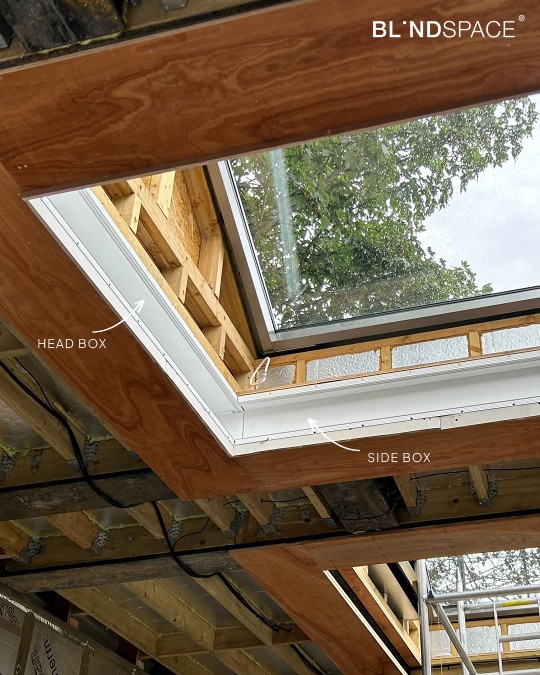
- The structural void (Blindspace® pocket) must be drawn into the ceiling/wall plans
- Electrical first-fix must include fused spur locations for blind motors
- Dimensions must account for blind tube diameter, fabric roll, and clearances
- Any changes after this stage require rework
This isn’t just our opinion. RIBA’s own guidance states that adding solar shading requirements after this stage limits you to “the more expensive options”. It’s official industry best practice.
What Happens If You Miss Each Stage
Every month you delay costs money and limits options. By Stage 5, you’re choosing between spending double for remedial concealment work, or accepting a visible cassette forever.
Neither outcome feels good when you’re standing in your finished dream space.
Understanding the common mistakes that cause these delays helps you avoid becoming another cautionary tale.
Why 90% of Architects Don’t Mention Shading Until It’s Too Late to Hide It
It’s not that your architect is bad. It’s that shading is a specialist blind spot.
Architects are brilliant big-picture thinkers managing immense complexity — structure, aesthetics, regulations, budgets. But shading, particularly the technical nuances of blind integration, is a highly specialised sub-discipline that doesn’t always get the focus it needs.
Three Common Reasons This Gets Missed
1. Focus on the Vision
The “Grand Designs” aesthetic is often uninterrupted glass. Discussing blinds can feel like planning for compromise during the exciting design phase. The temptation is to solve for maximum light first, comfort second.
2. Underestimating the Sun
A room that looks wonderfully bright on drawings can become an unusable greenhouse in reality. The overheating issue is now so widespread it required new Building Regulations (Part O) — proving it’s an industry-wide knowledge gap, not a personal failing.
3. Assuming Glass Alone is Enough
High-performance triple-glazing is impressive. Architects rightfully specify it. But it’s a static solution — it can’t adapt to seasons or provide privacy. This assumption is perhaps the most common oversight we encounter.
Your job isn’t to become a technical expert. It’s to know the right questions to ask.
You could say to your architect: “I love the glass we’ve designed in, but I’m conscious about potential heat and glare. How are we planning to manage that to ensure year-round comfort, and can we explore concealing any blinds within the structure?”
This simple question often opens a productive conversation that protects your investment.
What Happens When You Plan Early vs. When You Don’t
Contrasting outcomes reveal the tangible difference timing makes.
Scenario A: “The Reactive Retrofit” (Shading as an Afterthought)
The build is complete. The extension looks stunning in photos. You host the first family dinner on a sunny June evening. Within an hour, you realise the room is uncomfortably hot. The glare is so intense you can’t see the TV. At night, with internal lights on, you feel like you’re in a fishbowl.
Now you search for solutions. You discover:
- Concealing blinds inside the finished ceiling requires cutting out plasterwork
- Major disruption to your pristine new space
- £1,000-£2,000 in additional trade costs (plasterer, decorator, electrician returns)
- The only practical option is surface-mounted blinds with visible cassettes
- Financial penalty: paying 2-3x more than if planned
The emotional cost? Daily regret looking at visible hardware. Thinking “if only we’d known six months ago.”
Scenario B: “The Designed-In Solution” (S.H.A.D.E. in Practice)
The architect presents initial concept drawings. You ask about shading early. Your architect calls WindowTreat for consultation. We join a video call to review the plans.
Together, you identify where Blindspace® pockets should be located. These details are added to architectural drawings before the builder starts.
During the build:
- Structural pockets installed by main contractor as standard work
- Electrician includes fused spurs in first-fix (no extra visits)
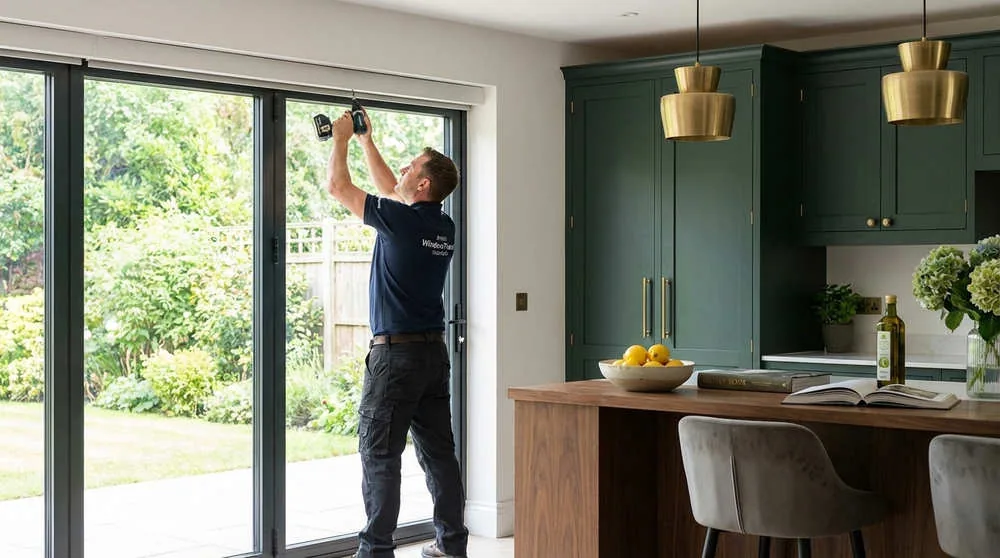
- After plastering, WindowTreat installs blind mechanisms into prepared voids
The outcome? Blinds that vanish completely into the ceiling when retracted. One seamless button-press to transform the room. Zero visible hardware. Zero aesthetic compromise. And crucially, lower total cost because it was designed-in efficiently.
The Professional’s Proof: Pavla & Piers’ Star-Gazing Bedroom
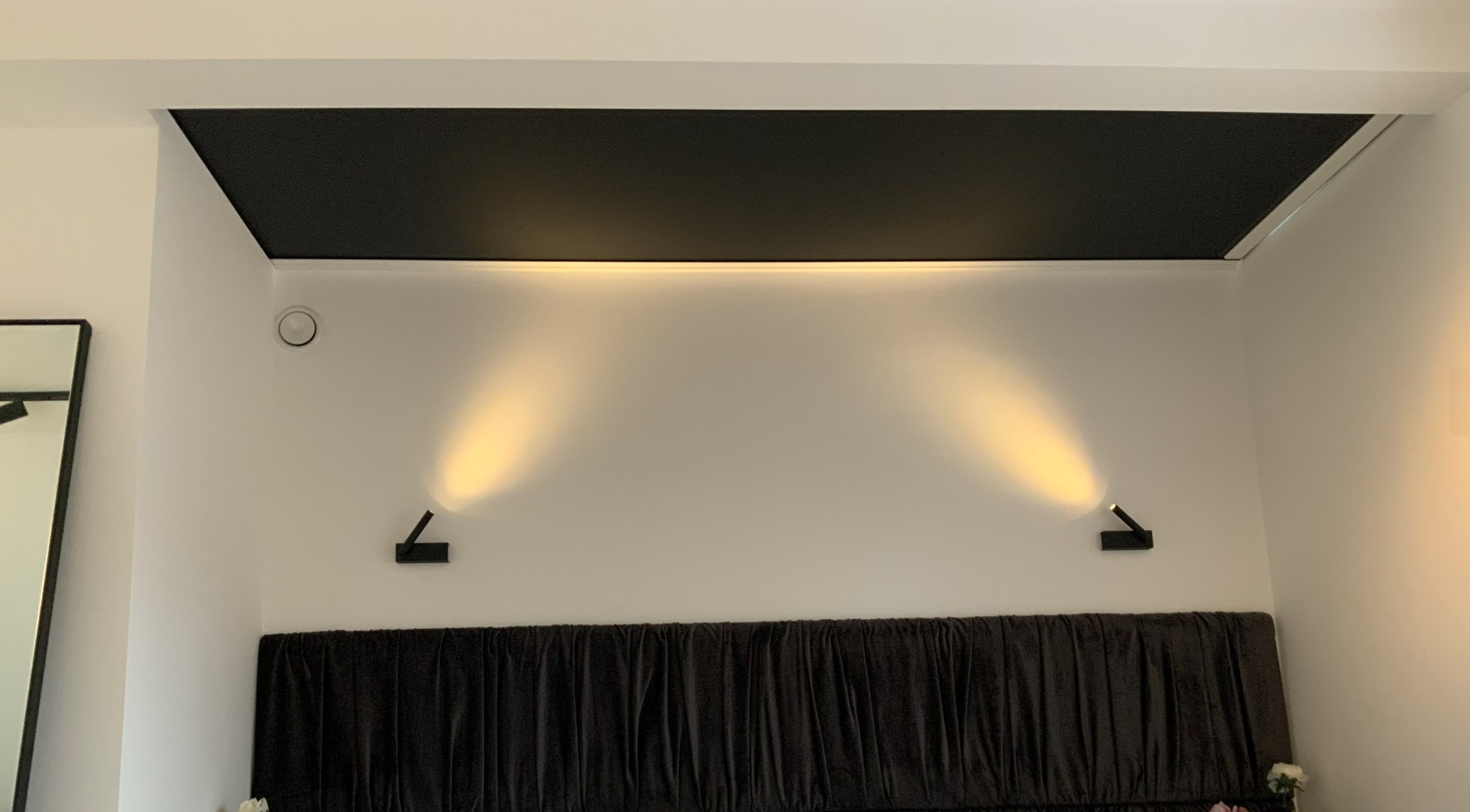
We worked with Pavla (an architect) and Piers (a structural engineer) designing their own dream home in Fulham. A central feature of their master bedroom was a large rooflight positioned directly above the bed for one specific purpose: stargazing.
For them, the aesthetic vision was so absolute that a visible blind was simply not an option. They needed total blackout for sleep, but the solution had to be completely concealed.
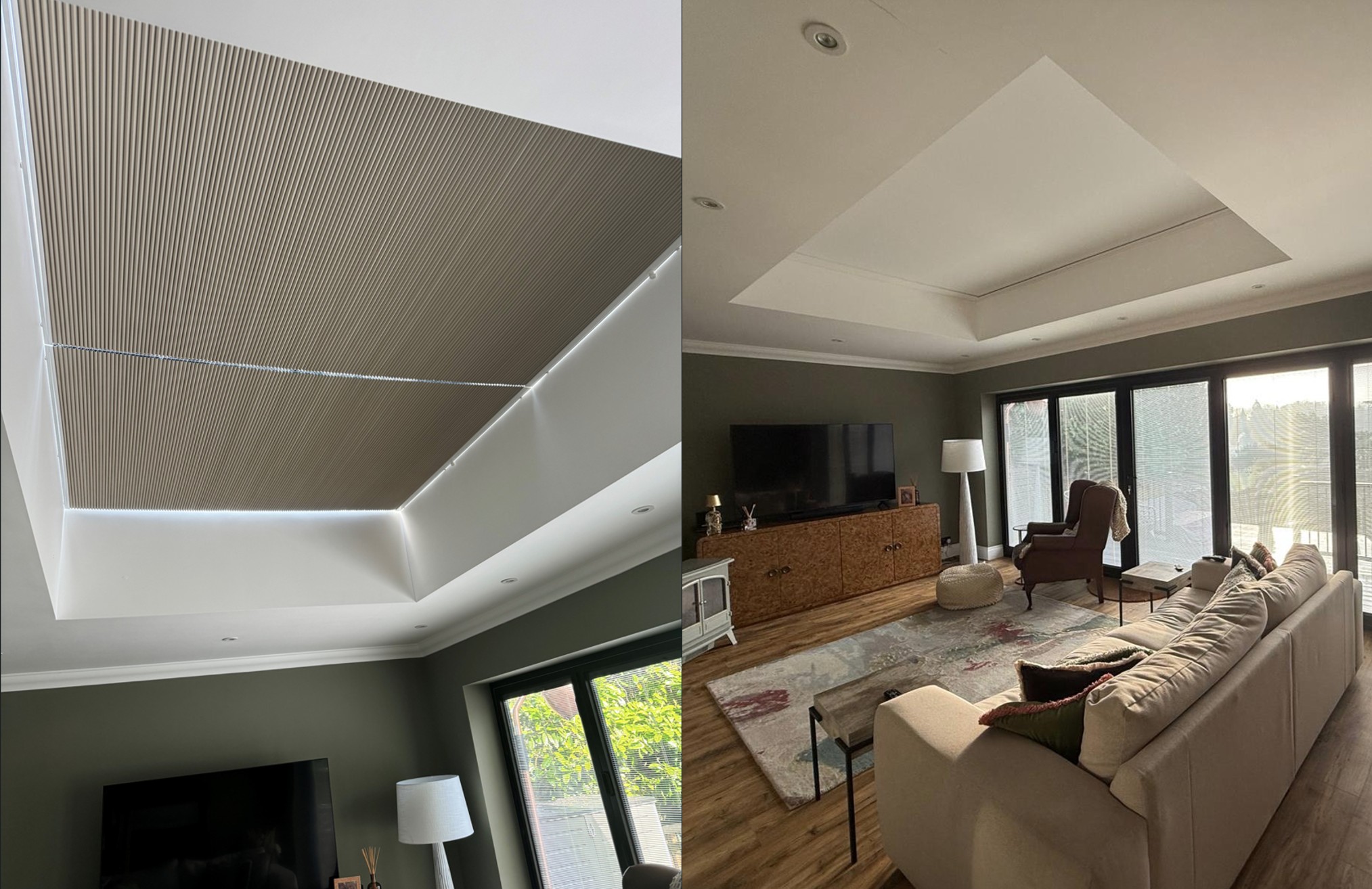
By planning at RIBA Stage 2, they integrated a blackout blind that emerges from a hidden recess. The fabric is so perfectly taut it looks like a solid ceiling when closed. At the touch of a button, it silently glides away to reveal the stars.
Professionals trusted early-planned concealment for their own home. That’s powerful proof.
If you’re wondering whether choosing between concealed and surface-mounted systems is worth the planning effort, their story answers it clearly.
Your Action Plan: The Right Questions to Ask at Each Stage
Practical, stage-by-stage actions you can implement immediately.
Stage 1: Initial Concept Discussion (RIBA Stage 1-2)
Your Action:
- Ask architect: “How should we plan for managing heat and light in these glazed areas?”
- Request WindowTreat consultation to review draft plans (call 01256 345580)
- Discuss orientation, solar exposure, and likely comfort challenges
Questions to Ask:
- “Have we allowed space in the ceiling structure for concealed blinds?”
- “What’s our strategy for preventing overheating to meet Part O regulations?”
- “Can we integrate shading so it’s invisible when not in use?”
These questions signal you’re informed. They invite collaboration, not conflict.
Stage 2: Technical Design (RIBA Stage 3-4)
Your Action:
- Ensure Blindspace® profiles are specified in ceiling sections
- Confirm electrical drawings show fused spur locations
- Review window reveals and upstand dimensions with blind specialist
Questions to Ask:
- “Have the builders been briefed on Blindspace® installation requirements?”
- “Is the shading specification detailed enough to avoid site queries?”
At this stage, details matter. Vague notes like “allow for blinds” aren’t enough. The builder needs precise dimensions, clearances, and fixing specifications.
Stage 3: Construction (RIBA Stage 4-5)
Your Action:
- Coordinate blind specialist site visit before plastering to verify pocket installation
- Confirm electrical rough-ins are correctly positioned
- Schedule final blind installation for after decoration but before handover
This is your last checkpoint before the window closes completely.
Stage 4: Post-Build (If Shading Wasn’t Planned)
Your Action:
- Accept that full concealment requires remedial work or isn’t feasible
- Focus on highest-quality surface-mounted or battery-powered solutions
- Prioritise performance (heat/glare control) over attempting concealment
Understanding what retrofitting actually involves helps set realistic expectations. The path changes, but quality outcomes remain possible.
If damaging finished plaster is unacceptable, battery-powered systems offer a clean alternative.
The Financial Cost of Late Planning (Show the Math)
Numbers make this tangible. Let’s calculate the retrofit penalty for a typical project.
Scenario: 4m-Wide Bifold Door Blinds with Concealment
Designed-In (Planned at RIBA Stage 2):
Retrofitted (Decided After Plastering Complete):
Retrofit penalty: £1,050 (22% cost increase) + 2-3 weeks disruption + dust/mess in finished home
Alternative: Accept Surface-Mounted to Avoid Retrofit Work
- No Blindspace® needed
- No structural work
- WindowTreat surface-mounted blind: £3,000-£4,000
- Savings vs. retrofit concealment: £1,500-£2,000
- Trade-off: Visible cassette forever
The decision tree becomes clear. If your plaster is dry and you want concealment, you’re choosing between:
Option A: Spending £1,000-£2,000 extra on retrofit work for concealment
Option B: Accepting a beautifully-finished visible cassette that’s £1,500 cheaper than retrofit concealment
There’s no “best” answer. It’s about honest priorities — your budget versus your aesthetic standards.
The clear lesson: Early planning is the only path to both lowest cost AND best aesthetic.
The Aesthetic Cost of Late Planning: What You Lose
Beyond money, there’s the emotional and aesthetic cost of compromise — harder to quantify but just as real.
What “Invisible When Not Needed” Actually Means
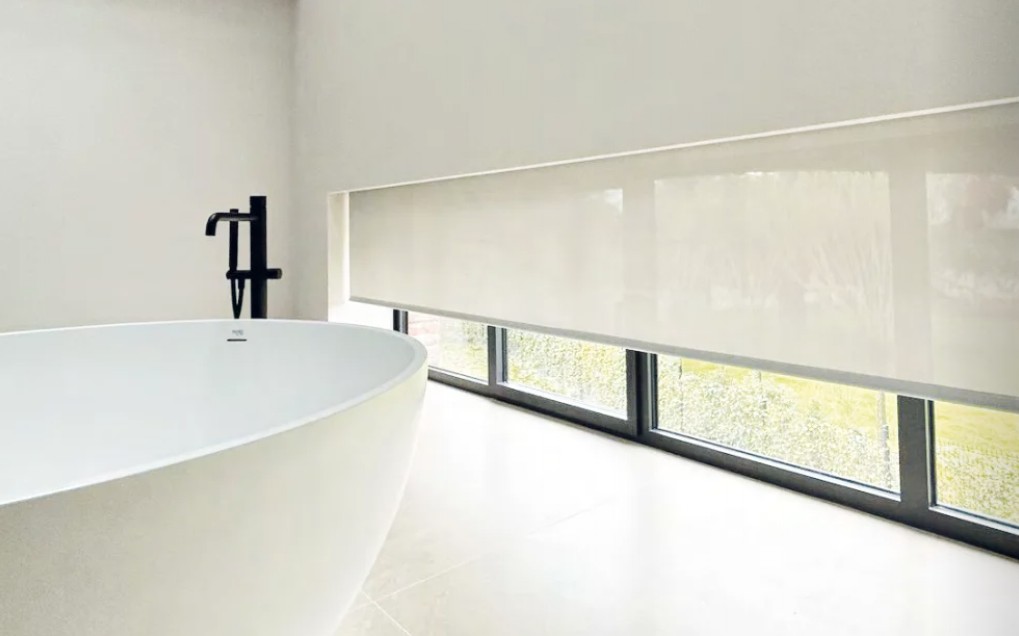
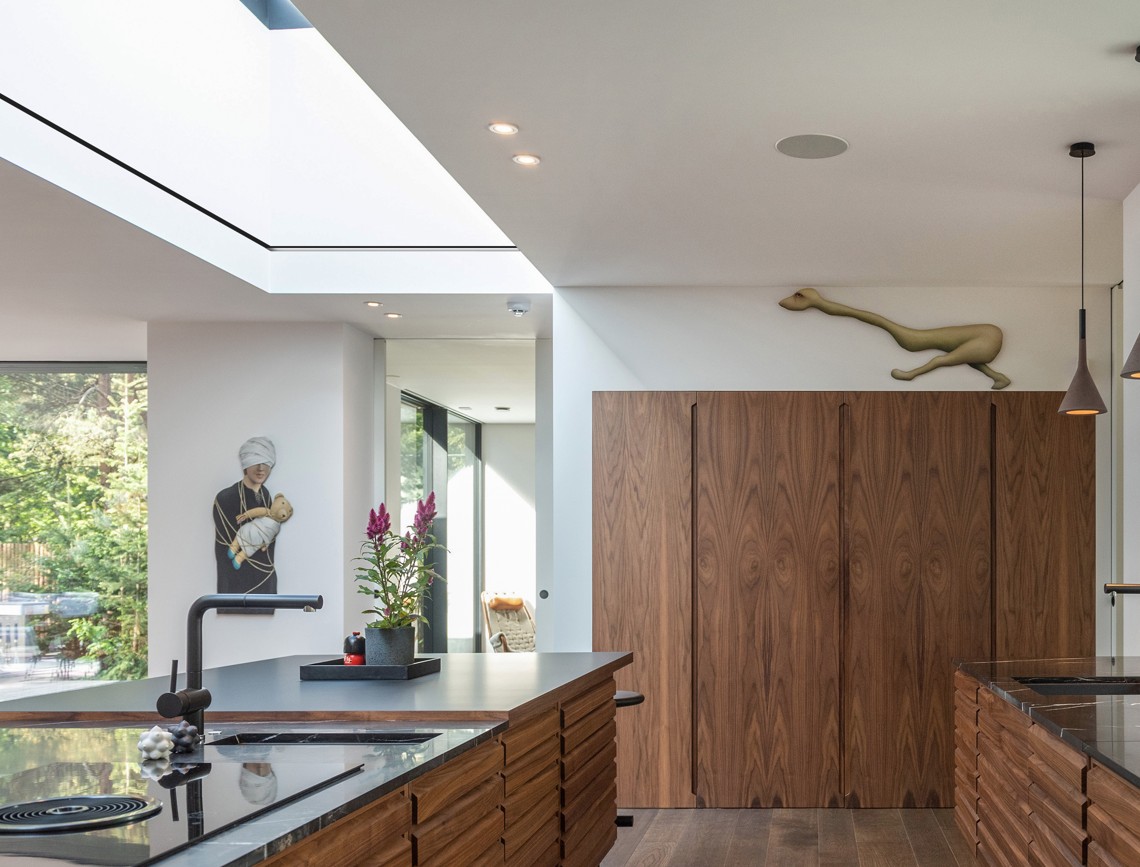
Concealed blind retracted: Clean white ceiling, uninterrupted sightlines, glass as the star. The architecture breathes.
Surface-mounted blind retracted: Visible aluminium cassette across window head. Discreet and modern, but present.
A high-quality surface-mounted blind with a cassette powder-coated to match your window frames is a beautiful, elegant solution. It’s discreet, modern, and performs flawlessly. But it is visible.
For some homeowners, that’s perfectly acceptable — even preferred for ease of maintenance. For others, it’s a compromise they’ll notice and regret every single day.
Are You Willing to Spend 2 Hours Now to Save £2,000 Later?
On a scale of 1-10, how much would seeing a cassette across your ceiling bother you daily?
If your answer is 8+, and your project is still in design phase, concealment is worth every penny of planning effort.
If your answer is 4 or below, a high-quality surface-mounted system is likely the smarter, more cost-effective choice.
There’s no wrong answer. Only honest self-awareness.
“But My Architect Hasn’t Mentioned This” (How to Have the Conversation)
You’re not questioning your architect’s expertise. You’re bringing valuable buyer insight from a specialist domain into the collaborative design process. The best architects welcome this.
Conversation Starters
Opening (Non-Confrontational):
“I’ve been reading about high-performance shading for glass extensions and want to make sure we get this detail right early. Could we discuss how to integrate blinds seamlessly?”
Follow-Up Questions (Collaborative):
- “How do we ensure this space is comfortable year-round, not just visually stunning?”
- “Can we plan for concealing the blind mechanisms to preserve the minimalist look?”
- “What’s the best stage to involve a shading specialist to ensure proper integration?”
The S.H.A.D.E. Reference:
“There’s a framework called S.H.A.D.E. that specialist shading companies use. It’s about designing shading in from day one. Could we explore how to apply that thinking to our project?”
Offer to Facilitate:
“I’ve found a specialist (WindowTreat) who offers free consultations to review architectural plans. Would it be helpful for them to join one of our meetings to advise on integration?”
Emphasise Partnership:
“I want to protect your architectural vision while ensuring the space is liveable. I see this as us working together to get every detail right.”
Share our article on common architectural oversights as a helpful resource, not a criticism. It frames the conversation around industry-wide patterns, not personal failings.
Choosing the Right Specialist: What to Look For
Not all blind companies understand architectural integration. Choosing the wrong partner wastes the planning effort you’ve invested.
What to look for when choosing a specialist company includes examining methodology, not just products.
Key questions to ask any specialist:
- “At what RIBA stage do you typically get involved in projects?”
- “Can you show examples of Blindspace® concealment you’ve integrated?”
- “How do you coordinate with architects and main contractors?”
- “What happens if we involve you too late for concealment?”
Their answers reveal whether they’re design-phase partners or retrofit fitters.
Room-Specific Planning Considerations
Different rooms have different shading priorities. Planning should reflect how you’ll actually use the space.
Choosing blinds for kitchens versus bedrooms requires understanding functional needs first, aesthetics second.
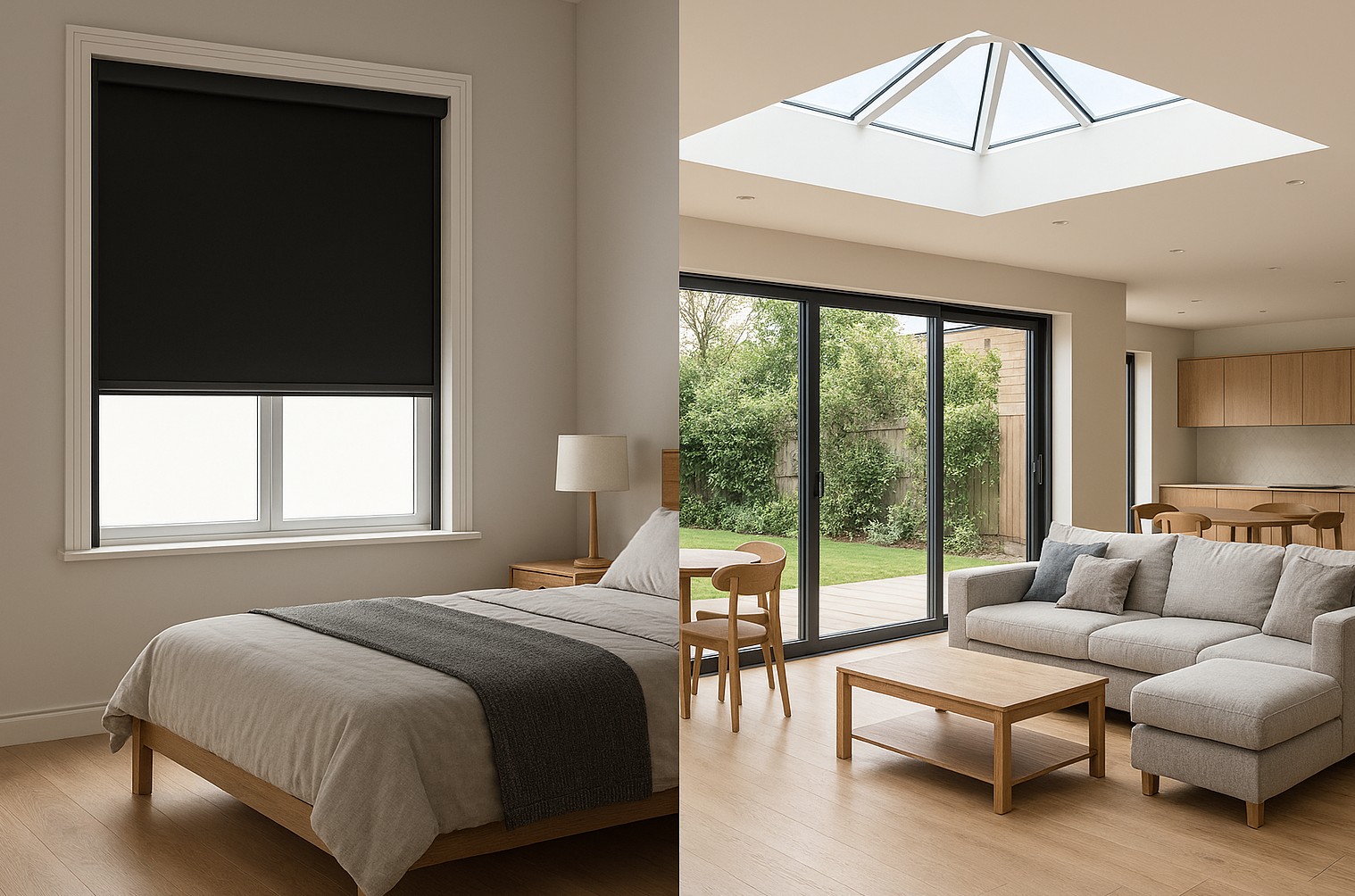
A kitchen might prioritise glare control while preserving the view. A bedroom demands room-darkening and privacy.
Planning these requirements early ensures you specify the right system for each space.
Specific Solutions for Large Glazing
Extensions often feature oversized glass elements that demand specialist engineering. Standard blind systems fail at scale.
Large Doors Require Large Thinking
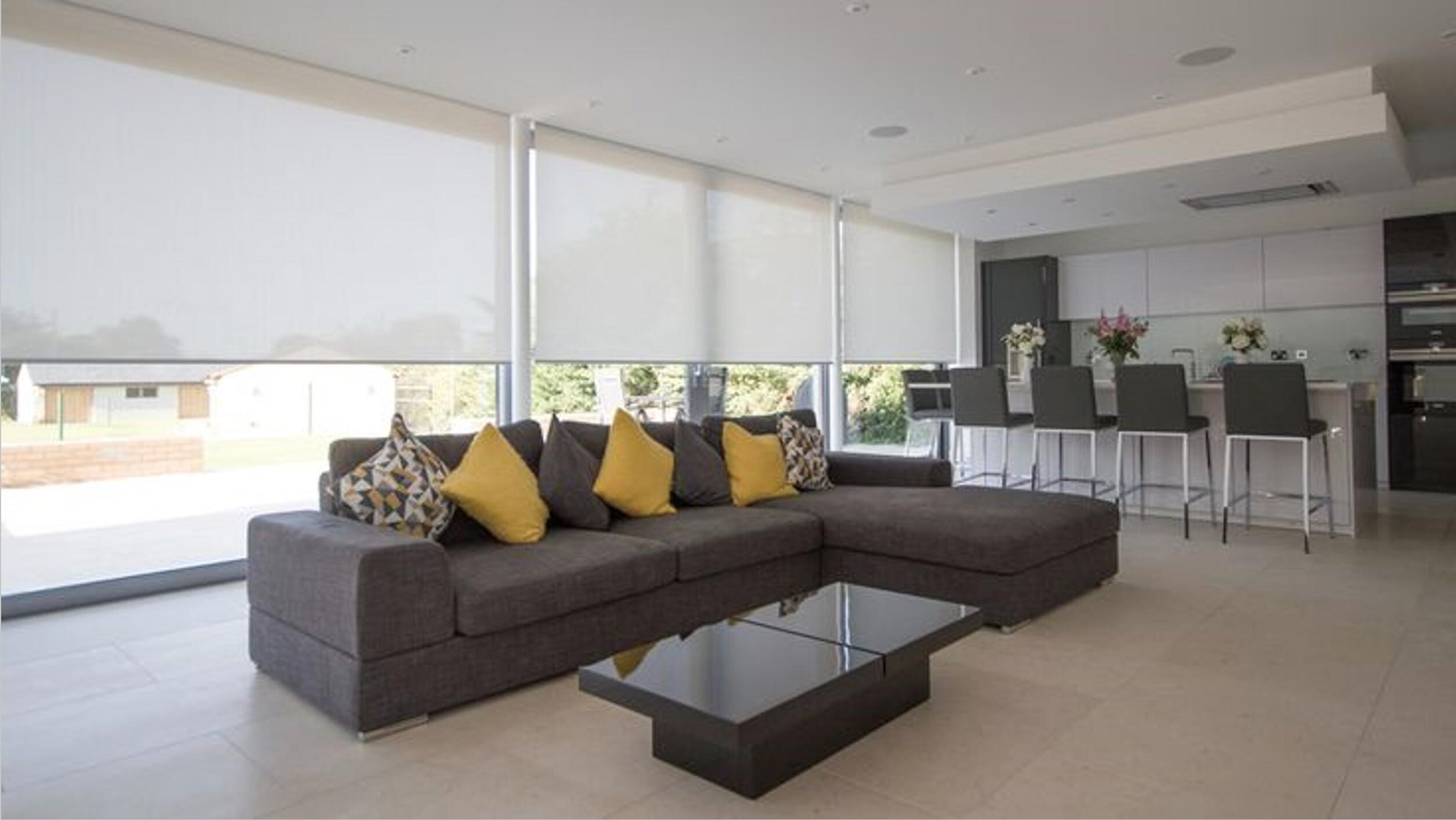
For blinds on large sliding and bifold doors, the engineering challenge is preventing fabric sag across wide spans.
Technologies like Deflect Zero actively compensate for tube bending, allowing single, seamless blinds up to 5+ metres wide.
Planning for these systems early means ensuring adequate header height and confirming structural support. Retrofitting them into undersized reveals is often impossible.
The conversation with your architect needs to happen while opening dimensions are still flexible.
What If I’ve Already Missed the Window? (Honest Retrofit Guidance)
If you’re past the design stage, don’t despair. You have three realistic options.
Option 1: Retrofit Full Concealment (High Investment, High Aesthetic Return)
Create plasterboard bulkhead/cornice to house blind.
Cost: £650-£1,250 in building works + blind cost
Result: Near-invisible finish, but not as seamless as designed-in
Right for: Homeowners where minimalism is non-negotiable and budget allows
Option 2: High-Quality Surface-Mounted (Lower Cost, Elegant Aesthetic)
Slim cassette powder-coated to match window frames.
Cost: Blind only (£3,000-£5,000), no structural work
Result: Discreet, modern, intentional-looking (not an afterthought)
Right for: Pragmatic homeowners who value function and quality over absolute invisibility
Option 3: Battery-Powered Smart Blinds (Zero Disruption to Décor)
No wall chasing, no electrician, no mess.
Cost: Blind only, saves £330-£650 in electrical work
Result: Full automation without damaging finished plaster
Right for: Finished rooms where preserving décor is paramount
Understanding whether it’s truly too late for the minimalist look depends entirely on your priorities and budget flexibility.
The reassurance? It’s genuinely not too late for a beautiful, high-performance result. The path changes, but the destination remains achievable.
Who is This Early-Planning Approach NOT For? (Our Honest Filter)
The S.H.A.D.E. early-planning framework is likely NOT relevant for you if:
Your build is already complete or past the plastering stage. Early planning has passed. Focus your energy on the best retrofit solutions instead (Options 2 or 3 above).
You’re undertaking a modest extension or working with standard windows. S.H.A.D.E. is designed for complex, large-scale glazing (roof lanterns 2m+, bifolds 4m+). For smaller projects, late-stage decisions are less costly.
Your budget is fixed and cannot accommodate design-stage consultation. If funds are extremely tight, waiting to see the “problem” before solving it might be a necessary trade-off. We understand that reality.
You’re comfortable with visible blind hardware. If a neat, surface-mounted cassette doesn’t bother you aesthetically, there’s no need to invest time and planning effort in full concealment.
Early planning delivers the best outcomes. But it requires time, coordination, and budget flexibility.
If that doesn’t describe your current situation, that’s completely fine. We’re here to help you find the best solution for where you are, not where you “should have been”.
We’d rather be honest upfront than set you up for disappointment later.
Your Decision Framework: Should You Act Now or Wait?
Three questions reveal your path forward.
Question 1: What Stage is My Project At?
- Design/Pre-planning: You MUST read this and act this week
- Plans approved, build starting soon: You have 2-4 weeks to integrate concealment — act NOW
- Build underway, walls up but not plastered: Urgently possible — call specialist immediately
- Plastered/Complete: Focus on retrofit options, not concealment regret
Your current stage dictates available options. Be honest about where you truly are.
Question 2: How Important is a Flawless, Invisible Finish to Me?
- Non-negotiable (9-10 out of 10): Early planning is essential — delay your build timeline if needed
- Important but flexible (6-8 out of 10): Pursue concealment if feasible, but high-quality surface-mounted is acceptable backup
- Neutral (below 6 out of 10): Surface-mounted from the start is your smart, cost-effective choice
Only you know which category you’re in. Be ruthlessly honest with yourself. A mismatch between your aesthetic standards and your planning actions creates regret.
Question 3: Am I Willing to Invest 2-4 Hours Now to Save £1,000-£2,000 Later?
Yes: Book a design-stage consultation with WindowTreat this week (call 01256 345580 or book appointment)
No / Not sure: Bookmark this guide, continue planning, revisit once you’re clearer on priorities
The mathematics are simple. 2-4 hours now prevents months of regret and thousands in retrofit costs. It’s arguably the highest-return time investment in your entire project.
What Homeowners Wish They’d Known Earlier
Learning from others’ experiences is the fastest path to wisdom. Real homeowners’ biggest planning regrets reveal two consistent themes.
Regret #1: “I wish I hadn’t gone for the cheap option first.”
The “buy twice” trap. Trying to save money with an inferior system, then replacing it months later with the quality solution they should have chosen initially.
Regret #2: “I wish we’d thought about blinds from day one.”
The heartbreak of retrofit compromise. Discovering too late that the elegant, concealed solution required planning before plastering.
Both regrets are entirely preventable. The information is here. The only question is whether you act on it.
Frequently Asked Questions about Planning & Design
Q: Can I add concealed blinds after the build is complete?
Creating concealment in a finished ceiling requires cutting plasterboard, installing pockets, and extensive re-plastering. It’s disruptive and costs 2-3x more than designing it in. A plasterboard bulkhead is less invasive but still requires a joiner and decorator.
Q: How much does early planning consultation cost?
Most specialists, including WindowTreat, offer free initial design consultations. A video call reviewing your plans typically takes 30-45 minutes. If you proceed, this advice is included in the project cost.
Q: Will involving a shading specialist complicate my architect relationship?
No. Frame it as bringing specialist knowledge to support your architect’s vision. The best architects appreciate collaborative input that ensures client satisfaction and protects their design intent.
Q: What if I’m not sure whether I’ll even need blinds?
That uncertainty is precisely why early consultation matters. A specialist can assess your glazing orientation, size, and likely solar exposure to give an evidence-based view. You might discover you genuinely don’t need extensive shading — or that it’s essential.
Q: How much space do I need to allow for concealed blinds?
Typically, a void of 100mm x 100mm minimum. Exact dimensions vary based on blind drop, fabric thickness, and motor size. This is why early specialist input matters — they calculate precise requirements for your architect.
Protecting Your Investment and Your Dream
Your extension represents a massive emotional and financial commitment. Every detail should work to preserve that investment.
Planning shading early isn’t about spending more. It’s about ensuring every square metre of your expensive new space is comfortable and usable.
It’s about protecting the architectural vision you and your designer have created. And it’s about avoiding the regret that comes from discovering a simple conversation six months earlier would have changed everything.
The best time to plan shading is RIBA Stage 2. The second-best time is today.
If you’re in planning stages, the next step is simple: have the conversation with your architect this week. Ask the questions from the Action Plan section.
If you’d like specialist input to support that conversation, we’re here.
Call our team on 01256 345580 or book a design consultation to discuss your project.
There’s no pressure. Just honest guidance to help you get it right.
All Articles in This Planning & Design Guide
Essential Foundations
What is S.H.A.D.E.? (explained for homeowners) The core philosophy that treats shading as integral architecture, explained in accessible language for anyone planning a glass extension.
What is S.H.A.D.E.? (explained for architects) The technical framework showing how S.H.A.D.E. principles align with RIBA stages, Part O compliance, and BREEAM considerations for design professionals.
When’s the right time to plan electric blinds for my extension? The critical RIBA stages when decisions must be made, and the specific consequences of delay at each phase.
Common Mistakes to Avoid
What common glazing and shading mistakes do architects make? The three most frequent architectural oversights that lead to uncomfortable, unusable extensions — and how to prevent them.
Electric blinds – what do real homeowners wish they’d known? Hard-won lessons from homeowners who’ve already completed their extensions, revealing the two biggest planning regrets.
My architect didn’t plan for blinds; is it truly too late to get the minimalist look I wanted? Honest options for achieving elegant shading when you’ve missed the ideal planning window, including retrofit concealment costs.
Integration and Installation
Concealed or surface-mounted blinds – how to choose? (Honest comparison) The aesthetic, cost, and timing trade-offs between “invisible” and “elegant” shading approaches.
What should I know about retrofitting electric blinds? (Pros and cons) A transparent look at adding electric blinds to finished rooms, covering disruption, costs, and realistic aesthetic outcomes.
How do you get power to electric blinds in a finished room without wrecking the walls? The clean alternative to chasing cables — how modern battery technology enables mess-free installation in completed spaces.
Choosing the Right Solution
What should I look for when choosing a specialist electric blind company? How to judge a specialist’s process and methodology to find a true partner for architectural integration, not just a product fitter.
Large sliding doors and bifolds – which blind solutions are best? The engineering challenges of wide spans, why standard systems fail, and what technologies like Deflect Zero make possible.
Which type of electric blind is best for a kitchen versus a bedroom? How room function dictates blind specification, from moisture-resistant fabrics for kitchens to room-darkening systems for bedrooms.