







You have likely arrived here because you received a quote for electric blinds and felt a moment of genuine surprise at the cost.
We understand that feeling completely.
Our goal is to educate you so you can make the best decision, even if that means you don’t buy from us.
What is Cost & Pricing in Specialist Shading?
Cost represents the initial financial outlay for the product and installation, while pricing reflects the engineered value, longevity, and performance of the system. In the world of high-end shading, a lower “cost” often masks a significantly higher “total cost of ownership” due to early failure or poor performance. True pricing transparency requires looking beyond the blind itself to the engineering that defies gravity and the fabrics that actually control heat.
What we will cover in this 2026 Guide:
- The Reality of Pricing vs. Other Home Features
- What Drives the Cost Up (and Down)?
- Product-Specific Cost Breakdowns (Roofs & Doors)
- The Value of Technical Fabrics
- High Street vs. Specialist Systems
- Hidden Maintenance & Running Costs
- Protecting Your Investment
The Reality of Pricing: Putting it in Context
The cost of specialist shading is often comparable to other premium features you are already budgeting for, such as high-end worktops or large bifold doors.
It helps to view shading as a functional building component rather than a decorative accessory.
Many homeowners are surprised when a blind quote rivals the cost of their glazing. However, you should consider how the cost of specialist shading compares to items like a premium kitchen worktop (£5,000–£8,000) or engineered oak flooring.
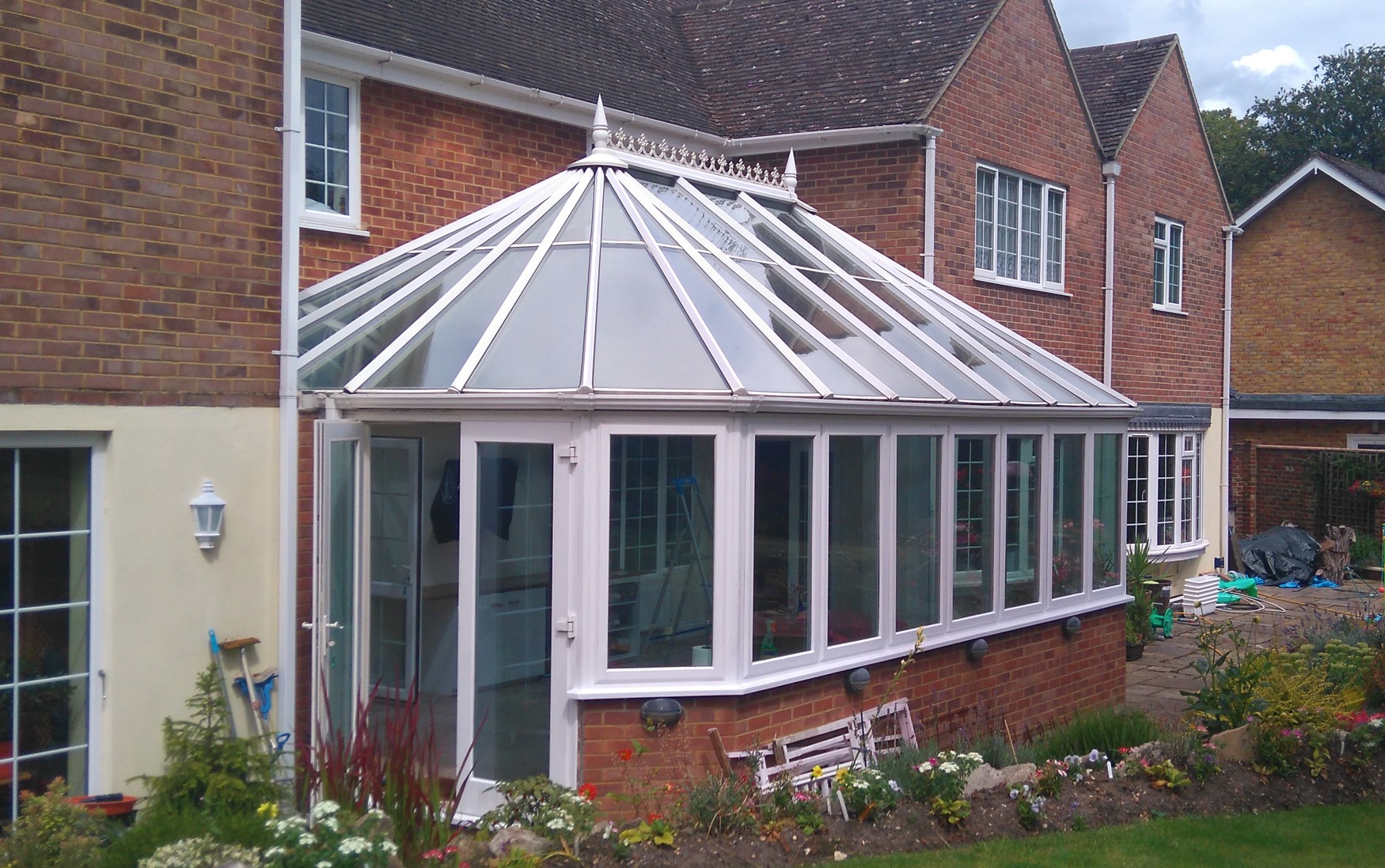
If you spend £150,000 on an extension but leave a £60,000 section unusable due to heat, “saving” £5,000 on shading is a false economy.
We often see the financial risk of an unusable room far outweighing the initial investment in shading.
Learn more in our detailed article: How does the cost of specialist shading compare to other high-end extension features?
What Drives the Cost Up (and Down)?
The primary drivers of cost are the engineering required to defy gravity and the architectural integration of the system.
A blind for a standard window is simple; a blind for a roof lantern is a complex machine.
To understand your quote, you must ask how much electric blinds really cost in terms of the mechanics behind the fabric. A tensioned system engineered to remain taut costs significantly more than a standard roller that will sag over time.
We call this the “duvet cover effect.”
Without robust engineering, gravity causes the fabric to ripple and droop.
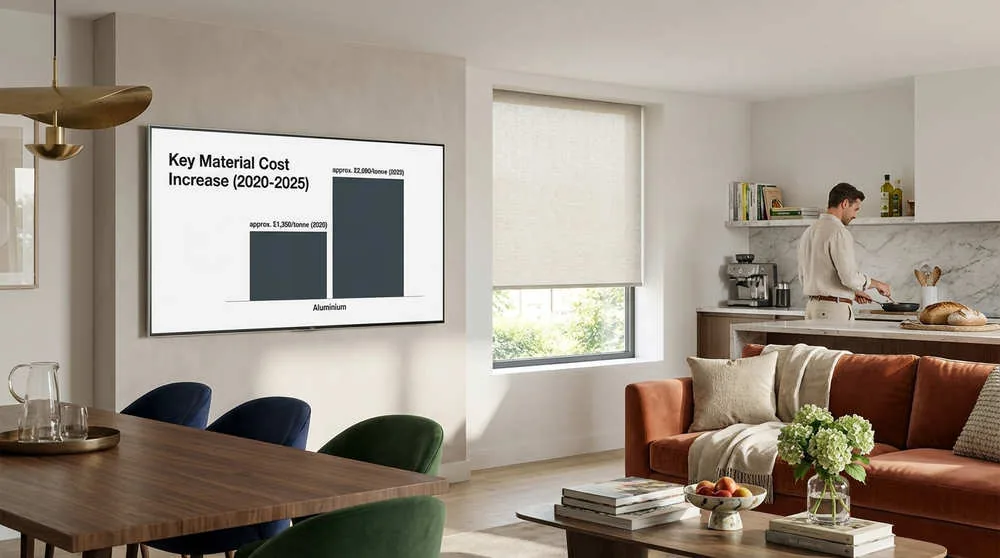
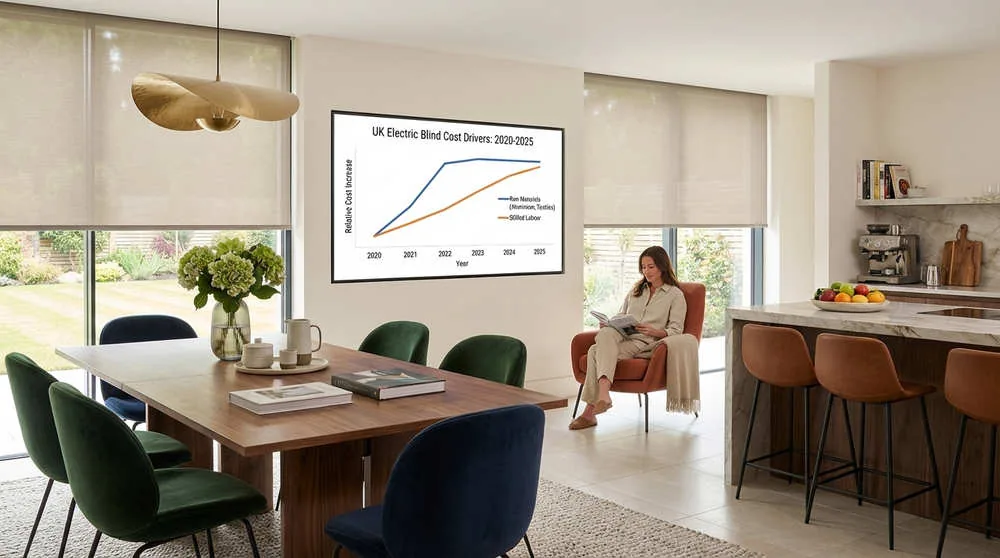
Price is also driven by 2020-2026 market pressures, including a 50% rise in aluminium costs and a shortage of skilled labour.
Learn more in our detailed article: How much do electric blinds really cost? (An honest UK guide for 2026)
Product-Specific Cost Breakdowns
Roof Lanterns and Skylights
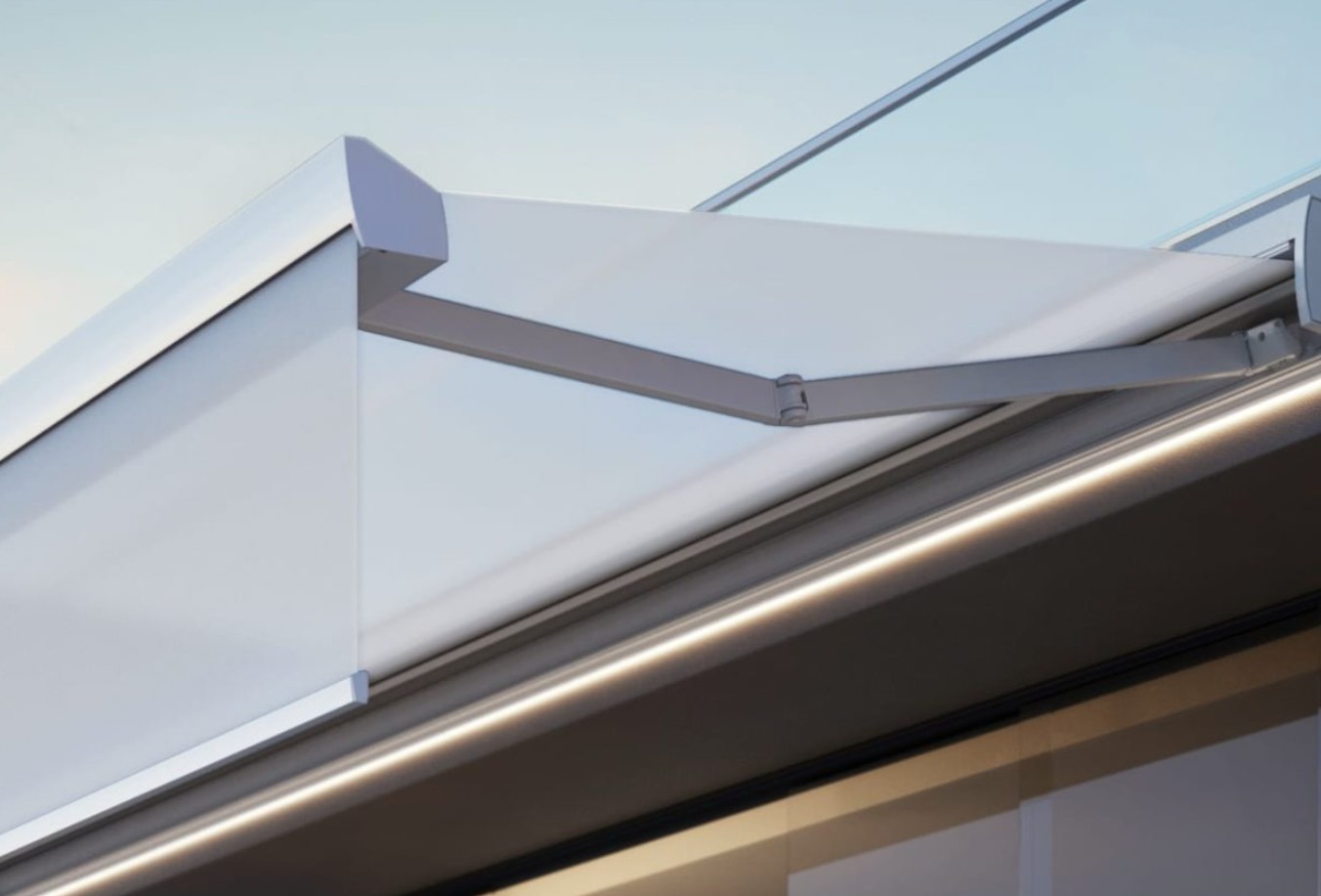
A high-performance electric roof lantern blind (2m x 3m) typically costs £ 5000 including VAT fully installed.
This reflects the need for a “zip” mechanism to lock the fabric in place.
When researching how much electric roof lantern blinds cost, remember you are paying for a system that acts as a “fabric ceiling.” Cheaper pleated systems often rely on visible guide wires and can collect dead insects and dust.
You can explore our Electric Roof Lantern Blinds to see how these systems integrate.
Bi-folds and Sliding Doors
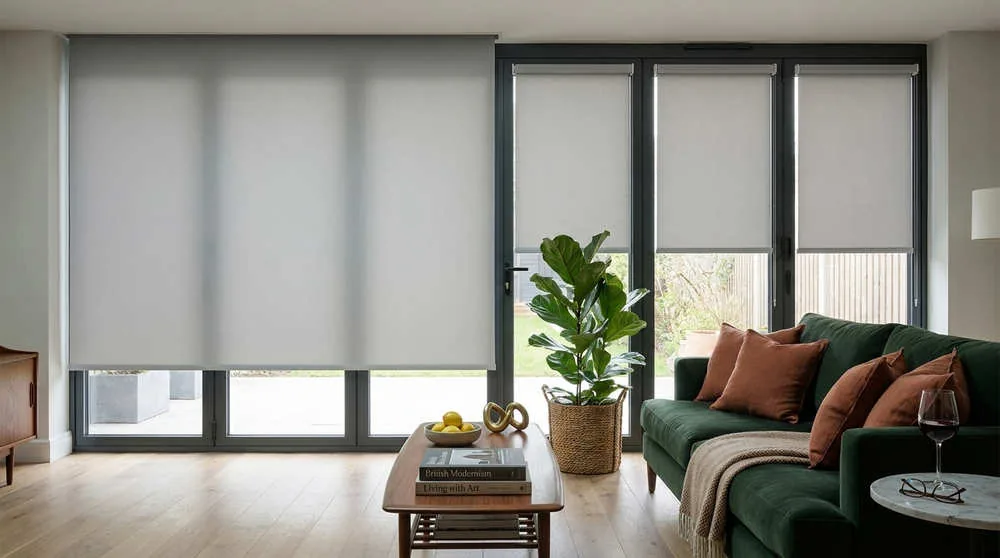
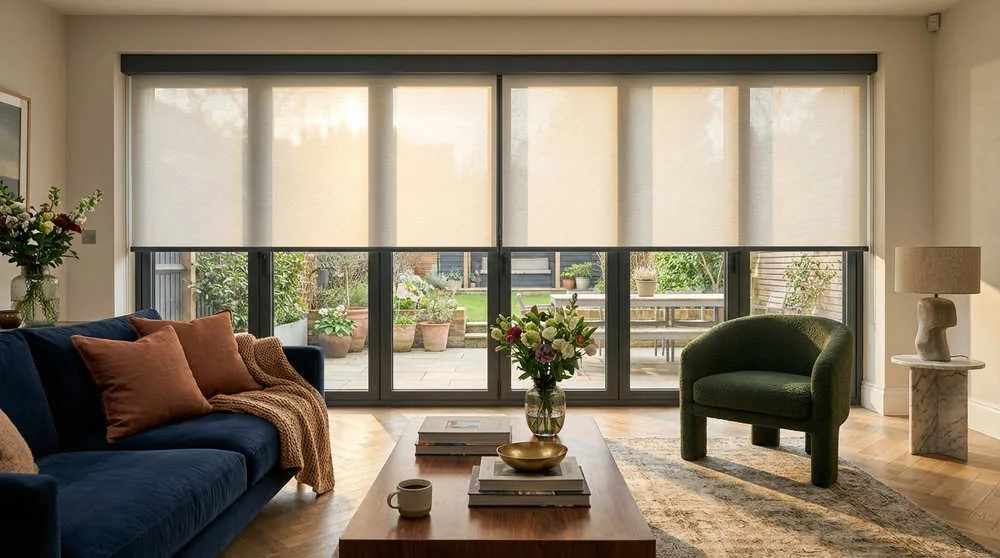
For a typical 4-metre wide set of bifold doors, you should expect to invest between £3,000 and £5,000 for a electric roller systems.
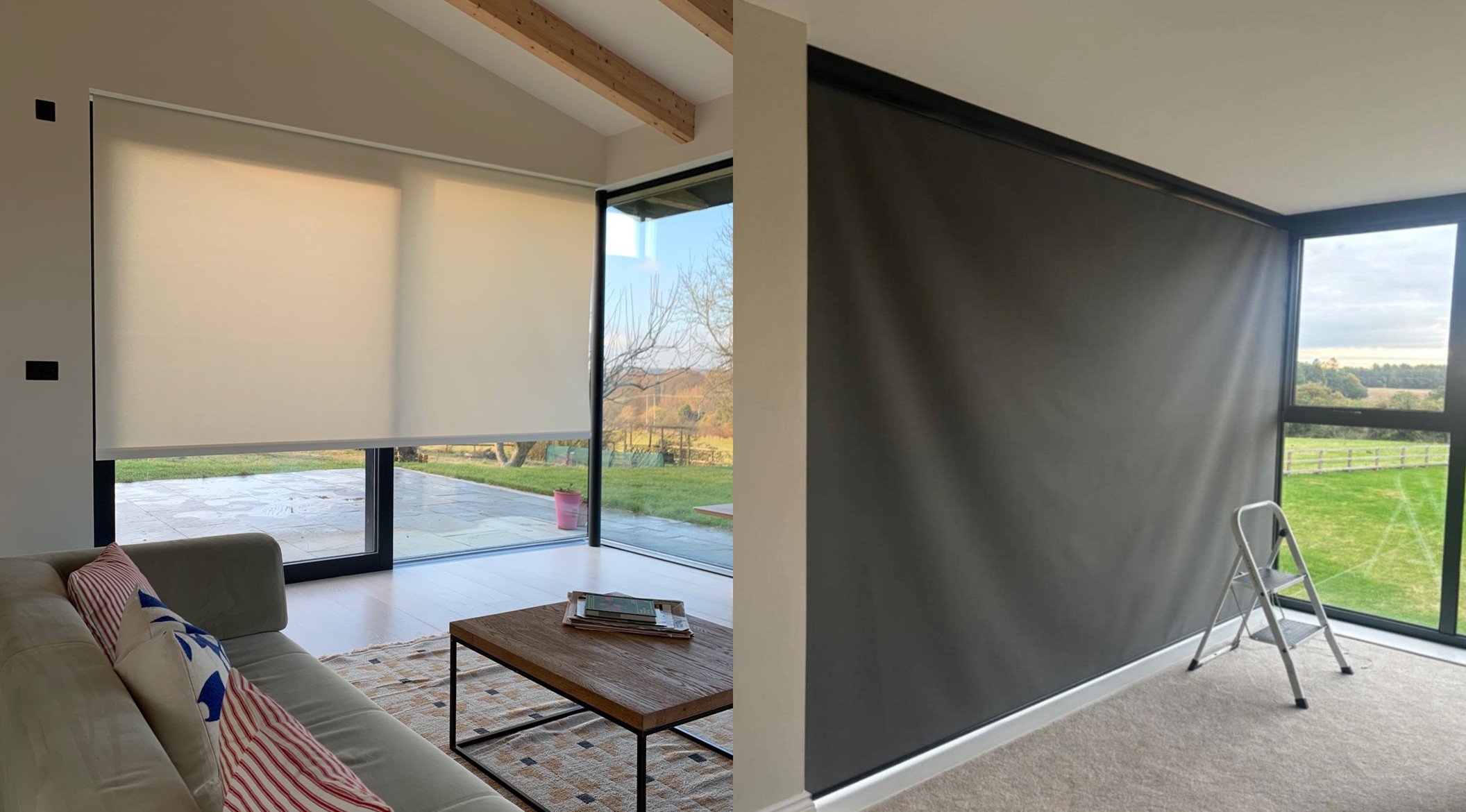
The cost increases with width due to the challenge of preventing the roller tube from bending.
Understanding how much electric blinds cost for bifold doors involves the “Span vs. Simplicity” choice. A single, seamless blind requires heavy-duty engineering (like ZoomTech®) to remain flat, whereas splitting the blind into smaller sections is cheaper but leaves light gaps.
Review our solutions for Bi Fold & Sliding Door Blinds to visualise the finish.
Concealment Costs
Retrofitting a concealed blind is significantly more expensive than designing it in from the start.
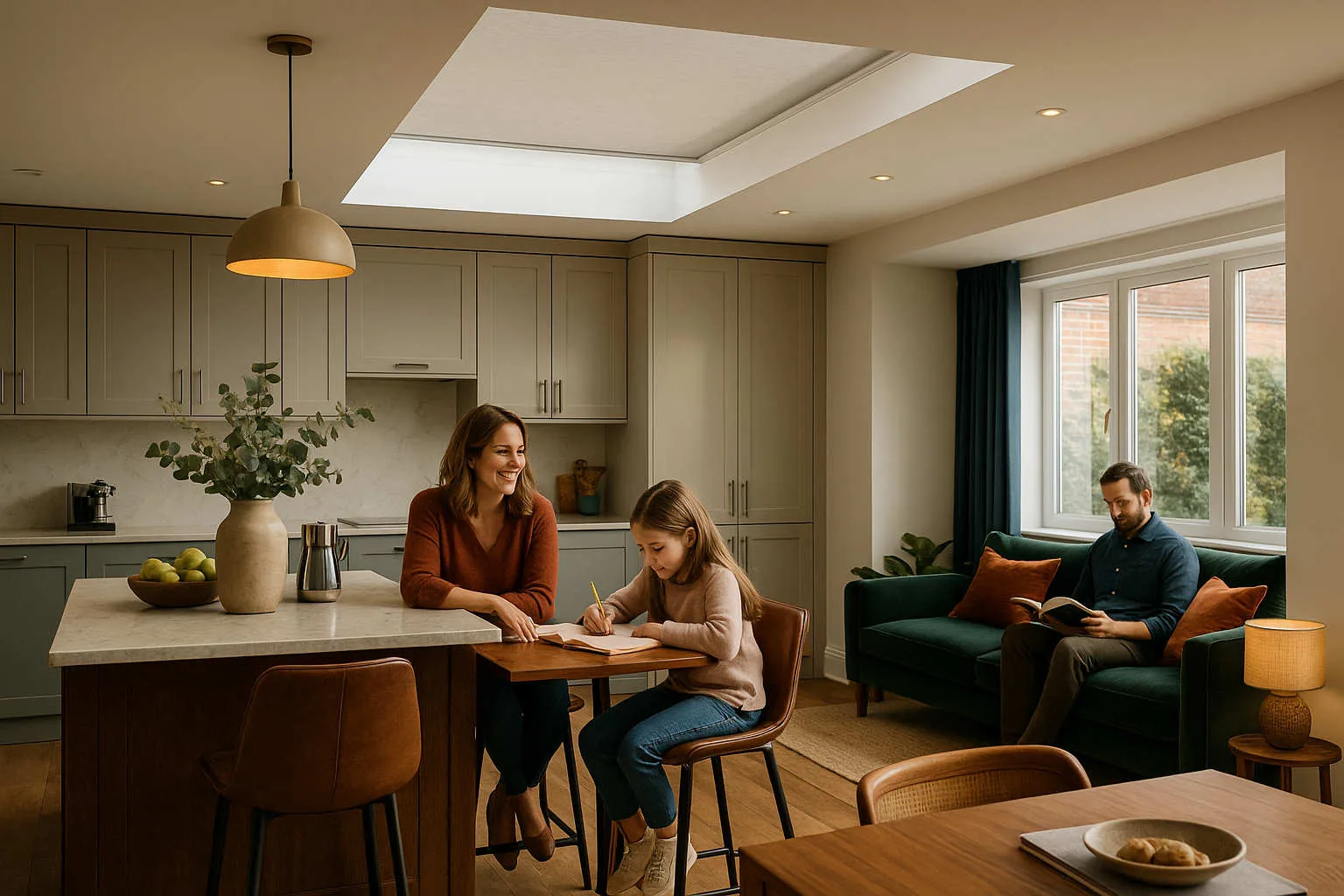
If you want the blind to vanish, you must ask what makes concealed systems more expensive than surface-mounted ones. The cost includes creating a structural pocket (using Blindspace®) which involves builders, plasterers, and electricians.
Learn more in our detailed article: How much do electric roof lantern blinds actually cost? (No hidden surprises)
Fabric Value: It’s Not Just Colour
True value in blind fabrics is defined by performance metrics like Solar Reflectance, not just the pattern or price per metre.
Cheap polyester absorbs heat; technical fabrics reflect it.
When choosing materials, you must consider which electric blind fabrics offer the best value based on their ability to solve your problem. A metallised fabric might cost more, but it acts as a mirror to reject heat, potentially saving your furniture from UV damage.
We worked with a client named James who built a bespoke garage for his classic car collection.
He needed total UV protection to prevent the paintwork from fading.
The investment in high-performance blackout fabric was insignificant compared to the value of the assets it preserved.
Learn more in our detailed article: Which electric blind fabrics offer the best value for money?
High Street vs. Specialist: The “Buy Twice” Trap
The real cost difference lies in whether the product is engineered for your specific home or assembled from mass-produced parts.
High-street options often lack the tensioning technology required for large architectural glazing.
You might wonder what you are actually paying more for with a specialist company. You are paying for motors with 5-year warranties and fabrics that don’t sag.
We worked with a client, Phil, who found this out the hard way. Phil chose a cheaper, non-specialist solution against our advice.
Within months, the blind sagged and looked terrible.
He eventually paid us to rip it out and install the correct system, meaning he paid for the project twice.
It is essential to know that the real difference between premium and budget blinds to avoid this false economy.
Learn more in our detailed article: WindowTreat vs. High-Street Blinds: What am I actually paying more for?
Hidden & Running Costs
The electricity cost to run a modern blind is negligible (often pence per year), but the cost of poor reliability can be high.
High-quality systems are designed to be “set and forget.”
Homeowners often worry about real-world maintenance and running costs. A premium battery motor needs charging perhaps once a year, while a mains-powered system costs less to run annually than a high street coffee.
The true “hidden cost” is the disruption of repairing a cheap system that has failed inside a finished ceiling.
Learn more in our detailed article: What are the real-world maintenance and running costs for electric blinds?
Frequently Asked Questions about Cost & Pricing
Q: Do your prices include VAT?
A: Yes, all indicative prices we provide in our guides are inclusive of VAT to ensure there are no nasty surprises.
Q: Why is retrofitting more expensive than planning early?
A: Retrofitting concealment often involves cutting into finished ceilings, re-plastering, and re-decorating. Planning early allows us to install the housing during the build phase, which is far cheaper and cleaner.
Q: Can I get 0% finance?
A: We typically do not offer 0% finance because the cost of that credit is usually subsidised by using lower-quality materials. We refuse to compromise the engineering of your blind to absorb a financial subsidy.
Protecting Your Investment
Choosing the right shading is about protecting the dream you have for your home.
By understanding the true costs, you can move from genuine surprise at the cost to making an informed investment in your comfort.
We champion the S.H.A.D.E. principle to ensure shading is designed in from the start, saving you money and stress in the long run.
Don’t let your beautiful extension become an unusable greenhouse.